Safety & Security PCBA Product Portfolio — Part 1
These production examples show the breadth of STHL’s safety and security PCB assembly program: connected protection, video surveillance, camera modules, DVR/NVR recording, alarm control, video servers and smoke detection. Each product preserves its original image and detail page.
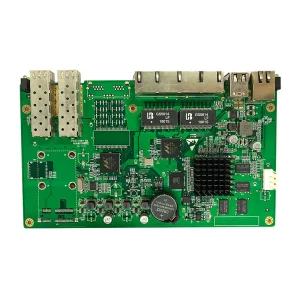
Precision Safety & Security PCBA Applications: Empowering Reliable Protection in a Connected World Factory, Solutions
View Product Details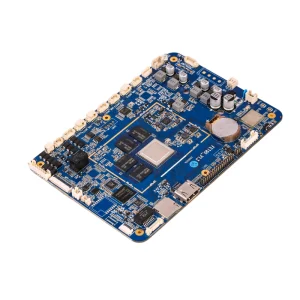
Prototype Video Surveillance System PCB Assembly Manufacturer, Company
View Product Details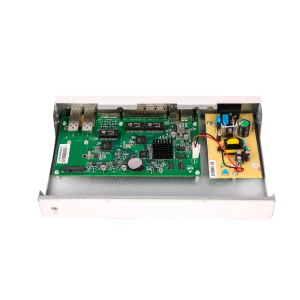
OEM Surveillance Camera PCB Assembly Partner, Factories
View Product Details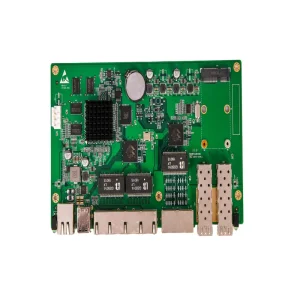
Top 10 DVR PCB Assembly--STHL Factory, Partner
View Product Details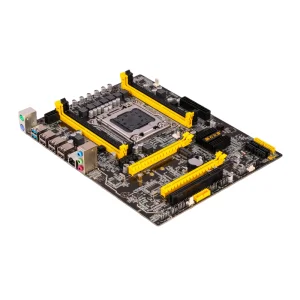
Top 10 NVR PCB Assembly--STHL: Engineering Stable Storage for High-Definition Video-1 Service, Manufacturers
View Product Details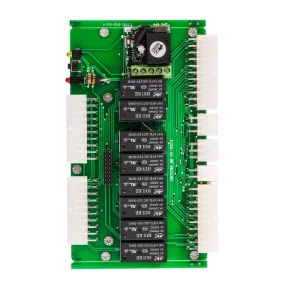
Turnkey Alarm System PCB Assembly--STHL Company, Service
View Product Details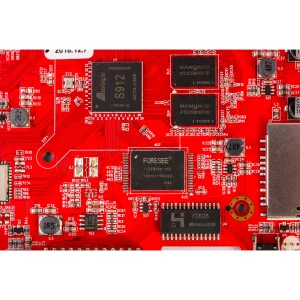
High Quality Video Server PCB Assembly--STHL Factory, Factories
View Product Details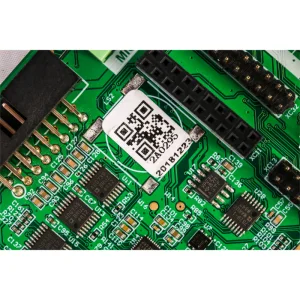
China Smoke Alarm PCB Assembly--STHL Service, Solutions
View Product DetailsSafety & Security PCB Assembly Is a Reliability Discipline, Not a Commodity Purchase
Safety and security electronics earn their value in the worst moment of the day. A camera must record after a power interruption, an alarm must transmit when a door is forced, a smoke detector must distinguish real danger from cooking steam, and an emergency button must work after years of inactivity.
Failure Is a Security Event
Functional failure is expensive in any market, but in security it becomes a trust failure. A false alarm can cost a monitoring company a contract; a missed event can create liability; a field return can require a truck roll. Manufacturing controls must be selected around the consequences of failure, not only around unit cost. For critical boards, this means controlled soldering profiles, solderability checks, AOI on every side, X-ray for hidden joints, and functional test that mirrors the installed product.
Lifecycle Longer Than the Catalogue
Video surveillance, fire panels, access controllers and perimeter systems often stay in service for 7–15 years. Components can go end-of-life long before the product does. A competent PCBA partner screens the BOM for lifecycle risk, proposes form-fit-function alternates with written approval, and keeps revision records that allow a field replacement to match the original build. Obsolescence planning is a safety issue when a security system cannot be repaired.
Evidence Must Travel With the Board
Global buyers increasingly ask for evidence: lot traceability, material declarations, test logs, first-article results and change history. A board without evidence is difficult to audit and expensive to support. We structure builds so that the serial number or lot code connects to incoming inspection, component reel data and final test results, enabling faster root-cause analysis and more confident compliance claims.
A Certified Safety & Security PCBA Factory in Shenzhen Since 2006
Shenzhen STHL Electronics Co., Ltd. is an EMS and ODM provider focused on turning complex designs into repeatable production. Since 2006, the company has supported OEMs in the USA, Germany, Italy, the UK, Poland, New Zealand, Brazil and 90+ other regions. Its 220+ staff include 50+ engineers, and its 10,000 m² facility contains 7 SMT lines, 2 DIP/THT lines, 2 functional test lines, 2 box build lines and an in-house R&D laboratory.
For safety and security products, STHL provides turnkey and partial-turnkey services from PCB fabrication and component sourcing to SMT/THT assembly, IC programming, conformal coating, cable assembly, box build and functional testing. Every build is RoHS compliant and controlled under IATF 16949, ISO 9001, ISO 14001 and ISO 13485 systems. There is no MOQ, an NDA can be signed before RFQ, and customers are welcome to audit the factory.
- No MOQ for prototype and volume builds
- NDA signed before RFQ
- 99.5% on-time delivery
- 99% qualified shipment rate
- AOI, X-ray, ICT and functional test
- ERP and MES traceability

Certified electronics manufacturing for safety, security, medical, automotive, industrial and IoT products.


Global Procurement Demand: What Buyers Now Score in a Safety & Security PCBA Supplier
Procurement teams in North America and Europe no longer treat PCB assembly as a simple build-to-print purchase. They are managing regulatory exposure, cyber-physical risk, long product lifecycles and supply-chain volatility at the same time.
AI Video Surveillance and Storage
The surveillance transition to IP cameras, 4K sensors, PoE and edge AI has increased board complexity. Camera PCBA and video server PCBA now combine high-speed interfaces, DDR routing, thermal constraints and long-duration recording. NVR and DVR boards must maintain stable storage and predictable boot behaviour under repeated write cycles. Buyers look for controlled impedance, BGA inspection, thermal validation support and reliable NAND/storage sourcing.
Life-Safety Alarm Integration
Smoke, fire, gas-leak, burglar and emergency-button products are moving from standalone alarms to connected systems. Many still must satisfy local codes and standards such as EN 54 or UL 603, while adding wireless modules and app connectivity. The PCBA supplier must understand low-leakage sensor circuits, redundancy, battery backup and test procedures that prove the alarm chain works.
Access Control and Perimeter Security
Smart locks, electronic fence vibrators and perimeter protection systems combine electromechanical parts, sensors and radio modules. Mechanical assembly tolerances, low-power design and environmental sealing affect the electronics. Procurement teams want suppliers that can support conformal coating, IP-rated enclosure integration and testing after final assembly.
Supply Resilience and Documentation
Dual sourcing, approved alternates, moisture-sensitive device control, counterfeit avoidance and lot traceability are now standard expectations. In regulated buying, the question is not only whether the board works, but whether the supplier can prove it consistently. A strong PCBA partner provides BOM scrubbing reports, DFM feedback, material declarations and change notifications before shipment.
Macro Industry Solutions: From Sensor to Command Center
Safety and security products form a chain: sensors detect, controllers decide, communication modules transmit and storage devices retain evidence. Each link has different failure modes. The PCBA solution must be matched to the threat and environment.
Video Surveillance and Video Recording
Camera, DVR, NVR and video server PCBA require high-speed video paths, reliable storage, thermal management and PoE support. Fine-pitch and BGA assembly are verified with AOI and X-ray, while functional testing exercises recording, playback, boot behaviour and interface stability. These controls matter when video evidence must remain accessible after months of continuous operation.
Intrusion, Panic and Alarm Systems
Burglar alarm controllers, emergency buttons and turnkey alarm systems depend on battery backup, siren drives, sensor inputs and low-power design. Test coverage must address false-alarm prevention as well as alarm transmission. The manufacturing plan should also protect firmware and programming data, because an alarm system is both a safety device and a connected endpoint.
Fire, Smoke and Gas Detection
Smoke alarm, fire alarm and gas-leak PCBA rely on low-leakage analog front ends, sensor calibration support and long-term stability. Sensitivity validation and contamination control are central because a detector must remain trustworthy after years in kitchens, corridors or industrial rooms. Conformal coating and assembly handling must be selected so they do not interfere with sensing surfaces.
Access, Smart Lock and Perimeter Protection
Smart lock controllers, electronic fence vibration modules and perimeter protection systems combine mechanical integration with low-power wake-up, wireless connectivity and environmental endurance. Builds often require conformal coating, cable assembly and final enclosure integration. Testing should reflect real use: lock actuation, tamper detection, vibration thresholds and battery-life behaviour.
Localized Support, Compliance and IP Protection for Global Buyers
Offshore manufacturing only works when documentation, communication and accountability are strong. For safety and security customers, three topics appear in almost every supplier qualification: can the factory protect IP, can it prove compliance, and can it respond quickly when a product changes?
Compliance Dossier and Material Declarations
STHL builds under IATF 16949, ISO 9001, ISO 14001 and ISO 13485 systems and produces RoHS-compliant assemblies. Projects can include REACH declarations, material declarations, first-article inspection, test reports and traceability records. Where the final product must meet UL, EN, IEC or local code requirements, we align manufacturing and documentation with the customer’s certification plan rather than making unsupported claims.
NDA, IP Protection and Revision Control
Design files are restricted to the assigned engineering team, and an NDA can be signed before RFQ. BOM changes, alternate parts and process deviations are documented and approved before production. ERP and MES records connect production status with lot traceability, helping protect both intellectual property and product consistency.
Regional Support and Logistics
Our English-speaking project team supports buyers across the USA, Germany, Italy, the UK, Poland, New Zealand, Brazil and other regions. Shipment documentation, packing requirements, consignment options and production updates can be structured around the customer’s supply-chain model, including prototype, low-volume and volume builds from the same factory.
Audit, Traceability and Factory Transparency
Customers can visit the Shenzhen factory and R&D laboratory, and remote evaluation can be supported through a 360-degree virtual factory tour. During production, AOI, X-ray, ICT and functional test records are retained according to the project quality plan. This transparency reduces the hidden cost of supplier qualification and makes repeat orders easier to govern.
Technical Roadmap: What Safety & Security PCBA Will Demand by 2030
The next generation of safety and security hardware will be more connected, more intelligent and more exposed to cyber risk. Manufacturing plans should anticipate four shifts.
Secure-by-Design Electronics
Security products are becoming cyber-physical systems. Boards may need secure boot, hardware root of trust, tamper detection, encrypted storage and authenticated OTA updates. PCBA partners must protect programming keys, control firmware traceability and prevent unauthorised changes during test and rework.
Edge AI and Video Intelligence
AI cameras and smart controllers process data locally. This raises power density, high-speed memory requirements and thermal complexity. Manufacturing processes need fine-pitch placement, controlled impedance, thorough X-ray inspection and functional test that exercises AI modules under realistic workloads.
Advanced Materials and Environmental Durability
Outdoor cameras, door locks and perimeter devices face moisture, salt, vibration and temperature swings. HDI, rigid-flex, conformal coating, potting and IP-rated assembly will be part of the roadmap. Material selection must balance protection, repairability and compliance.
Digital Thread and Sustainable Manufacturing
Buyers increasingly expect digital traceability from component reel to finished board. MES-driven records, automated change control and energy-conscious production will become competitive advantages. Sustainability is not a separate report; it is a process discipline that reduces waste, rework and supply risk.
How STHL Controls a Safety & Security PCBA Build
Every project follows a controlled sequence from design review to shipment. The workflow is designed to catch manufacturability, sourcing and test risks before they become field failures.
DFM and BOM Review
Engineers check Gerber, BOM, centroid data, footprints, end-of-life risk and testability before material is ordered. Ambiguities are resolved before production, not after the first article.
Component Sourcing and Incoming Inspection
Full, partial or consigned sourcing through 100+ agents and suppliers, including incoming inspection, moisture-sensitive device control and traceability from reel to finished board.
PCB Fabrication and Stack-Up Control
Standard, HDI, flexible, rigid-flex, ceramic, heavy-copper and high-Tg boards are managed to the required surface finish, impedance and environmental performance.
SMT, THT and Mixed-Technology Assembly
7 SMT lines and 2 DIP/THT lines support fine-pitch, BGA and mixed boards from prototype to volume, with controlled soldering profiles and ESD discipline.
Inspection, Programming and Functional Test
AOI, X-ray, ICT, FCT, IC programming and conformal coating are selected around the product’s safety and security function, not just basic continuity.
Box Build and Global Shipment
Cable assembly, enclosure integration, ESD-safe packing and documented shipment. A 99.5% on-time delivery performance supports repeat production and field-service planning.
What Engineers and Buyers Say About STHL
Feedback from hardware engineers, designers and company owners across North America, Europe and beyond.
“Excellent team to work with and fast delivery with high-quality boards. We are very happy to work with such a good supplier. Thanks again.”

“Please extend my thanks to your team for your hard work in preparing these samples. This positive experience has strengthened my confidence in your company, and I'm looking forward to discussing bulk orders in the near future.”

“We are satisfied with the last order. You did a great job on those boards and the lead time was short. I will place a new order soon.”

Q&A for Safety & Security PCB Assembly Buyers
Straight answers to the questions procurement and engineering teams ask before selecting a safety and security PCBA manufacturer in China.
What makes safety and security PCBA different from standard PCB assembly?
Safety and security products must work after long periods of inactivity, during power anomalies, in humid or outdoor environments, and under audit. The PCBA process therefore needs stronger emphasis on traceability, test coverage, firmware protection, long-term component availability and documented change control. Cosmetic inspection alone is not enough; the build must prove that the intended function remains reliable over the product lifecycle.
How do you protect our design files and intellectual property?
We sign an NDA before RFQ, restrict project data to the assigned engineering team and track every build through ERP and MES systems. BOM changes and approved alternates are documented before production. Customers can also define access limits, file-transfer rules and programming-key controls for their project.
Can STHL support compliance with UL, EN, IEC and RoHS requirements?
STHL is certified to IATF 16949, ISO 9001, ISO 14001 and ISO 13485 and produces RoHS-compliant assemblies. We can provide material declarations, traceability records, test reports and manufacturing documentation to support your certification plan. Where UL, EN, IEC or local codes apply, the final compliance responsibility remains with the product owner, but our team aligns the build and documentation with the agreed requirements.
What test coverage is available for safety and security boards?
Available coverage includes AOI, X-ray, ICT, functional testing, IC programming and conformal coating support. For security and life-safety products, test plans can exercise sensor inputs, alarm outputs, communication interfaces, recording or storage behaviour, battery back-up logic and firmware version verification. The exact test strategy is defined during DFM and NPI review.
How do you manage component obsolescence in long-life security products?
Our sourcing team screens the BOM for lifecycle risk and recommends approved alternates or last-time-buy planning where appropriate. We record revisions so that a future build can be compared with the original. For long-life products, we encourage customers to share forecast visibility and to define form-fit-function approval criteria for any alternate part.
Is there a minimum order quantity for safety and security PCBA?
No. STHL accepts prototype, low-volume and high-volume PCB assembly orders, so a design can be validated and then scaled to mass production with the same supplier. This is particularly useful for security hardware teams that need pilot builds before a full product launch.
Can we audit or visit the factory?
Yes. Customers are welcome to visit our Shenzhen factory and R&D laboratory at any time, and a 360-degree virtual factory tour is available for remote evaluation. Audits can cover SMT, THT, testing, material preparation, traceability and box-build areas depending on the project scope.
What files do I need to submit for a PCBA project?
Send Gerber files, a BOM with manufacturer part numbers, the pick-and-place or centroid file and assembly drawings. If you need IC programming or functional testing, include firmware and test procedures. Our engineers complete a DFM and BOM review before production starts.
Complete Safety & Security PCBA Product Portfolio — Part 2
Part 2 continues the portfolio with intrusion detection, fire and gas safety, emergency signalling, explosion-proof equipment, smart locks, electronic fencing and perimeter protection. Each product preserves its original image and detail page.
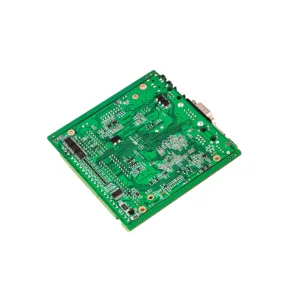
OEM Burglar Alarm PCB Assembly--STHL Manufacturer, Solutions
View Product Details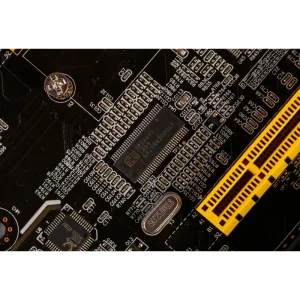
Reliable Fire Alarm PCB Assembly--STHL Solutions, from China
View Product Details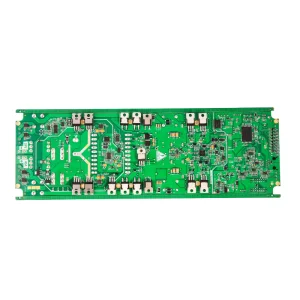
Prototype Gas Leak Alarm PCB Assembly--STHL Supplier, Company
View Product Details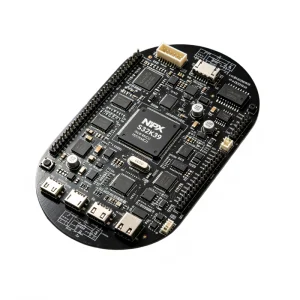
Turnkey Emergency Button PCB Assembly--STHL in China, from China
View Product Details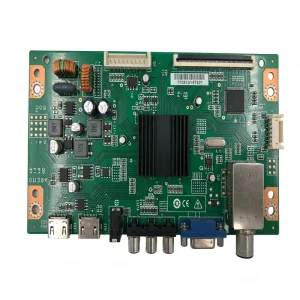
Top-Rated Explosion-proof Equipment PCB Assembly--STHL Factory, Solution Provider
View Product Details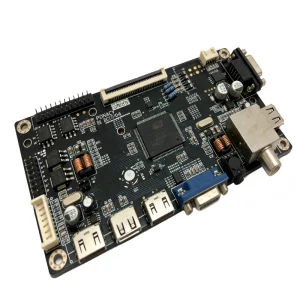
High Quality Smart Lock PCB Assembly--STHL Manufacturer, Solutions
View Product Details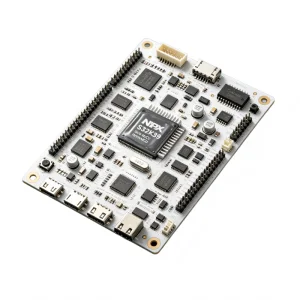
OEM Electronic Fence Vibrator PCB Assembly--STHL Solution Provider, from China
View Product Details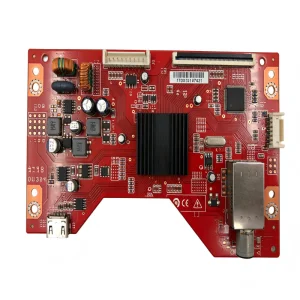
Prototype Perimeter Protection System PCB Assembly--STHL Company, Solutions
View Product DetailsBuild a Safer, More Connected Security Product With STHL
Share your Gerber files, BOM and test requirements for a DFM review, sourcing feedback and a manufacturing plan. Our team supports prototypes, low-volume production and repeat volume builds under one quality system, with NDA protection available before RFQ.
