Aerospace PCB Assembly Factory & Factories
A reliability-focused whitepaper for OEMs sourcing mission-critical PCBAs from China — covering engineering assurance, extreme-environment assembly, global procurement demand, supply-chain resilience, Factory 4.0 efficiency, application scenarios, and STHL's aerospace PCBA product platforms.
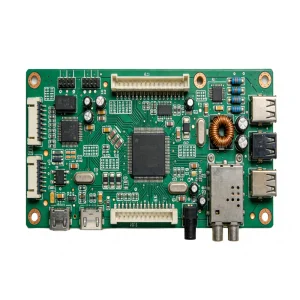
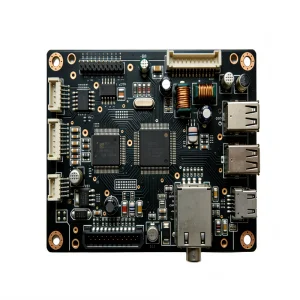
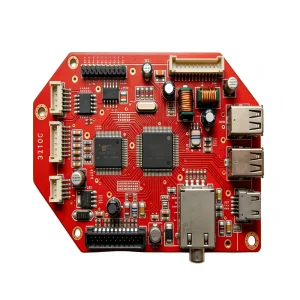
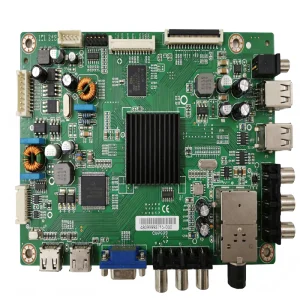
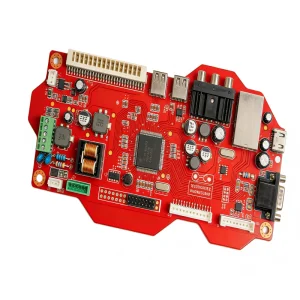
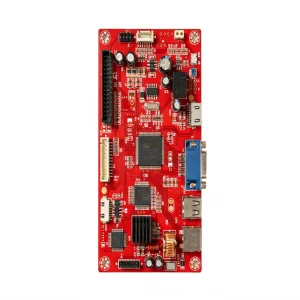
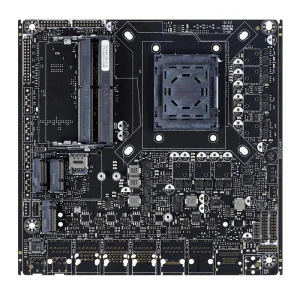
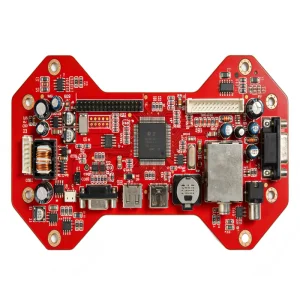
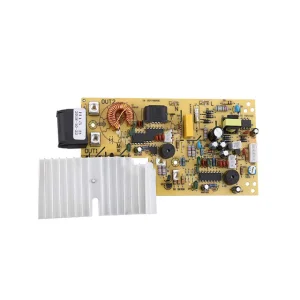
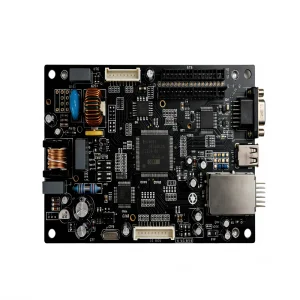
Aerospace PCBA Product Platforms for Extreme Environments
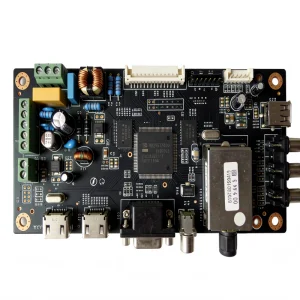
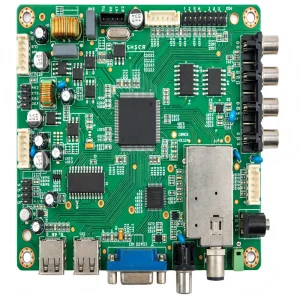
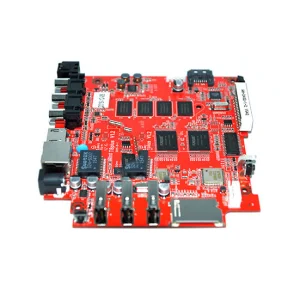
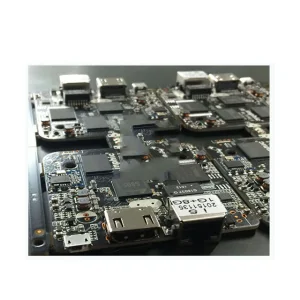
These product platforms reflect the core demand signals behind the search for an aerospace PCB assembly factory: flight control computers, autopilot modules, air data and inertial systems, and certified electronics that must remain dependable under vibration, thermal cycling, humidity, altitude, and long service life.
What an Aerospace PCB Assembly Factory Must Prove Before It Wins a Program
The search for an aerospace PCB assembly factory is usually triggered by a specific supply-chain risk: a current supplier cannot meet a new build standard, a flight-control board is moving from prototype to production, or a legacy program needs a traceable second source. Aerospace buyers are not only comparing price per joint. They are qualifying a manufacturing system that must preserve design intent through thermal cycling, vibration, humidity, altitude, EMI, and long service life. STHL's aerospace PCBA platform is built around that reality: controlled sourcing, documented assembly, test coverage, and engineering feedback before release.
Design assurance flow-down
The factory must translate stack-up, impedance, via fill, surface finish, Tg, CTE, outgassing, and assembly drawings into controlled process instructions. A low-cost quote without DFM feedback is not a qualified aerospace PCBA offer.
Material & component integrity
Aerospace programs require authorized channels, moisture-sensitive device control, counterfeit-avoidance flow-down such as AS5553 and AS6081 where specified, and incoming inspection with reel-to-board traceability.
Traceability by lot or serial
ERP and MES records should connect component lots, paste, reflow profiles, operator, AOI and X-ray results, test logs, rework, and final shipment. Traceability is a risk-control asset, not a paperwork burden.
Test strategy matched to criticality
AOI, X-ray, ICT, flying probe, boundary scan, functional test, burn-in, and environmental screening should be selected from the failure modes of the board, not copied from a generic PCBA checklist.
Aerospace PCB Assembly Trends: More Electronics, More Heat, More Accountability
Aerospace electronics is moving in several directions at once. Aircraft and UAV architectures are adding processors, sensors, redundant channels, and power electronics, while procurement teams demand shorter qualification cycles and stronger lifecycle support. For aerospace PCB assembly factories, the winning capability is not simply more SMT lines; it is the ability to control complexity from DFM through final test.
Fly-by-wire, UAV and autonomy
More flight-control computers, autopilot modules, inertial sensors, and redundant communication paths increase board complexity and test time. PCBA suppliers must support fine-pitch devices, deterministic signal integrity, and controlled thermal paths.
SWaP-C pressure
Size, weight, power, and cost targets push designs toward HDI, microvias, rigid-flex, high-density connectors, and embedded components. Assembly houses need X-ray, fine-pitch placement, and controlled reflow to protect yield.
Power density & thermal stress
Wide-bandgap semiconductors, motor drives, and high-current planes raise thermal and reliability requirements. Heavy copper, thermal vias, metal-backed boards, conformal coating, and void-controlled assembly become part of the qualification conversation.
Materials & environmental durability
High-Tg FR-4, Rogers, polyimide, ceramic, heavy-copper, and halogen-free materials require material-specific process windows. Outgassing, ionic cleanliness, thermal cycling, vibration, and humidity must be considered at the assembly instruction level.
Digital thread & counterfeit risk
AS5553 and AS6081 flow-downs, authorized distributor controls, lot-level traceability, and MES records help protect aerospace programs from counterfeit parts and unapproved changes. Digital evidence is becoming a buying criterion.
Dual sourcing & regional resilience
Aerospace OEMs are not making a single-country bet. They are building a controlled supplier network with qualified second sources, buffer inventory, lifecycle planning, and audit-ready documentation across regions.
The implication for buyers is direct: an aerospace PCB assembly factory that can document DFM decisions, component provenance, process windows, test results, and change history reduces program risk long before hardware reaches the aircraft.
Why Aerospace Buyers Are Rebalancing China PCBA Sourcing
Global aerospace procurement is not leaving China in a straight line. Commercial aircraft build rates, defense electronics, UAV production, eVTOL development, and space applications create different demand cycles, but they share one requirement: qualified electronics manufacturing capacity with reliable documentation. China's EMS cluster remains relevant because it combines deep component access, engineering talent, dense PCBA capacity, and fast NPI response. The question is not whether to use a China aerospace PCB assembly factory, but how to qualify and govern the relationship.
Cost-to-quality optimization
Buyers compare total landed cost, yield, rework, logistics, and engineering support. A lower unit price can be expensive if it creates test escapes, schedule risk, or repeated quality escalations.
Supplier qualification workload
Audits, document reviews, sample builds, and first-article inspections consume engineering time. Procurement teams prefer factories that can present certifications, process controls, and traceability evidence without a long discovery phase.
Lead-time & working capital
Component allocation and long lead-time parts can delay a build even when SMT capacity is available. A PCBA factory with active sourcing channels and BOM engineering can propose alternates and reduce schedule exposure.
Lifecycle & obsolescence support
Aerospace platforms remain in service for decades. Buyers need last-time-buy planning, approved alternate parts, change notification, and configuration control that continues after the initial production run.
In practice, the winning model is a controlled network: a primary supplier for speed and engineering collaboration, a qualified second source for resilience, and clear rules for component sourcing, export-control review, and change approval. For aerospace PCBA factories in China, the competitive advantage is shifting from labor cost to process discipline, transparency, and supply-chain coordination.
Supply-Chain Resilience and Efficiency Advantages of a China Aerospace PCBA Factory
STHL operates a 10,000+ m² facility in Shenzhen with 220+ staff, including 50+ engineers, 7 SMT lines, 2 DIP/THT lines, 2 functional test lines, and 2 box-build lines. The company has served global OEMs since 2006 and is certified to IATF 16949, ISO 9001, ISO 14001, and ISO 13485. For aerospace-adjacent programs, those systems provide a base for document control, lot traceability, incoming inspection, ESD control, and change management. Where a customer's contract requires AS9100D, NADCAP, ITAR, or other aerospace-specific flow-downs, the scope should be confirmed during RFQ rather than assumed.
Factory 4.0 in PCBA is not a single machine or software package. It is the coordination of engineering data, material control, process parameters, inspection results, and shipment records. In an aerospace build, that coordination matters because a single unapproved component substitution or missed reflow profile can invalidate a customer's qualification evidence. STHL's workflow uses ERP and MES tracking to connect the BOM, production status, test records, and lot traceability. The goal is to make every build repeatable and every deviation visible.
DFM & BOM review
Engineers review Gerber, BOM, centroid data, stack-up, footprints, panelization, and end-of-life risks before material is ordered. This is where many aerospace PCBA change requests are prevented.
Component sourcing
Parts are sourced through 100+ agents and suppliers covering more than 500,000 part numbers. Incoming inspection, moisture-sensitive device control, and traceability records support authenticity and repeatability.
PCB fabrication
Bare boards are produced to the required stack-up, surface finish, impedance, and material specification. Rigid, flex, rigid-flex, HDI, Rogers, ceramic, heavy-copper, and high-Tg options can be aligned with the application.
SMT & THT assembly
Seven SMT lines and two DIP/THT lines handle fine-pitch, BGA, mixed-technology, and high-mix builds. Reflow profiles, paste control, and ESD discipline are documented for repeatability.
Inspection & testing
AOI, X-ray, ICT, functional testing, boundary scan where applicable, IC programming, and conformal coating are selected according to board criticality and customer test procedures.
Box build & delivery
Cable and wire harness assembly, enclosure integration, ESD-safe packaging, and shipment documentation complete the build. Factory audits and remote pre-qualification are supported for global buyers.
From Flight Control Computers to Inertial Navigation: Where Aerospace PCBAs Are Used
Application context determines assembly requirements. A cockpit display board, an air data computer, and an engine-indicating system may all use similar SMT equipment, but they face different thermal, vibration, test, and documentation demands. The sections below connect local application scenarios to the product platforms shown on this page.
Flight control & autopilot
Flight control computers, fly-by-wire units, and autopilot modules require deterministic signal paths, redundant channels, and robust connectors. Assembly must protect fine-pitch processors, BGAs, and high-reliability solder joints.
Air data & inertial reference
ADIRU, ADC, IMU, INS, and magnetometer boards combine precision sensors with sensitive analog and digital circuits. Low-noise layout, stable materials, and controlled test environments are central to reliable performance.
Cockpit displays & HUD
PFD, MFD, EFIS, and HUD electronics demand high-brightness interfaces, video processing, and long-term availability. Conformal coating and clean assembly help resist humidity and contamination.
Engine indication & crew alerting
EICAS boards must handle real-time sensor input, alerting logic, and display output in a high-attention environment. Test coverage should verify signal integrity, power stability, and alarm paths.
Navigation & positioning
VOR receivers, inertial navigation systems, and magnetometer modules require careful analog calibration, temperature stability, and traceable component selection for repeatable field behavior.
Cockpit voice recorders & safety electronics
CVRA and safety-recorder PCBAs prioritize data integrity, memory robustness, and power interruption tolerance. Assembly and test records can become part of the customer's airworthiness evidence package.
How to Qualify an Aerospace PCB Assembly Factory
Use a structured checklist during RFQ. The objective is not to collect certificates; it is to verify that the factory can repeat a controlled build and prove it with records.
Verify AS9100D scope
If the program requires AS9100D, confirm the certificate scope covers the actual site and processes. Ask how aerospace flow-downs are translated into work instructions.
Check quality certifications
IATF 16949, ISO 9001, ISO 13485, and ISO 14001 demonstrate system discipline, but each program should still review ESD, cleanliness, and process controls.
Audit component authenticity
Ask for authorized-channel sourcing rules, incoming inspection criteria, AS5553 and AS6081 flow-down where required, and handling of obsolete or allocated parts.
Request traceability samples
A sample traceability record should connect the finished board to component lots, paste, reflow, AOI, X-ray, test, rework, and shipment data.
Review process capability
Fine-pitch, BGA, rigid-flex, heavy-copper, thermal via, conformal coating, and mixed-technology experience should be evidenced by process controls and inspection methods.
Confirm test coverage
Test strategy should match the failure modes of the board. Discuss AOI, X-ray, ICT, flying probe, boundary scan, functional test, programming, and environmental screening.
Examine change control
Component substitutions, process changes, and rework must be documented and approved. Aerospace buyers need notification rules that continue after mass production begins.
Protect IP and export data
NDA before RFQ, restricted project access, secure file transfer, and export-control review should be confirmed during supplier qualification.
Aerospace PCB Assembly Factory FAQs for Global Buyers
The questions below reflect the commercial, engineering, and compliance concerns that appear most often in aerospace PCBA sourcing conversations.
What makes aerospace PCB assembly different from standard PCBA?
Aerospace PCBA usually places more emphasis on documentation, traceability, component authenticity, environmental durability, and test evidence. The board may need to survive vibration, thermal cycling, humidity, altitude, and long service life, so the manufacturing process must be controlled beyond basic SMT yield.
Can a China PCB assembly factory support aerospace-grade projects?
Yes, but qualification matters. Buyers should verify the factory's quality management system, process controls, traceability, counterfeit-avoidance practices, and ability to follow customer flow-downs. Where AS9100D, NADCAP, ITAR, or other special requirements apply, confirm the exact scope and documentation during RFQ.
How are design files and intellectual property protected?
STHL signs an NDA before RFQ, restricts project data to the assigned engineering team, and controls production records through ERP and MES systems. For sensitive programs, file access, data transfer, and export-control requirements should be documented in the supply agreement.
What testing is used for aerospace PCBAs?
Testing is selected from board criticality and failure modes. Common methods include AOI, X-ray, ICT or flying probe, boundary scan, functional test, IC programming, and visual inspection. Conformal coating inspection and environmental screening can be added when required by the customer.
How is component traceability handled?
Traceability should connect incoming component lots to the finished assembly. STHL's sourcing network covers 100+ agents and suppliers and more than 500,000 part numbers, with incoming inspection and reel-to-board records supported by ERP and MES tracking.
Do you support prototypes and high-mix production?
Yes. STHL accepts prototype, low-volume, and high-volume PCB assembly orders with no MOQ. This allows engineering teams to validate a design and scale to production with the same supplier, reducing transfer risk and documentation gaps.
Which certifications should I verify?
STHL holds IATF 16949, ISO 9001, ISO 14001, and ISO 13485 certifications and produces RoHS-compliant assemblies. Aerospace-specific certifications such as AS9100D or NADCAP should be discussed against the exact program requirement, because the required scope can vary by customer and application.
How do you manage obsolescence and long lifecycle programs?
BOM review, alternate-part engineering, last-time-buy planning, approved manufacturer checks, and change notification are used to reduce lifecycle risk. For aerospace programs, configuration control and documented approval of substitutions are essential.
Send Gerber, BOM and Assembly Drawings for a Controlled DFM Review
STHL supports NDA-before-RFQ, no-MOQ production, factory audits, and remote 360° virtual factory evaluation. Share your aerospace PCBA requirements and let our engineers identify sourcing, assembly, test, and documentation risks before production.
Aerospace PCB Assembly Factories for Displays, Navigation, and Safety Electronics
Explore additional aerospace PCBA product platforms covering HUD, MFD, PFD, EFIS, CVR, VOR receiver, IMU, and INS assemblies. Each platform can be reviewed against your BOM, drawing package, test procedure, and quality flow-down requirements.
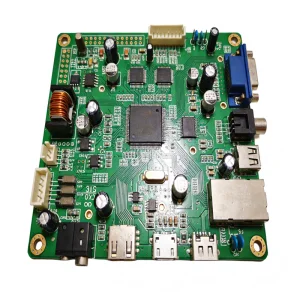
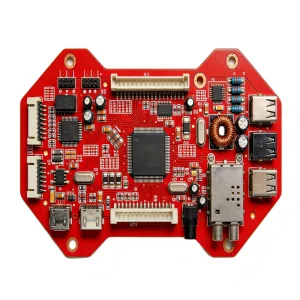
High-Reliability Multifunction Display (MFD) PCBA Assembly--STHL Solutions, from China
View Product Details