Seattle Multifamily Access & Intercom PCBA
Apartment buildings in Capitol Hill, Ballard and South Lake Union need low-power access control, PoE interfaces, secure elements, tamper detection and reliable communication in compact enclosures.
 STHL · Smart Home PCBA & EMS Since 2006
The four original product families below are the fastest starting points for Seattle-area teams building intelligent living systems. Every image and product URL from the original product list is preserved, and each title link keeps its original destination.
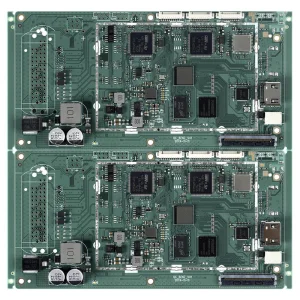
Seattle smart living controller
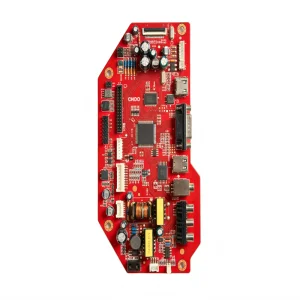
Energy & climate control
Reliable Smart Thermostat PCBA Assembly--STHL Solution Provider, in China
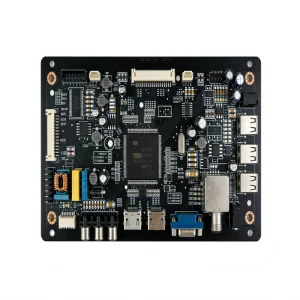
Voice & edge interaction
Turnkey Voice Assistant Device PCBA Assembly--STHL Service, Solutions
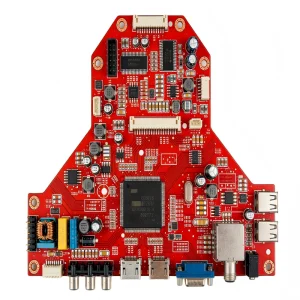
Connected home hub platform
Seattle is not a generic consumer electronics market. It is a demanding regional ecosystem where software expectations, energy policy, housing realities and global sourcing meet on the same circuit board.
The Seattle metro combines affluent early adopters, cloud and software engineers, dense multifamily construction, older single-family housing, high labor costs and aggressive energy and electrification priorities. For smart home brands, this creates demand for devices that are easy to retrofit, secure by design and able to interoperate with Matter/Thread, Wi-Fi, Bluetooth LE, Zigbee and legacy wiring. A product that works in a new laboratory bench may fail in an older Ballard bungalow, a South Lake Union apartment tower or a Bellevue heat-pump retrofit if the PCBA was not engineered for the local installation reality.
Procurement teams in Seattle, Bellevue, Redmond, Kirkland, Everett and Tacoma do not simply buy boards. They buy proof of process control: DFM feedback, BOM resilience, counterfeit avoidance, traceability from reel to finished assembly, documented test coverage and a clear escalation path when a component reaches end-of-life. A supplier that cannot show this becomes a schedule risk long before it becomes a price problem. That is why information gain matters more than brochure claims in the supplier evaluation process.
Washington’s clean energy and building performance direction also puts smart home electronics closer to energy infrastructure. Heat-pump controls, smart thermostats, home energy monitors, EV charging, demand-response gateways and leak-detection systems depend on accurate analog front ends, isolation, relay drive, surge protection, RF coexistence and secure firmware provisioning. These are PCBA engineering issues, not only PCB fabrication issues.
Access control, intercoms, smart lighting and energy sub-metering must fit compact enclosures and low-standby budgets.
Thermostats and climate controllers need accurate sensors, relay drive, isolation and reliable firmware update paths.
Charging and load-control products demand high-voltage separation, protection and communication reliability.
Seattle–Tacoma logistics supports air and sea shipment planning for high-mix, low-volume and scaled production.
Smart home manufacturing has shifted from single-device SKUs to connected platforms. Buyers now evaluate PCBA suppliers on multi-protocol engineering, documentation, lifecycle resilience and global delivery discipline.
Globally, smart home demand is being reshaped by Matter and Thread, multi-radio coexistence, edge AI, energy management, security and privacy expectations. A smart plug or light bulb is no longer a simple board with a relay or LED driver. It may contain a Wi-Fi or Thread radio, secure element, OTA firmware path, energy metering, thermal protection and cloud onboarding logic. For manufacturers, this increases the importance of RF-aware layout, controlled test coverage, firmware provisioning and component lifecycle planning.
Global procurement teams are also balancing China-plus-one strategies with the practical reality that Shenzhen still offers one of the world’s densest electronics ecosystems. Dual sourcing is common, but many OEMs keep a China manufacturing partner because the component cluster, PCB fabrication depth, SMT capacity, engineering feedback speed and box-build integration are difficult to replicate quickly elsewhere. The winning supplier is not simply the lowest quoted unit price. It is the supplier that can reduce engineering churn, avoid counterfeit risk, document traceability and deliver repeatable quality from prototype to volume.
For Seattle buyers, the global procurement question becomes highly practical: can the supplier support a small engineering build in Redmond, a pilot run for a Bellevue multifamily deployment and a volume shipment through the Port of Seattle/Tacoma without changing process ownership? That requires one accountable workflow from BOM review to final test and packaging.
STHL’s operating model is designed around that requirement: one factory, one engineering team and one traceable process behind component sourcing, PCB fabrication, SMT/THT assembly, testing and box build.
China’s factory advantage is often described as labor cost. For smart home PCBA, the more important advantage is supply-chain density plus engineering speed. Shenzhen brings PCB fabrication, component distribution, tooling, SMT, test fixtures, cable assembly, enclosures and packaging within a short logistics radius. That density shortens the loop between design feedback, material changes and production execution.
STHL combines electronic component procurement, PCB fabrication, SMT/THT assembly, functional testing and box build under one controlled workflow. The factory operates 7 SMT lines, 2 DIP/THT lines, 2 functional test lines and 2 box-build lines across a 10,000 m² facility with 220+ staff and 50+ engineers. AOI, X-ray, ICT and functional testing are used to verify assemblies, while ERP and MES systems support production status and lot traceability.
For Seattle teams, this efficiency translates into fewer supplier handoffs, faster engineering iterations and a clearer path from first article to repeat production. Prototypes can move by air freight, while volume programs can plan sea shipment through West Coast ports or consolidated distribution.

These illustrative Seattle-area scenarios show how smart home PCBA requirements change by installation environment, building type and user expectation.
Apartment buildings in Capitol Hill, Ballard and South Lake Union need low-power access control, PoE interfaces, secure elements, tamper detection and reliable communication in compact enclosures.
Heat-pump controllers, smart thermostats and energy monitors require accurate temperature and humidity sensing, relay drive, isolation, surge protection and dependable firmware update paths.
Leak sensors, ventilation controls and indoor air quality monitors need low standby current, stable sensor front ends, humidity protection and reliable wireless reporting in basements and crawl spaces.
EV charging and load-management products require high-voltage separation, ground-fault protection, communication modules, thermal planning and test coverage that matches safety expectations.
Older homes may lack neutral wires, have unstable dimming loads and place electronics inside tight wall boxes. PCBA design must manage heat, relay life, dimming compatibility and wireless range.
Homes near the water face humidity, salt air and power disturbances. Conformal coating, surge protection, enclosure sealing strategy and reliability testing become part of the PCBA specification.
When comparing suppliers, unit price is only one variable. The lowest quote can become the most expensive path if it creates engineering churn, field failures, component risk or delayed shipments.
| Evaluation Area | What to Verify | Why It Matters for Seattle Smart Home Programs |
|---|---|---|
| Engineering & DFM | Gerber, BOM and centroid review; stack-up and impedance checks; alternate-part suggestions; testability feedback before production. | Reduces redesign cycles for fast-moving Seattle hardware teams and protects launch schedules for connected devices. |
| Component Integrity | Authorized sourcing channels, incoming inspection, moisture-sensitive device control, reel-level traceability and counterfeit avoidance. | Protects brand reputation and prevents field failures in products installed in homes, apartments and shared buildings. |
| Process Control | SMT and THT capability, fine-pitch and BGA experience, AOI, X-ray, ICT, functional test and IC programming. | Smart home devices combine radios, sensors, relays and power conversion; test coverage must be planned, not improvised. |
| Quality Systems | IATF 16949, ISO 9001, ISO 14001 and ISO 13485 certificates; RoHS-compliant assemblies; documented corrective-action process. | Seattle programs often sit near medical, automotive, industrial and energy-grade expectations even when the end product is consumer-facing. |
| IP & Data Security | NDA before RFQ, restricted project access, controlled engineering data, ERP/MES traceability and audit records. | Cloud-connected products carry firmware, credentials and branding value that must be protected throughout manufacturing. |
| Logistics & Scale | Prototype and no-MOQ support, volume ramp capability, ESD-safe packaging, on-time delivery history and West Coast shipping experience. | Seattle teams need a supplier that can support engineering builds and scaled shipments through air freight or Port of Seattle/Tacoma ocean logistics. |
Seattle product teams are already designing for these shifts. Suppliers that understand the implications at the board level will be better partners than those that only quote BOMs.
Interoperability increases RF complexity. PCB layout, antenna clearance, shielding, firmware provisioning and RF test must be planned together, especially when Wi-Fi, Thread, Bluetooth LE and Zigbee share a small enclosure.
Presence detection, acoustic events and appliance diagnostics are moving to the edge. That means more sensor inputs, tighter power budgets, higher-speed interfaces and stronger thermal management on compact boards.
Heat pumps, EV charging, solar, batteries and demand-response programs make home electronics part of energy infrastructure. Isolation, metering accuracy, protection and long-term reliability become central PCBA requirements.
Secure boot, cryptographic key injection, debug-port control and firmware version traceability are increasingly required. PCBA providers must protect credentials during programming, test and packaging.
Brands want one platform with regional radios, enclosures and feature variants. Design-for-test and controlled alternate components help manage SKU complexity without forcing separate supply chains for every model.
Dual sourcing continues, but China’s component and process ecosystem remains central for high-mix smart home electronics. The practical strategy is transparent traceability, documented alternates and disciplined logistics.
For 20 years, STHL has combined component procurement, PCB fabrication, SMT and THT assembly, functional testing and box build into one accountable workflow—from first article to repeat production.

Full or partial turnkey sourcing through 100+ agents and suppliers, with BOM scrubbing, alternate-part suggestions and reel-level traceability.
Learn More
Standard, prototype, aluminum, flexible, rigid-flex, HDI, Rogers, ceramic, heavy-copper, high-Tg and halogen-free boards built to your stack-up.
Learn More
Prototype, low-volume and high-volume assembly including fine-pitch, BGA and mixed-technology boards, verified by AOI and X-ray.
Learn More
PCB layout and design, IC programming, ICT and functional testing, conformal coating, cable and wire harness, and complete box-build assembly.
Learn MoreEngineers check Gerber, BOM and centroid data for manufacturability, footprint errors and end-of-life parts before material is ordered.
Parts are purchased through a broad supplier network, then receive incoming inspection, lifecycle review and moisture-sensitive device control.
Bare boards are produced to your stack-up, surface finish and impedance requirements, from single-layer to HDI and rigid-flex.
7 SMT lines and 2 DIP/THT lines handle fine-pitch, BGA and mixed-technology boards for prototypes and mass production.
AOI, X-ray, ICT and functional tests, plus IC programming and conformal coating, with results logged for traceability.
Cable assembly, enclosure integration and ESD-safe packaging, shipped to customers in 90+ countries and regions.
Shenzhen STHL Electronics Co., Ltd. is a certified electronics manufacturing services and ODM provider founded in 2006. The company supports global OEMs from PCB layout and component sourcing to PCB fabrication, SMT/THT assembly, cable assembly, box build and testing. Its 10,000 m² facility operates 7 SMT lines, 2 DIP/THT lines, 2 functional test lines and 2 box-build lines, with 220+ staff including 50+ engineers.
STHL is certified to IATF 16949, ISO 9001, ISO 14001 and ISO 13485 and produces RoHS-compliant assemblies. Every build is supported by documented process control, incoming inspection, AOI, X-ray, ICT and functional testing, plus ERP and MES traceability. NDA review before RFQ is available for Seattle and global hardware teams that need to protect design data and firmware assets.
Customers are welcome to visit the Shenzhen factory and R&D laboratory, and a 360-degree virtual factory tour is available for remote pre-qualification. The original certification images and full-size certificate links are preserved below.




Certified quality and environmental systems with factory audit, virtual tour and NDA options for global buyers.

Feedback from hardware engineers, designers and company owners across North America, Europe and beyond.
“Excellent team to work with and fast delivery with high-quality boards. We are very happy to work with such a good supplier. Thanks again.”

“Please extend my thanks to your team for your hard work in preparing these samples. This positive experience has strengthened my confidence in your company, and I'm looking forward to discussing bulk orders in the near future.”

“We are satisfied with the last order. You did a great job on those boards and the lead time was short. I will place a new order soon.”

Straight answers for engineering, procurement and operations teams evaluating a smart home PCBA partner for the Seattle market and global distribution.
Send Gerber files, a BOM with manufacturer part numbers, the pick-and-place or centroid file and assembly drawings. If you need IC programming or functional testing, include firmware and test procedures. Our engineers complete a DFM and BOM review before production starts.
No. STHL accepts prototype, low-volume and high-volume PCB assembly orders, so you can validate a design and scale to mass production with the same supplier.
Yes. We offer full turnkey, partial turnkey and consigned assembly. Our sourcing team works with 100+ agents and suppliers covering more than 500,000 part numbers, with incoming inspection and traceability from reel to finished board.
STHL is certified to IATF 16949, ISO 9001, ISO 14001 and ISO 13485, and produces RoHS-compliant assemblies. Boards are verified with AOI, X-ray, ICT and functional testing.
We sign an NDA before RFQ, restrict project data to the assigned engineering team and track every build through our ERP and MES systems.
Yes. Customers are welcome to visit our Shenzhen factory and R&D laboratory at any time, and a 360-degree virtual factory tour is available for remote evaluation.
We can support air freight for prototypes and urgent builds, and sea or consolidated shipments for volume programs. Seattle–Tacoma port access, Sea-Tac air freight and West Coast distribution make it practical to plan repeat deliveries. Packaging, labeling and shipment documentation can be aligned with your program requirements.
We support PCBA manufacturing for smart home products using these wireless technologies, including module integration, firmware programming and functional test planning. RF performance depends on layout, antenna choice, enclosure design and test strategy, so early engineering review is important for Seattle product teams.
Our team reviews lifecycle status during BOM scrubbing, proposes approved alternates when appropriate and documents changes through the RFQ and production process. Authorized sourcing and incoming inspection help reduce counterfeit risk and schedule surprises.
Lead time depends on board complexity, component availability, test requirements and volume. Prototype and low-volume builds usually move faster than mass production with custom testing or box build. The most reliable path is to send Gerbers, BOM, quantity and target schedule for a project-specific review.
Yes. STHL provides cable and wire harness assembly, conformal coating, IC programming, final assembly and box build, allowing Seattle teams to consolidate more of the manufacturing workflow with one supplier.
We can support secure programming workflows, controlled access to firmware data, debug-port handling procedures and production traceability. The exact process should be defined with your firmware and security team so key provisioning, test access and packaging controls match your product architecture.
Share your Gerber, BOM, target quantity, firmware or test requirements and preferred delivery schedule. Our engineering team will review manufacturability, component availability and test strategy before quoting. NDA support is available before RFQ for sensitive smart home designs.
These eight product families complete the original smart home PCBA series. They are arranged in a full-row grid for desktop, tablet and mobile viewing, with every original image and product URL preserved.
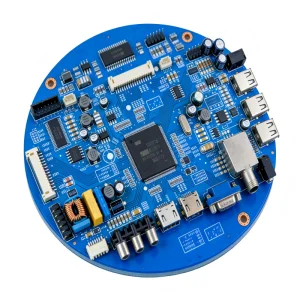
Smart display interface
Professional Smart Display PCBA Assembly--STHL Supplier, in China
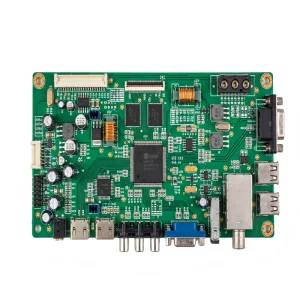
Voice-controlled speaker
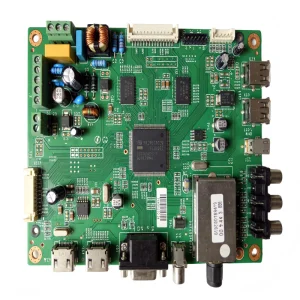
Smart outlet platform
Professional Smart Outlet PCBA Assembly--STHL Manufacturer, Supplier
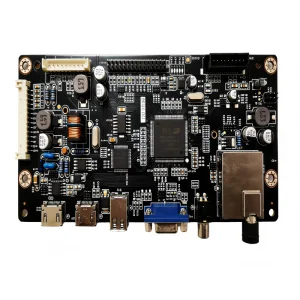
Smart plug & energy monitor
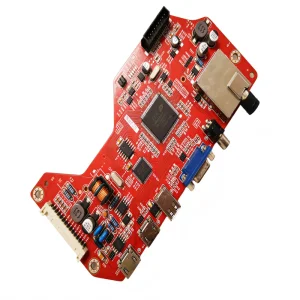
Smart dimmer & lighting
Top 10 Smart Dimmer Switch PCBA Assembly--STHL Service, Solutions
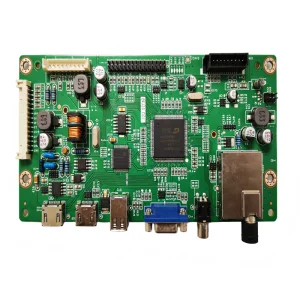
Smart wall switch
China Top Smart Wall Switch PCBA Assembly--STHL Company, Solutions
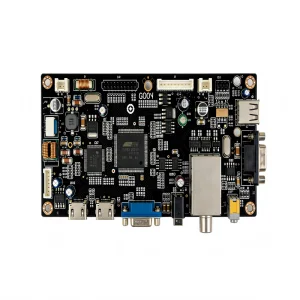
Smart light strip
Top-Rated Smart Light Strip PCBA Assembly--STHL Company, Partner
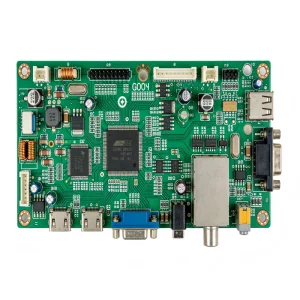
Prototype smart light bulb
Prototype Smart Light Bulb PCBA Assembly--STHL from China, Factories




