
Four Core Smart Home PCBA Platforms for New York Deployment
Start with the first four product families most often requested by New York multifamily developers, HVAC integrators, hospitality operators, and smart-building technology teams. Every original product image and product URL is preserved.
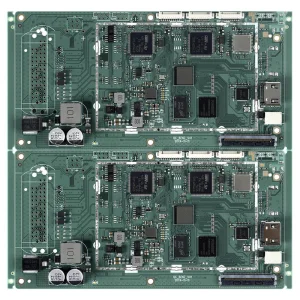
One-Stop Smart Home Printed Circuit Board Assembly (PCBA): The Core of Intelligent Living Company, Service
A consolidated PCBA route for New York smart-home hardware teams that need one accountable supplier from prototype to repeat production.
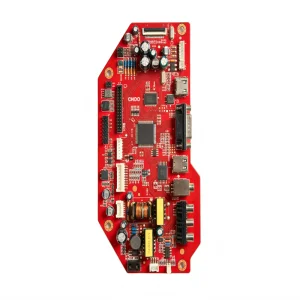
Reliable Smart Thermostat PCBA Assembly--STHL Solution Provider, in China
Designed for stable temperature sensing, relay control, low-power radios, and energy data reporting in pre-war and modern New York buildings.
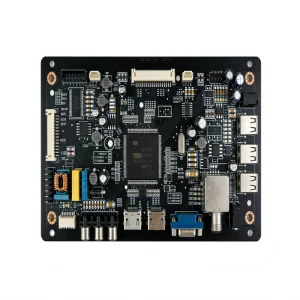
Turnkey Voice Assistant Device PCBA Assembly--STHL Service, Solutions
Supports microphone arrays, acoustic tuning, wireless connectivity, privacy controls, and New York hospitality or residential voice-control use cases.
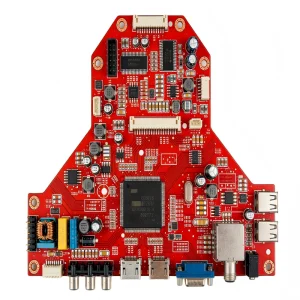
Top 10 Smart Home Hub PCBA Assembly--STHL Service, in China
A practical PCBA platform for Matter, Thread, Zigbee, Wi-Fi, and Bluetooth gateway products used in dense New York wireless environments.
Why New York Is a Distinct Smart Home PCBA Market
New York is not a single market. It combines Manhattan high-rises, Brooklyn and Queens multifamily blocks, Long Island single-family homes, Westchester offices, and the industrial and logistics corridors of Northern New Jersey. That density creates a demand for smart-home boards that perform in older buildings, dense wireless spectrum, cold winters, humid summers, and strict building-performance expectations.
New York building owners and technology providers are under pressure to measure energy use, reduce carbon, improve tenant comfort, and support remote operations. Programs such as New York City’s Local Law 97, NYSERDA incentives, Con Edison demand-response initiatives, and voluntary ESG reporting push smart thermostats, submeters, leak sensors, smart locks, lighting controls, and plug-load management into everyday building operations.
For hardware teams, this changes the PCBA requirement. A smart thermostat is no longer only a temperature controller; it is a sensor-fusion, wireless-communication, energy-reporting, and user-interface product. A smart outlet is not only a relay board; it is a metering, safety, and cybersecurity device. A smart hub must maintain reliable operation in apartments with concrete walls, steel framing, plaster, and congested 2.4 GHz traffic.
This is where a China-based smart home PCB assembly factory becomes strategically useful for New York customers — not simply because of unit cost, but because of engineering depth, component access, flexible order volume, and the ability to move from prototype to market launch without changing manufacturing partners.
- New York projects often require mixed volumes: pilot units for a building, mid-volume for a portfolio, and scalable production after approval.
- Building owners expect documented traceability, reliable field performance, and support for future firmware or wireless-standard changes.
- Electrical safety, FCC authorization, cybersecurity, and energy-reporting credibility matter before a device reaches a New York job site.
STHL Manufacturing Snapshot
Company capabilities from Shenzhen STHL Electronics Co., Ltd. since 2006.
7 SMT lines, 2 DIP/THT lines, 2 functional test lines, 2 box build lines, and an in-house R&D laboratory.
Staff including engineering and production teams
Component part numbers accessible through sourcing network
SMT, THT, test, and box build production lines
Regions served by STHL PCBA and EMS programs
New York Local Business, Building, and Industrial Context
New York’s smart-home opportunity sits at the intersection of real estate, energy, and technology. The buyers are not only consumers; they include property managers, HVAC contractors, electrical distributors, integrators, security companies, hospitality groups, and building-automation teams.
Multifamily co-ops and condos
Boards need thermostat setbacks, leak detection, submetering, and remote diagnostics without disrupting residents. PCBA priorities include robust relays, low standby power, tamper resistance, and reliable wireless links through dense corridors.
Brownstones and pre-war buildings
Plaster walls, steam heating, older wiring, and basement humidity make environmental sensing and power protection important. Conformal coating, surge protection, wide-temperature components, and sensor calibration can improve field reliability.
Commercial offices and smart buildings
Hudson Yards, Midtown, Downtown, and Brooklyn business districts create demand for lighting controls, occupancy sensing, energy dashboards, access control, and building-automation gateways. New York teams increasingly request documented traceability and cybersecurity-aware design.
Hospitality, retail, and mixed-use
Hotels, restaurants, and retail spaces need voice controls, smart displays, thermostats, smart plugs, and lighting automation that are easy to deploy across rooms. Product teams often require low-MOQ pilot builds before portfolio-wide rollouts.
Localized Smart Home PCBA Application Scenarios
New York-specific deployment scenarios that influence BOM choices, tests, and documentation.
Smart thermostat and HVAC control
Relay ratings, temperature accuracy, humidity sensing, and power stealing must be verified for steam, hot-water, and forced-air systems common across New York building stock.
Leak, freeze, and humidity monitoring
Basements, risers, and older plumbing make water and freeze detection valuable. Boards need low-power sensor interfaces, battery management, and reliable alerts through building Wi-Fi or gateways.
Smart hubs and displays
Apartment concierge systems, hotels, and property managers use wall displays and hubs for access, energy, and amenity control. Heat dissipation, touch interfaces, and antenna placement are critical.
Voice assistant and smart speakers
Microphone arrays, acoustic isolation, LED feedback, and privacy mute circuits must be consistent from prototype to production for hospitality and residential voice-control products.
Smart outlets, plugs, and wall switches
New York electrical safety expectations make creepage, isolation, relay life, surge tolerance, and metering accuracy important. UL/ETL-ready documentation should be planned early.
Lighting controls and light strips
Dimming compatibility, thermal management, constant-current control, and flicker performance are key for New York apartments, restaurants, hotels, and retail displays.
Technical Roadmap and Future Outlook for Smart Home PCBA
New York product teams should specify a PCBA platform that can survive the next wireless and regulatory cycle, not only the first purchase order. The roadmap below reflects the practical technology direction for smart-home hardware.
Matter and Thread convergence
Multi-protocol hubs and bridges are moving toward Matter over Thread and Wi-Fi. PCBA design should account for dual-radio coexistence, certified module options, and OTA firmware strategy.
Wi-Fi 6E/7, BLE, and Zigbee coexistence
Dense New York apartments create RF congestion. Antenna keep-out, shielding, pre-certified modules, and conducted and radiated testing reduce surprises during FCC and field deployment.
Energy metering and sensor fusion
Submetering, load disaggregation, occupancy sensing, and environmental sensing support New York carbon reporting and demand-response use cases. Accuracy and calibration data should be documented.
Edge AI and privacy-by-design
On-device processing for voice, presence, and anomaly detection reduces cloud dependency. PCBA planning should include secure elements, memory headroom, thermal margin, and microphone privacy circuits.
Cybersecurity and software supply chain
Secure boot, signed firmware, debug-lock procedures, unique device identity, and controlled programming are increasingly requested by New York enterprise buyers and property portfolios.
Thermal, power, and enclosure robustness
Steam heat, cold winters, humid summers, and older wiring argue for wide-temperature components, surge protection, conformal coating options, and enclosure-aware thermal design.
Stabilize the platform
DFM review, BOM resilience, FCC/UL-ready layout, Matter module selection, and functional test coverage.
Scale the deployment
Pilot builds for New York properties, fixture-based testing, OTA update compatibility, and traceability roll-up.
Add intelligence
Edge AI sensing, energy disaggregation, demand-response readiness, and cybersecurity documentation for enterprise buyers.
China Factory Supply-Chain Resilience and Efficiency Advantages
A China-based smart home PCB assembly factory can be a risk-management asset when sourcing, engineering, testing, and traceability are managed correctly. The goal is not merely lower pricing; it is a faster, more controlled route from design files to a shippable product for the New York market.
Shenzhen STHL Electronics Co., Ltd. operates as a certified EMS and ODM provider with 220+ staff, including 50+ engineers, and a 10,000+ m² facility. Its production base includes 7 SMT assembly lines, 2 DIP/THT lines, 2 functional test lines, 2 box build lines, and an in-house R&D laboratory for design verification and prototype testing.
For smart-home products, the supplier ecosystem matters as much as the assembly lines. STHL’s sourcing team works with 100+ agents and suppliers covering more than 500,000 part numbers, with incoming inspection and reel-level traceability. Full turnkey, partial turnkey, and consigned assembly are supported, so New York product teams can control critical components while outsourcing the rest.
Low-volume and prototype orders are accepted with no MOQ, which is important for New York pilot projects in co-ops, hotels, university buildings, and commercial portfolios. The same supplier can then support higher-volume production after a design is validated.
For New York delivery, goods can move by air freight through JFK or Newark, or by ocean freight through the Port of New York and New Jersey. Incoterms, customs classification, and tariff treatment should be validated with the importer’s broker before order release.
Production capacity
High-mix and volume assembly backed by dedicated SMT and THT lines.
Quality and delivery
Process controls designed for repeat production and export documentation.
Global Commercial and Industrial Status
Global smart-home manufacturing is balancing cost, resilience, and compliance. Many New York brands use a dual-source or China-plus-one strategy, but China remains an important base for NPI, component sourcing, and high-mix electronics manufacturing.
Dual sourcing is becoming standard
Brands qualify multiple regions for risk management, but they still need one engineering partner who can manage documentation, fixtures, test procedures, and design revisions across factories.
Component volatility demands engineering
Lead times and allocation shift quickly. BOM scrubbing, approved alternates, moisture-sensitive device control, and incoming inspection reduce line-down risk for smart-home builds.
Compliance is part of the product
FCC, UL/ETL, RoHS, REACH, ENERGY STAR, Matter/Thread, and cybersecurity expectations should be designed into the PCB, BOM, firmware, labels, and test records from the first prototype.
Localized Support and Compliance Assurance for New York Customers
New York customers need more than a quotation. They need a manufacturing partner who can communicate clearly across time zones, prepare documentation for U.S. certification, and understand the difference between a prototype and a deployable building product.
Electrical safety support
Design and documentation support for UL/ETL-related requirements, including creepage, isolation, relay ratings, fuse selection, and critical component traceability. Final listing is normally held by the brand owner unless otherwise agreed.
FCC and wireless readiness
Module selection, antenna keep-out, shielding, and pre-scan planning help reduce FCC Part 15 and wireless certification risk for Wi-Fi, Bluetooth, Thread, Zigbee, and Z-Wave products.
RoHS, REACH, and materials
RoHS-compliant assembly, material declarations, and conflict-mineral data can be requested for New York enterprise buyers, distributors, and property-management procurement teams.
Energy and building-performance data
For submetering and thermostat products, calibration records and stable measurement design support Local Law 97 reporting, NYSERDA programs, and Con Edison demand-response use cases.
Cybersecurity and IP protection
NDA before RFQ, restricted project access, controlled programming, and ERP/MES tracking protect design files and build data. Secure boot and debug-lock support can be included in the production specification.
New York logistics support
Consolidated shipments, export documents, FOB or DDP discussion, and delivery planning to New York area consignees, distributors, or contract warehouses via JFK, Newark, or the Port of New York and New Jersey.
Factory-to-New York Execution in Six Controlled Steps
Every smart-home PCBA project follows a controlled path from incoming files to export shipment. The same workflow supports prototypes for a New York pilot and repeat production for a portfolio rollout.
DFM and BOM review
Engineers check Gerber, BOM, and centroid data for manufacturability, footprint errors, and end-of-life parts before material is ordered.
Component sourcing
Parts are purchased through 100+ agents and suppliers, then pass incoming inspection and moisture-sensitive device control.
PCB fabrication
Bare boards are produced to the required stack-up, surface finish, and impedance requirements, from standard boards to HDI and rigid-flex.
SMT and THT assembly
7 SMT lines and 2 DIP/THT lines handle fine-pitch, BGA, and mixed-technology boards for prototypes and mass production.
Inspection and testing
AOI, X-ray, ICT, and functional tests, plus IC programming and conformal coating, with results logged in the MES.
Box build and delivery
Cable assembly, enclosure integration, and ESD-safe packaging, shipped to customers in 90+ countries and regions.
Why Global OEMs Choose STHL for Smart Home PCBA
Measurable capacity, documented quality systems, and engineering support that reduces total cost — not only the unit price.
Dust-free smart factory
10,000+ m² highly automated production space.
20 years of experience
Proven know-how across PCB and PCBA since 2006.
Global sourcing
500k+ parts via 100+ agents and suppliers.
Fully certified
IATF 16949, ISO 9001, ISO 14001, and ISO 13485.
ERP and MES tracking
Real-time production status and lot traceability.
Cost-down engineering
DFM and BOM optimization by the engineering team.
No MOQ
Prototype and large-quantity orders are both welcome.
NDA before RFQ
Your design data and IP are protected from day one.
Fast delivery
99.5% on-time delivery across global shipments.
Eight Additional Smart Home PCBA Assemblies Ready for New York Programs
The remaining product families below complete the smart-home PCBA portfolio. They are arranged in a full two-row grid for procurement teams comparing displays, speakers, outlets, plugs, dimmers, wall switches, light strips, and bulb prototypes.
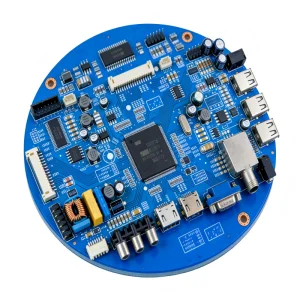
Professional Smart Display PCBA Assembly--STHL Supplier, in China
For wall-mounted control panels, hotel room interfaces, and building amenity displays.
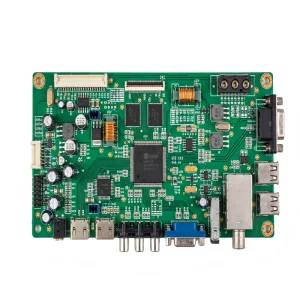
OEM Smart Speaker PCBA Assembly--STHL Factory, Solutions
Microphone, amplifier, wireless, and acoustic integration for voice-enabled devices.
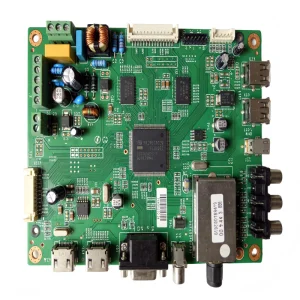
Professional Smart Outlet PCBA Assembly--STHL Manufacturer, Supplier
Relay, isolation, surge, and metering design for plug-load control and energy reporting.
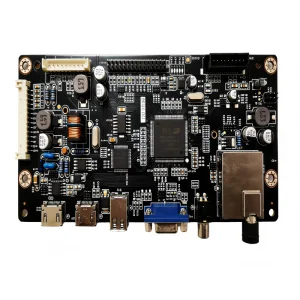
OEM Smart Plug PCBA Assembly--STHL Service, Factories
Compact power-supply layout, safety spacing, and wireless reliability for high-volume plug products.
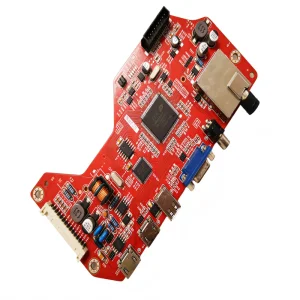
Top 10 Smart Dimmer Switch PCBA Assembly--STHL Service, Solutions
Dimming compatibility, thermal design, and flicker control for retrofit and new lighting installations.
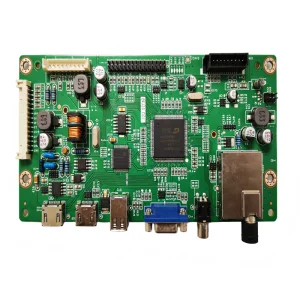
China Top Smart Wall Switch PCBA Assembly--STHL Company, Solutions
Touch, relay, and wireless switch platforms with attention to electrical spacing and enclosure fit.
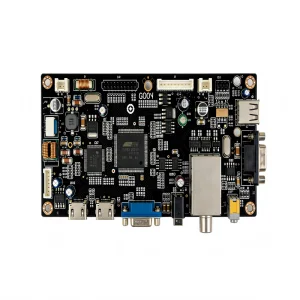
Top-Rated Smart Light Strip PCBA Assembly--STHL Company, Partner
Constant-current control, color tuning, thermal management, and flexible assembly options.
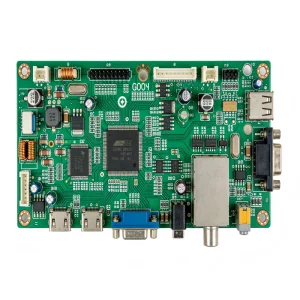
Prototype Smart Light Bulb PCBA Assembly--STHL from China, Factories
Low-MOQ prototype support for LED driver, wireless module, thermal, and enclosure integration.
Q&A for Smart Home PCB Assembly Buyers in New York
These answers address the questions New York hardware teams, procurement managers, and building-technology companies ask before selecting a China-based PCBA manufacturing partner.
What files do I need to submit for a PCBA project?
Send Gerber files, a BOM with manufacturer part numbers, the pick-and-place (centroid) file and assembly drawings. If you need IC programming or functional testing, include firmware and test procedures. Our engineers complete a DFM and BOM review before production starts.
Is there a minimum order quantity (MOQ)?
No. STHL accepts prototype, low-volume and high-volume PCB assembly orders, so you can validate a design and scale to mass production with the same supplier.
Can STHL source all the electronic components?
Yes. We offer full turnkey, partial turnkey and consigned assembly. Our sourcing team works with 100+ agents and suppliers covering more than 500,000 part numbers, with incoming inspection and traceability from reel to finished board.
Which quality certifications does STHL hold?
STHL is certified to IATF 16949, ISO 9001, ISO 14001 and ISO 13485, and produces RoHS-compliant assemblies. Boards are verified with AOI, X-ray, ICT and functional testing.
How do you protect our design files and IP?
We sign an NDA before RFQ, restrict project data to the assigned engineering team and track every build through our ERP and MES systems.
Can we audit or visit the factory?
Yes. Customers are welcome to visit our Shenzhen factory and R&D laboratory at any time, and a 360-degree virtual factory tour is available for remote evaluation.
How do you support New York customers across time zones?
Use a scheduled engineering call, documented DFM feedback, shared build status, and consolidated communication through one project contact. For New York, practical production windows and shipping milestones should be agreed before PO release so that certification, freight, and warehouse appointments align.
Can you support FCC, UL/ETL, Matter, and Thread requirements?
STHL can support design-for-certification, pre-certified module selection, antenna layout guidance, functional test development, and documentation for the certification process. Final certification is normally held by the brand owner or the appointed certification body.
How do you ship smart-home PCBAs to New York?
Shipments can move by air through JFK or Newark, or by ocean through the Port of New York and New Jersey. STHL can prepare export documentation and discuss FOB, DDP, or other Incoterms with the importer’s freight forwarder. Customs classification and tariff treatment should be confirmed by the importer’s broker.
How should we design for older New York buildings?
Plan for surge tolerance, relay life, wide-temperature operation, humidity protection, antenna placement through dense walls, and robust connectors. For basements and risers, conformal coating and enclosure sealing options can improve field reliability. Testing should reflect the actual installation environment rather than a laboratory-only condition.
Planning a Smart Home PCBA Build for New York?
Send Gerber files, BOM, centroid data, test requirements, and target volumes. STHL can review manufacturability, recommend component alternatives, and structure a prototype-to-production plan for your New York deployment.
