
Four Fast-Start LED PCB Assembly Products for Swiss Market Programs
Start with a prototype, validate thermal and optical performance, then scale to repeat production with the same factory, the same traceability model and the same engineering contact. Product images and original product URLs are preserved.
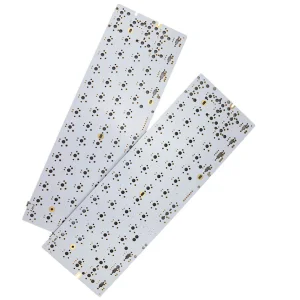
Prototype LED PCB Assembly for Swiss Lighting Innovation Teams
Fast-turn prototyping for high-efficacy luminaires, sensor modules and custom LED engines. DFM review, BOM scrubbing, first-article inspection and IPC-A-610 Class 2/3 options.
View Product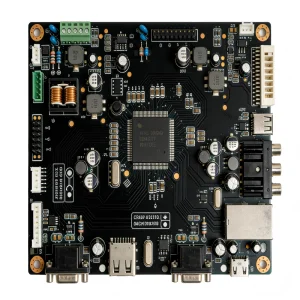
LED Strip & Tape Light PCB Assembly for Swiss Architectural Projects
Flexible and rigid strip solutions for coves, facades, retail and hospitality. Thermal-aware layout, reel-level traceability and DDP delivery options for Swiss importers.
View Product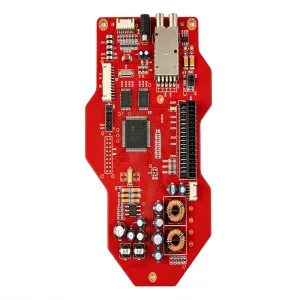
Prototype LED Panel Light PCB Assembly for Swiss Smart Buildings
Panel-light and troffer assemblies with DALI-2 / 0-10V control compatibility, low-flicker design and documentation support for CE-oriented building projects.
View Product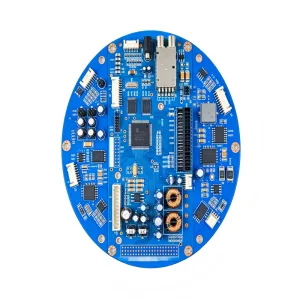
OEM LED Light Bar PCB Assembly for Swiss Industrial and Display OEMs
Custom light bars for machine vision, signage and appliances. Controlled BOM, ESD-safe assembly, functional testing and Swiss project documentation.
View ProductWhy Switzerland Is a High-Value Market for Reliable LED PCB Assembly
A Swiss LED project is rarely just a board purchase. It is a thermal, optical, compliance and supply-chain decision that affects building performance, maintenance cost and brand reputation.
Switzerland combines one of Europe’s most demanding quality cultures with an energy transition that is reshaping lighting. The Federal Energy Strategy 2050, cantonal building programmes, Minergie standards and corporate net-zero targets all push buildings toward efficient LED lighting, intelligent controls and measurable life-cycle performance. For Swiss OEMs, architects, installers and procurement teams, the LED PCB is no longer a passive component: it is the thermal, optical and data interface that determines service life, maintenance cost and brand credibility.
Swiss industry adds another layer of complexity. Precision-engineering clusters, medtech and pharma, watchmaking, railway and machine vision all use LED lighting and display electronics in demanding environments. These buyers rarely purchase on unit price alone. They ask for a qualified process, traceable materials, controlled change notification, multi-year availability and documentation that supports CE marking, Swiss import clearance and internal quality audits. A low quote with undocumented parts creates more total cost than it removes.
Shenzhen STHL Electronics Co., Ltd. has served global OEMs since 2006. Our 220+ team, including 50+ engineers, runs a 10,000 m² facility with 7 SMT lines, 2 DIP/THT lines, 2 functional test lines and 2 box-build lines. Every build is RoHS-compliant and controlled under IATF 16949, ISO 9001, ISO 14001 and ISO 13485 systems. We work with no MOQ, sign an NDA before RFQ and have maintained 99.5% on-time delivery with a 99% qualified shipment rate. For Switzerland, we combine this manufacturing platform with documentation, Incoterms and communication discipline that fit Swiss procurement expectations.
Illustrative Swiss LED PCBA decision scorecard
For complex Swiss projects, a practical scorecard often weights these factors. Safety-, medical- and infrastructure-related programmes may weight compliance and traceability even higher.
Switzerland’s LED Electronics Landscape: Precision, Energy Policy and Smart Buildings
Swiss demand is concentrated in applications where failure is expensive and documentation matters: architectural lighting, public infrastructure, healthcare, railway, automation and premium consumer products.
The Swiss lighting market is shaped by strong architecture, high building standards and a long replacement cycle. LED retrofits in offices, hospitals, schools, railway stations, retail and hospitality must often work within existing fixtures, emergency-lighting rules and building-management protocols. That makes panel light, linear strip, ceiling, downlight, floodlight and signage PCBs strategic rather than generic. Failure of a driver or thermal path is not just a warranty event; it can disrupt a building, a production line or a public space.
Swiss OEMs often keep design, optics, firmware and brand in Switzerland while sourcing PCB fabrication, assembly, component procurement and box build internationally. The winning supplier is not the one with the largest catalogue; it is the one that can read a Swiss BOM, propose an alternate part without changing optical output, protect the design with an NDA, produce a clean first article and repeat it with controlled traceability. Language and time-zone alignment matter, but so does engineering depth.
The Swiss regulatory and trade context is distinct from the EU. Switzerland is outside the EU customs union but closely integrated through the Mutual Recognition Agreement. CE marking is generally accepted for many products placed on the Swiss market, while Swiss chemicals legislation, import VAT, customs declarations and product-specific rules still apply. For LED assemblies, plan RoHS/REACH and material declarations, safety and EMC evidence, packaging and labelling, and a logistics route through Zurich, Basel or Geneva from the first RFQ.
What Swiss buyers tend to value
- Documented thermal design: MCPCB, copper thickness, dielectric, via structures and warpage control.
- Long-life BOM: avoid end-of-life LEDs, drivers and connectors through lifecycle checks.
- Traceability: reel-to-board lot records, MES/ERP status and controlled change notification.
- Compliance file: ISO certificates, RoHS/REACH, IPC class, test reports and material data.
- Delivery certainty: DDP/CIF/FOB options, Swiss import documentation and 99.5% OTD.
- Engineering responsiveness: DFM, DFT, 8D, RMA and alternate-part proposals.
For Swiss projects, the cheapest unit price is rarely the lowest total cost.
LED PCB Technology Roadmap for Switzerland: 2025–2030
LED PCB assembly is moving from a simple carrier to a thermal-optical-data subsystem. For Swiss OEMs planning the next product generation, this roadmap connects market expectations to manufacturable board features.
Thermal reliability and high-efficacy luminaires
Aluminum MCPCB, copper-core and ceramic options; high-thermal-conductivity dielectric; controlled dielectric thickness; 1–4 oz copper; low-warpage panel design.
Fine-pitch SMT, COB, CSP, QFN and BGA; AOI, X-ray and functional test. DALI-2, 0-10V, PWM and sensor-ready modules with low-flicker design and photobiological safety evidence where applicable.
Integration, connectivity and small-batch customization
HDI, rigid-flex and mixed-material boards; thermal vias; selective conformal coating. Sensors, wireless modules, Matter/Thread/BLE/Zigbee options; NFC programming and secure provisioning.
Swiss smart-building and medtech users will ask for documented change control, nFADP-aware data handling and clear cybersecurity boundaries between the luminaire and the building network.
Human-centric, circular and data-enabled photonics
Full-spectrum and circadian lighting; modular LED engines; repairability and digital product passports. Mini/Micro LED for displays and signage; advanced thermal materials and low-loss optical coupling.
Circularity will influence substrate choice, material mix, design for disassembly and take-back planning. Supply-chain resilience will depend on dual-approved LED sources, lifecycle monitoring and buffer inventory for critical Swiss projects.
Technical specifications to put in the LED PCB RFQ
- Stack-up, Tg, CTI, thermal conductivity, copper weight, surface finish (ENIG, OSP, immersion tin) and impedance control if needed.
- LED binning, CCT, CRI, flux and forward-voltage tolerance; LM-79/LM-80 data where applicable.
- Solder mask, silkscreen, conformal coating, test points, IC programming and serialization.
- IPC-A-610 Class 2/3, J-STD-001, UL 94V-0 material options, IEC 62321, EN 55015 and EN 61547 where applicable.
- Packaging, labelling, serialization, MSL control, shelf life and ESD-safe shipment.
What this means for Swiss OEMs
A future-ready LED PCB supplier must be able to support more than a single build. Swiss teams should look for a partner that can:
- Move from prototype to pilot to volume without changing the manufacturing site.
- Control BOM changes, alternates and end-of-life risk with documented approval.
- Provide test data, traceability and a clear RMA/8D path.
- Support Swiss import, documentation and delivery terms without adding hidden coordination cost.
LED PCB Assembly Across Swiss Commercial and Industrial Applications
From architectural lighting to medical and railway electronics, the right PCB assembly strategy depends on failure cost, regulatory path and thermal environment. These modules map common Swiss use cases to manufacturable PCBA controls.
Architectural & Commercial Lighting
Panel, linear, track and ceiling luminaires for offices, retail, hospitality and public buildings. Focus: thermal path, optical consistency, low flicker and DALI-2 compatibility.
Explore LED PCB assembly solutionsIndustrial & Machine Vision Lighting
High-brightness LED modules for inspection, curing and machine lighting. Focus: thermal derating, precise binning, rugged connectors and functional test.
Industrial control PCBAOutdoor, Floodlight & Infrastructure
Floodlights, street and area lighting for Swiss climate conditions. Focus: surge protection, thermal cycling, IP-rated enclosure integration and long-life BOM.
View LED floodlight PCBASignage, Display & Backlight
Retail, transit and public-information displays. Focus: brightness uniformity, colour consistency, BLU assembly and high-reliability display boards.
View LED display board PCBAMedical, Automotive & Railway
Controlled electronics for regulated supply chains. Focus: ISO 13485, IATF 16949, traceability, PPAP/FAI and change control.
Medical PCBA solutionsSmart Home & Building Automation
Sensor-rich lighting, controls and IoT modules. Focus: wireless integration, cybersecurity-aware design, low-power layout and nFADP-conscious data flows.
Smart home PCBA solutionsLocalized Support and Compliance Assurance for the Swiss Market
Swiss buyers need a supplier who can communicate clearly, document the build and support import and compliance workflows without adding layers of coordination.
Localized support from RFQ to repeat order
- Dedicated English-speaking project engineer; documentation and label packages can be prepared for German-, French- and Italian-speaking end markets.
- CET/CEST communication windows, scheduled calls for Swiss engineering teams and fast DFM/BOM feedback before quotation lock.
- Incoterms 2020: EXW, FOB, CIF and DDP; consolidation, ESD-safe packaging and customs documentation support for Swiss import.
- NDA before RFQ, IP segregation, project access control and a 360° virtual factory tour for remote qualification.
- RMA/8D, failure analysis, lifecycle monitoring and alternate-part support after serial production begins.
Compliance and traceability built into the build
- ISO 9001, IATF 16949, ISO 13485 and ISO 14001 systems; RoHS-compliant assemblies with material declarations on request.
- CE support, RoHS/REACH documentation, conflict-minerals data, IPC-A-610 Class 2/3 and J-STD-001 process alignment.
- AOI, X-ray, ICT, FCT, IC programming, conformal coating and box build under MES/ERP traceability.
- For medical projects, process controls can align with ISO 13485 and Swissmedic-facing documentation requirements; for automotive, PPAP/FAI and IMDS support can be discussed during RFQ.
- Change notification, last-time-buy and lifecycle management reduce Swiss supply-chain risk.




Supply-Chain Resilience and Efficiency Advantages for Swiss Buyers
A modern Chinese EMS factory is not only a production floor. It is a digital, engineering-led supply network that can reduce hand-offs, shorten communication chains and make Swiss programmes more predictable.
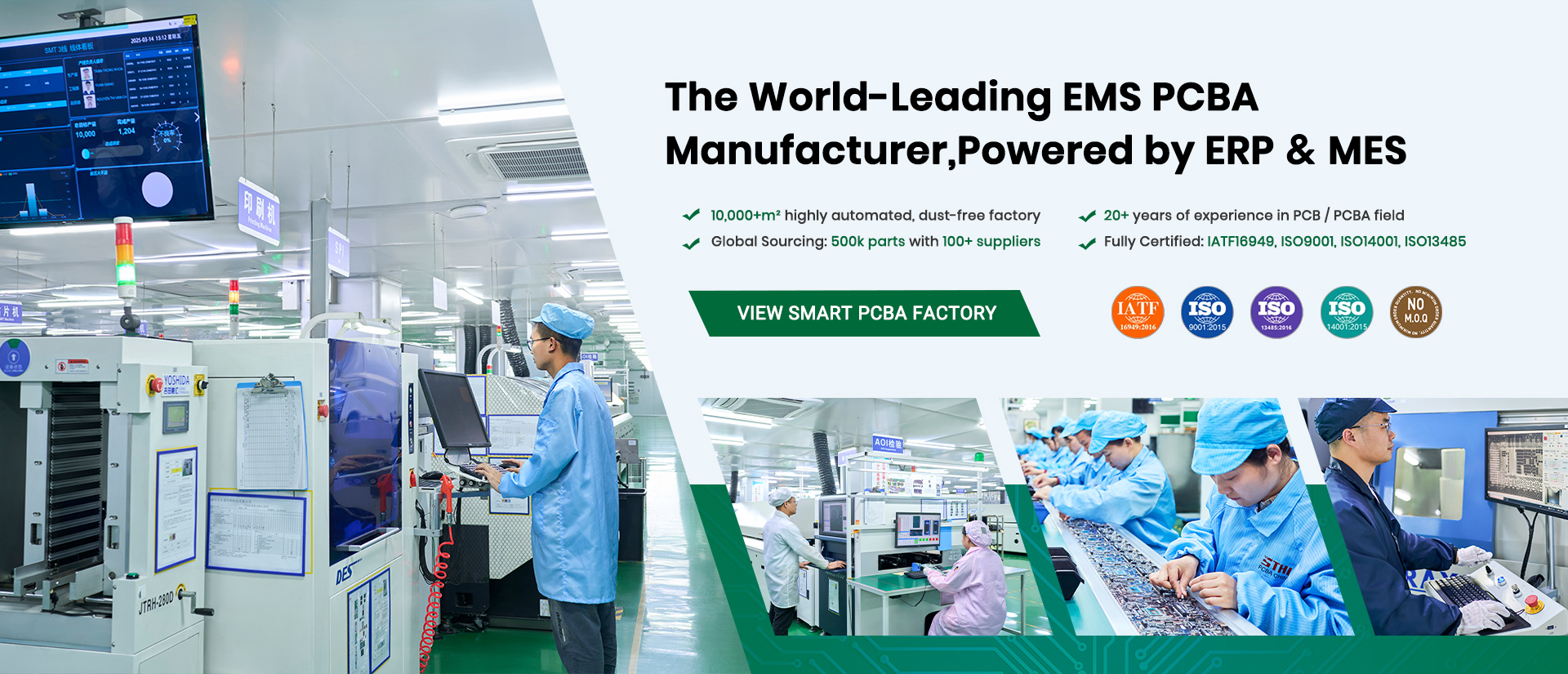
Manufacturing in China is no longer only a labour-cost decision. For Swiss buyers, the relevant question is whether the factory has the digital systems, engineering depth and supplier network to make an LED PCB programme repeatable. STHL’s 10,000 m² Shenzhen facility combines 7 SMT lines, 2 THT lines, 2 functional test lines and 2 box-build lines with an in-house R&D laboratory and MES/ERP tracking. The same site can support a prototype panel-light build, a custom light bar, a signage controller and a volume display board without handing your project across multiple unconnected suppliers.
Supply-chain resilience is engineered before production. Our sourcing team works with 100+ agents and suppliers covering more than 500,000 part numbers. Engineers scrub the BOM, flag end-of-life or allocation risk, propose drop-in alternates, check moisture sensitivity and plan long-lead LED procurement. For Swiss projects, we can discuss dual-approved sources, buffer stock, last-time-buy and consigned components. No MOQ lets Swiss teams validate a design first and scale later without changing the manufacturing partner.
Efficiency comes from one controlled workflow: DFM/BOM review, component sourcing, PCB fabrication, SMT and THT assembly, AOI/X-ray/ICT/FCT, IC programming, conformal coating, cable assembly, box build and ESD-safe shipment. Real-time production status and lot traceability reduce the hidden management cost that Swiss procurement teams often absorb when they coordinate several vendors. The outcome is a shorter communication chain, fewer hand-offs and a documented production history for every board.
DFM & BOM Review
Gerber, BOM and centroid data checked for manufacturability, footprint errors and end-of-life risk before material is ordered.
Component Sourcing
Parts purchased through 100+ agents and suppliers, then inspected and controlled for moisture sensitivity and authenticity.
PCB Fabrication
Bare boards produced to your stack-up, surface finish, thermal and impedance requirements, from single-layer to HDI and rigid-flex.
SMT & THT Assembly
7 SMT lines and 2 DIP/THT lines handle fine-pitch, BGA, COB and mixed-technology boards for prototypes and volume.
Inspection & Testing
AOI, X-ray, ICT and functional tests, plus IC programming and conformal coating, with results logged in MES.
Box Build & Delivery
Cable assembly, enclosure integration and ESD-safe packaging, shipped to customers in 90+ countries and regions.
How Swiss Buyers Should Structure an LED PCBA RFQ
A clear RFQ package shortens engineering review, reduces quotation revisions and gives procurement a comparable basis for total landed cost.
RFQ package that prevents delays
- Gerber files, BOM with manufacturer part numbers, pick-and-place/centroid data and assembly drawings.
- Stack-up, LED binning, thermal requirements, surface finish, test procedure and firmware if programming is required.
- Target certifications, IPC class, label/packaging requirements, forecast and Incoterms.
- Swiss import requirements, consignee details and any forwarder or customs broker preferences.
Supplier questions that reveal real capability
- Which certifications apply, and how are they maintained? Can you provide current certificates and audit access?
- How is traceability managed from incoming reel to finished board? What is the change-notification process?
- How are alternates approved? What tests are standard, and what is the RMA/8D path?
- Can you support DDP, Swiss import documentation and a virtual or on-site factory audit?
Experience from Global OEMs Who Demand Reliability
Long-term relationships are built on engineering response, repeatable quality and clear communication — not on a single low quotation.

“Please extend my thanks to your team for your hard work in preparing these samples. This positive experience has strengthened my confidence in your company, and I'm looking forward to discussing bulk orders in the near future.”Olivia Hardware Engineer · Germany

“We are satisfied with the last order. You did a great job on those boards and the lead time was short. I will place a new order soon.”William CEO · Italy
LED PCB Assembly Sourcing for Switzerland: Frequently Asked Questions
Direct answers for Swiss procurement, engineering and quality teams evaluating a China-based LED PCB assembly factory.
QWhat is the best LED PCB assembly approach for a Swiss lighting product?
Start from thermal and optical requirements, not from laminate price. For high-power LEDs, choose aluminum MCPCB or copper-core/ceramic solutions with verified thermal conductivity, copper weight, dielectric and via design. For control, sensor or display sections, use FR4/HDI or rigid-flex. Specify IPC class, LED binning, test method and compliance file. STHL reviews Gerber, BOM and centroid data before quoting.
QCan STHL support Swiss compliance and import documentation?
Yes. We manufacture RoHS-compliant assemblies under ISO 9001, IATF 16949, ISO 14001 and ISO 13485. We can provide ISO certificates, RoHS/REACH declarations, material data, test reports and IPC inspection records as agreed. For Swiss import, we support commercial invoice, packing list, HS code discussion, origin and Incoterms; DDP can be quoted. Final CE and product-specific compliance remains the brand owner’s responsibility, but we align documentation with your technical file.
QHow do you control thermal performance on high-power LED PCBs?
Through stack-up, copper distribution, thermal vias, surface finish, solder void control, LED pad design and validated assembly. We use AOI/X-ray and functional tests as agreed. For Swiss luminaires where maintenance access is expensive, we recommend lifecycle planning, derating review and lot traceability.
QIs there a minimum order quantity?
No. STHL accepts prototype, low-volume and high-volume LED PCB assembly. This lets Swiss teams validate a design, run a pilot installation and scale to volume with the same factory.
QCan you source LEDs and electronic components?
Yes. We offer full turnkey, partial turnkey and consigned assembly. Our sourcing network covers 100+ agents and 500,000+ part numbers. We review lifecycle, authenticity, lead time and alternates, and inspect incoming material.
QHow do you protect our IP and design files?
NDA before RFQ, restricted project access, ERP/MES project tracking and controlled data sharing. We can work with your security requirements and provide a virtual or on-site audit.
QWhich tests are standard?
SPI/AOI, X-ray for BGA/QFN/void inspection, ICT, functional test, IC programming and visual inspection. Conformal coating, thermal cycling, burn-in or application-specific tests can be quoted.
QCan Swiss customers audit the factory?
Yes. Swiss customers are welcome to visit Shenzhen and audit the SMT, THT, testing, warehouse and box-build areas. A 360° virtual factory tour is available for remote pre-qualification.
QWhat lead time should we expect?
Lead time depends on LED and component availability, PCB complexity, test coverage and quantity. Prototypes can often move quickly after DFM approval; volume projects require material planning. STHL reports 99.5% on-time delivery across global shipments and provides production status through ERP/MES.
QDo you support DDP delivery to Switzerland?
We can quote EXW, FOB, CIF and DDP. DDP simplifies Swiss customs and delivery for some buyers, but the correct Incoterm depends on your VAT registration, customs broker and risk model. We provide the documents needed for clearance and coordinate with your forwarder.
QCan you support German, French or Italian documentation?
We coordinate English project communication and can prepare label, packaging and documentation packages for German-, French- and Italian-speaking end markets with your approved translations.
QCan STHL support box build and cable assembly?
Yes. We provide cable assembly, wire harness, enclosure integration and complete box build, which reduces the number of suppliers Swiss teams must manage. ESD-safe packaging and shipment documentation are included as agreed.
Eight More LED PCB Assembly Products for Swiss Market Programs
These product families support linear lighting, flexible retrofits, signage, displays, backlight units, ceiling panels and outdoor floodlights. Original product URLs and images are preserved.
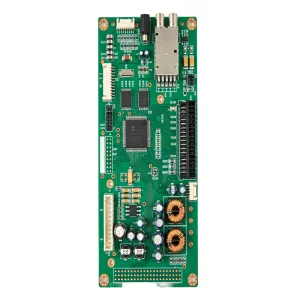
One-Stop LED Rigid Strip Light PCB Assembly for Swiss Linear Lighting
Rigid strip modules for linear luminaires, shelves and architectural details. Controlled LED spacing, thermal layout and repeatable SMT assembly.
View ProductOEM LED Flexible Strip Light PCB Assembly for Swiss Retrofit and Cove Lighting
Flexible strip PCBA for cove, cabinet and retrofit projects. Options for cut-to-length layouts, connector integration and reel-level traceability.
View Product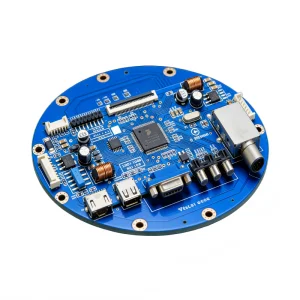
High-Quality LED Module Board PCB Assembly for Swiss OEMs
Custom LED module boards for lighting engines, sensors and embedded light functions. DFM review, alternate-part engineering and functional test.
View Product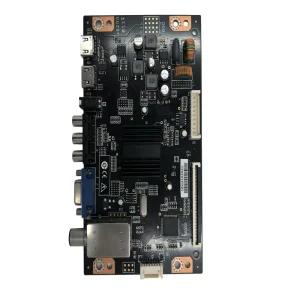
Turnkey LED Signage Board PCB Assembly for Swiss Retail and Transit Signage
Signage and backlit graphics PCBA for retail, transport and public information. Focus on brightness uniformity, reliability and clean cable integration.
View Product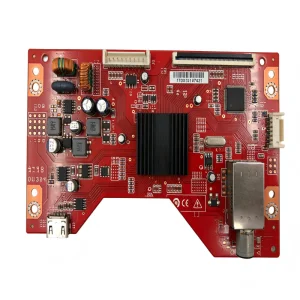
High-Reliability LED Display Board PCB Assembly for Swiss Public Information Systems
Display boards for public information, transport and industrial HMI. High-reliability assembly with AOI, X-ray and functional test options.
View Product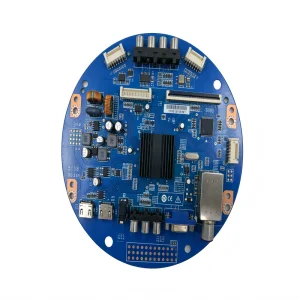
Prototype LED Backlight Unit (BLU) PCB Assembly for Swiss Display and HMI Makers
Backlight PCBA for displays, HMI and instrument clusters. Prototype support, LED binning control and options for fine-pitch assembly.
View Product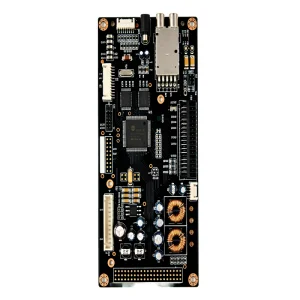
LED Ceiling Panel Light PCB Assembly for Swiss Office and Retail Projects
Ceiling panel PCBA for offices, retail and public interiors. Thermal-aware layout, low-flicker options and driver compatibility support.
View Product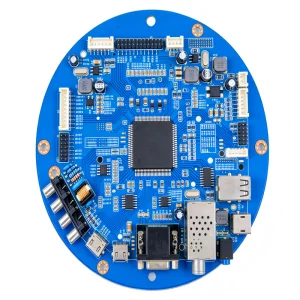
Top-Rated LED Floodlight PCB Assembly for Swiss Outdoor and Industrial Lighting
Floodlight and area-lighting PCBA for outdoor, industrial and infrastructure use. Focus on thermal cycling, surge protection and long-life BOM.
View ProductReady to qualify a reliable LED PCB assembly factory for Switzerland?
Send Gerber, BOM, pick-and-place data and target compliance requirements. Our engineering team will complete a DFM/BOM review, propose the right LED PCB stack-up and return a transparent quote with lead time and Incoterms options.
