
Korea-Ready Prototype Aerospace PCB Assemblies
These four platforms are the starting point for most Korean aerospace NPI inquiries. Each product URL is preserved from the original STHL aerospace portfolio, with a Korea-specific application note added for engineering and procurement teams.
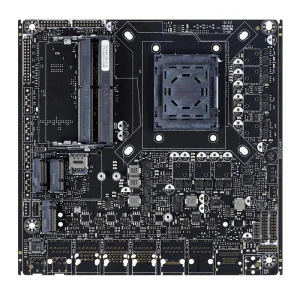
China Aerospace PCB Assembly: Engineering Reliability for Extreme Environments Company, Solution Provider — Korea Edition
Qualification-ready build support for extreme-temperature, vibration and long-life avionics, suitable for Korean commercial space, UAV and test-equipment prototypes where material traceability and IPC Class 3-oriented workmanship are requested.
View Product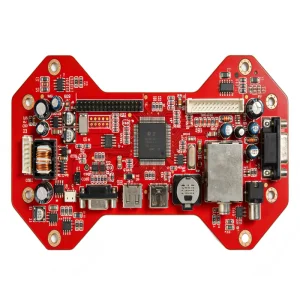
High Quality Autopilot Module PCBA Assembly--STHL Company, in China — Korea UAV & AAM Edition
Autopilot PCBA support for Korean UAV, drone and advanced air mobility control platforms. DFM review, secure BOM sourcing, X-ray, ICT/FCT and conformal coating can be aligned to prototype-to-low-volume schedules.
View Product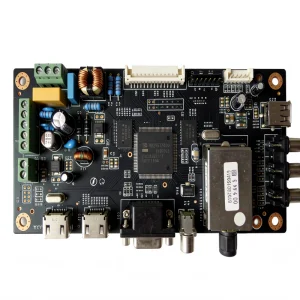
China Flight Control Computer (FCC) PCBA Assembly--STHL Factory, Company — Korea Avionics Edition
Flight control computer PCBA support for Korean avionics integrators and research programs, including high-layer-count boards, BGA and fine-pitch assembly, thermal validation and NDA-controlled data handling.
View Product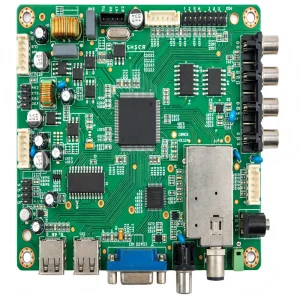
OEM Fly-by-Wire (FBW) Control Unit PCBA Assembly--STHL Partner, Manufacturers — Korea Next-Gen Aircraft Edition
Fly-by-wire control unit PCBA prototype service for Korean advanced aircraft, eVTOL and simulator programs. Engineering review and test coverage can be aligned with customer flow-downs and approved supplier requirements.
View ProductNeed a Korea-specific aerospace PCBA quotation? Send Gerber, BOM, centroid data and your export-control classification. Our engineers will complete a DFM and BOM review before RFQ.
Send Inquiry NowWhy Korea Is Becoming a High-Value Aerospace PCBA Market
Korea’s aerospace and advanced air mobility ecosystem is moving from a relatively concentrated defense and research base toward a more commercially connected supply chain. The launch of the Korea AeroSpace Administration (KASA) in 2024 has reinforced national attention on space, launch vehicles, satellites and the Sacheon aerospace cluster. In parallel, Korea Aerospace Industries (KAI), Hanwha Aerospace, Korean Air Aerospace Division, LIG Nex1, Satrec Initiative and a growing tier of UAV, eVTOL and space start-ups are creating procurement demand across Sacheon, Changwon, Busan, Daejeon, Seoul and Incheon.
For Korean buyers, this change does not simply create more board-level demand. It changes the supplier qualification burden. Engineering teams need faster prototype turns; quality teams need material provenance and serialized traceability; procurement teams need dual sourcing and obsolescence plans; legal teams need export-control screening, NDA discipline and data segmentation. A conventional low-cost PCB assembly quotation is no longer enough for aerospace-adjacent programs.
The strongest China-for-Korea use case is therefore not a generic “cheap PCBA” route. It is a prototype-to-production corridor for non-ITAR/EAR-controlled commercial aerospace, UAV, space ground support, test equipment, industrial avionics and advanced air mobility subassemblies. Korean OEMs can validate designs faster with an offshore engineering partner while keeping flight-critical or export-restricted work inside an approved domestic or allied supply chain.
What Korean Aerospace Buyers Are Really Qualifying
- Documented DFM feedback before material commitment, not after the first article fails.
- Traceability from incoming reel to serialized finished board, with CoC and lot records.
- Clear boundaries between non-controlled prototypes and ITAR/EAR-controlled production.
- English-language engineering communication with Korea-specific shipping and customs preparation.
- No-MOQ prototype starts and a credible scale path to low-volume or volume assembly.
Global OEM Purchasing Behavior and the Korea Opportunity
Aerospace and advanced mobility procurement teams are not only comparing unit prices. They are comparing supply resilience, engineering velocity, quality evidence and the cost of a failed first article.
Dual-Source by Design
Korean aerospace primes and Tier 1 suppliers increasingly expect a qualified domestic path for sensitive flight hardware and an agile offshore path for prototypes, test rigs and non-controlled commercial electronics. The decision is not “China or Korea”; it is which work package can be safely and economically placed where.
NPI Velocity
Global procurement teams reward suppliers that shorten the loop between Gerber release, DFM feedback, component substitution and functional test. For Korean UAV, eVTOL and research programs, a two-week prototype delay can move a flight-test window and affect downstream certification planning.
Evidence Over Claims
Experienced buyers ask for process evidence: AOI and X-ray records, ICT/FCT logs, MSD control, ESD handling, first-article inspection support, corrective-action history and lot-level traceability. E-E-A-T in aerospace sourcing is demonstrated by documents, not brochure language.
Eight PCBA Solution Modules for Korea Aerospace Programs
STHL combines component sourcing, PCB fabrication, SMT/THT assembly, testing and box build in one controlled workflow. The module below maps typical Korean requirements to practical manufacturing responses.
Rapid Prototype & NPI
No-MOQ prototype starts, DFM/BOM review, engineering feedback and PCBA testing for Korean design teams that need flight-test or bench-validation hardware quickly.
High-Mix Low-Volume
Avionics, satellite ground equipment and test systems often require many board variants at modest volume. STHL’s 7 SMT lines and 2 DIP/THT lines support mixed-technology builds with controlled changeovers.
Avionics & Flight Control
BGA, fine-pitch, high-layer-count and mixed-technology PCBA for FCC, autopilot and FBW-related prototypes, with AOI, X-ray, ICT and functional test options.
Satellite & RF Payloads
Magnetometer, RF, sensor and payload-adjacent boards for Korean space research and ground-segment applications, with controlled material documentation and traceability.
Power & Thermal Management
Heavy-copper, ceramic, high-Tg, metal-core and thermally demanding assemblies for UAV power systems, avionics power supplies and eVTOL demonstrators.
Test Equipment & GSE
Ground support equipment, ATE boards and laboratory fixtures benefit from fast turnarounds, component sourcing and box-build support without the qualification burden of flight hardware.
Cable, Harness & Box Build
Cable assembly, enclosure integration, conformal coating, IC programming and final packaging can be combined with PCBA to reduce supplier handoffs for Korean programs.
Obsolescence & Continuity
BOM scrubbing, alternate-part proposals, approved-vendor review and last-time-buy planning help Korean buyers keep long-life aerospace platforms supportable.
From 2025 to 2032: Technology Roadmap for China–Korea Aerospace PCBA Collaboration
The next wave of Korean aerospace demand will be shaped by eVTOL commercialization, satellite constellations, advanced avionics architectures and stricter digital traceability. The manufacturing response must evolve with it.
| Horizon | Korea Demand Signal | PCBA Manufacturing Response |
|---|---|---|
| 2025–2027: Prototype acceleration | Korean UAV, eVTOL, space research and test-equipment teams need faster NPI cycles and flexible low-volume builds while domestic production capacity is reserved for higher-criticality work. | No-MOQ prototype assembly, rapid DFM/BOM review, high-mix SMT/THT, component sourcing, AOI/X-ray/ICT/FCT and Korea-bound DAP/DDP logistics. |
| 2027–2030: Advanced packaging and power | SiC/GaN power electronics, denser avionics, satellite payload miniaturization and UAM certification activity increase thermal and reliability requirements. | Heavy-copper and metal-core boards, high-Tg and ceramic substrates, conformal coating, thermal validation support and tighter process capability studies. |
| 2030–2032: Digital thread and distributed quality | Korean OEMs expect serialized traceability, supplier dashboards and faster corrective-action loops across global supply chains. | ERP/MES lot tracking, serialized test records, machine-readable inspection data, PPAP-style documentation and secure engineering data exchange. |
| Continuous | Export-control screening and supplier segmentation become more important as Korea expands defense and dual-use aerospace exports. | Project-level classification review, NDA-first RFQ, data access restriction, approved sub-supplier control and clear hand-off to Korea-based or allied AS9100/NADCAP sources when required. |
In practical terms, Korean buyers should treat China-based PCBA as a development and non-controlled production accelerator, not as a replacement for every aerospace qualification route. The winning model combines speed, documented quality and honest compliance boundaries. For flight-critical or export-restricted work, the program should remain with an approved domestic or allied supplier and use STHL only where the work package is technically and legally appropriate.
Korea-Specific Localization, Documentation and Export-Control Discipline
Localization is more than shipping to Incheon or Busan. It means giving Korean engineering, quality and procurement teams the documents and decision support they need before, during and after the build.
NDA and IP Segmentation
NDA before RFQ, restricted project data access and controlled engineering communication help protect Korean customer IP throughout prototype and low-volume production.
Export-Control Screening
STHL requests customer-provided export classification for aerospace projects. ITAR/EAR-restricted or defense-sensitive work should be placed only with an approved domestic or allied supply chain; STHL supports non-controlled commercial aerospace, UAV, test and space ground applications.
Material and Environmental Documents
RoHS and material declarations can be prepared for Korea RoHS and K-REACH review. KC certification is product-level and normally customer-owned; PCBA evidence can be packaged to support the customer’s compliance file.
Traceability and Quality Evidence
Reel-to-board traceability, lot control, CoC, AOI/X-ray records, ICT/FCT logs, 8D corrective actions and first-article documentation can be structured around Korean customer templates.
Korea-Bound Logistics
ESD-safe packaging, commercial invoice, packing list, country-of-origin data and DAP/DDP planning can be prepared for Incheon, Busan, Sacheon and Daejeon deliveries through air freight or express courier.
Engineering Communication
English technical documentation is standard. Korea-specific labels, approval forms and customer work instructions can be integrated into the project folder, with meeting windows planned around Seoul time.
Manufacturing Backbone for Korea-Bound Aerospace Prototypes
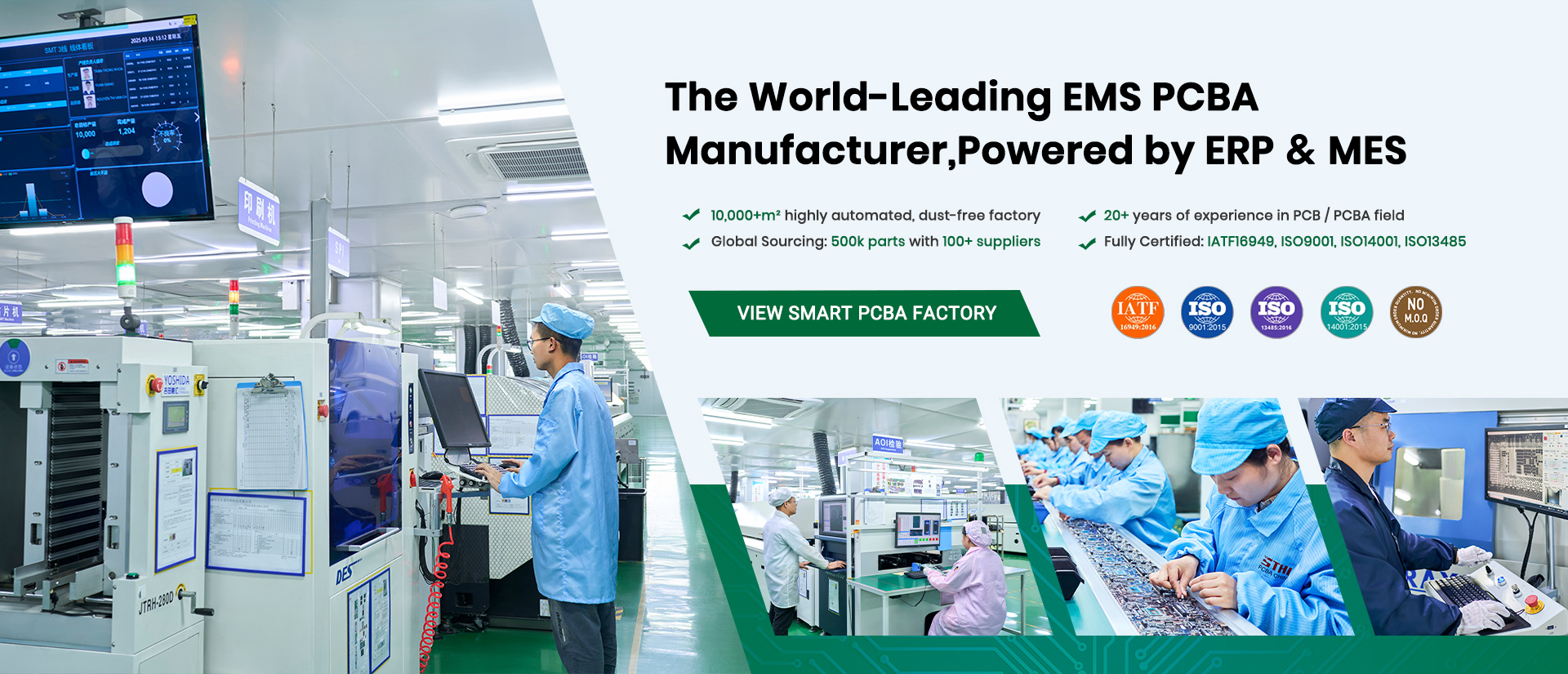
Shenzhen STHL Electronics Co., Ltd. has been an EMS and ODM partner since 2006. For Korean aerospace-adjacent programs, the value is a single controlled workflow from component sourcing through SMT/THT assembly, testing, conformal coating and box build.
STHL operates a 10,000 m² production facility with 220+ staff, including 50+ engineers, 7 SMT assembly lines, 2 DIP/THT lines, 2 functional test lines and 2 box-build lines. The in-house R&D laboratory supports design verification and prototype testing. Quality is controlled under IATF 16949, ISO 9001, ISO 14001 and ISO 13485 systems, and assemblies are produced to RoHS requirements.
For Korean buyers, this means a practical combination: no-MOQ prototype assembly, component sourcing through 100+ agents and suppliers covering more than 500,000 part numbers, DFM and BOM review before production, AOI, X-ray, ICT and functional testing, plus ERP/MES tracking from engineering through shipment. Every build can be supported with NDA-first data handling and documented material traceability.
The company supports full turnkey, partial turnkey and consigned assembly. Prototype, low-volume and volume orders can run through the same supplier, which reduces the risk of losing process knowledge when a Korean program moves from engineering validation to pilot build. Factory audits and remote virtual tours are available for procurement and quality teams.
Quality Systems and Documentation
IATF 16949, ISO 9001, ISO 14001 and ISO 13485 systems; RoHS-compliant assembly; AOI, X-ray, ICT and FCT verification; ERP/MES tracking; NDA before RFQ. For aerospace flow-downs, the project scope is reviewed before quotation.
Explore Global ServiceFrom Gerber Files to Korea Delivery in Six Controlled Steps
Each stage is designed to expose risk early, before material is committed and before a Korean engineering team loses schedule time.
DFM & BOM Review
Engineers check Gerber, BOM, centroid data, footprint risks, end-of-life parts and assembly constraints before material is ordered.
Component Sourcing
Parts are sourced through a broad supplier network, then screened through incoming inspection, MSD control and lot traceability.
PCB Fabrication
Bare boards are produced to the required stack-up, surface finish, impedance and material specification, from standard to HDI and rigid-flex.
SMT & THT Assembly
Seven SMT lines and two DIP/THT lines support fine-pitch, BGA and mixed-technology boards for prototype and production phases.
Inspection & Testing
AOI, X-ray, ICT and functional testing, plus IC programming and conformal coating, with results logged for customer review.
Box Build & Delivery
Cable assembly, enclosure integration, ESD-safe packaging and Korea-bound shipping preparation complete the workflow.
Eight More Aerospace PCBA Platforms for Korean Programs
These eight product URLs are preserved from the original STHL portfolio. The Korea-specific notes below help Korean engineering and procurement teams connect each platform to realistic prototype, test and non-controlled commercial programs.
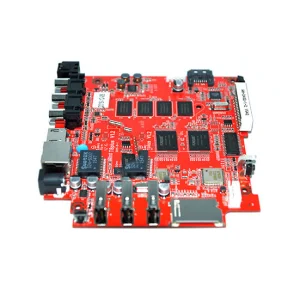
OEM Magnetometer PCBA Assembly--STHL Supplier, Solutions — Korea Satellite & Navigation Edition
Magnetometer PCBA support for Korean satellite payloads, navigation calibration benches and sensor research, with controlled sourcing and test documentation.
View Product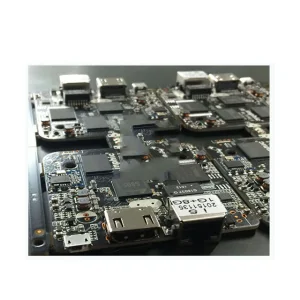
High Quality Air Data Inertial Reference Unit (ADIRU) PCBA Assembly--STHL Service, Factories — Korea Commercial Avionics Edition
ADIRU PCBA prototypes for Korean commercial avionics, retrofit test rigs and MRO training systems where high reliability and traceability are required.
View Product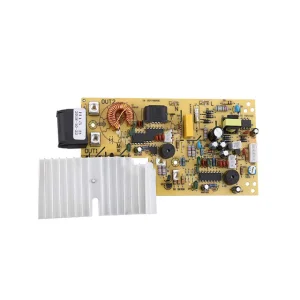
China Leading Air Data Computer (ADC) PCBA Assembly--STHL Supplier, from China — Korea Flight Test Edition
ADC PCBA support for Korean flight-test instrumentation, avionics integration labs and ground validation systems, with DFM review and test coverage planning.
View Product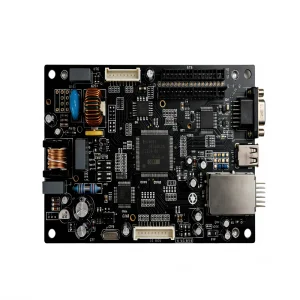
China Top Engine Indicating and Crew Alerting System (EICAS) PCBA Assembly--STHL from China, Manufacturers — Korea Cockpit Modernization Edition
EICAS PCBA prototypes for Korean cockpit modernization, simulator and test-bench applications, supported by fine-pitch SMT and functional testing.
View Product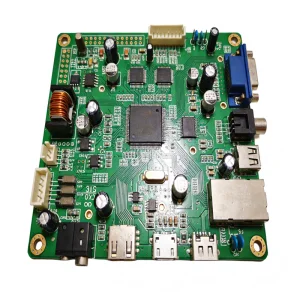
OEM Heads-Up Display (HUD) PCBA Assembly--STHL from China, Manufacturers — Korea Trainer & eVTOL Edition
HUD PCBA for Korean advanced trainer, simulator and eVTOL cockpit demonstrators, with optical-adjacent board assembly and controlled ESD handling.
View Product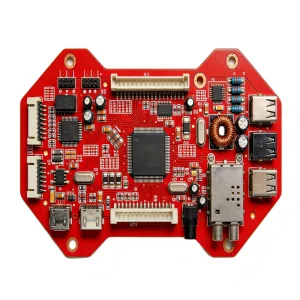
High-Reliability Multifunction Display (MFD) PCBA Assembly--STHL Solutions, from China — Korea Multi-Role Platform Edition
MFD PCBA support for Korean multi-role aircraft, helicopter and mission-system demonstrators, with high-reliability SMT and inspection options.
View Product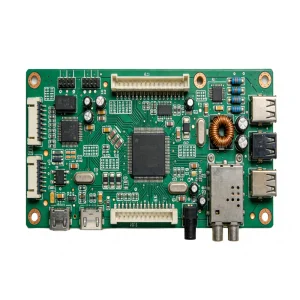
Precision Primary Flight Display (PFD) PCBA Assembly--STHL Service, from China — Korea Civil Aviation & eVTOL Edition
PFD PCBA for Korean civil aviation, flight-simulator and eVTOL demonstrator programs, with engineering review and functional test support.
View Product
Certified Electronic Flight Instrument System (EFIS) PCBA Assembly--STHL Manufacturer, Factories — Korea Regional Aircraft & UAM Edition
EFIS PCBA prototypes for Korean regional aircraft, UAM cockpit concepts and avionics test equipment, with traceability and inspection records available.
View ProductReady to qualify a prototype aerospace PCBA supplier for Korea? Send your project package and export classification. STHL will respond with a manufacturing review, lead-time plan and NDA-ready quotation path.
Send Inquiry NowKorea Aerospace PCBA Sourcing Q&A
Straight answers for Korean engineering, procurement and quality teams evaluating a prototype-to-production PCBA partner in China.
What files do I need to submit for a PCBA project?
Send Gerber files, a BOM with manufacturer part numbers, the pick-and-place (centroid) file and assembly drawings. If you need IC programming or functional testing, include firmware and test procedures. For aerospace-adjacent work, also provide export classification, source-control notes and any customer-specific flow-downs your project requires. Our engineers complete a DFM and BOM review before production starts.
Is there a minimum order quantity (MOQ)?
No. STHL accepts prototype, low-volume and high-volume PCB assembly orders, so you can validate a design and scale to mass production with the same supplier. For Korean aerospace prototypes, this is especially useful during engineering validation and test-equipment builds.
Can STHL source all the electronic components?
Yes. We offer full turnkey, partial turnkey and consigned assembly. Our sourcing team works with 100+ agents and suppliers covering more than 500,000 part numbers, with incoming inspection and traceability from reel to finished board. Long-lead and obsolete aerospace parts can be reviewed during RFQ.
Which quality certifications does STHL hold?
STHL is certified to IATF 16949, ISO 9001, ISO 14001 and ISO 13485, and produces RoHS-compliant assemblies. Boards can be verified with AOI, X-ray, ICT and functional testing. STHL does not claim AS9100 or NADCAP certification unless a project-specific certificate package states it.
How do you protect our design files and IP?
We sign an NDA before RFQ, restrict project data to the assigned engineering team and track every build through our ERP and MES systems. For Korean customers, project folders, data access and communication channels can be structured to support internal IP and export-control review.
Can we audit or visit the factory?
Yes. Customers are welcome to visit our Shenzhen factory and R&D laboratory at any time, and a 360-degree virtual factory tour is available for remote evaluation. A Korea-focused checklist can cover SMT, THT, testing, material control, packaging and traceability.
Is China a suitable source for Korea aerospace PCBAs?
It can be suitable for non-controlled commercial aerospace, UAV, space ground support, test equipment, industrial avionics and advanced air mobility prototypes. It is not automatically suitable for ITAR/EAR-restricted, defense-sensitive or flight-critical programs. Korean customers should classify the work package and use an approved domestic or allied supplier where required.
How do you handle export control and ITAR/EAR flow-downs?
Export classification is customer-provided and reviewed before quotation. STHL supports non-controlled commercial and industrial aerospace work. If a project is ITAR/EAR-restricted or subject to Korean defense procurement restrictions, the work should be routed to an appropriately approved supply chain. STHL will not accept work that falls outside its legal or certification scope.
Can you support AS9100 or NADCAP flow-downs?
Aerospace flow-downs are reviewed per project. STHL’s core certifications are IATF 16949, ISO 9001, ISO 14001 and ISO 13485. Where AS9100, NADCAP special processes or customer-approved special-process sources are mandatory, STHL will disclose its scope before RFQ and, where appropriate, coordinate with qualified partners rather than overstate capability.
What lead time should a Korean buyer expect for prototype aerospace PCBAs?
Lead time depends on board complexity, component availability, testing requirements and export documentation. Simple prototypes can move quickly; high-layer-count boards, long-lead aerospace components, X-ray/BGA inspection, conformal coating and functional test add time. A realistic schedule is issued after DFM, BOM and test-scope review, not before.
How do you support Korea RoHS, K-REACH and KC documentation?
We can prepare RoHS and material declarations to support Korea RoHS and K-REACH review. KC certification is product-level and normally owned by the device manufacturer. STHL can provide PCBA test records, material evidence and manufacturing documentation that the Korean customer can include in its compliance file.
What testing options are available?
Options include AOI, X-ray, ICT, functional testing, IC programming, conformal coating and final inspection. For Korean aerospace-adjacent programs, test coverage should be defined during RFQ so that fixture requirements, firmware versions, pass/fail criteria and data retention are clear before assembly begins.
Start Your Korea Aerospace PCBA Inquiry
Send Gerber, BOM, centroid data, test requirements, target quantity and export classification. STHL will review manufacturability, component risk, quality documentation and Korea-bound delivery planning before quotation.
