
Prototype and NPI speed
Product teams need first articles that reveal thermal, optical and assembly issues early. DFM feedback, BOM scrubbing and quick-turn SMT are more valuable than a low quotation that hides engineering risk.
Turnkey, prototype-to-volume LED PCB assembly for Melbourne lighting OEMs, specifiers, integrators and asset owners — combining local market intelligence, certified quality systems, Factory 4.0 traceability and resilient global component sourcing.
These four proven platforms help Melbourne lighting brands, electrical contractors and hardware teams move from concept validation to repeat production without changing supply partners. Each card retains the original product URL, while the positioning is adapted for Melbourne commercial, industrial and infrastructure projects.
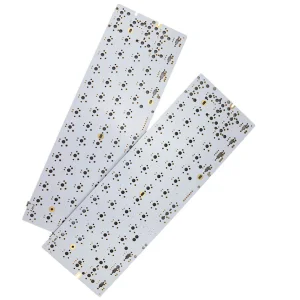
Fast-turn prototype builds that let Melbourne product teams validate thermal, optical and driver choices before tooling spend. Supports MCPCB, FR-4, flex and rigid-flex LED boards.
Original portfolio: Prototype LED PCB Assembly: Revolutionizing Lighting Technology with Precision and Performance Manufacturer, in China
View Product Details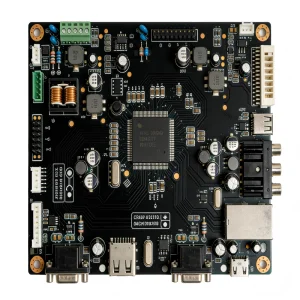
Flexible and rigid strip assemblies for joinery, retail, hospitality and architectural feature lighting where colour consistency, voltage drop and bend radius matter.
Original portfolio: China Leading LED Strip Light (or LED Tape Light) PCB Assembly--STHL Supplier, in China
View Product Details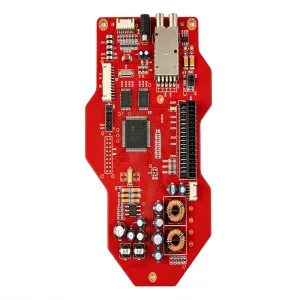
Uniform-light panel boards for offices, education, healthcare and retail ceilings, with optional DALI dimming, emergency packs and low-flicker driver integration.
Original portfolio: Prototype LED Panel Light PCB Assembly--STHL Solutions, in China
View Product Details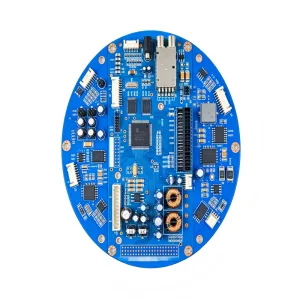
Custom light-bar PCBs for linear luminaires, display cases, transport interiors and retrofit kits, with thermal-interface and ingress-protection options.
Original portfolio: OEM LED Light Bar PCB Assembly--STHL Factory, Service
View Product DetailsA local, standards-aware view of commercial lighting demand, industrial pressures and the supply-chain choices behind reliable LED boards.
Melbourne is not a generic Australian city for lighting electronics. Its commercial construction pipeline, transport infrastructure, healthcare and education estates, hospitality precincts and advanced manufacturing zones create a dense field of specification-driven LED projects. A single mixed-use development in the CBD may combine architectural cove lighting, emergency luminaires, DALI-controlled office troffers, high-CRI retail displays, exterior floodlights and sensor-enabled amenity lighting. Each subsystem has a different thermal envelope, ingress-protection requirement, driver topology and compliance evidence package. That is why the phrase LED PCB assembly Melbourne is usually a proxy for a larger question: who can supply a repeatable, traceable LED board that survives the project’s operating environment and documentation review?
Greater Melbourne’s industrial precincts — including Dandenong, Braeside, Clayton, Hallam, Bayswater, Laverton North, Somerton and Port Melbourne — house lighting brands, electrical contractors, OEM integrators, signage fabricators and specialist design houses. Many have moved from off-the-shelf luminaires to custom LED engines to differentiate their offer. They need smaller NPI batches, faster design iterations and a supplier that can scale from 50 boards to 5,000 without changing process control. At the same time, Victorian asset owners are under pressure to reduce operational carbon, improve lighting quality and avoid premature failures in difficult environments such as coastal exposure, uninsulated warehouses, food-processing plants and tunnel or car-park installations.
Compliance behaviour matters locally. Melbourne buyers commonly ask for evidence that the LED assembly supports RCM marking strategy and AS/NZS 60598 luminaire safety, AS/NZS 61347 controlgear separation, CISPR 15 / EN 55015 emissions targets and relevant MEPS or green-building requirements. They also ask for RoHS material declarations, conflict-minerals statements, lot traceability and change-control notifications. A low unit price that ignores this documentation burden is not a low total cost. Procurement teams increasingly score suppliers on total cost of risk, not only quoted board price.
Four trends dominate Melbourne’s LED product roadmap. First, human-centric lighting requires stable colour point, dimming linearity and flicker control across the dimming range. Second, IoT and DALI-2 integration require sensor supply, RF layout discipline and firmware/test integration at the PCBA level. Third, sustainability and circularity require lower scrap, longer warranties, material transparency and repairable assemblies. Fourth, dual sourcing requires an offshore EMS partner with digital traceability and a local integration or stocking strategy. A capable LED PCB assembly partner therefore behaves more like a product-realisation partner than a board broker.
Intent for LED PCB assembly searches is rarely a simple transaction. Hardware engineers, procurement managers and operations teams use the same phrase with different evaluation criteria. A Melbourne search often maps to one of six jobs-to-be-done.
Product teams need first articles that reveal thermal, optical and assembly issues early. DFM feedback, BOM scrubbing and quick-turn SMT are more valuable than a low quotation that hides engineering risk.
Melbourne buyers increasingly want one accountable partner for bare-board fabrication, component sourcing, SMT/THT assembly, programming, test and box build. Multiple hand-offs create hidden schedule risk.
LED boards fail for thermal reasons far more often than for novices expect. MCPCB choice, copper thickness, thermal vias, LED binning and reflow control must be designed and documented together.
When LED bin ranges, driver ICs or connectors tighten, supplier depth matters. Buyers value BOM alternates, incoming inspection, moisture-sensitive device control and reel-level traceability.
Melbourne OEMs need evidence packs for safety, EMC strategy, environmental compliance and quality. ISO systems, first-article reports and test records shorten the path through customer and council approvals.
Projects often start with a tender sample, pilot batch or display prototype. No-MOQ prototype support lets Melbourne teams validate before committing to volume, while the same process scales to production.
Information gain for buyers: define “partner” as the organisation that owns process control, traceability and engineering review. Ask for the DFM report before quotation, the BOM risk list before deposit, the test plan before assembly and the traceability records before shipment. This is how a Melbourne LED PCB assembly program becomes predictable rather than merely cheap.
For Melbourne customers, the commercial advantage is not merely offshore pricing. It is the ability to combine component procurement, PCB fabrication, SMT/THT assembly, test and value-added services under one quality system.

Full or partial turnkey sourcing through 100+ agents and suppliers, with BOM scrubbing, alternate-part suggestions and reel-level traceability.
Learn more →
Standard, prototype, aluminium, flexible, rigid-flex, HDI, Rogers, ceramic, heavy-copper and high-Tg boards built to your LED stack-up.
Learn more →
Prototype, low-volume and high-volume assembly including fine-pitch, BGA and mixed-technology LED boards, verified by AOI and X-ray.
Learn more →
PCB layout, IC programming, ICT and functional testing, conformal coating, cable and wire harness, and complete box build assembly.
Learn more →Global OEMs are not simply leaving China supply; they are redesigning it for visibility, optionality and risk control.
Buying teams in the USA, Germany, the UK, Italy, Poland, New Zealand, Brazil, Australia and other regions now ask for dual-source BOMs, buffer inventory, multi-region final assembly options and real-time production visibility. The winning model is not a race to the lowest quoted unit price. It is a supply-chain architecture that combines China’s process depth and component ecosystem with digital control, contract clarity and local market agility. For Melbourne companies, that translates into practical questions: can the supplier prove which LED bin was used, can it hold a firmware version, can it support a pilot batch before a tender, and can it keep the same process controls when volume increases?
China Factory 4.0 has changed what a good offshore LED PCB assembly partner can prove. Automated SMT lines with solder paste inspection, AOI and X-ray are only useful when connected to ERP/MES records. At STHL, the operating platform links BOM validation, incoming inspection, reel-level traceability, build travellers, test results and shipment records. That matters to Melbourne customers who need to answer an audit question months after a board was built: which LED bin, which driver IC lot, which reflow profile and which functional test record were used? Traceability is not paperwork for its own sake; it is the difference between a corrective action and a guess.
STHL’s Shenzhen operation is not a trading office. The 10,000 m² facility, 220+ staff, 50+ engineers, 7 SMT lines, 2 DIP/THT lines, 2 functional test lines and 2 box build lines are set up for high-mix LED assembly. The sourcing team works with 100+ agents and suppliers covering more than 500,000 part numbers. Prototype and volume orders are accepted with no MOQ. Every build is RoHS-compliant and controlled under IATF 16949, ISO 9001, ISO 14001 and ISO 13485 systems. Factory visits and remote audits are welcome at any time.
Melbourne’s operating environments are varied. The same LED board specification that suits a heated showroom may fail in a coastal car park, a cold-storage warehouse or a tunnel requiring maintained emergency illumination.
CBD fit-outs, hotels, galleries, retail and hospitality projects need high CRI, tight LED binning, low flicker, DALI dimming and reliable thermal design in compact luminaires. Board-level choices influence whether the fixture meets the designer’s visual intent and the builder’s commissioning schedule.
High-bay luminaires, cold storage, food-processing areas and warehouses in Dandenong, Laverton North and Somerton demand ingress protection, thermal margin, vibration resistance and predictable lumen maintenance. Conformal coating and sealed connectors may be more important than headline efficiency.
Stations, tunnels, car parks and civic assets require maintained emergency lighting, EMC discipline, moisture tolerance and long service life. LED PCB assemblies must support test regimes that reflect real maintenance access and safety obligations.
Hospitals, aged-care facilities, schools and universities prioritise visual comfort, low flicker, cleanability and reliable emergency operation. LED boards and drivers should be specified with test evidence that supports facilities-management acceptance.
Signage fabricators and display integrators need constant-current LED boards with heat management, outdoor UV protection and mechanical stability. Turnkey LED signage board assembly can include drivers, connectors, housings and test reports.
Sensor-enabled luminaires, wireless controls, human-centric lighting and energy-monitoring nodes require mixed-technology PCBs. Component sourcing, RF layout and firmware/test integration are as important as the LED itself.
STHL’s process controls are matched to the reliability and compliance level each market requires, from medical devices to automotive electronics and industrial control.
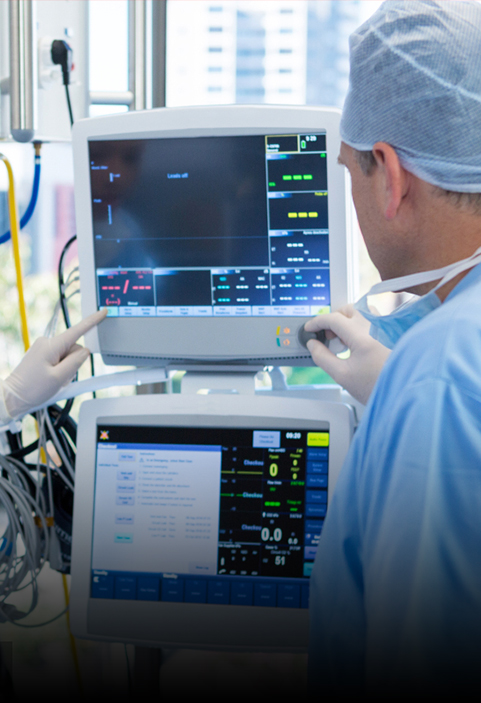
ISO 13485-controlled assembly for monitoring, diagnostic and wearable devices with full lot traceability.
Explore medical PCBA →
IATF 16949 processes for control modules, lighting and charging electronics that must survive heat and vibration.
Explore automotive PCBA →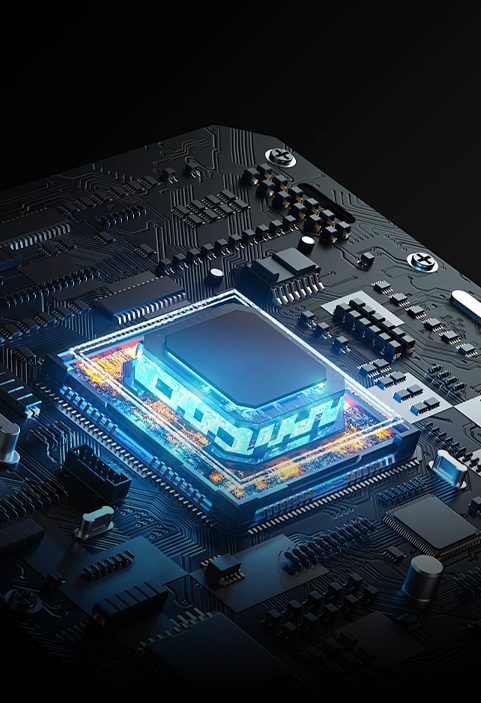
High-density, BGA-rich boards for computing, storage and peripherals, verified by X-ray inspection.
Explore computer PCBA →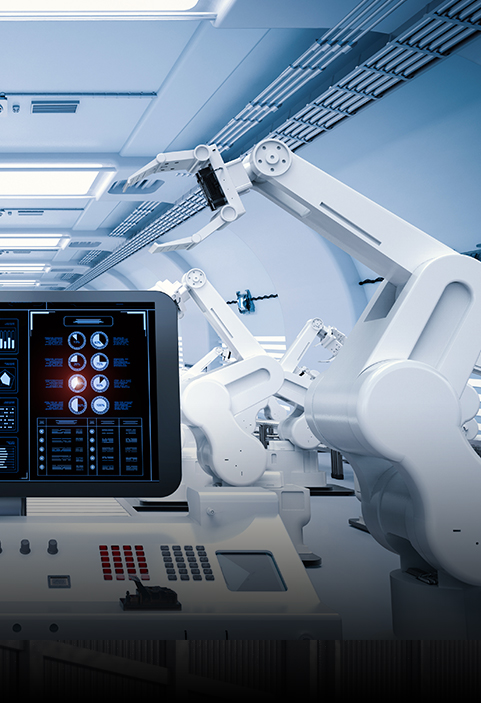
Robust PCBAs for PLCs, motor drives and automation equipment, with conformal coating options.
Explore industrial PCBA →LED assemblies are deceptively simple in block diagrams and difficult in practice. The information gain for Melbourne buyers is in the details that prevent field failures.
Thermal resistance from LED junction to ambient is a system property, not just a board property. Aluminium MCPCBs, thermally conductive FR-4, copper thickness, thermal vias, solder-mask openings and TIM selection interact with the luminaire housing. A prototype should measure junction temperature under worst-case ambient, not just at 25°C.
Colour point, forward voltage and flux binning must be specified with acceptable ranges. For Melbourne retail and architectural projects, batch-to-batch consistency matters as much as initial performance. STHL’s sourcing team can lock bins, propose alternates and document lot data.
Separating mains, SELV and control sections is essential. Creepage and clearance, fuse strategy, common-mode noise and surge protection should be reviewed together with the luminaire enclosure and driver. Early DFM avoids expensive PCB respins after EMC testing.
Strip, bendable and 3D-shaped LED assemblies require bend-radius control, stiffeners, strain relief and pad design that survives handling. Flexible boards are often the right answer for architectural details, signage and compact fixtures, but only with the right mechanical design.
Melbourne’s outdoor and coastal installations can expose boards to humidity, temperature cycling and UV. Conformal coating, sealed connectors, potting and material compatibility should be defined in the drawing package. The housing and board must be treated as one environmental system.
AOI catches placement errors, X-ray verifies hidden joints, ICT checks electrical values and functional test validates the assembly at the fixture level. A practical test plan ensures critical LED strings, sensors and drivers are verified before shipment, not after installation.
DFM is not cosmetic. It can reduce panel waste, improve assembly yield, simplify test access and avoid end-of-life components. BOM optimization can identify second sources, reduce lead time and protect against allocation without changing the approved design intent.
For long-life lighting assets, the bill of materials must be controlled through production. Change notifications, lot records, firmware revisions and test data should be retrievable. This protects warranties, audits and future service replacements.
Knowing what happens after you place a purchase order removes surprises. This is how every STHL LED PCBA project moves through the factory.
Engineers check Gerber, BOM and centroid data for manufacturability, footprint errors, thermal considerations and end-of-life parts before material is ordered.
Parts are purchased through 100+ agents and suppliers, then pass incoming inspection and moisture-sensitive device control with reel-level records.
Bare boards are produced to your stack-up, surface finish, impedance and LED thermal requirements, from single-layer to HDI and rigid-flex.
7 SMT lines and 2 DIP/THT lines handle fine-pitch, BGA and mixed-technology LED boards for prototypes and mass production.
AOI, X-ray, ICT and functional tests, plus IC programming and conformal coating, with results logged in our MES for traceability.
Cable assembly, enclosure integration and ESD-safe packaging, shipped to customers in 90+ countries and regions with documented dispatch records.
Google’s quality rater logic rewards real experience, expertise, authority and trust. For offshore manufacturing, those signals must be demonstrated through verifiable systems, documentation and audit access.
 Watch: Inside the STHL PCBA Factory
Founded in 2006, STHL is a certified EMS and ODM provider serving hardware teams in the USA, Germany, Italy, the UK, Poland, New Zealand, Brazil, Australia and 90+ other regions. The 10,000 m² facility includes an in-house R&D laboratory for design verification and prototype testing.
Every build is RoHS-compliant and controlled under IATF 16949, ISO 9001, ISO 14001 and ISO 13485 systems. Boards are verified with AOI, X-ray, ICT and functional testing. We sign an NDA before RFQ, restrict project data to the assigned engineering team and track every build through ERP and MES systems. Melbourne customers are welcome to visit the Shenzhen factory, request a remote audit or review a 360-degree virtual tour.
Send Inquiry Now
Quality Management System

Automotive Quality Management

Medical Devices Quality Management

Environmental Management System
Long-term cooperation with global brands and established component distributors keeps Melbourne BOMs genuine, traceable and available. Brand and channel logos are shown for supply-chain context.
Brand customers and cooperative enterprises



















Component sourcing channels












Measurable capacity, documented quality systems and engineering support that reduces total cost — not just the unit price.

10,000+ m² highly automated production space.

Proven know-how across PCB and PCBA since 2006.

500k+ parts via 100+ agents and suppliers.

IATF 16949, ISO 9001, ISO 14001, ISO 13485.

Real-time production status and lot traceability.

DFM and BOM optimisation by our engineering team.

Prototype and large-quantity orders both welcome.

Your design data and IP are protected from day one.

99.5% on-time delivery across global shipments.
Feedback from hardware engineers, designers and company owners across North America, Europe and beyond.
“Excellent team to work with and fast delivery with high-quality boards. We are very happy to work with such a good supplier. Thanks again.”

“Please extend my thanks to your team for your hard work in preparing these samples. This positive experience has strengthened my confidence in your company, and I'm looking forward to discussing bulk orders in the near future.”

“We are satisfied with the last order. You did a great job on those boards and the lead time was short. I will place a new order soon.”

“The order was perfect — exactly as specified with top quality. Highly recommend this reliable supplier.”

“Exciting! Very fast delivery, a professional supplier and a professional product. We will place a new order very soon!”

“We have tested all the boards and I am highly pleased. I will repeat my order soon. Thank you again for your excellent service.”

“It's always a pleasure ordering. Very professional team and good quality — thanks for your great service.”

“Satisfied with the sample products delivered. Very good product, quick delivery and a good understanding of my requirements.”

“The supplier's professionalism is evident in their seamless communication, efficient processing and reliable service. They are a trustworthy and commendable partner.”

Practical updates from the production floor — customer visits, traceability practices and what really drives PCBA lead time.




Straight answers for procurement, engineering and operations teams evaluating an offshore LED PCB assembly partner for Melbourne projects.
Send Gerber files, a BOM with manufacturer part numbers, the pick-and-place (centroid) file and assembly drawings. If you need IC programming or functional testing, include firmware and test procedures. Our engineers complete a DFM and BOM review before production starts.
No. STHL accepts prototype, low-volume and high-volume PCB assembly orders, so you can validate a design and scale to mass production with the same supplier.
Yes. We offer full turnkey, partial turnkey and consigned assembly. Our sourcing team works with 100+ agents and suppliers covering more than 500,000 part numbers, with incoming inspection and traceability from reel to finished board.
STHL is certified to IATF 16949, ISO 9001, ISO 14001 and ISO 13485, and produces RoHS-compliant assemblies. Boards are verified with AOI, X-ray, ICT and functional testing.
We sign an NDA before RFQ, restrict project data to the assigned engineering team and track every build through our ERP and MES systems.
Yes. Customers are welcome to visit our Shenzhen factory and R&D laboratory at any time, and a 360-degree virtual factory tour is available for remote evaluation.
We support Melbourne teams through remote DFM reviews, time-zone-aware communication, prototype batches, production scheduling, ESD-safe export packaging and documentation. For repeat programs we agree on buffer stock, change notification and inspection records before volume shipment.
Aluminium MCPCB is common for thermal-critical lighting, while high-Tg FR-4 may suit mixed-signal LED boards and flexible polyimide is used where bending is required. Outdoor and coastal projects may need conformal coating, sealed connectors and UV-compatible materials. The final choice depends on the fixture, ambient temperature, cleaning process and warranty target.
We manufacture to the approved design and provide material, process and test records that support your RCM, AS/NZS safety and EMC strategy. We do not replace the customer’s regulatory responsibility, but we make the evidence trail clearer for luminaire makers, contractors and compliance consultants.
Yes. Prototype and low-volume builds are accepted with no MOQ. They can be used for thermal testing, photometric evaluation, EMC pre-compliance, fit checks and customer approval before volume release.
BOM data, incoming inspection, component lots, build travellers, inspection results and functional test records are linked in our ERP and MES environment. This allows us to retrieve production evidence for a specific lot long after shipment.
Lead time depends on PCB complexity, component availability, testing scope and project volume. After the DFM/BOM review and component check, we provide a schedule with material lead times, assembly time, test time and shipping. Prototype and repeat production schedules are quoted separately so Melbourne buyers can plan tenders and installations realistically.
Eight further product families for rigid strip, flexible strip, module, signage, display, backlight, ceiling panel and floodlight applications. Each original URL and product image is retained.
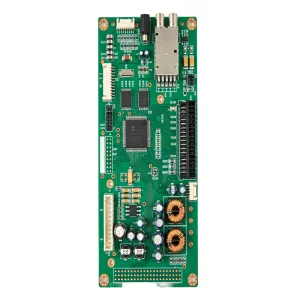
Rigid strip engines for linear luminaires, shelving, signage and architectural details, with controlled LED spacing and thermal performance.
Original portfolio: One-Stop LED Rigid Strip Light PCB Assembly--STHL in China, Factories
View Product DetailsFlexible LED tape and strip solutions for curves, joinery and compact fixtures, with bend-radius and strain-relief support.
Original portfolio: OEM LED Flexible Strip Light PCB Assembly--STHL Solutions, from China
View Product Details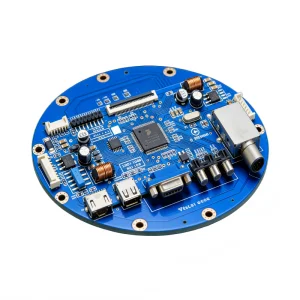
LED module boards for downlights, spotlights, sensors and integrated fixtures, supported by incoming inspection and functional testing.
Original portfolio: High Quality LED Module Board PCB Assembly--STHL Partner, Manufacturers
View Product Details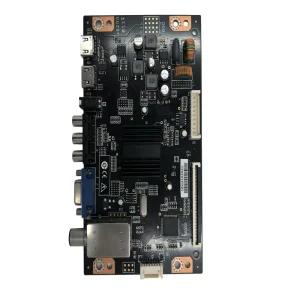
LED signage boards with driver, connector and housing integration options for retail, wayfinding, transport and outdoor advertising.
Original portfolio: Turnkey LED Signage Board PCB Assembly--STHL Solutions, in China
View Product Details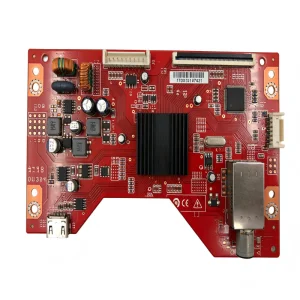
Display and matrix boards for demanding visual applications, with X-ray inspection, electrical test and lot traceability.
Original portfolio: High-Reliability LED Display Board PCB Assembly--STHL Manufacturer, Partner
View Product Details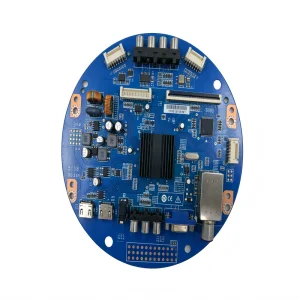
Backlight unit boards for displays, instruments and control panels, including prototype validation and volume production support.
Original portfolio: Prototype LED Backlight Unit (BLU) PCB Assembly--STHL Partner, Factories
View Product Details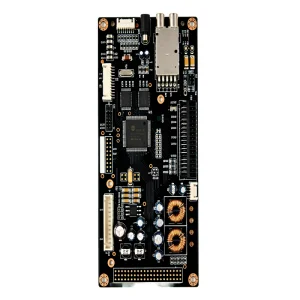
Ceiling panel light boards for offices, education, healthcare and retail, with uniform light distribution and driver integration options.
Original portfolio: China Leading LED Ceiling Panel Light PCB Assembly--STHL Supplier, Company
View Product Details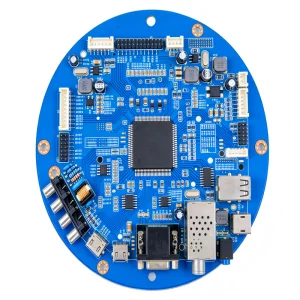
High-reliability floodlight boards for car parks, precincts, industrial yards and sports lighting, with thermal and ingress-protection options.
Original portfolio: Top-Rated LED Floodlight PCB Assembly--STHL Supplier, Company
View Product DetailsShare your Gerber, BOM, sample target and compliance expectations. Our engineering team will return a DFM review, sourcing risk list and production plan suitable for prototype, tender or volume release.
For the fastest quotation, include the intended Melbourne application, operating ambient, IP target, LED bin requirements, quantity for prototype and volume, delivery expectation and whether you need RCM or AS/NZS evidence support.
