
Environmental Monitoring Equipment PCB Assembly Supplier & Factory for United Arab Emirates
Turnkey PCB assembly for air-quality, water-quality, gas, particulate, weather, leak, emissions and smart-city monitoring systems — engineered for UAE heat, dust, humidity, salinity and long-field-life requirements.
Reference PCBAs for UAE Environmental, Monitoring and Critical-Control Ecosystems
These four manufacturing references show how STHL supports high-mix, traceable electronics for UAE integrators, environmental consultancies, utilities, healthcare teams, industrial EPC contractors and smart-city programmes. Product URLs and original images are retained below.
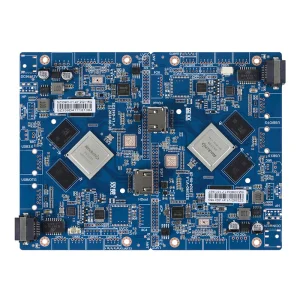
Suitable for user-interface boards, edge gateways and connected accessories around environmental monitoring networks.
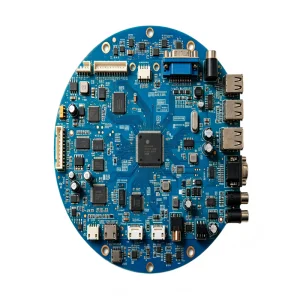
Gateway-class assembly experience for LoRaWAN, NB-IoT, Wi-Fi and sensor-fusion deployments.
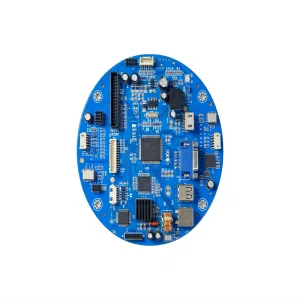
Compact, reliable mixed-technology assembly for wearable, acoustic and field-service monitoring peripherals.
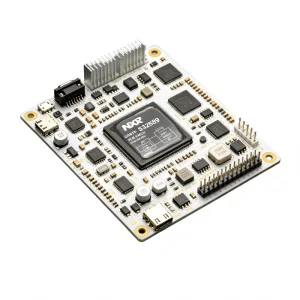
Medical-grade process discipline for traceable, high-reliability boards used in controlled clinical and environmental spaces.
Why the UAE Is a High-Value Market for Environmental Monitoring Equipment PCB Assembly
The UAE is no longer only a trading hub between Asia, Europe and the Middle East. It is a fast-moving market for smart-city infrastructure, clean energy, water security, industrial safety and climate-resilient urban development. That makes environmental monitoring equipment a strategic electronics category for OEMs and integrators serving Abu Dhabi, Dubai, Sharjah, Ajman, Ras Al Khaimah, Fujairah and Umm Al Quwain.
Smart Cities and Net-Zero Programmes
Air-quality nodes, weather stations, water meters, building-performance sensors and public-health monitoring systems require rugged PCBAs that can survive high ambient temperatures, solar loading and long outdoor deployment cycles. UAE programmes aligned with national sustainability goals create demand for reliable electronics with full traceability.
Water, Energy and Industrial Safety
Desalination plants, district cooling, oil and gas facilities, power generation, ports and heavy industry all depend on leak detection, emissions monitoring, corrosion sensing and safety instrumentation. The PCBA must remain stable in high humidity, salt-laden air and temperature swings.
GCC Procurement and Distribution Hub
UAE-based OEMs, distributors and project integrators often source electronics globally and deploy across the Gulf. They need a PCBA factory that can support English documentation, NDA-protected RFQs, repeatable lot traceability, export packaging and shipment to Jebel Ali Port, Dubai International Airport, Abu Dhabi and regional project sites.
Field Conditions Drive the PCB Assembly Specification
Environmental monitoring equipment in the UAE is not deployed in a laboratory comfort zone. A particulate monitor on a highway, a water-quality node near a desalination plant, a methane detector at an industrial site or a weather station in a coastal area can face 45°C+ ambient temperatures, solar gain, sand, dust, humidity, salt fog and electrical noise from pumps, motors and power infrastructure.
For procurement teams, this means the supplier must think beyond unit price. The PCBA design and assembly process should consider component derating, thermal management, low-power architecture, conformal coating, connector robustness, EMC layout, surge protection, calibration data storage and strict material traceability. This is where experienced DFM review and controlled assembly become commercially important, not just technically desirable.
- High-mix, low-volume prototype builds for pilot environmental networks
- Repeatable volume assembly for multi-site UAE deployments
- BOM risk review and alternate-part validation for long-life programmes
- Lot-level traceability from incoming reel to finished board

What Global OEMs and UAE Integrators Look for in a PCBA Supplier
Global environmental monitoring companies are under pressure to shorten product cycles while proving reliability, cybersecurity readiness, material compliance and supply-chain resilience. Buyers increasingly evaluate a PCBA factory as a long-term manufacturing partner, not a one-off quotation source.
Supply-Chain Resilience
Long-life environmental programmes cannot tolerate uncontrolled component substitutions. Buyers want BOM scrubbing, approved alternates, moisture-sensitive device control and documented sourcing channels that reduce counterfeit and end-of-life risk.
Documented Quality and IP Protection
NDA-before-RFQ workflows, restricted project access, ERP/MES traceability and clear inspection records are essential when the end product is used in regulated, public-sector or critical-infrastructure environments.
From Prototype to Regional Rollout
UAE projects often begin with a pilot batch, then scale rapidly after acceptance. The same supplier should be able to support prototype assembly, small-batch validation, IC programming, functional testing, conformal coating and volume production without a process reset.
Environmental Monitoring Equipment PCB Assembly: Design and Process Priorities
Environmental monitoring PCBA is a system-level discipline. A board may combine analogue sensor front ends, precision references, low-power microcontrollers, wireless modules, storage, protection circuitry and calibration data. Each block affects field reliability and long-term measurement confidence.
Sensor Front Ends and Low-Noise Signal Chains
Air, gas, water and particulate sensors often deliver small analogue signals. PCB assembly must control contamination, flux residue, solder voids and grounding to protect measurement stability. Fine-pitch SMT, AOI and X-ray inspection help reduce process variation.
Low-Power and Solar/Battery Operation
Remote environmental nodes may rely on solar panels, primary batteries or energy harvesting. Power budgeting, low-quiescent-current design, sleep-mode verification and battery-holder robustness should be reviewed during DFM and functional testing.
Wireless Connectivity and Modular Architecture
LoRaWAN, NB-IoT, LTE-M, Wi-Fi, BLE and satellite backhaul require careful RF layout, shielding and antenna integration. Modular PCBA architectures can simplify regional variants and future radio upgrades for UAE and GCC deployments.
Heat, Dust, Humidity and Salt-Fog Protection
Conformal coating, potting, gasket interfaces, connector selection and enclosure integration can improve survivability in coastal or desert environments. The PCBA process should be matched to the cleaning, coating and test requirements of the final product.
EMC, Surge and Isolation
Environmental equipment often shares power infrastructure with pumps, motors, valves and industrial controls. Isolation, transient protection, creepage and clearance, and EMC-aware layout help reduce field failures and measurement drift.
Traceability and Calibration Data
Each board can carry serialized identification linked to component lots, assembly date, test results and firmware version. This supports calibration workflows, warranty analysis and future audits for UAE utility or public-sector projects.
PCB Assembly Solutions for UAE Environmental Monitoring Applications
Different monitoring applications demand different trade-offs between measurement accuracy, power consumption, environmental protection, wireless backhaul and regulatory documentation. A single PCBA factory should be able to support these variants without compromising process control.
Ambient Air Quality and Dust Monitoring
Particulate monitors, gas analysers and urban air-quality nodes require stable sensor interfaces, low-noise power and reliable data logging. For UAE deployments, solar loading, dust ingress and high summer temperatures should be considered in both electronics and enclosure design.
Water Quality and Wastewater Monitoring
Desalination plants, municipal networks and industrial wastewater systems use conductivity, pH, turbidity, chlorine and dissolved-oxygen sensors. Boards may need isolation, corrosion-resistant connectors, waterproof cable assemblies and stable analogue front ends.
Industrial Emissions and Leak Detection
Oil, gas, petrochemical and power facilities require methane, VOC, H2S and leak-detection systems with robust electronics. Intrinsically safe or harsh-area end products often demand careful material selection, traceability and functional testing at board level.
Smart Agriculture and Irrigation
Soil moisture, weather, humidity and irrigation controllers benefit from low-power PCBAs, solar charging and wireless modules. Long-range connectivity and remote firmware update capability can improve field maintenance in large agricultural estates.
Weather Stations and Coastal Monitoring
Weather and marine-monitoring equipment faces salt fog, wind-driven rain and lightning risk. Surge protection, conformal coating, sealed connectors and robust grounding are practical design priorities for coastal UAE installations.
Indoor Environmental Quality and Data Centres
Temperature, humidity, particulate and gas monitoring in hospitals, schools, offices, laboratories and data centres requires compact, reliable control boards. Box-build support can combine PCBA, cable assembly, enclosure integration and functional testing.
Where Environmental Monitoring Electronics Is Heading Globally
The next generation of environmental monitoring equipment will combine more sensors, more edge intelligence and more connectivity. At the same time, buyers need longer product life cycles, better cybersecurity and stronger material compliance. This creates opportunities for OEMs that choose the right manufacturing partner early.
Rugged, Modular Sensor Nodes
Low-power MCUs, mature wireless modules, precision sensor front ends and serialized traceability remain the foundation for field-deployable monitoring.
Edge AI and Sensor Fusion
Local signal processing can reduce data transmission costs and improve anomaly detection. PCBAs may need higher-performance processors, secure elements and thermal-aware layout.
Secure OTA and Device Identity
Secure boot, encrypted firmware updates and hardware identity will become normal requirements for public infrastructure and industrial monitoring networks.
Digital Twins and Lifetime Data
Traceability data from the PCBA can feed calibration, maintenance and end-of-life planning. Manufacturing records become part of the product's long-term value.
Global Commercial and Industrial Context
Environmental monitoring demand is growing across North America, Europe, the Middle East and Asia because of climate disclosure, industrial safety, water scarcity and urban air-quality management. At the same time, supply chains face component allocation risk, price volatility and lifecycle uncertainty. A PCBA supplier that offers DFM review, alternate sourcing, traceability and flexible order quantities can reduce the total cost of ownership.
UAE integrators often serve projects across the GCC, so documentation quality matters. A board assembled in Shenzhen may be installed in Abu Dhabi, integrated in Dubai and maintained in another region. Consistent English documentation and lot traceability help keep that chain visible.
Procurement Strategy for Long-Life Programmes
- Lock approved component alternatives before volume release
- Validate conformal coating and cleaning with actual sensor assemblies
- Define functional test fixtures that simulate field power and signal conditions
- Store calibration and test records by serial number
- Review packaging for humidity, ESD and long-distance air or sea freight
UAE Buyer Support, Documentation and Manufacturing Compliance
For UAE procurement teams, compliance is not a single certificate. It is the ability to supply the right documentation, follow agreed processes, protect intellectual property and coordinate shipment into the region without surprises.
Quality Management Systems
STHL operates under IATF 16949, ISO 9001, ISO 14001 and ISO 13485 systems. Assemblies can be produced to RoHS requirements, with AOI, X-ray, ICT and functional testing records available as agreed.
Documentation Pack for UAE Projects
Typical project documentation can include BOM comparison, DFM feedback, first-article data, test records, packing lists, commercial invoices, RoHS declarations and lot traceability. End-product certification remains the responsibility of the product owner, but STHL can support the information flow.
IP Protection and Communication
NDA-before-RFQ, restricted project access and ERP/MES tracking help protect design files and firmware. English-language communication supports UAE engineering and procurement teams across time zones.
 ISO 9001Quality Management System
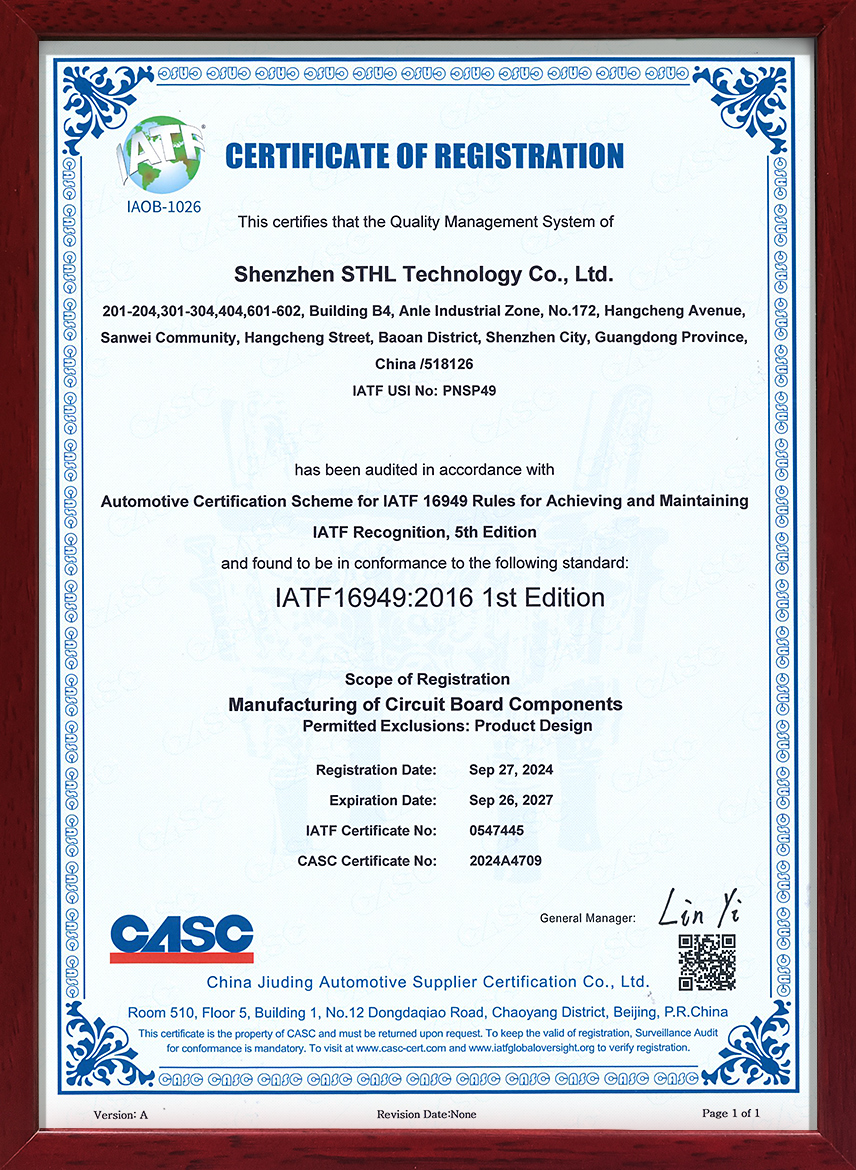 IATF 16949Automotive Quality Management
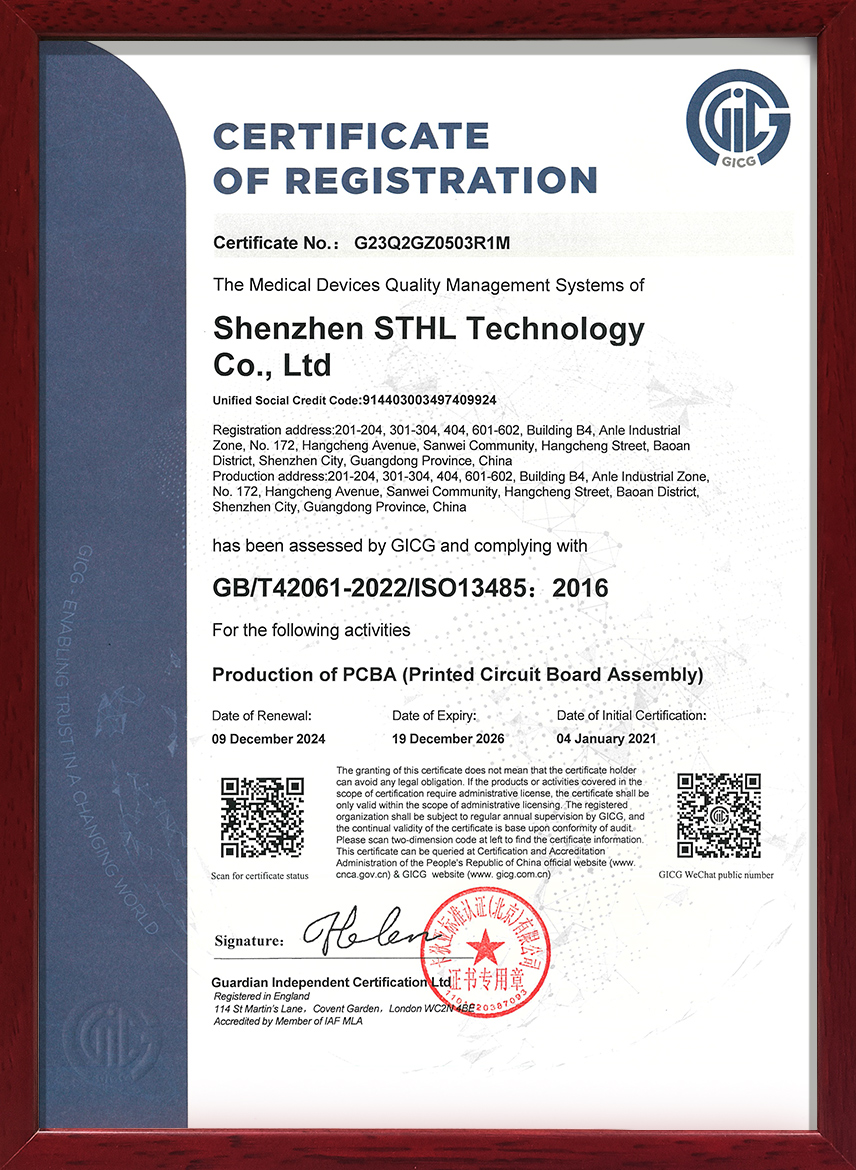 ISO 13485Medical Devices Quality Management
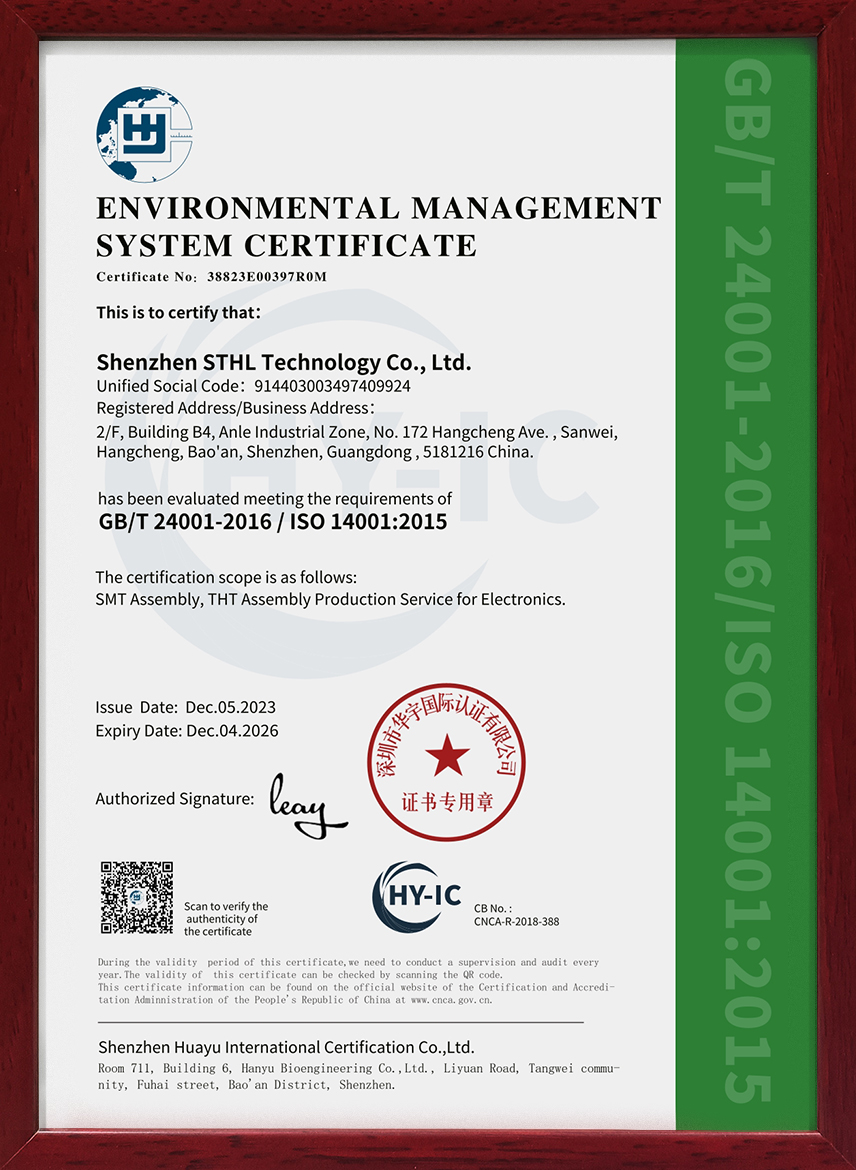 ISO 14001Environmental Management System
Shipping and Regional Coordination
STHL supports export packaging and shipment to UAE destinations by air freight and sea freight, including coordination for Jebel Ali Port, Dubai International Airport, Abu Dhabi and other regional logistics points. Incoterms, labelling, palletization and documentation can be aligned with the buyer's import process.
Design Support for End-Product Approvals
Environmental monitoring products with wireless communication may require radio or product-safety approvals before commercial deployment in the UAE. STHL can support design-for-test and documentation inputs, but final certification should be confirmed with the relevant UAE authorities and the applicant's regulatory team. This distinction is important for a reliable E-E-A-T procurement process.
Inside STHL: 20 Years of PCBA Experience for Global OEMs
Shenzhen STHL Electronics Co., Ltd. has been providing electronics manufacturing services since 2006. For UAE buyers, the value is not only capacity. It is the ability to combine component sourcing, PCB fabrication coordination, SMT and THT assembly, testing and box build in one accountable workflow.
Engineering Capacity That Supports Real Environmental Projects
STHL operates a 10,000+ m² production facility with 220+ staff, including 50+ engineers, 7 SMT assembly lines, 2 DIP/THT lines, 2 functional test lines and 2 box-build lines. An in-house R&D laboratory supports design verification, prototype testing and manufacturing problem-solving.
For environmental monitoring PCBA, this matters because the product often needs more than a bare circuit board. It may need IC programming, conformal coating, cable and wire harness assembly, enclosure integration, functional testing and serialized records. Keeping these steps under one manufacturing system reduces handover risk between suppliers.
- 7 SMT assembly lines with fine-pitch and BGA capability
- 2 DIP/THT lines for mixed-technology monitoring boards
- AOI, X-ray, ICT and functional testing
- 100+ sourcing agents and suppliers covering 500,000+ part numbers
- 99.5% on-time delivery and 99% qualified shipment rate in original STHL performance data

Quality Gates from Gerber Files to UAE Shipment
A controlled PCBA workflow makes it easier to qualify a supplier and easier to audit a project later. The sequence below reflects the practical steps STHL uses to move an environmental monitoring assembly from inquiry to repeat production.
01. DFM and BOM Review
Gerber, BOM, pick-and-place and assembly drawings are reviewed for manufacturability, footprint issues, end-of-life risk and test access. Engineering feedback is provided before material commitment.
02. Component Sourcing
Approved parts are purchased through qualified channels. Incoming inspection, moisture-sensitive device control and traceability records reduce counterfeit and handling risk.
03. PCB Fabrication Coordination
Bare boards can be coordinated to the required stack-up, surface finish, impedance and material needs, including rigid, flex, rigid-flex, HDI and aluminium options.
04. SMT and THT Assembly
Fine-pitch, BGA, mixed-technology and through-hole assemblies are processed on dedicated SMT and DIP/THT lines with documented process parameters.
05. Inspection and Test
AOI, X-ray, ICT, functional testing, IC programming and conformal coating can be combined according to the product's risk profile and field environment.
06. Box Build and Export Packing
Cable assembly, enclosure integration, final inspection, ESD-safe packing and export documentation support shipment to UAE and global destinations.
Need a UAE-Ready Environmental Monitoring PCBA Partner?
Share Gerber files, BOM, centroid data and test requirements. STHL can respond with DFM feedback, sourcing notes and a manufacturing route for your UAE project.
What Global Engineers and Buyers Say About STHL
Long-term OEM relationships depend on consistent communication, reliable boards and responsive engineering support. These comments are retained from STHL customer feedback.
“Excellent team to work with and fast delivery with high-quality boards. We are very happy to work with such a good supplier. Thanks again.”
PauloR&D Engineer · United States“Please extend my thanks to your team for your hard work in preparing these samples. This positive experience has strengthened my confidence in your company.”
OliviaHardware Engineer · Germany“We are satisfied with the last order. You did a great job on those boards and the lead time was short. I will place a new order soon.”
WilliamCEO · ItalyEnvironmental Monitoring PCBA Sourcing FAQs for UAE Buyers
These answers are written for UAE OEMs, distributors, EPC contractors, environmental consultancies and project owners evaluating a PCB assembly factory in China.
Can STHL supply environmental monitoring equipment PCB assembly for UAE projects?
Yes. STHL supports turnkey PCB assembly for environmental monitoring equipment, including air-quality nodes, water-quality instruments, gas and leak detectors, particulate monitors, weather stations, industrial emissions equipment and smart-city sensor gateways. The manufacturing route can include component sourcing, PCB fabrication coordination, SMT/THT assembly, IC programming, conformal coating, functional testing, cable assembly and box build.
What makes environmental monitoring PCBA different from ordinary consumer electronics PCBA?
Environmental monitoring boards often combine sensitive analogue sensors, low-power wireless communication, long field-life requirements and exposure to heat, dust, humidity or corrosive air. That makes material selection, cleaning, conformal coating, thermal design, EMC layout and test coverage more important. Traceability is also more critical because the board may be installed in public infrastructure or industrial safety equipment.
How do you support UAE heat, dust, humidity and coastal conditions?
Engineering review can consider component derating, thermal separation, low-power architecture, connector protection, conformal coating and enclosure integration. Where required, test plans can include boundary-condition checks and functional verification. The final environmental protection level depends on the complete product design, enclosure and installation method, so STHL works together with the customer's engineering team on the PCBA-level requirements.
Which certifications are relevant to UAE buyers?
STHL is certified to IATF 16949, ISO 9001, ISO 14001 and ISO 13485 and produces RoHS-compliant assemblies. These systems support automotive, medical, industrial and environmental electronics programmes. Radio communication products may also require UAE-specific end-product approvals; STHL can support design-for-test and documentation inputs, while final regulatory approval remains with the product applicant and its regulatory advisors.
Can STHL handle prototype and low-volume orders before mass production?
Yes. There is no minimum order quantity requirement for the assembly service. Prototype, pilot and low-volume builds are accepted so UAE teams can validate enclosures, sensors, firmware and power management before scaling. The same supplier can then support repeat production, which reduces re-qualification effort.
What files should UAE customers send for an RFQ?
Please send Gerber files, a BOM with manufacturer part numbers and acceptable alternates, pick-and-place/centroid data, assembly drawings and any special instructions. If IC programming or functional testing is needed, include firmware, programming files and test procedures. For NDA-protected projects, the NDA can be signed before detailed files are shared.
Can STHL source electronic components for long-term monitoring programmes?
Yes. STHL offers full turnkey, partial turnkey and consigned assembly. The sourcing network includes 100+ agents and suppliers covering more than 500,000 part numbers. Engineering can review end-of-life risk, propose alternates and document approved substitutions so that UAE installations do not face unnecessary re-testing later.
How do you protect design files and intellectual property?
STHL can sign an NDA before RFQ. Project data is restricted to the assigned engineering and production team, and builds are tracked through ERP and MES systems. For sensitive environmental monitoring products, access control and documentation handling can be discussed during supplier qualification.
Do you ship PCB assemblies to the United Arab Emirates?
Yes. STHL ships to global customers and can support air and sea freight documentation. Common UAE logistics destinations include Jebel Ali Port, Dubai International Airport, Abu Dhabi and other regional locations. Incoterms, packaging, labelling and export documents can be aligned with the customer's freight forwarder.
Can we audit the factory or review quality records remotely?
Yes. Customers are welcome to visit the Shenzhen factory and R&D laboratory, and a 360-degree virtual factory tour is available for remote evaluation. During project execution, inspection records, test data and traceability information can be provided as agreed in the quality plan.
What is the typical manufacturing route for an environmental monitoring PCBA project?
A typical route begins with DFM/BOM review, component sourcing, PCB fabrication coordination, SMT/THT assembly, inspection and testing, conformal coating or programming where needed, then packing and shipment. More complex projects may include fixture design, functional test development, box build and serialized traceability.
How should UAE buyers compare PCBA quotations?
Compare more than the unit price. Review component sourcing assumptions, approved alternates, test coverage, traceability, coating/cleaning requirements, engineering support, NDA handling, shipment terms and scalability. A quotation that includes realistic DFM feedback and lifecycle planning can reduce costly field failures and repeated validation later.
Eight Additional PCBA Platforms for UAE Environmental, Medical, Automotive and Smart-City Programmes
These eight product references complete the original product set. They demonstrate adjacent manufacturing experience relevant to UAE monitoring and control ecosystems, including gateways, sensors, medical systems, automotive electronics and particulate-monitoring hardware.
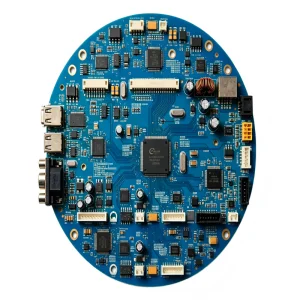
Useful for alerting, voice-interface and connected devices in smart building and public-environment programmes.
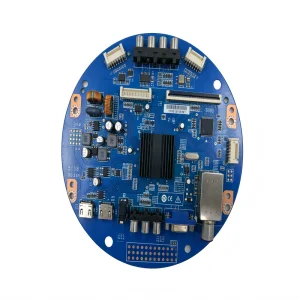
Gateway and hub assembly experience for sensor networks, cloud connectivity and local control.
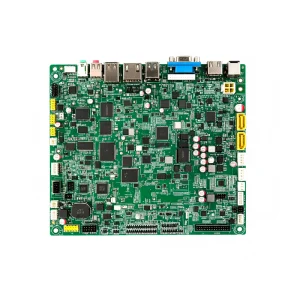
Directly relevant to water networks, district cooling, facilities management and industrial leak-detection systems.
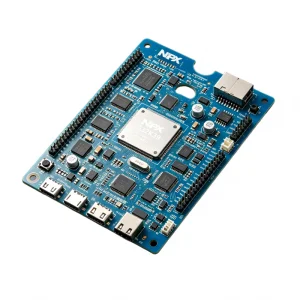
Supports healthcare electronics and controlled-environment systems where documentation and reliability matter.
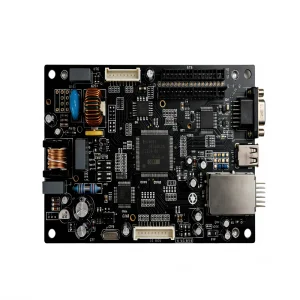
High-reliability assembly experience relevant to alerting, monitoring and operator-interface electronics.
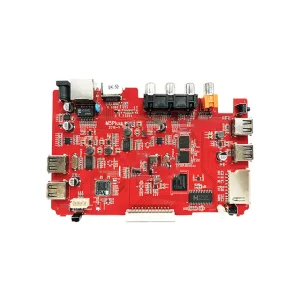
Sensor-based monitoring assembly experience for healthcare, workplace and public-space applications.
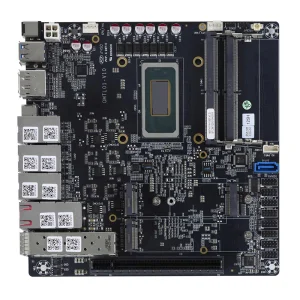
Automotive-grade process discipline for vehicle, transport and mobile environmental-monitoring electronics.
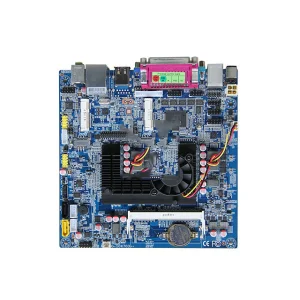
Closely aligned with UAE dust, construction, industrial and urban air-quality monitoring requirements.
Ready to Qualify STHL for UAE Environmental Monitoring PCBA?
Send your Gerber, BOM, assembly drawings and test requirements. Our engineering team can review manufacturability, sourcing risk and the most suitable production route for your United Arab Emirates project.