Chicago OEMs · Turnkey PCBA · Factory 4.0
Consumer electronics PCB Assembly Service & Factories for Chicago
Turnkey PCB fabrication, component sourcing, SMT/THT assembly, testing and box build for Chicago smart-home, building-automation, wearable, audio, networking, logistics-technology and medical-device teams — engineered in Shenzhen, supported with NDA-backed DFM review, no MOQ and traceable production.
Since 20067 SMT lines220+ staff90+ regions99.5% on-time delivery
Chicago-Ready Consumer Electronics Programs
Four fast-start PCBA programs for Chicago product teams
Begin with the original STHL consumer-electronics product series. Each program can be adapted for Chicago OEMs that need rapid NPI, low-volume validation, Illinois-based engineering communication and a clear path to volume production.
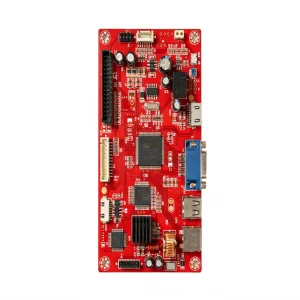
Chicago program
China Top Laptop PCB Assembly Partner, Service
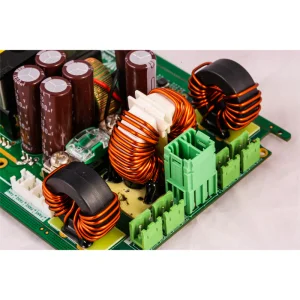
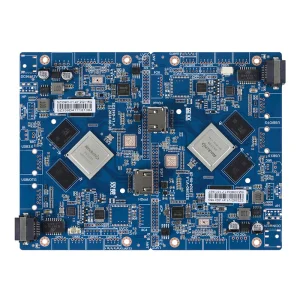
Chicago program
One-Stop Tablet PCB Assembly--STHL Service, Factories
Chicago Opportunity
A Chicago-first PCBA strategy backed by a global Factory 4.0 system
Chicago consumer electronics teams operate in a paradox. Their products must feel local, support rapid field feedback and meet North American compliance expectations, yet the bill of materials is global. A smart thermostat, access-control panel, Bluetooth audio device, warehouse scanner or telehealth wearable may be designed in the Midwest, prototyped in Illinois, assembled in China and serviced across the United States. The PCBA supplier has to connect those stages without losing traceability, schedule control or IP protection.
Local-global operating model
Designed for Chicago purchasing rhythms, engineered for global BOM realities
STHL approaches the Chicago market with a local-global model: engineering communication aligned to US working hours, Shenzhen-based manufacturing depth, and export logistics that fit the Midwest distribution calendar. Since 2006, our team has supported OEMs in 90+ regions with PCB fabrication, component sourcing, SMT/THT assembly, IC programming, testing, conformal coating, cable assembly and box build. Our 10,000 m² facility, 220+ staff, 50+ engineers, 7 SMT lines and 2 DIP/THT lines are managed under IATF 16949, ISO 9001, ISO 14001 and ISO 13485 systems.
Information gain for Chicago buyers: this is not a generic “cheap PCBA China” page. It explains how the Chicago industrial base uses consumer electronics, what global procurement teams now require, how China Factory 4.0 reduces supply-chain risk, and which localized applications benefit most from a no-MOQ, NDA-backed, traceable PCBA partner.
- NDA before RFQ
- No MOQ for prototypes
- Full turnkey and consigned BOM
- AOI · X-Ray · ICT · FCT
- ERP and MES traceability
- Factory visits and audits welcome
 Automated SMT production line supporting high-mix consumer electronics PCBA programs for global OEMs.
20+Years of EMS and PCBA experience
10,000+m² production facility
220+Staff including production and engineering
50+Professional engineers
7SMT assembly lines
90+Regions served worldwide
99.5%On-time delivery record
500K+Electronic component part numbers sourced
Turnkey Capabilities
Turnkey PCBA services for Chicago hardware teams
Chicago buyers rarely need a single process in isolation. They need a supplier that can move from Gerber review to component sourcing, PCB fabrication, assembly, testing and shipped product without losing accountability between hand-offs.

Electronic Components Procurement
Full or partial turnkey sourcing through 100+ agents and suppliers, with BOM scrubbing, alternate-part suggestions, incoming inspection, moisture-sensitive device control and reel-level traceability.
Learn more
PCB Fabrication
Standard, prototype, aluminum, flexible, rigid-flex, HDI, Rogers, ceramic, heavy-copper, high-Tg and halogen-free boards built to your stack-up, surface finish and impedance requirements.
Learn more
SMT & THT PCB Assembly
Prototype, low-volume and high-volume assembly including fine-pitch, BGA and mixed-technology boards, verified by AOI and X-ray and controlled through our MES.
Learn more
Value-Added & Box Build
PCB layout and design support, IC programming, ICT and functional testing, conformal coating, cable and wire harness, and complete box build assembly for shipment-ready products.
Learn more
Chicago Commercial & Industrial Context
Chicago’s consumer electronics manufacturing and commercial landscape
Chicago is more than a sales market. The metro area is a major air, rail and interstate logistics gateway, with O’Hare International Airport and a dense distribution network supporting both national retail and industrial customers. For consumer electronics brands, that logistics position makes Chicago a natural control point for inventory, after-sales service and channel fulfillment. For engineering teams, it creates a practical requirement: the PCBA partner must deliver consistent boards and clean documentation into a supply chain that cannot absorb surprises.
The broader Chicago and Midwest industrial base also shapes PCBA demand. Building automation, HVAC controls, warehouse automation, security systems, medical devices, automotive aftermarket electronics, consumer appliances, professional audio, networking and communications all intersect in the region. Each segment imposes different reliability priorities: thermal cycling for outdoor or HVAC products, vibration resistance for logistics devices, RF discipline for wireless products, low leakage and traceability for medical wearables, and long-life documentation for building controls.
Smart home and HVAC controls
Thermostats, air-quality monitors, fan controls, heat-pump electronics and connected appliances need low standby power, surge-tolerant relay design, EMC discipline and reliable wireless coexistence. Chicago’s climate makes thermal and humidity robustness part of the product story, not a laboratory afterthought.
Building automation and security
Access-control readers, intercoms, PoE cameras, door controllers and environmental sensors require long service life, firmware-security awareness, clean power design and conformal-coating options for humid, dusty or unconditioned installation sites.
Logistics, retail and warehouse IoT
Handheld scanners, label printers, asset tags, gateways and shelf sensors face drops, vibration, battery constraints and high-volume field replacement. A robust PCBA supplier must support serialization, test fixtures and repeatable low-cost builds.
Wearable health and medical devices
Remote monitoring, diagnostics, wellness wearables and clinical accessories benefit from ISO 13485-controlled processes, lot traceability, low-leakage design support and documented functional testing rather than visual inspection alone.
Consumer audio, gaming and content creation
Bluetooth headsets, smart speakers, USB-C audio devices and gaming peripherals depend on RF stability, low noise, battery safety and enclosure-fit precision. These boards often combine fine-pitch components with demanding cosmetic requirements.
Networking, telecom and VoIP
Routers, modems, network switches and VoIP phones require thermal planning, high-speed routing discipline, stable power delivery and thorough functional testing before shipment to North American carriers and enterprise customers.
Industry Trends
Consumer electronics PCBA trends shaping Chicago product roadmaps
Chicago product teams are not isolated from global electronics trends. They are often early adopters because their products sit at the intersection of consumer usability, industrial reliability and North American compliance.
1. Edge AI, miniaturization and HDI
Edge AI features push more processing, memory and sensors into compact consumer products. That increases HDI, fine-pitch and thermal-density requirements. DFM review must catch pad geometry, via-in-pad risk, component clearance and test-access limitations before tooling begins.
2. Wireless coexistence and RF complexity
Wi-Fi 6/7, Bluetooth LE, Thread, Matter, LoRa and UWB increasingly share the same enclosure. Chicago smart-home and building-automation products need PCB layouts and assembly processes that preserve RF performance without compromising cost or schedule.
3. Battery management and USB-C PD
Portable consumer devices are expected to charge faster, run longer and remain safe under fault conditions. Battery-management ICs, USB-C power delivery, thermal sensing and protection circuitry must be sourced, assembled and tested with traceability.
4. Supply-chain resilience and dual sourcing
Global enterprises now reward suppliers that can propose alternate parts, protect long-lead ICs, separate consigned and turnkey material, and document incoming inspection. Resilience is designed into the BOM and purchasing workflow, not improvised after a shortage.
5. Traceability, cybersecurity and compliance evidence
Consumer electronics sold in the US increasingly face security expectations, product-liability documentation and market-access requirements. Buyers want FAI, inspection records, test logs, RoHS declarations and lot traceability before they approve a production release.
6. Sustainability and circularity
Brands face pressure to reduce waste, improve recyclability and document material choices. RoHS-compliant assembly, halogen-free options, better packaging and design-for-repair choices are becoming procurement criteria rather than marketing extras.
Global Procurement Demand
What global enterprise procurement teams now demand from a PCBA factory
Global buyers are not simply comparing unit prices. They are evaluating whether a PCBA supplier can reduce total risk across engineering, sourcing, production, testing, logistics and after-sales. For a Chicago-based OEM, the most useful supplier is one that can answer both technical and commercial questions with documented evidence.
| Procurement requirement | What Chicago buyers should ask | How a Factory 4.0 PCBA partner responds |
|---|---|---|
| NPI speed | Can you review Gerber, BOM and centroid data quickly, identify end-of-life parts and quote without a large MOQ? | DFM and BOM review before material ordering, prototype and low-volume acceptance, no MOQ, and engineering feedback before production starts. |
| BOM resilience | Do you have multiple authorized sourcing channels and can you propose validated alternates when parts are constrained? | 100+ agents and suppliers, 500,000+ part numbers, full or partial turnkey sourcing, consigned material support, incoming inspection and alternate-part suggestions. |
| Traceability | Can you tie materials, process parameters and test results to the boards we receive? | ERP and MES production tracking, reel-to-board traceability, AOI, X-ray, ICT and functional test records, and lot-level documentation. |
| Compliance evidence | Which certifications apply, and what records are supplied with the shipment? | IATF 16949, ISO 9001, ISO 14001 and ISO 13485 systems; RoHS-compliant builds; FAI, inspection reports and test logs available by project scope. |
| Mixed-volume flexibility | Can you support prototype validation, pilot builds and mass production through one accountable supplier? | 7 SMT lines, 2 DIP/THT lines, 2 functional test lines, box build capability and engineering continuity from first article to repeat orders. |
| Total landed cost | Can you improve cost without hiding risk in component quality, testing or logistics? | DFM and BOM optimization, authorized sourcing, controlled inspection, ESD-safe packaging and shipment planning aligned with Chicago/Midwest distribution needs. |
China Factory 4.0
 Precision PCBA equipment and documented process control reduce supply-chain risk for Chicago OEMs.
China Factory 4.0: supply-chain resilience and efficiency advantages for Chicago OEMs
China Factory 4.0 is not only about robots on an SMT line. It is an operating system that connects sales engineering, component sourcing, production, testing and quality records. At STHL, ERP and MES systems provide live production visibility and lot traceability. Barcode rules tie materials to boards. AOI, X-ray, ICT and functional testing create evidence. Engineering changes, substitutions and inspection results are documented instead of lost in email threads.
This matters to Chicago teams because they often design in the US, source globally and sell under North American consumer-protection expectations. A PCBA supplier that can show process control and material traceability is easier to qualify, audit and scale.
Resilience comes from redundancy; efficiency comes from mature process control
Supply-chain resilience comes from multiple sourcing channels: 100+ agents and suppliers, more than 500,000 part numbers, authorized-distribution purchasing, incoming inspection, moisture-sensitive device control, alternate-part engineering and support for both turnkey and consigned material. Efficiency comes from the ability to move quickly between prototype, pilot and volume builds without changing factories or restarting the learning curve.
The Shenzhen and Greater Bay Area electronics ecosystem is also an operational advantage. PCB fabrication, stencils, fixtures, component distribution, cable assembly, tooling, test development and box build are concentrated within a short supply radius. That shortens the loop between design feedback and physical validation — especially valuable for Chicago engineering teams that cannot afford a six-week loop for every mechanical or electrical correction.
- 7 SMT assembly lines
- 2 DIP / THT lines
- 2 functional test lines
- In-house R&D laboratory
- AOI, X-Ray, ICT and FCT
- Box build and ESD-safe packaging
Precision PCBA equipment and documented process control reduce supply-chain risk for Chicago OEMs.
Localized Applications
Where PCBA reliability becomes a Chicago business advantage
Chicago’s mix of consumer, commercial and industrial customers creates application-specific demands. The right PCBA partner should match process controls, testing strategy and documentation to the product’s real use environment.
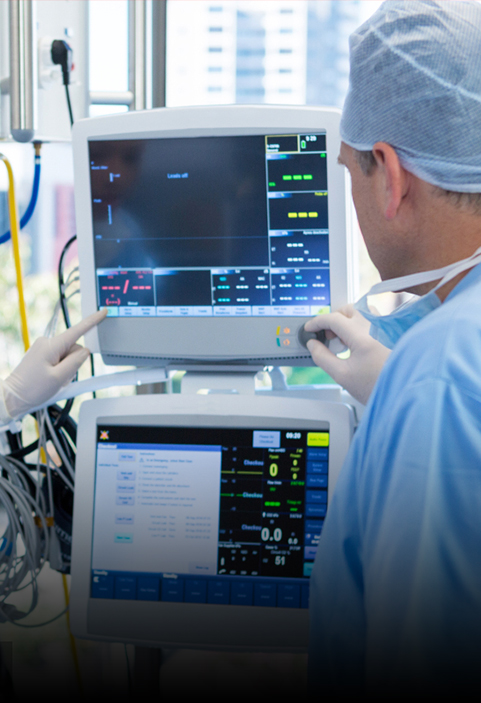
Smart home, HVAC and connected appliances
Chicago homes experience wide seasonal temperature swings. Thermostats, air-quality devices and connected appliances need robust power conversion, relay protection, sensor calibration support and reliable wireless performance.
View smart-home PCBA
Building automation, security and access control
Intercoms, access readers, cameras and door controllers often operate for years in unconditioned spaces. Conformal coating, power integrity, firmware-security documentation and stable long-term BOM planning become business-critical.
View safety & security PCBA
Wearables and medical-device electronics
Medical and wellness devices require documented processes, lot traceability and consistent test evidence. ISO 13485-controlled systems support Chicago product teams working with clinical partners, insurers or regulated distribution channels.
View medical PCBA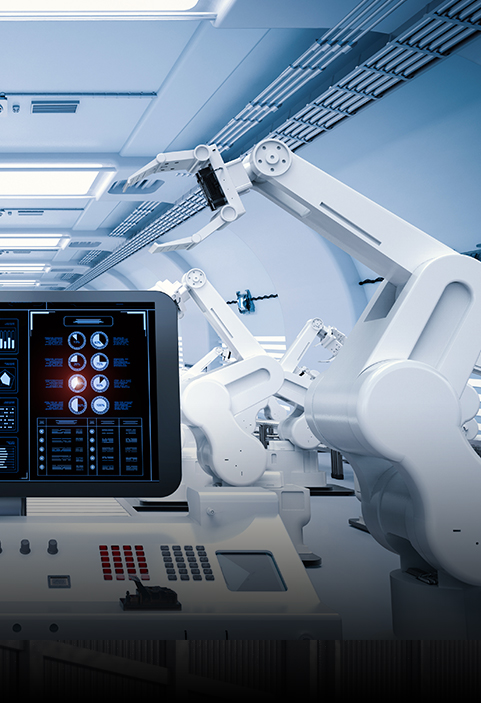
Networking, computing and industrial control
Chicago’s logistics and industrial customers depend on routers, switches, gateways, scanners and control boards. High-speed layout discipline, BGA inspection, thermal planning and functional testing reduce field failures.
View computer PCBA
Controlled Workflow
From Gerber to Chicago: six controlled PCBA steps
Knowing what happens after a purchase order reduces friction between engineering and procurement. This is the workflow used to move a Chicago project from design data to a shipment-ready PCBA.
DFM & BOM Review
Engineers check Gerber, BOM and centroid data for manufacturability, footprint errors, clearance issues, test access and end-of-life parts before any material is ordered.
Component Sourcing
Parts are purchased through 100+ agents and suppliers, then pass incoming inspection, anti-counterfeit checks and moisture-sensitive device control. Alternates are documented when approved.
PCB Fabrication
Bare boards are produced to your stack-up, surface finish and impedance requirements, from simple single-layer boards to HDI, rigid-flex, heavy-copper and high-Tg designs.
SMT & THT Assembly
Seven SMT lines and two DIP/THT lines handle fine-pitch, BGA and mixed-technology boards for prototypes, pilot builds and mass production with the same engineering continuity.
Inspection & Testing
AOI, X-ray, ICT and functional tests, plus IC programming and conformal coating, are logged through our MES so Chicago buyers receive evidence, not assumptions.
Box Build & Delivery
Cable assembly, enclosure integration and ESD-safe packaging are prepared for export to Chicago and the wider US market, with shipment status available to procurement teams.
Quality, Compliance & IP

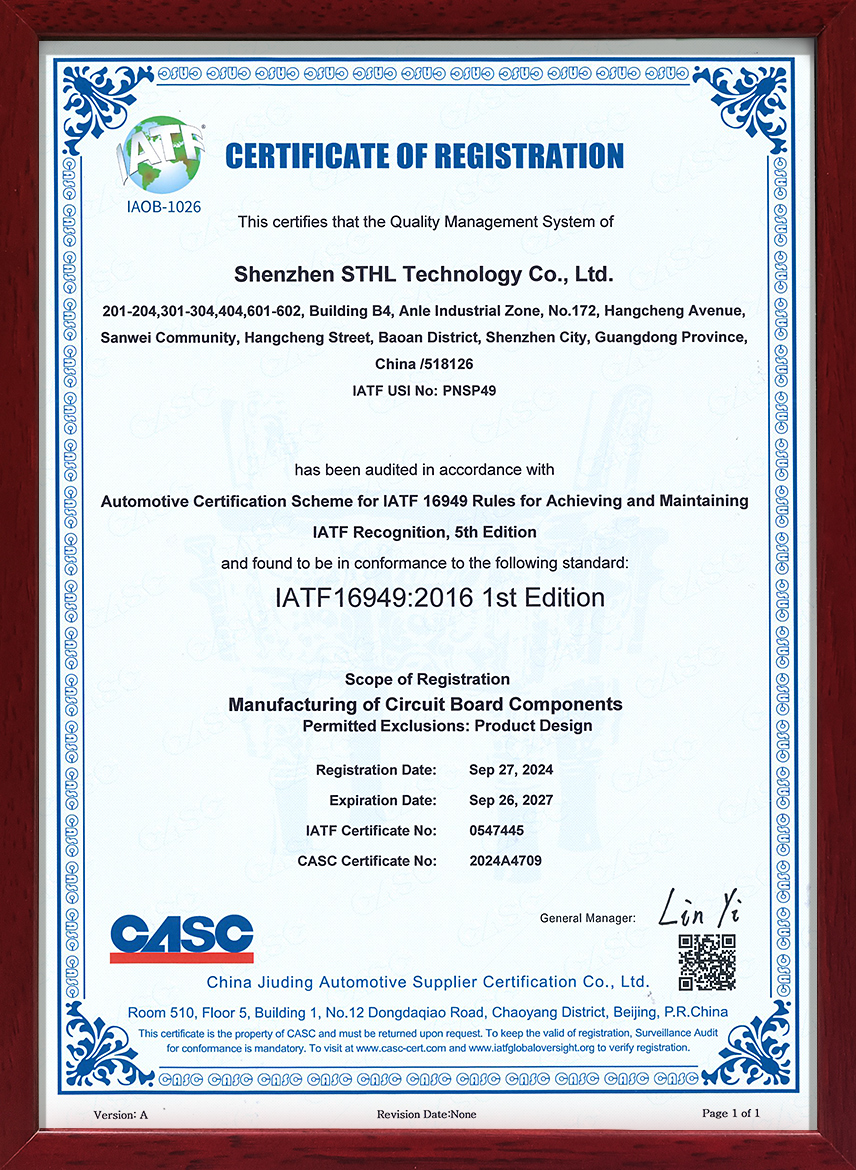
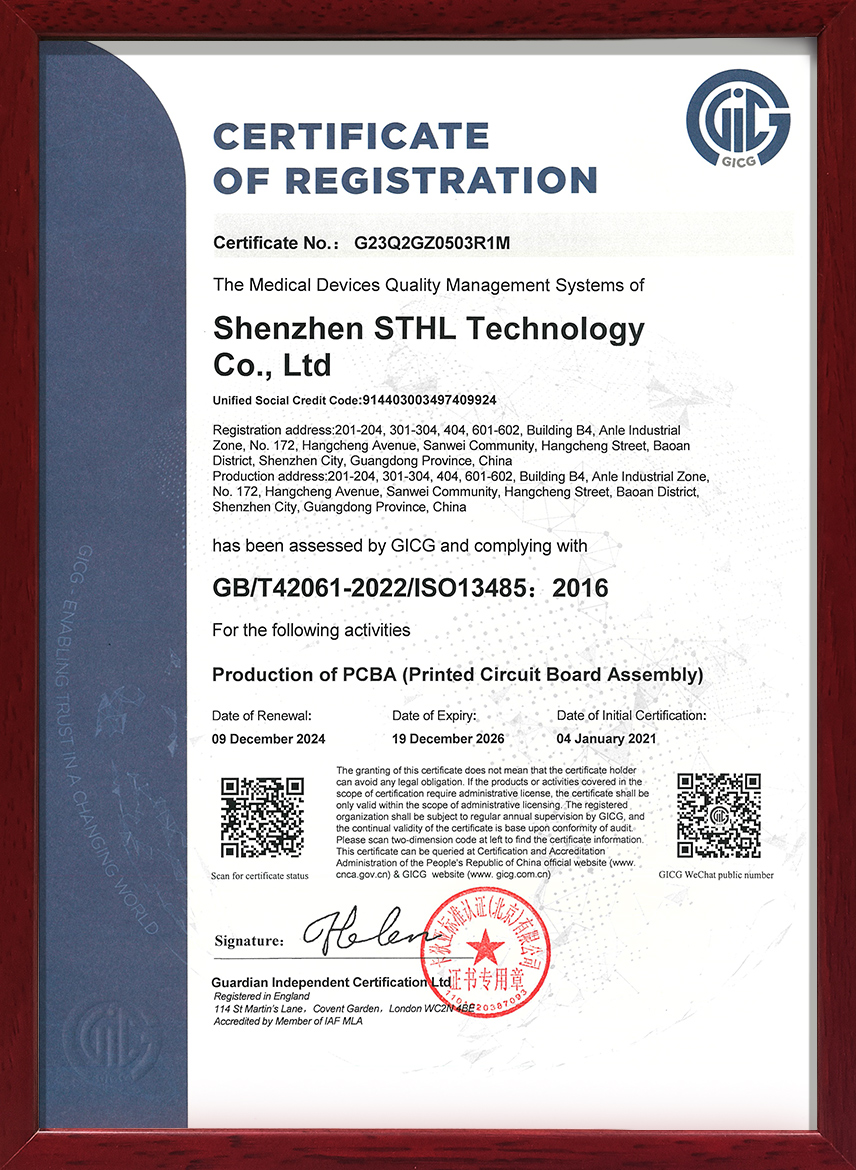
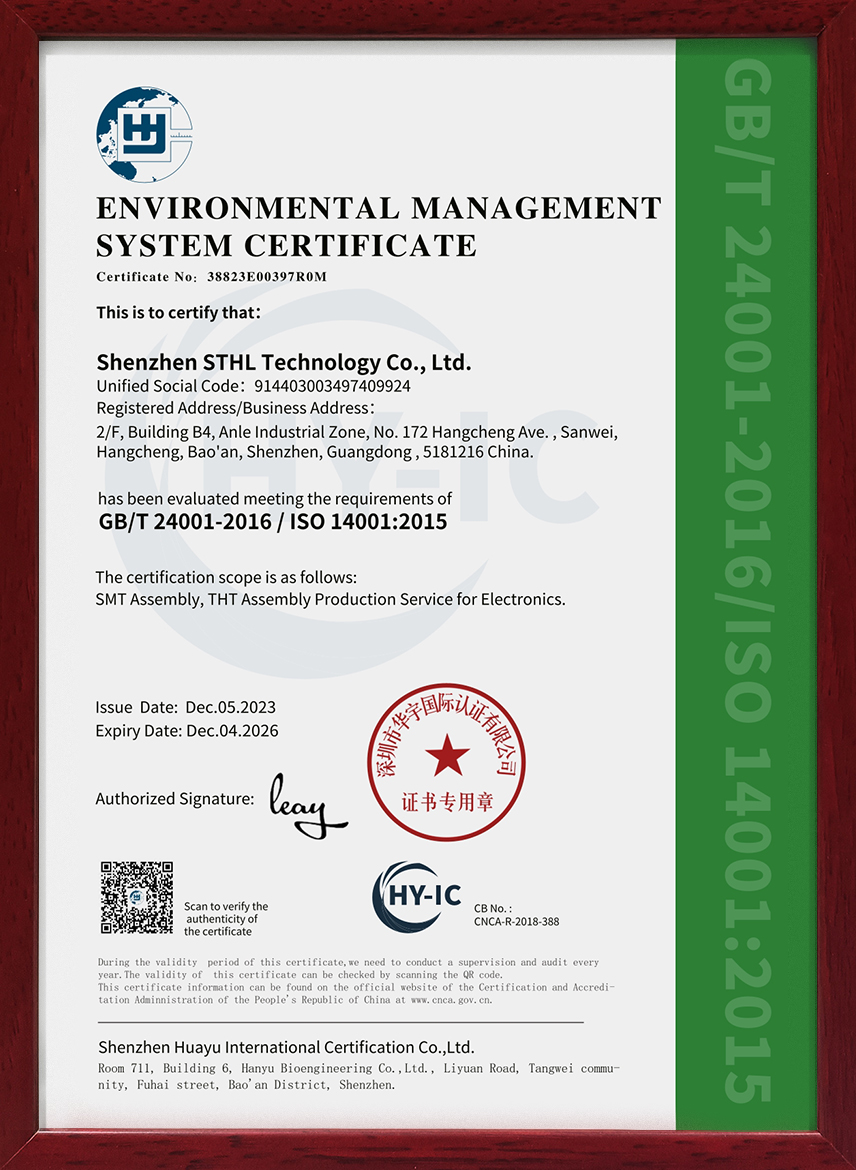
Quality, compliance and IP protection Chicago buyers can verify
Chicago procurement and quality teams often ask for evidence before price. STHL operates under IATF 16949, ISO 9001, ISO 14001 and ISO 13485 systems, with RoHS-compliant assemblies and inspection records available according to project scope. Design files are protected by NDA before RFQ, project data is restricted to the assigned engineering team, and every build is tracked through ERP and MES systems.
ISO 9001
Quality Management System
IATF 16949
Automotive Quality Management
ISO 13485
Medical Devices Quality Management
ISO 14001
Environmental Management System
Authority & Market Evidence































Brand experience and component sourcing relationships
Long-term cooperation with global brands and established component distributors helps keep the BOM genuine, traceable and available. The logos below reflect brand customers, cooperative enterprises and sourcing channels presented in STHL’s original website content. They are shown for identification and supplier-evaluation purposes.
Brand customers and cooperative enterprises
Component sourcing channels
Logos are presented as supply-chain and market-experience references. Project-specific sourcing is confirmed during RFQ and BOM review.
Client Feedback
What engineers and buyers say about working with STHL
Feedback from hardware engineers, designers and company owners across North America, Europe and beyond reflects the practical concerns of Chicago buyers: communication, delivery, sample confidence and repeat-order consistency.
“
Excellent team to work with and fast delivery with high-quality boards. We are very happy to work with such a good supplier. Thanks again.

PauloR&D Engineer · United States
“
Please extend my thanks to your team for your hard work in preparing these samples. This positive experience has strengthened my confidence in your company, and I’m looking forward to discussing bulk orders in the near future.

OliviaHardware Engineer · Germany
“
We are satisfied with the last order. You did a great job on those boards and the lead time was short. I will place a new order soon.

WilliamCEO · Italy
“
We have tested all the boards and I am highly pleased. I will repeat my order soon. Thank you again for your excellent service.

AnnaSr. Hardware Designer · New Zealand
News & Insights
Consumer electronics PCBA insights and factory news
Practical updates from the production floor: customer visits, traceability practices, packaging discipline and the factors that really drive PCBA lead time for global OEMs.


Nov 9, 2026 · Factory Visit
STHL Hosts Two German Visitors for an SMT, THT and Material Preparation Walkthrough
Read more
Nov 12, 2026 · Tech Update
STHL PCBA Component Traceability: From Incoming Reel to Finished Board
Read more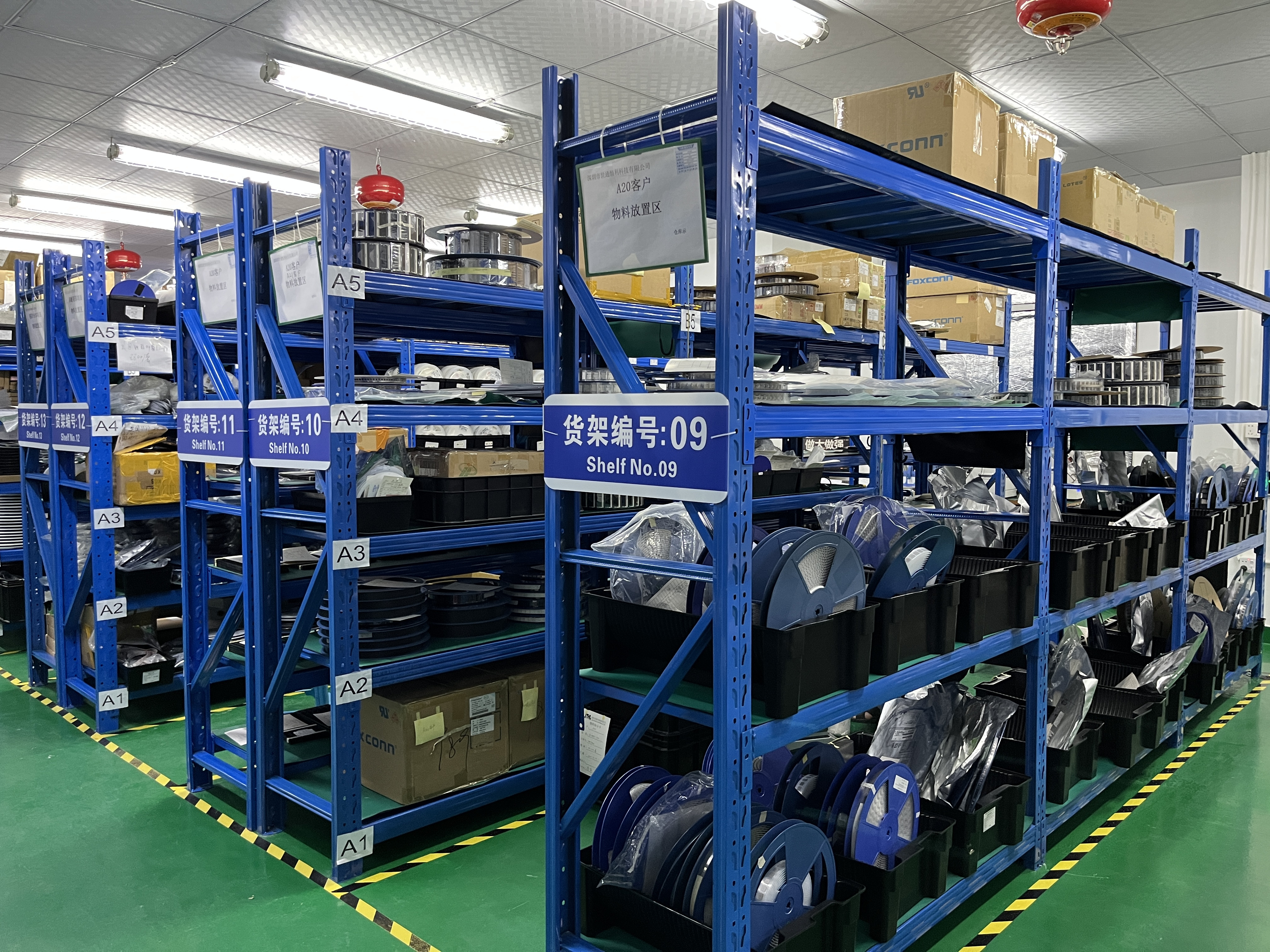
Nov 10, 2026 · Industry News
PCBA Lead Time: Where the Days Go Between Purchase Order and Shipment
Read more
FAQ
FAQ: consumer electronics PCB assembly for Chicago buyers
Straight answers to the questions Chicago procurement and engineering teams ask before choosing a PCB assembly manufacturer in China.
What files do I need to submit for a PCBA project?
Send Gerber files, a BOM with manufacturer part numbers, the pick-and-place (centroid) file and assembly drawings. If you need IC programming or functional testing, include firmware and test procedures. Our engineers complete a DFM and BOM review before production starts so that footprint issues, end-of-life parts, test-access limitations and sourcing risks are identified early.
Is there a minimum order quantity (MOQ)?
No. STHL accepts prototype, low-volume and high-volume PCB assembly orders, so Chicago hardware teams can validate a design and scale to mass production with the same supplier. This is especially useful for NPI programs that need a small pilot build before a full production release.
Can STHL source all the electronic components?
Yes. We offer full turnkey, partial turnkey and consigned assembly. Our sourcing team works with 100+ agents and suppliers covering more than 500,000 part numbers, with incoming inspection and traceability from reel to finished board. When parts are constrained, engineering can propose approved alternates and document the change for your review.
Which quality certifications does STHL hold?
STHL is certified to IATF 16949, ISO 9001, ISO 14001 and ISO 13485, and produces RoHS-compliant assemblies. Boards are verified with AOI, X-ray, ICT and functional testing. Project-specific documentation can include inspection records, test logs, first-article reports and other quality evidence required by your procurement process.
How do you protect our design files and IP?
We sign an NDA before RFQ, restrict project data to the assigned engineering team and track every build through our ERP and MES systems. For Chicago and US-based teams, this protects sensitive schematics, firmware, BOM data and product plans while still allowing practical engineering communication and production support.
Can we audit or visit the factory?
Yes. Customers are welcome to visit our Shenzhen factory and R&D laboratory at any time, and a 360-degree virtual factory tour is available for remote evaluation. Audits can cover SMT, THT, testing, material control, traceability and packaging processes depending on your supplier-qualification scope.
How does STHL support Chicago and US buyers across time zones and logistics?
Projects can be coordinated by email, video review and scheduled calls aligned to US working hours. Production status is tracked through ERP and MES, and shipments can be prepared for air, express or other export methods suitable for Chicago and the Midwest. Packaging can be specified for ESD safety, moisture protection and distributor or end-customer labeling needs.
How do you handle NPI, low-volume builds and scale-up?
STHL keeps engineering continuity from prototype through production. The same DFM feedback, sourcing assumptions, test strategy and assembly documentation can carry forward into pilot and volume builds. This reduces the risk of a “prototype supplier” and a “mass-production supplier” interpreting your design differently.
What compliance should Chicago consumer electronics teams plan for?
The exact compliance path depends on your product category and sales channel. Common considerations include FCC requirements for wireless or digital devices, UL or safety standards for relevant products, RoHS/REACH material restrictions, California Proposition 65 where applicable, battery-transport rules and cybersecurity expectations for connected devices. STHL can support the manufacturing documentation and test records needed for your compliance process, while final certification remains the product owner’s responsibility.
Talk to a PCBA Engineer
[email protected] +86 135 1018 8049 WhatsApp: +86 135 1018 8049 Send Inquiry NowRelated STHL capabilities
Products
PCBA Solution
LED PCB Assembly
Aerospace PCB Assembly
Smart Home PCB Assembly
Safety & Security PCB Assembly
Communication PCB Assembly
Power Supply PCB Assembly
Energy PCB Assembly
Consumer Electronics PCB Assembly
Medical PCB Assembly
Automotive PCB Assembly
Computer PCB Assembly
Industrial Control PCB Assembly
Environmental Monitoring PCB Assembly
Global Service
Hot Blog
Top Search Keywords
Request a Catalog
Contact Us
More Chicago-Focused Programs
Eight additional consumer electronics PCBA programs for Chicago product teams
These programs complete the original STHL consumer-electronics product series. Each product URL is retained, and each program can be reviewed for Chicago-specific NPI support, component sourcing, assembly, testing and box build.
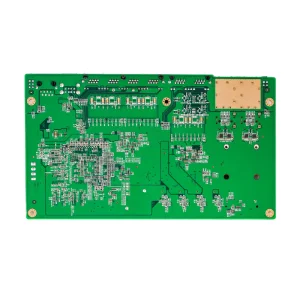
Chicago programReliable Smartphone PCB Assembly--STHL Supplier, in China
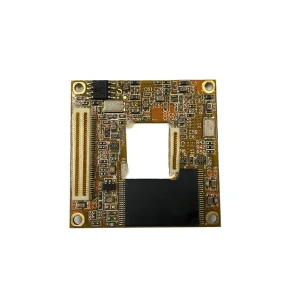
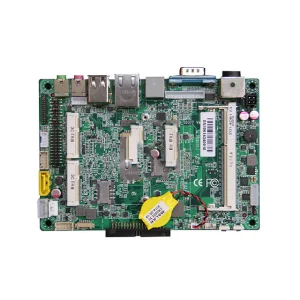
Chicago programTop-Rated Modem PCB Assembly--STHL Service, Manufacturers
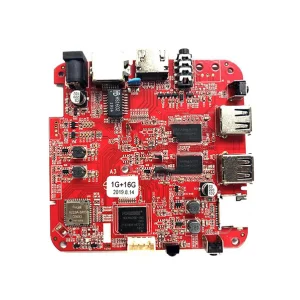
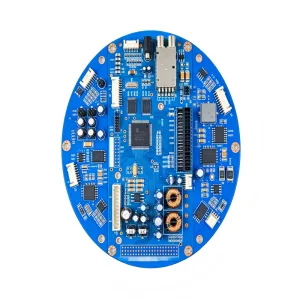
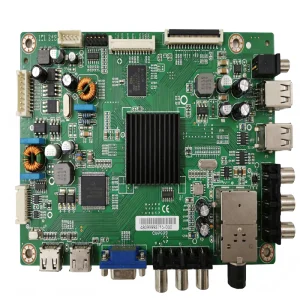
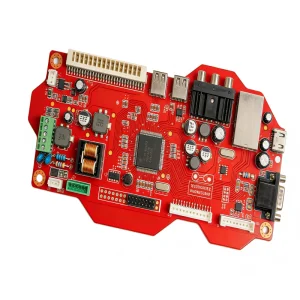
Chicago programCustom Intercom PCB Assembly--STHL Service, Manufacturers