Italy Service Desk · NDA-First RFQ · DDP to Milan & Rome

Communication PCB Assembly Manufacturer & Service for Italy

Turnkey SMT/THT assembly, impedance-controlled fabrication and EU-compliance testing for Italian telecom OEMs, ISPs, railway signalling groups and industrial networking teams — engineered in Shenzhen, delivered to Lombardy, Lazio, Piedmont and Campania.

Italy Product Portfolio

Four Communication PCBA Platforms Italian Buyers Order Most

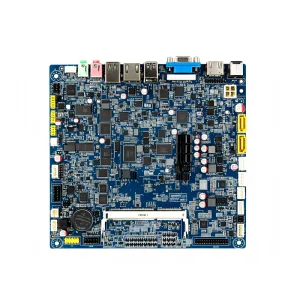
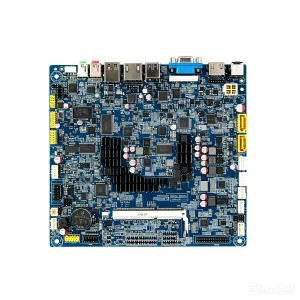
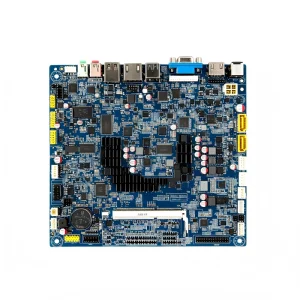
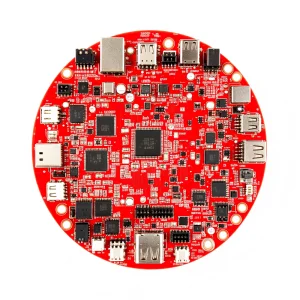
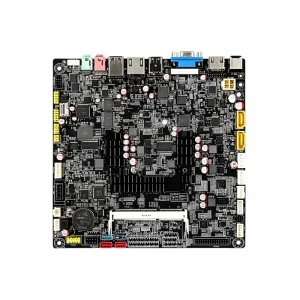
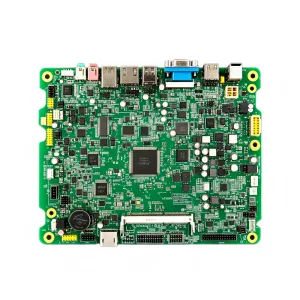
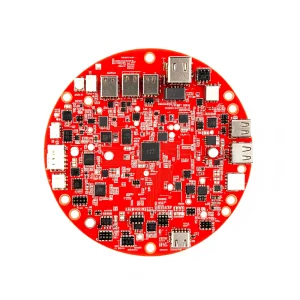
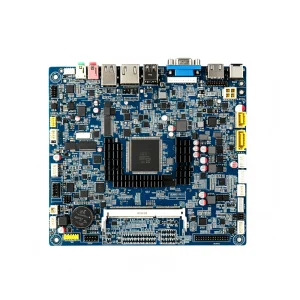
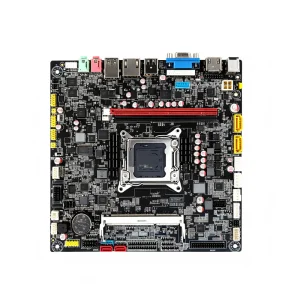
These four assemblies carry the widest share of our Italian shipments — carrier-grade base stations, prototype routers, OEM communication boards and Wi-Fi access points. Every card keeps its original engineering datasheet link.

White Paper · Market Context

Communication PCB Assembly for Italy: What Procurement Teams Should Understand Before the Next RFQ

Italy is not one market. It is a set of regional demand clusters — Milan's data-centre corridor, Turin and Piedmont's automotive and satellite engineering base, the fibre construction sites of the south, and Rome's public-sector networks — each carrying different technical and documentary expectations.

Italian communication hardware demand is shaped by three forces moving at once: European regulatory pressure, national recovery funding, and operator consolidation. The Piano Nazionale di Ripresa e Resilienza (PNRR) channels several billion euros into ultra-broadband and 5G coverage programmes, while FiberCop and Open Fiber continue building the passive optical layer that sits underneath every ONU and OLT shipped into the country. That combination has created a multi-year procurement pipeline for optical network units, optical line terminals, CPE, gateways and backhaul equipment — ordered not only by the four or five large carriers, but by the tier-one subcontractors who build for them.

At the same time, the market has consolidated. The Vodafone Italia and Fastweb merger, the reorganisation of TIM's network assets, and the growing weight of Iliad and WindTre have reduced the number of buying entities while raising the bar on supplier qualification. Fewer, larger buyers audit more deeply. A factory that shipped acceptable boards in 2021 may find that its documentation package, traceability records and change-control discipline are now the deciding factor in 2026.

For those buyers, the question is rarely "can we find a cheaper assembly house?". The real question is: can we find a supplier who still ships repeatable boards on the eleventh build run, and who can answer a CE or RED technical-file question without a two-week delay? Unit price matters, but an unplanned line stop in a Lombardy plant costs far more than the delta between two quotations.

This white paper maps where Italian communication PCBA demand actually sits, where a Chinese factory holds structural cost and speed advantages, which technology transitions should be planned into a 2026–2028 RFQ, and how STHL structures PCB fabrication, component sourcing, SMT/THT assembly, test and box build under one accountable supplier so that Italian engineering teams get repeatability instead of surprises.

It is written for hardware engineering managers, supply-chain leads and technical procurement officers who already know what a PCA is and want to know whether this factory deserves a place on their approved vendor list.

Factory at a Glance

Capacity Sitting Behind Every Italian Order

Measured capability rather than marketing claims — the numbers a vendor audit team would ask for anyway.

20+Years in EMS & PCBA since 2006
10,000 m²Dust-controlled production floor in Shenzhen
50+In-house engineers, DFM and test specialists
7SMT lines plus 2 DIP/THT and 2 box-build lines
500,000+Component part numbers reachable via 100+ sourcing agents
99.5%On-time delivery across 90+ export regions
Italy · Local Industry Reality

Italy's Communication Hardware Landscape: Where the Demand Actually Comes From

Understanding the six demand clusters that generate most Italian communication PCBA enquiries helps a supplier pre-position components, test fixtures and documentation before the RFQ lands.

Ultra-Broadband & PNRR Funding

Italy's recovery plan underwrites fibre-to-the-home and 5G coverage in market-failure areas. The result is a sustained order book for GPON and XGS-PON ONU boards, OLT line cards and customer premises gateways — frequently tendered by wholesalers and their system integrators rather than by a single carrier.

Data Centres & Cloud Regions

The Milan metro has become one of Europe's fastest-growing data-centre clusters, with Genoa and northern Italy adding hyperscale and colocation capacity. That demand translates directly into Ethernet switch boards, optical transceiver assemblies and high-speed backplane hardware built to tight impedance and insertion-loss tolerances.

5G, Open RAN & Operator Consolidation

With Vodafone Italia and Fastweb combining operations and TIM restructuring its network assets, the vendor landscape is consolidating. Fewer buyers means deeper audits — and a stronger preference for suppliers who can document process control, not merely quote a unit price.

Rail, Maritime & Satellite Communications

Italy hosts a dense railway signalling supply chain built around ERTMS and GSM-R programmes, alongside a satellite engineering cluster in Turin and Lazio. Both environments demand extended temperature ranges, conformal coating and vibration-tolerant assemblies with full lot traceability.

Industrial IoT & Smart Manufacturing

From the packaging valley around Bologna to the machine-tool clusters of Lombardy and Veneto, Italian industrial OEMs are embedding connectivity into machinery. Industrial gateways, protocol converters and fieldbus modules form a steady, unglamorous, high-mix order stream.

Public Safety & Critical Infrastructure

Government and emergency-service networks in Lazio and across the regions place a premium on secure-boot hardware, tamper evidence and firewall-class throughput. NIS2 transposition into Italian law is raising documentation expectations for any device connected to critical infrastructure.

Supplier Selection

Why Italian Buyers Choose a China Communication PCBA Factory

Six advantages that survive scrutiny in a technical audit — and the reasoning behind each one.

One Supplier, One Accountability Line

PCB fabrication, component sourcing, SMT/THT assembly, conformal coating, IC programming, functional test and box build sit inside a single 10,000 m² facility. When a board fails at final test, nobody can blame a third-party fabricator — the root cause is found in one building.

Component Sourcing Depth

Telecom BOMs are the hardest to keep complete: long-lead PHYs, FPGAs, optical DSPs and RF front-ends routinely slip. Access to 100+ agents and distributors covering more than 500,000 part numbers, plus approved alternate-part proposals, keeps an Italian build schedule intact when a single line item goes on allocation.

Engineering That Lowers Total Cost

DFM review, panelisation optimisation, layer-stack rationalisation and BOM cost-down proposals are performed before material is purchased. On a 12-layer base station board, a stack-up change alone can remove a meaningful percentage of bare-board cost without touching electrical performance.

Certification & Audit Readiness

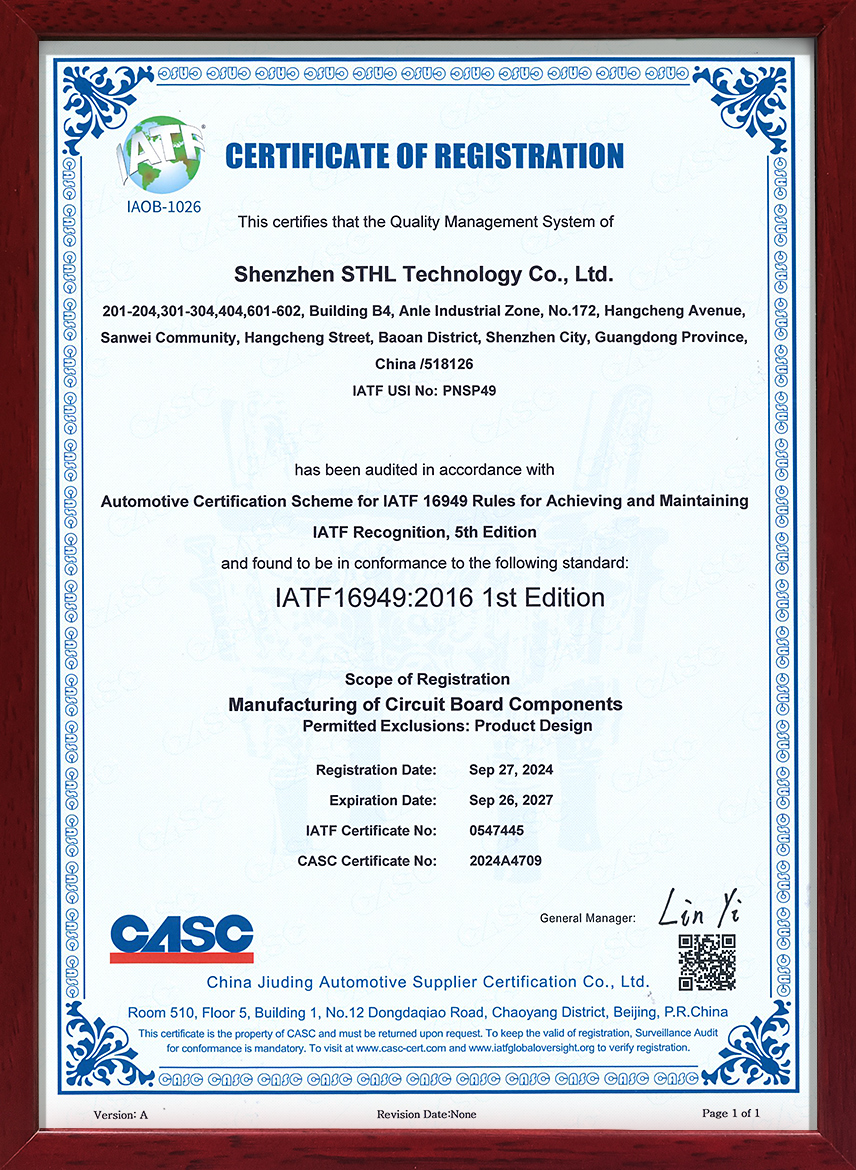
IATF 16949, ISO 9001, ISO 14001 and ISO 13485 systems are maintained under third-party surveillance audits. Certificate copies, control plans, MSA studies and corrective-action records can be released to an Italian quality team before the first purchase order is issued.

Prototype Speed, Volume Discipline

There is no minimum order quantity. A design can be validated with five boards in days and then scaled into the same certified lines for series production, which removes the requalification cost that comes from switching suppliers between pilot and volume.

Logistics & Export Documentation

Air freight reaches Milan Malpensa or Rome Fiumicino in a matter of days, while consolidated sea freight lands at Genoa or La Spezia for heavier volumes. Commercial invoices, packing lists, EUR.1 origin documentation and DDP or DAP terms are prepared as standard, not as a favour.

Industry Trends

Communication PCBA Technology Trends Shaping 2026–2028 Demand

Six transitions that change what a communication board must physically be able to do — and therefore what a supply chain partner must be able to build.

Open RAN Disaggregation

Splitting the base station into distributed and radio units multiplies the number of specialised boards in a network. That raises demand for mid-volume, high-mix assembly with tighter test coverage per unit — precisely where a flexible Chinese EMS partner outperforms a captive line optimised for one product family.

10G PON and Wi-Fi 7 CPE Refresh

As Italian fibre operators migrate from GPON toward XGS-PON and begin trialling 10G-capable CPE, gateway boards gain higher-speed SerDes, tighter thermal budgets and more aggressive EMI constraints. Assembly houses without X-ray and impedance verification capability will fall out of qualification quickly.

400G to 800G Optical Transition

Data-centre interconnect upgrades in Milan and Genoa are pushing transceiver assemblies toward denser BGA arrays and stricter via tolerances. Fine-pitch BGA capability, X-ray verification and repeatable reflow profiling become non-negotiable.

RedCap and Massive IoT

Reduced-capability 5G modules open new categories of industrial and municipal devices in Italy. These products are cost-sensitive, produced in moderate volumes, and depend on cheap, reliable, repeatable assembly — the exact profile Chinese high-mix factories are built for.

Edge AI and Smart NICs

Inference moving closer to the network edge increases board complexity: more power rails, denser DDR routing, and thermal designs that must survive sealed enclosures. Suppliers need simulation support and thermal-cycling validation, not just a pick-and-place line.

NIS2 and Hardware Root of Trust

As Italy transposes the EU network and information security directive, secure boot, signed firmware and hardware trust anchors move from differentiators to table stakes. That drives demand for IC programming with key injection, unique serialisation and protected data handling at the assembly stage.

Localised Application Scenarios

Where Communication PCBAs Actually Run in Italy

Italian demand is regional. Matching a build specification to the environment it will operate in is the difference between a board that passes qualification and one that returns from the field.

Lombardy — Milan Data Corridor

Hyperscale and colocation sites around Milan require 800G-ready switch boards and optical modules with strict insertion-loss control, plus full test data per serial number so that a European audit trail exists from the first deployment.

Lazio — Rome Public Networks

Government and emergency-service communications prioritise secure-boot firmware, tamper detection and firewall-class packet throughput. Boards are typically low-to-mid volume but demand exhaustive functional test and documented change control.

Piedmont — Turin Automotive & Space

Automotive telematics and satellite ground equipment share a requirement for wide temperature operation, conformal coating and extended vibration tolerance, often under IATF 16949 discipline inherited from an automotive parent programme.

Campania & the South — Fibre Build-Out

Fibre construction in less densely served regions drives high-volume, cost-optimised ONU and CPE boards. Here the winning specification is repeatability at scale, with stable BOMs and predictable lead times across many production batches.

Emilia-Romagna — Industrial Automation

The packaging and automation cluster around Bologna embeds industrial Ethernet and fieldbus connectivity into machinery. Mixed-technology boards with through-hole connectors, wide-input power supplies and 10-year availability expectations are the norm.

Apennine & Rural Coverage Gaps

Mountainous terrain makes repeater, relay and fixed-wireless-access hardware operationally important. Outdoor enclosures impose thermal-cycling and humidity requirements that must be designed into the PCB stack-up and coating specification from the start.

Macro-Level Solutions

End-to-End Communication Network PCBA Solutions

Rather than selling individual boards, we map assembly capability onto the network layers an Italian operator, ISP or systems integrator actually operates.

Access Layer

ONU, OLT, CPE and optical transceiver assemblies for FTTH and fixed-wireless access programmes, including XGS-PON migration paths.

Metro & Core Transport

Ethernet switch fabrics, optical line cards and backplane hardware for data-centre and metro transport, verified with X-ray and ICT.

Radio Access Network

Base station, small cell, repeater and radio unit boards with heavy copper, thermal vias and tight RF layout discipline.

Security Perimeter

Firewall, secure gateway and VPN appliance boards with secure-boot programming, key injection and serial-number traceability.

Customer Premises Equipment

Modem, router, gateway and access point boards for retail, hospitality and enterprise Wi-Fi 6E and Wi-Fi 7 deployments.

Industrial & Transport

Industrial gateways, protocol converters and railway communication boards with conformal coating and extended temperature validation.

Global Procurement Requirements

What Global Enterprises and Italian Procurement Teams Ask For

Qualification conversations with European buyers follow a predictable pattern. Answering these six areas early shortens the path from enquiry to first purchase order.

A complete RFQ package

  • Gerber or ODB++ fabrication data with stack-up and impedance requirements
  • BOM with manufacturer part numbers and approved alternates
  • Pick-and-place (centroid) file and assembly drawings
  • Test specification, firmware and programming instructions where applicable
  • Target annual volume, delivery destination and Incoterms expectation

The documentary side matters as much as the technical side. Italian buyers increasingly request material declarations for RoHS and REACH, a certificate of conformity per lot, and evidence that the supplier maintains a documented change-notification procedure. A factory that can produce these documents without escalation signals a mature quality system.

Commercial expectations are equally specific. Volume bands are usually quoted with year-over-year price-down commitments, payment terms default to telegraphic transfer with an agreed balance schedule, and second-source strategies are discussed openly. We keep consigned, partial-turnkey and full-turnkey models available so an Italian OEM can choose where to hold inventory risk.

Traceability

Reel-to-board lot records, date codes and serialised test results retained per build.

Yield Targets

First-pass yield reported per product, with corrective actions on any recurring defect.

Lead Time

Prototype turns measured in days; series production scheduled against a locked material plan.

IP Protection

NDA signed before RFQ, project data restricted to the assigned engineering cell.

Capacity Reserve

Production slots held for repeat customers so ramp-up does not queue behind new projects.

Audit Access

On-site visits welcomed, with a 360° virtual factory tour for remote pre-qualification.

How We Work

From Gerber Files to an Italian Loading Dock in Six Controlled Steps

Knowing what happens after the purchase order is signed removes the uncertainty that makes overseas sourcing feel risky.

DFM & BOM Review

Engineers check fabrication data, footprints, panel utilisation and end-of-life risk before a single component is ordered.

Component Sourcing

Parts are purchased through vetted distributors and agents, then inspected on arrival with MSD control and date-code recording.

PCB Fabrication

Bare boards are produced to the agreed stack-up, surface finish and impedance targets, from single-sided to HDI and rigid-flex.

SMT & THT Assembly

Seven SMT lines and two DIP lines handle fine-pitch, BGA and mixed-technology boards across prototype and volume batches.

Inspection & Test

AOI, X-ray, ICT and functional test, plus IC programming and conformal coating, with every result logged against the lot.

Box Build & Shipping

Cable assembly, enclosure integration, ESD-safe packing and export documentation for delivery to any Italian address.

European Compliance

Quality Systems and EU Documentation for the Italian Market

Independent third-party certification underpins the process controls, while the documentation package supports your CE marking obligations in Europe.

Communication equipment placed on the Italian market must satisfy the Radio Equipment Directive 2014/53/EU where radio transmitters are involved, the EMC Directive 2014/30/EU for electromagnetic compatibility, and the Low Voltage Directive where applicable. RoHS 2011/65/EU and REACH obligations run alongside, and the Waste Electrical and Electronic Equipment Directive governs end-of-life take-back responsibilities. None of these are the assembler's legal duty — they belong to the brand owner — but a factory that cannot supply the supporting evidence makes your CE file harder to assemble.

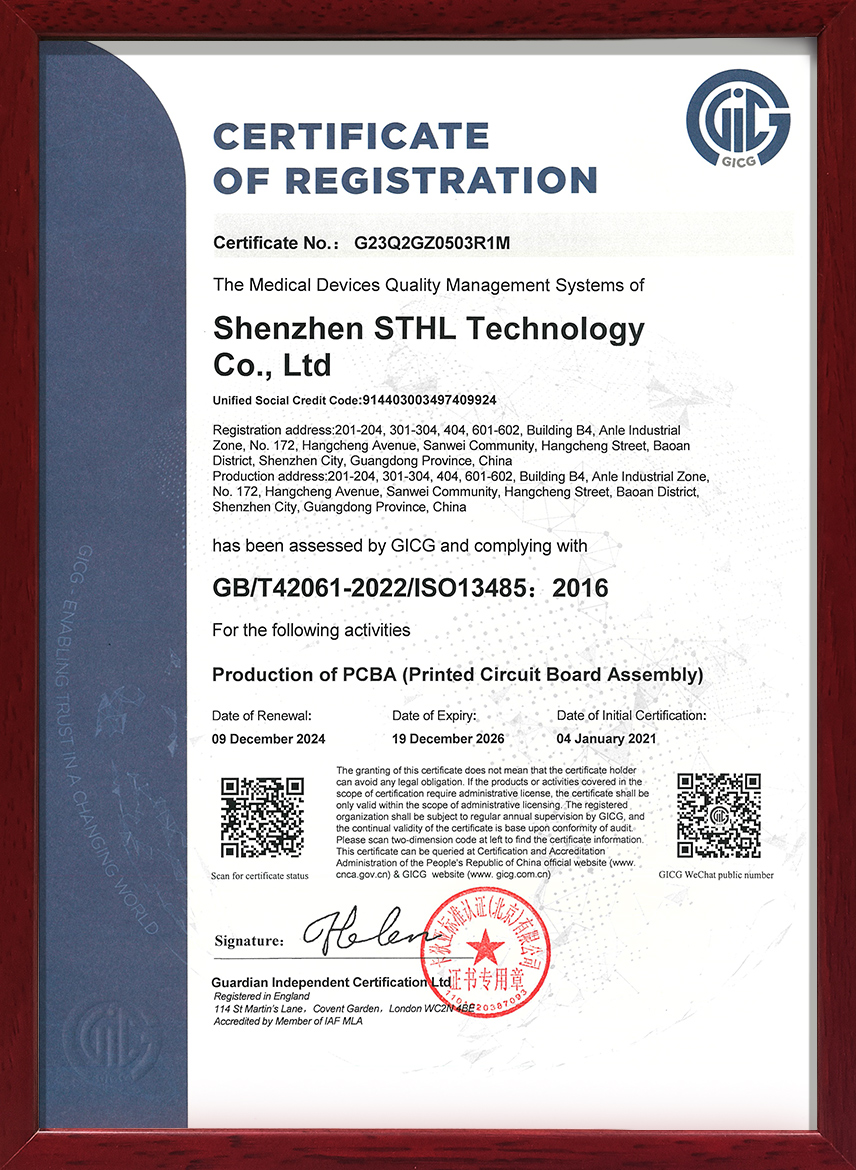
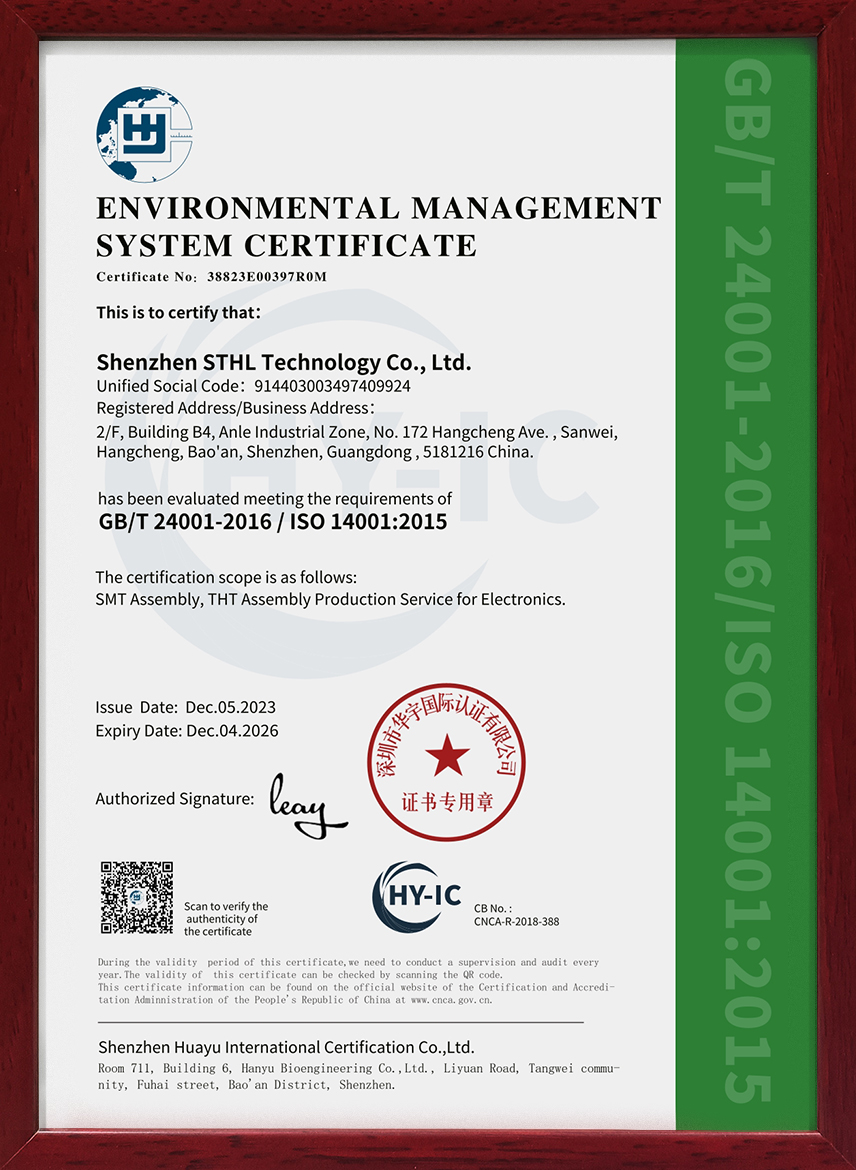
STHL operates under IATF 16949, ISO 9001, ISO 14001 and ISO 13485 systems and produces RoHS-compliant assemblies as standard. Boards are verified through automated optical inspection, X-ray inspection of hidden joints, in-circuit test and application-specific functional test. For Italian customers we routinely provide material declarations, lot-level certificates of conformity, dimensional and impedance reports on request, and signed non-disclosure agreements before any design data is exchanged.

STHL ISO 9001 quality management certificateISO 9001
STHL IATF 16949 automotive quality certificateIATF 16949
STHL ISO 13485 medical device quality certificateISO 13485
STHL ISO 14001 environmental management certificateISO 14001
STHL technician operating precision PCBA inspection equipment for communication boards

Precision assembly and inspection: every communication build is checked against the approved test specification before packing.

Inside the STHL PCBA factory: SMT lines, testing area and warehouse

Inside the Shenzhen facility: seven SMT lines, two DIP lines and dedicated functional-test stations under one roof.

Complete Communication Range

Eight More Communication PCBA Lines Built for Italian Networks

From modem and gateway boards to ONU, OLT, optical transceiver and repeater assemblies — the full telecom portfolio, each linking to its original product page.

Client Feedback

What Engineers and Buyers Say About Working With STHL

Feedback collected from hardware engineers, designers and company owners across Europe and beyond.

We are satisfied with the last order. You did a great job on those boards and the lead time was short. I will place a new order soon.
William, CEO of an Italian electronics company
WilliamCEO Italy
Please extend my thanks to your team for your hard work in preparing these samples. This positive experience has strengthened my confidence in your company, and I am looking forward to discussing bulk orders in the near future.
Olivia, hardware engineer in Germany
OliviaHardware Engineer · Germany
The supplier's professionalism is evident in their seamless communication, efficient processing and reliable service. They are a trustworthy and commendable partner.
Dmitry Ivanov, CEO in Romania
Dmitry IvanovCEO · Romania
Send Inquiry Now
FAQ

Communication PCBA Sourcing FAQs for Italian Buyers

Direct answers to the questions procurement and engineering teams ask most often before placing a first order with a Chinese PCB assembly manufacturer.

What files do I need to submit for an Italian communication PCBA project?

Send Gerber or ODB++ fabrication data, a BOM with manufacturer part numbers and approved alternates, the pick-and-place (centroid) file, and assembly drawings. If the board needs IC programming or functional test, include firmware, the programming sequence and the test procedure. Our engineers complete a DFM and BOM review and return a consolidated quotation before any material is ordered.

Is there a minimum order quantity for Italian customers?

No. We accept prototype, low-volume and high-volume orders, so an Italian design team can validate five boards and then scale the same design into series production without changing supplier or repeating the qualification cycle.

Can you source the full BOM for telecom-grade boards?

Yes. We offer full turnkey, partial turnkey and consigned assembly. Our sourcing team works with more than 100 agents and distributors covering over 500,000 part numbers, and proposes approved alternates when a long-lead PHY, FPGA or optical DSP is on allocation — with your engineering sign-off before substitution.

Which certifications do you hold, and can you support CE marking in Italy?

We operate under IATF 16949, ISO 9001, ISO 14001 and ISO 13485 systems and build RoHS-compliant assemblies. CE marking remains the brand owner's responsibility, but we supply the supporting evidence you need: material declarations, lot certificates of conformity, inspection reports and test data that feed directly into your technical file.

How do you protect our design files and intellectual property?

We sign a non-disclosure agreement before the RFQ, restrict project data to the assigned engineering team, and track every build through ERP and MES systems. Customer files are never used for any other project, and tooling or test fixtures built for your product remain dedicated to it.

How long does production and delivery to Italy take?

Prototype assembly typically runs in days once material is in house; series production is scheduled against a locked component plan. Air freight reaches Milan Malpensa or Rome Fiumicino within days, while sea freight to Genoa or La Spezia suits heavier consignments. We quote a realistic transit window rather than an optimistic one.

Do you ship DDP to Italy and handle customs documentation?

We work with DDP, DAP and FOB terms depending on what your finance and logistics teams prefer. Commercial invoices, packing lists, origin documentation and product descriptions are prepared so that clearance at an Italian port or airport is not delayed by paperwork. We can also ship to a nominated forwarder.

How is quality verified on communication boards?

Every build passes automated optical inspection, with X-ray inspection of hidden BGA and QFN joints, in-circuit test where a fixture exists, and application-specific functional test. Results are logged against the production lot, and first-article reports are available for new products before volume release.

Can we audit the factory or visit before approving the supplier?

Yes. Customers are welcome to visit our Shenzhen factory and R&D laboratory, and a 360-degree virtual factory tour is available for remote pre-qualification when travel is not practical. Audit checklists from Italian quality departments are followed point by point.

Do you support second-source and dual-supplier strategies?

We do. Many European buyers split volume between two assemblers to reduce risk. We can take a defined share of a programme, hold agreed safety stock, or act as the primary source while you qualify a backup — with consistent documentation so that both sites work from the same test specification.

Ready to Qualify a Communication PCBA Partner for Italy?

Send your Gerber files, BOM and volume forecast. We will return a DFM review, a component risk list and a quotation — under NDA, with no obligation.