
Communication PCB Assembly Products for Greece-Focused Programs
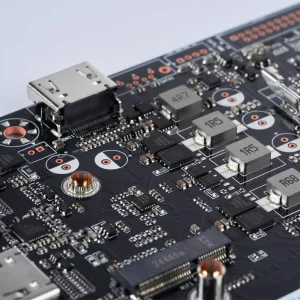
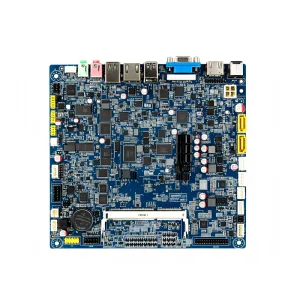
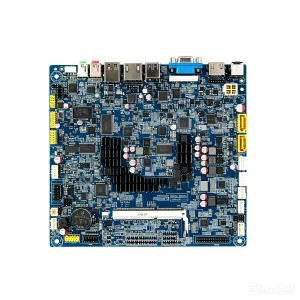
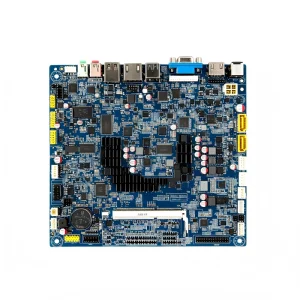
These four product families cover the most requested communication PCB assembly platforms for Greek network builders: OEM communication PCBA, prototype routers, base station boards, and wireless access points. Every product page keeps its original technical route and RFQ options.
Why Communication PCB Assembly Is a Strategic Category for Greece
Greece’s communication ecosystem is no longer only about consumer mobile coverage. It is a layered national infrastructure market: fiber rollout, 5G densification, island connectivity, port and shipping communications, tourism bandwidth, public-sector digital services, energy telemetry, and industrial IoT. Behind every router, ONU, OLT, base station, optical transceiver, firewall, switch, and repeater is a PCBA whose quality determines field reliability and deployment cost.
What Greek buyers should evaluate beyond unit price
For Greek OEMs, system integrators, and distributors, the lowest quotation is rarely the lowest total landed cost. A communication PCBA program must be measured by first-pass yield, component authenticity, EU documentation readiness, firmware programming control, test coverage, and the supplier’s ability to manage long-lifecycle BOMs. A board that fails in a ferry cabinet, a coastal outdoor enclosure, an island base station, or a hotel Wi-Fi ceiling can cost far more than the spread between two quotations.
- Experience: manufacturing communication, computer, industrial, and telecom PCBAs for global OEMs since 2006.
- Expertise: 50+ engineers supporting DFM, BOM review, test development, IC programming, and box build.
- Authority: IATF 16949, ISO 9001, ISO 14001, and ISO 13485 controlled processes.
- Trust: NDA before RFQ, ERP/MES traceability, AOI, X-ray, ICT, and functional testing.
 Shenzhen PCBA manufacturing base: high-mix communication boards, prototype builds, and volume production under one quality system.
Greece Communication Infrastructure and Industrial Context
Greece’s telecom market is shaped by OTE Group, Nova, Vodafone Greece, private network operators, data-center and cloud providers, shipping companies, tourism groups, utilities, and public-sector projects. The commercial opportunity is broad, but the technical requirements are highly local: coastal humidity, island logistics, seasonal demand peaks, mountainous coverage gaps, and EU compliance expectations all influence communication PCBA design and sourcing.
Telecom modernization, FTTH, and 5G densification
Fixed and mobile operators continue to invest in fiber-to-the-home, backbone capacity, 5G coverage, and enterprise services across Attica, Thessaloniki, and regional cities. As fiber reaches apartment buildings and island communities, demand grows for ONU, OLT, optical transceiver, gateway, and Ethernet switch PCBAs. At the same time, 5G small cells and base station equipment require high-reliability boards with controlled impedance, thermal management, and strong RF grounding.
For Greek OEMs and system integrators, the critical question is not simply “Can the factory assemble this board?” It is “Can the factory repeat the build with the same BOM, the same test coverage, and the same traceability when volumes increase?” That is where a communication PCBA manufacturer with documented process control becomes a strategic supplier rather than a transactional assembler.
Maritime, port, tourism, and island operations
Piraeus is a major Mediterranean logistics gateway, and Greek shipping and ferry operators depend on resilient communications for vessel management, passenger connectivity, port operations, and remote monitoring. Hotels, marinas, short-term rentals, and seasonal venues also need routers, wireless access points, and firewalls that can handle peak occupancy. On the Aegean and Ionian islands, equipment must tolerate salt-air corrosion, wide humidity ranges, surge events, and limited maintenance access.
This creates opportunities for value-added PCBA services: conformal coating, conformal-coated assemblies, surge protection, wide-temperature component selection, IP-rated enclosure integration, and box build. A manufacturer that understands these deployment realities can recommend design-for-reliability changes before a field failure becomes a warranty problem.
FTTH ONU, OLT, and optical transceiver PCBAs
Support for fiber expansion in Athens, Thessaloniki, and island communities. Optical alignment, optical test fixtures, and end-of-line verification can be planned around the product’s PON or point-to-point architecture.
5G base stations, small cells, and repeaters
High-reliability SMT and THT assembly for RF-adjacent boards, power sections, control modules, and thermal interfaces. AOI and X-ray inspection help catch fine-pitch and BGA defects before deployment.
Routers, gateways, and wireless access points
For hospitality, enterprise, ferry, marina, and public Wi-Fi use cases. BOM lifecycle review helps avoid end-of-life parts during a multi-year rollout across Greek sites.
Ethernet switches and firewall appliances
For enterprise networks, logistics hubs, port systems, and data rooms. High-speed digital boards benefit from controlled impedance, X-ray inspection, firmware programming, and functional testing.
Industrial modems and remote telemetry
For water management, agricultural irrigation, energy monitoring, and environmental sensing. Low-power design, connector ruggedization, and conformal coating options can support remote Greek sites.
Public-sector, safety, and operational networks
For municipal connectivity, emergency communications, and transport infrastructure. Documentation, traceability, and repeatable testing matter when equipment must pass formal procurement and acceptance checks.
Global Communication PCBA Demand: Trends That Affect Greek Buyers in 2026
Greece is a connected market inside a global component and equipment ecosystem. The same platform shifts that reshape North American, European, and Asian networks also reach Greek operators and OEMs: open radio architectures, fiber densification, Wi-Fi 7, edge computing, optical capacity expansion, and cybersecurity-by-design.
5G, small cells, and Open RAN
More distributed radio units mean more high-mix PCBA programs. Mixed-technology boards may combine high-speed digital control, RF sections, power conversion, and thermal management. Assembly partners must handle tight tolerances and provide strong inspection coverage.
FTTH and 10G PON expansion
Fiber rollout increases demand for ONU, OLT, splitter-adjacent electronics, and optical transceivers. Test strategy matters: optical performance, calibration data, and serial-number traceability can be specified in the PCBA build package.
Wi-Fi 7, FWA, and enterprise Wi-Fi
Higher throughput and 6 GHz operation increase thermal and EMC complexity. Routers, gateways, and access points require careful DFM review, shielding strategy, and functional testing before release to hospitality and enterprise channels.
Optical transport and high-speed backhaul
Metro, data-center, and submarine landing connectivity continue to push optical module and line-card performance. High-layer-count boards, high-speed materials, and signal-integrity verification become part of the sourcing decision.
Edge computing and IoT at the network edge
Industrial gateways, monitoring nodes, and smart-city devices need compact PCBs with secure boot, remote update support, and long-term component availability. Lifecycle planning should start at NPI, not after mass production.
Cybersecurity and EU compliance pressure
Firewall, VPN, and secure-network appliances require robust firmware programming, access control, and test records. For Greece, alignment with CE marking, EMC, radio equipment, RoHS, REACH, and WEEE documentation is a practical procurement expectation.
Information gain for Greek procurement teams: compare suppliers on their ability to manage component lifecycle + engineering change + test evidence + EU documentation, not only on SMT throughput. A communication PCBA program can be delayed by a single obsolete PHY, a missing test fixture, or an unclear compliance file long before the assembly line becomes the bottleneck.
China Factory Efficiency Advantage for Greek Communication PCBA Buyers
China’s PCBA advantage is not a single low labor rate. It is a dense ecosystem: PCB fabrication, component distribution, stencils, tooling, programming, testing, enclosures, cables, and freight forwarding all within a short industrial radius. For Greek buyers, that ecosystem can compress NPI cycles and reduce coordination risk when managed by a factory with the right controls.
What “efficient” should mean in practice
STHL operates a 10,000+ m² facility with 7 SMT lines, 2 DIP/THT lines, 2 functional test lines, 2 box build lines, and an in-house R&D laboratory. The practical advantage is high-mix flexibility: prototype router boards, optical transceiver assemblies, base station control boards, and volume access point PCBAs can move through a shared engineering and quality system without forcing the customer to manage multiple small vendors.
Component sourcing is another efficiency lever. With access to 100+ agents and suppliers covering more than 500,000 part numbers, STHL can scrub the BOM, suggest alternates, check lifecycle status, and plan long-lead parts before production starts. For Greek OEMs importing into the EU, this early BOM work is often more valuable than a small unit-price difference.
From Shenzhen to Greece: practical logistics routes
Communication PCBAs are usually shipped by air for prototypes and urgent production, and by sea for larger, less time-sensitive volumes. Piraeus and Thessaloniki are natural entry points for sea freight; Athens International Airport supports urgent air shipments. The right Incoterms, HS classification, packaging method, ESD protection, and customs broker should be agreed before the first shipment.
- Prototype and NPI shipments: prioritize air freight and clear labeling for fast customs review.
- Volume shipments: consolidate with Piraeus or Thessaloniki delivery and plan buffer stock for long-lead components.
- Documentation: commercial invoice, packing list, test reports, RoHS/REACH declarations, and traceability files as required.
- Packaging: ESD-safe trays, moisture barrier bags, desiccant, and shock protection for mixed board sizes.
Turnkey Communication PCBA Capabilities: From Gerber to Box Build
A complete communication PCBA program combines component procurement, PCB fabrication, SMT and THT assembly, inspection, testing, programming, conformal coating, cable assembly, and box build. Keeping these steps inside one controlled workflow reduces handoff risk and simplifies supplier qualification for Greek buyers.

Electronic Components Procurement
Full or partial turnkey sourcing through 100+ agents and suppliers, with BOM scrubbing, alternate-part suggestions, and reel-level traceability for telecom and network boards.
Learn more →
PCB Fabrication
Standard, prototype, aluminum, flexible, rigid-flex, HDI, Rogers, ceramic, heavy-copper, high-Tg, and halogen-free boards built to your stack-up.
Learn more →
SMT & THT PCB Assembly
Prototype, low-volume, and high-volume assembly including fine-pitch, BGA, and mixed-technology boards, verified by AOI and X-ray inspection.
Learn more →
Value-Added Services
PCB layout and design support, IC programming, ICT and functional testing, conformal coating, cable and wire harness, and complete box build assembly.
Learn more →DFM & BOM Review
Engineers check Gerber, BOM, and centroid data for manufacturability, footprint errors, and end-of-life parts before material is ordered.
Component Sourcing
Parts are purchased through 100+ agents and suppliers, then pass incoming inspection and moisture-sensitive device control.
PCB Fabrication
Bare boards are produced to your stack-up, surface finish, and impedance requirements, from single-layer to HDI and rigid-flex.
SMT & THT Assembly
7 SMT lines and 2 DIP/THT lines handle fine-pitch, BGA, and mixed-technology boards for prototypes and mass production.
Inspection & Testing
AOI, X-ray, ICT, and functional tests, plus IC programming and conformal coating, with results logged in our MES.
Box Build & Delivery
Cable assembly, enclosure integration, and ESD-safe packaging, shipped to customers in 90+ countries and regions.
E-E-A-T, Certifications, Traceability, and Audit Readiness
For Greek and EU buyers, supplier claims must be verifiable. STHL’s quality system is documented through independent certifications, in-process inspection, functional test records, and lot traceability. Final CE marking remains the responsibility of the product brand owner, but the PCBA manufacturer should supply the technical evidence needed to support the product’s compliance file.
Company credentials and production evidence
Shenzhen STHL Electronics Co., Ltd. has operated as a certified EMS and ODM provider since 2006. The company is certified to IATF 16949, ISO 9001, ISO 14001, and ISO 13485, and produces RoHS-compliant assemblies. The factory covers 10,000+ m² with 220+ staff, including 50+ engineers, and uses ERP/MES systems to track production status and lot traceability from incoming reel to finished board.
Quality verification includes AOI, X-ray, ICT, and functional testing. For communication PCBAs, these controls are especially relevant for fine-pitch components, BGA devices, optical modules, RF-adjacent sections, and mixed-technology boards that combine digital, analog, and power circuitry. Customers are welcome to visit the Shenzhen factory and R&D laboratory; a 360-degree virtual factory tour is also available for remote evaluation.
Audit-ready documentation package
- NDA signed before RFQ to protect design files and IP.
- DFM and BOM review records before production release.
- Incoming material inspection and supplier traceability.
- AOI, X-ray, ICT, and functional test results where applicable.
- IC programming records and firmware version control.
- RoHS and REACH declarations, packaging data, and shipment documentation.
- ERP/MES production traceability and lot-level records.
Trust signal: STHL’s global service model supports OEMs in the USA, Germany, Italy, the UK, Poland, New Zealand, Brazil, and 90+ other regions. Greek buyers can request documentation formats aligned to their internal supplier qualification process.

ISO 9001
Quality Management System

IATF 16949
Automotive Quality Management

ISO 13485
Medical Devices Quality Management

ISO 14001
Environmental Management System
Localized Communication PCBA Scenarios for the Greek Market
Greek deployments often combine advanced network technology with challenging field conditions. The following scenarios show how communication PCB assembly decisions map to real local requirements — from urban fiber and enterprise networks to island coverage and maritime operations.
Athens and Thessaloniki fiber rollouts
ONU, OLT, and optical transceiver PCBAs require consistent optical test data, serialization, and BOM control. A manufacturer that supports programming and test fixtures can help reduce integration effort for Greek network equipment builders.
Urban 5G and island small cells
Small-cell and base-station boards often combine RF, digital, and power sections. Controlled impedance, thermal vias, shielding, and X-ray inspection should be specified in the RFQ package.
Hospitality and seasonal Wi-Fi
Hotels, resorts, ferries, marinas, and short-term rentals need reliable access points and gateways. High-volume seasonal procurement can benefit from repetitive build controls and stable test procedures.
Piraeus logistics and shipping communications
Gateways, Ethernet switches, firewalls, and optical modules support port operations, vessel connectivity, and logistics systems. Corrosion protection, shock resistance, and long-life components may matter more than least-cost BOM selection.
Agriculture, water, and energy telemetry
Industrial modems and remote monitoring devices need low-power design, rugged connectors, and conformal coating options. Long-term component availability should be reviewed during NPI.
Public-sector and EU compliance projects
Procurement teams often require clear test evidence, traceability, and documentation. STHL can support RoHS/REACH declarations, build records, and inspection reports while the brand owner manages CE marking and radio equipment compliance.
Global Procurement Requirements: A Practical RFQ Checklist for Greek Buyers
A strong communication PCBA RFQ is more than a Gerber file and a quantity. It is a controlled handoff of technical, commercial, compliance, and logistics requirements. The checklist below helps Greek procurement and engineering teams compare quotations on the same basis.
Technical package
Gerber files, BOM with manufacturer part numbers, pick-and-place centroid file, assembly drawings, stack-up and impedance requirements, test specifications, firmware files if IC programming is required, and mechanical or box-build drawings.
Compliance package
Target market requirements, CE-support needs, RoHS and REACH declarations, radio equipment or EMC test assumptions, WEEE considerations, labeling requirements, and any customer-specific supplier qualification forms.
Quality and traceability
Inspection standard, IPC class where applicable, AOI/X-ray/ICT/FCT requirements, sampling plan, serialization, programming records, rework policy, warranty terms, RMA process, and lot traceability expectations.
Logistics and Incoterms
Destination in Greece, preferred airport or seaport, Incoterms, customs broker details, packaging method, ESD protection, shipping schedule, and whether partial shipments are acceptable.
Component lifecycle
Approved manufacturer list, alternates policy, end-of-life review, moisture sensitivity level control, counterfeit-avoidance expectations, and long-lead items that may affect rollout timing.
Prototype-to-production path
Target first-article date, pilot build quantity, volume ramp, test fixture ownership, design freeze date, and change-control process. Keeping NPI and volume production with the same supplier can reduce revalidation effort.
Supplier comparison matrix for Greek PCBA tenders
Why STHL Is Shortlisted by European Communication Equipment Builders
STHL combines the manufacturing depth of a Shenzhen EMS factory with a service model built for overseas buyers. For Greek communication equipment programs, that means engineering support, documented quality, flexible order quantities, and a practical path from prototype to volume shipment.
Dust-Free Smart Factory
10,000+ m² highly automated production space with controlled assembly areas.
20 Years of Experience
Proven know-how across PCB and PCBA manufacturing since 2006.
Global Sourcing
500,000+ parts through 100+ agents and suppliers, with BOM alternatives.
Fully Certified
IATF 16949, ISO 9001, ISO 14001, and ISO 13485 management systems.
ERP & MES Tracking
Real-time production status and lot traceability from reel to finished board.
Cost-Down Engineering
DFM and BOM optimization by an engineering team focused on manufacturability.
No MOQ
Prototype, low-volume, and large-quantity orders are all welcome.
NDA Before RFQ
Your design data and IP are protected before technical review begins.
Fast Delivery
99.5% on-time delivery across global shipments with ESD-safe packaging.
Schneider ElectricSiemensRazerMinfei MotorGeelyMaxmoreAnkerCorsairDaisenD-LinkGarinHaieri-SmellJPKaadasKonkaLogitechLOQEDMindray
Brand names and trademarks belong to their respective owners. The list reflects supply-chain and cooperative ecosystem experience, not a claim of endorsement for every product category or region.
Engineer and Buyer Feedback on Communication PCBA Manufacturing
Global customer feedback is most useful when it reflects repeatable patterns: fast response, reliable boards, clear communication, and confidence to move from samples to volume. These selected comments reflect the service experience STHL aims to deliver for Greek and European buyers.
“Excellent team to work with and fast delivery with high-quality boards. We are very happy to work with such a good supplier. Thanks again.”

“Please extend my thanks to your team for your hard work in preparing these samples. This positive experience has strengthened my confidence in your company, and I’m looking forward to discussing bulk orders in the near future.”

“We are satisfied with the last order. You did a great job on those boards and the lead time was short. I will place a new order soon.”




FAQ: Communication PCB Assembly in Greece and China PCBA Sourcing
Direct answers for procurement, engineering, and operations teams evaluating a communication PCB assembly manufacturer for Greek and EU deployments.
Talk to a PCBA Engineer
✉ [email protected] ☏ +86 135 1018 8049 ◉ WhatsApp: +86 135 1018 8049 Send Inquiry NowWhat is communication PCB assembly, and why does it matter for Greece?
Communication PCB assembly is the manufacturing of populated circuit boards for telecom, networking, optical, wireless, and data-communication equipment. It typically covers component sourcing, PCB fabrication, SMT and THT assembly, inspection, programming, testing, conformal coating, and box build. For Greece, it matters because routers, ONUs, OLTs, base stations, access points, switches, firewalls, optical transceivers, and repeaters must work reliably in urban, coastal, maritime, and island environments while meeting EU documentation expectations.
Which communication PCBAs can STHL manufacture for Greek projects?
STHL’s product and process coverage includes OEM communication PCBA, prototype routers, base station board assemblies, wireless access points, high-reliability modems, gateways, Ethernet switches, firewall appliances, optical network units, optical line terminals, optical transceivers, and repeaters. The factory also supports mixed-technology assemblies that combine fine-pitch SMT, BGA, THT, connectors, and electro-mechanical parts.
Can STHL support prototype and low-volume orders without a large MOQ?
Yes. STHL accepts prototype, low-volume, and high-volume PCB assembly orders. There is no MOQ, which allows Greek engineering teams to validate a design, build pilot units, and scale to volume production with the same supplier. This is especially useful for communication equipment programs that need multiple hardware revisions before market release.
What files are needed to submit a communication PCBA RFQ?
Send Gerber files, a BOM with manufacturer part numbers, the pick-and-place or centroid file, assembly drawings, stack-up and impedance requirements, and any test specifications. If you need IC programming, conformal coating, or functional testing, include firmware, programming instructions, test procedures, and fixture information. STHL engineers complete a DFM and BOM review before production starts.
How does STHL support EU compliance for shipments to Greece?
STHL can support RoHS and REACH declarations, build records, test reports, material traceability, and documentation needed for the customer’s compliance file. The final CE marking, radio equipment compliance, EMC documentation, and WEEE responsibilities remain with the product brand owner or importer. For communication products with wireless functions, the applicable EU RED, EMC, and safety requirements should be defined during the RFQ stage so the PCBA build and test plan support the final product approval path.
How is quality verified before communication PCBAs are shipped?
Quality control can include incoming component inspection, solder paste and reflow process control, AOI, X-ray inspection for BGA and fine-pitch devices, ICT, and functional testing. Production status and lot traceability are tracked through ERP and MES systems. For communication boards, the test plan should be agreed up front because RF, optical, high-speed digital, and power sections may need different verification methods.
How do you protect our design files and intellectual property?
STHL signs an NDA before RFQ, restricts project data to the assigned engineering team, and tracks builds through ERP and MES systems. Greek OEMs and distributors can include additional confidentiality requirements in the supplier agreement and specify data-handling expectations for Gerber, BOM, firmware, test fixtures, and mechanical files.
What are typical logistics options between Shenzhen and Greece?
Prototype and urgent production shipments can move by air to Athens, while larger volumes can move by sea through Piraeus or Thessaloniki. The correct option depends on board value, packaging volume, production schedule, and the buyer’s customs broker. Incoterms, HS classification, labeling, ESD packaging, and import documentation should be agreed before the first shipment.
Can STHL source all electronic components, and how are obsolete parts handled?
STHL offers full turnkey, partial turnkey, and consigned assembly. The sourcing team works with 100+ agents and suppliers covering more than 500,000 part numbers. BOM scrubbing can identify end-of-life risk, long lead times, and possible alternates before material is ordered. For communication products with long deployment lives, lifecycle review should be part of every major build.
Can we audit or virtually visit the factory before placing an order?
Yes. Customers are welcome to visit the Shenzhen factory and R&D laboratory. A 360-degree virtual factory tour is also available for remote evaluation by procurement, engineering, and quality teams. An audit can review SMT lines, THT assembly, testing, material storage, traceability, and quality documentation.
8 Additional Communication PCBA Products for Greek Network and Telecom Programs
These eight product families complete the communication PCBA portfolio for router, gateway, modem, switch, firewall, optical access, optical transport, and repeater applications. Each card preserves the original product URL and product image.
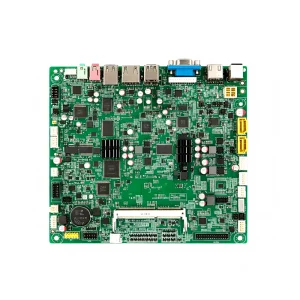
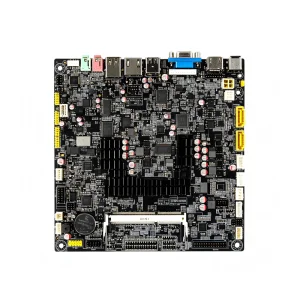
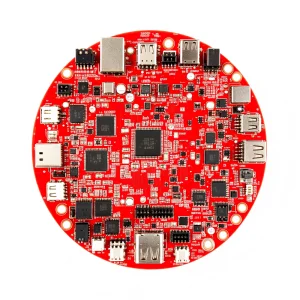
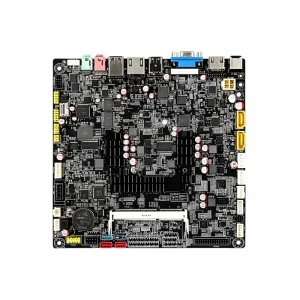
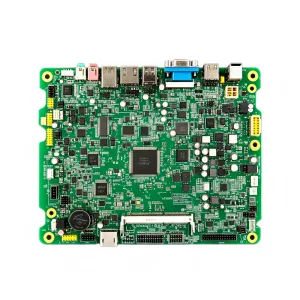 FTTH ONU
Reliable Optical Network Unit (ONU) PCB Assembly Manufacturer, Solution Provider
View product →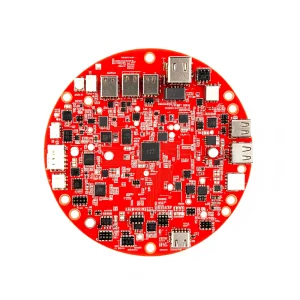
Send Your Communication PCBA RFQ for the Greece Market
Share Gerber, BOM, centroid data, test requirements, target quantities, and delivery expectations. STHL signs an NDA before RFQ, reviews DFM and BOM risks, and returns a documented quotation with lead time, compliance inputs, and a practical shipping plan to Greece.
