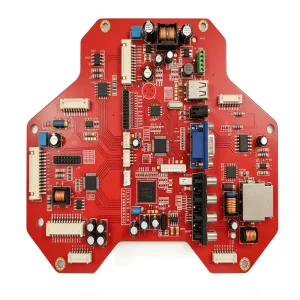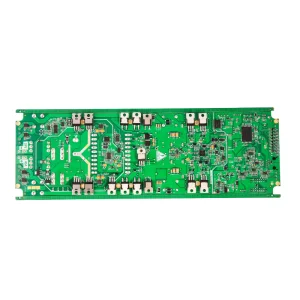
Featured HDI-ready assemblies
PCB Assembly Solutions from the Original STHL Product Series
The product set below covers safety monitoring, battery charging, security electronics, cranes, water heaters, thermostats, power distribution and gateways. These are exactly the kinds of mixed-technology programs where HDI-compatible layout, controlled SMT, inspection data and component traceability determine whether a design scales from prototype to repeat production.
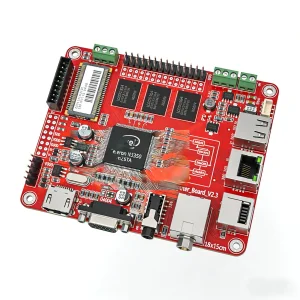
China Battery Charger PCB Assembly Supplier, from China
View Product Details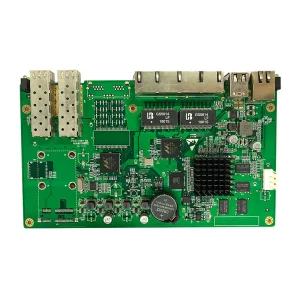
Precision Safety & Security PCBA Applications: Empowering Reliable Protection in a Connected World Factory, Solutions
View Product Details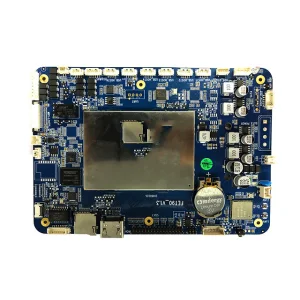
Certified Electric Cranes PCBA Assembly Service, Manufacturers
View Product Details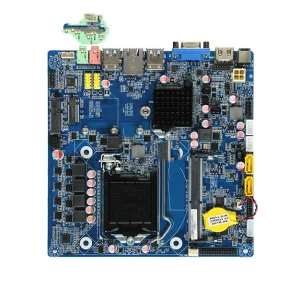
China Water Heater Controller PCB Assembly Service, Factories
View Product Details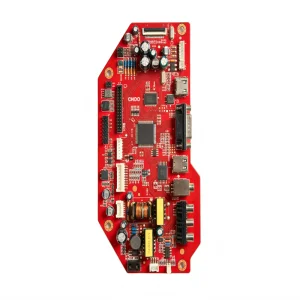
Reliable Smart Thermostat PCBA Assembly--STHL Solution Provider, in China
View Product Details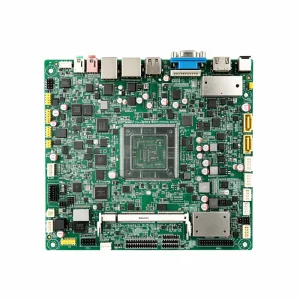
Turnkey Power Distribution Unit (PDU) PCB Assembly--STHL Company, Service
View Product Details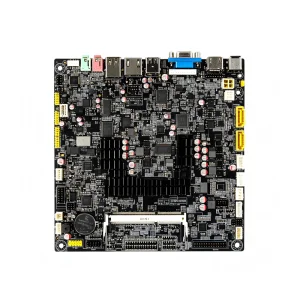
Top-Rated Gateway PCB Assembly Supplier, Partner
View Product DetailsHDI context and search intent
What a Top-Rated HDI PCB Supplier Must Deliver in 2025 and Beyond
The search intent behind “top-rated HDI PCB supplier & from China” is not a request for a generic broker list. It is a request for evidence: can the supplier build denser boards, control fine-pitch assembly, protect intellectual property, trace components and sustain quality when the program moves from prototype to volume?
HDI PCB means high-density interconnect printed circuit board. It generally uses laser-drilled microvias, blind or buried vias, sequential lamination, finer lines and spaces, and tighter registration to pack more routing and more function into less space. HDI is not only a smartphone technology. It now supports automotive driver assistance, medical monitoring, industrial control, power distribution, gateways, security systems, smart metering and satellite communications.
The commercial value of HDI is rarely just “a smaller board.” HDI can shorten signal paths, improve electrical performance, reduce weight, support denser component placement, and allow a product to integrate features that would otherwise require multiple boards or connectors. The manufacturing challenge, however, moves into the stack-up, drilling, plating, lamination, surface finish, solder mask registration, assembly tolerance and test coverage. A supplier that quotes a low unit price but ignores these variables creates hidden cost later.
For China sourcing, a reliable HDI PCB supplier should be judged as an engineering and quality partner. Buyers should look for documented process controls, experience with mixed-technology PCBA, real component sourcing capability, incoming inspection, moisture-sensitive device control, AOI and X-ray inspection, functional test, traceability, NDA discipline, and a clear escalation path when a technical question arises. STHL’s original article and factory information show a 20-year EMS and PCBA background, a Shenzhen production base, 220+ staff, 50+ engineers, seven SMT lines, two DIP/THT lines, two functional test lines and two box build lines.
- Engineering depth: DFM feedback before tooling, not after the first build.
- Supply-chain depth: component alternatives, authenticity checks and lot traceability.
- Quality depth: certified systems, inspection records and test data tied to the build.
- Commercial discipline: NDA before RFQ, no-MOQ prototype support and scalable capacity.
Information gain: the five questions that separate a top-rated HDI supplier from a low-cost assembler
- Can the supplier explain the HDI stack-up trade-offs instead of only asking for Gerber files?
- Does component sourcing include approved alternates, incoming inspection and reel-to-board traceability?
- Are AOI, X-ray, ICT and functional test selected according to the failure modes of the product, not as a fixed menu?
- Can the supplier preserve the same process controls from prototype to repeat production?
- Is IP protection supported by NDA, restricted access and documented production data?
Global HDI PCB industry status
Global HDI PCB Demand, China’s Manufacturing Role and Supply-Chain Reality
HDI demand follows the electronics industry’s long migration toward smaller form factors, higher data throughput, greater power density and more embedded sensing. The market is not a single homogeneous block: consumer electronics prizes miniaturization and cost, automotive electronics prioritizes reliability and thermal endurance, medical electronics requires traceability and process discipline, and data-center or telecom equipment balances signal integrity with thermal management.
20+Years in EMS and PCBA
10,000+m² production facility
50+Professional engineers
90+Regions served worldwide
China remains central, but the basis of competition has changed
Shenzhen and the wider Greater Bay Area combine PCB fabrication, electronic component distribution, SMT capacity, testing services, tooling, logistics and engineering talent in a dense ecosystem. That concentration helps buyers compress development cycles, but it also raises the bar for supplier selection. A top-rated China HDI PCB supplier must demonstrate more than access to capacity. It must show quality-system discipline, transparency, responsive engineering and the ability to handle high-mix builds without losing traceability.
In practice, global OEMs are not simply shifting away from China or staying for one reason. They are designing more resilient supplier maps: dual sourcing for critical components, regional final assembly where needed, and closer technical collaboration with manufacturing partners that can support both prototype and volume. For HDI and PCBA programs, this means the supplier’s ERP/MES visibility, component qualification process, change notification and problem-solving method matter as much as the price per square meter or per placed component.
STHL’s original company information shows a practical response to this environment: 100+ agents and suppliers, more than 500,000 part numbers, full turnkey, partial turnkey and consigned assembly options, an in-house R&D laboratory for design verification, and a factory that welcomes audits and visits. That combination is directly relevant to HDI PCB buyers who need a partner capable of handling dense boards, fine-pitch components and regulated end markets.
Illustrative buyer evaluation pattern for a regulated HDI PCBA program
This pattern is an illustrative procurement model, not a universal market statistic. High-reliability medical, automotive or infrastructure programs usually increase the weighting on quality and traceability.
Trends and technology roadmap
HDI PCB Trends: Miniaturization, Any-Layer Structures and Digital Traceability
HDI technology is evolving on several fronts at once: finer features, more complex via structures, better thermal performance, higher-frequency materials and stronger production data. The roadmap below is directional, because adoption depends on product volume, reliability class, cost target and the maturity of the fabrication and assembly supply chain.
Finer lines and microvia scaling
Boards are moving toward tighter line/space rules, smaller laser-drilled microvias and higher routing density. This increases the importance of copper plating uniformity, registration control and inspection capability.
Any-layer and stacked via adoption
Any-layer HDI and stacked microvia structures support higher pin counts and denser interconnects, especially in premium smartphones, wearables, advanced computing and high-end medical devices.
Rigid-flex and flex integration
Designers use rigid-flex and flex to reduce connectors, save space and improve reliability in compact or moving assemblies. Assembly handling and test strategy must be defined early.
High-frequency and thermal materials
5G/6G, radar, data center and power electronics push demand for low-loss laminates, high-Tg materials, metal-core options and thermal vias that manage heat without sacrificing signal quality.
mSAP and substrate-like PCB evolution
Modified semi-additive processes and substrate-like PCB approaches are expanding in advanced modules. Buyers should verify supplier experience, yield learning and inspection methods before committing to volume.
Digital thread and traceability
ERP, MES, AOI, X-ray and test records are becoming part of the deliverable. Traceability from incoming reel to finished board is especially valuable in automotive, medical and industrial programs.
Practical technology roadmap for HDI PCBA programs
2024–2026: mainstream HDI adoption in wearables, security, gateways, medical monitors and automotive modules; emphasis on stack-up optimization, fine-pitch assembly and test coverage.
2026–2027: broader any-layer HDI evaluation, more rigid-flex integration, tighter component spacing and increased demand for component traceability and change notification.
2027–2028: advanced mSAP-like processes, finer routing, embedded component exploration and stronger thermal management for AI, data center and power-dense products.
2028–2030: substrate-like PCB, glass substrate research and higher-frequency materials may move from exploratory programs into selected high-value applications. The winning supplier will be the one that can scale yield, not just quote a capability slide.
What this means for buyers
- Do not specify HDI features without agreeing on the inspection and test method.
- Ask how the supplier controls via reliability, plating thickness and registration capability.
- Confirm whether the assembly partner can handle fine-pitch, BGA, PoP and mixed-technology boards.
- Require a change-notification process for components, materials and process parameters.
- Plan traceability and test data before the first production order, not after a quality issue.
Localized applications
HDI PCB Application Scenarios Across Regions and Industries
HDI demand is localized by regulation, product behavior and supply-chain maturity. A board that succeeds in a consumer wearable may fail in an industrial monitoring cabinet unless the program accounts for thermal cycling, humidity, vibration, serviceability and long-term component availability.
North America
Medical monitoring, data-center hardware, security systems, test equipment and aerospace electronics often require high-mix production, strict traceability, engineering responsiveness and protection of design data.
Europe
Automotive electronics, industrial automation, energy infrastructure, HVAC controls and medical devices demand certified quality systems, robust change control and documentation suitable for audits.
Asia-Pacific
Consumer electronics, wearables, smart home, EV accessories and communication products reward fast NPI cycles, dense board capability, component sourcing agility and scalable SMT capacity.
Latin America, Middle East & Africa
Smart metering, surveillance, power conversion, environmental monitoring and telecom infrastructure prioritize durability, serviceability, anti-counterfeit sourcing and dependable delivery.
Medical & Healthcare
ISO 13485-controlled assembly for monitoring, diagnostic and wearable devices.
ExploreAutomotive Electronics
IATF 16949 processes for control, lighting and charging electronics.
ExploreComputer & Storage
High-density boards for computing, storage and peripherals with BGA inspection.
ExploreIndustrial Control
Robust PCBAs for PLCs, motor drives and automation equipment.
ExploreSafety & Security
Reliable protection electronics for connected security and alarm systems.
ExploreSmart Home & IoT
Compact, connected and cost-sensitive assemblies for smart devices.
ExploreCommunication
Gateways, GNSS, network and wireless modules with controlled assembly.
ExplorePower Supply
PDU, AC-DC converter and charger assemblies with thermal and safety focus.
ExploreEnergy
Control and monitoring electronics for energy and infrastructure systems.
ExploreEnvironmental Monitoring
Sensor and analysis boards for waste gas, water and air monitoring systems.
ExploreThe featured products also map directly to these scenarios: gas-leak alarms and environmental monitoring, battery chargers and AC-DC converters, security and surveillance cameras, cranes and PDU controls, water heaters and thermostats, gateways, GNSS modules, health-monitoring bracelets, webcams and telematics boxes. This is the practical meaning of “localized application” for an HDI PCB supplier: the same factory must adapt process controls to different product risks.
Macro industry solutions
Integrated HDI PCBA Manufacturing, Not a Quotation Race
HDI programs create more interfaces between design, fabrication, components, assembly and test than standard boards. A macro industry solution therefore treats the supplier as one accountable workflow: DFM review, stack-up and material alignment, sourcing, PCB fabrication, SMT/THT assembly, inspection, programming, conformal coating, box build and shipment evidence.
STHL’s original site describes a Shenzhen factory with 220+ staff, 50+ engineers, a 10,000 m² facility and in-house R&D laboratory. The production base includes seven SMT assembly lines, two DIP/THT lines, two functional test lines and two box build lines. That capacity profile is relevant for HDI and mixed-technology PCBA because it supports prototype learning, low-volume high-mix builds and volume production under the same quality system.
Component sourcing is often the hidden bottleneck. STHL offers full turnkey, partial turnkey and consigned assembly, with access to 100+ agents and suppliers covering more than 500,000 part numbers. The work is not simply “find a part.” It includes BOM scrubbing, alternate suggestions, end-of-life risk review, incoming inspection, moisture-sensitive device control and traceability from incoming reel to finished board.
Testing should be selected from product risk. For an HDI board, AOI alone may not reveal via or BGA issues; X-ray may be required. For power products, functional test under load matters. For medical or automotive programs, test records and lot traceability become part of the quality evidence. STHL’s original capabilities include AOI, X-ray, ICT and functional testing, IC programming and conformal coating.


Component Procurement
Full or partial turnkey sourcing with BOM review, alternate-part suggestions and reel-level traceability.

PCB Fabrication
Standard, prototype, aluminum, flex, rigid-flex, HDI, Rogers, ceramic, heavy-copper and high-Tg boards.

SMT & THT Assembly
Fine-pitch, BGA and mixed-technology assembly verified by AOI and X-ray inspection.

Value-Added Services
IC programming, ICT/FCT, conformal coating, cable and harness, and complete box build assembly.
DFM & BOM Review
Review Gerber, BOM and centroid data for manufacturability, footprint errors and end-of-life risk before material is ordered.
Component Sourcing
Purchase through qualified agents and suppliers, then verify incoming parts and moisture-sensitive device control.
PCB Fabrication
Build bare boards to stack-up, surface finish and impedance requirements, from standard boards to HDI and rigid-flex.
SMT & THT Assembly
Run seven SMT lines and two DIP/THT lines for prototypes, low volume and repeat production.
Inspection & Testing
Use AOI, X-ray, ICT and functional test, plus IC programming and conformal coating, with results logged in MES.
Box Build & Delivery
Integrate cable assembly, enclosure and ESD-safe packaging for shipment to customers in 90+ regions.
Quality and E-E-A-T signals
Quality Systems, Certifications and Evidence That Reduce HDI Sourcing Risk
Google’s Search Quality Rater Guidelines emphasize experience, expertise, authoritativeness and trust. For a manufacturing supplier, those are not abstract words: they appear as certificates, audits, process data, engineering response, test records, IP protection, clear contact information and a willingness to let customers verify the factory.

ISO 9001
Quality Management System
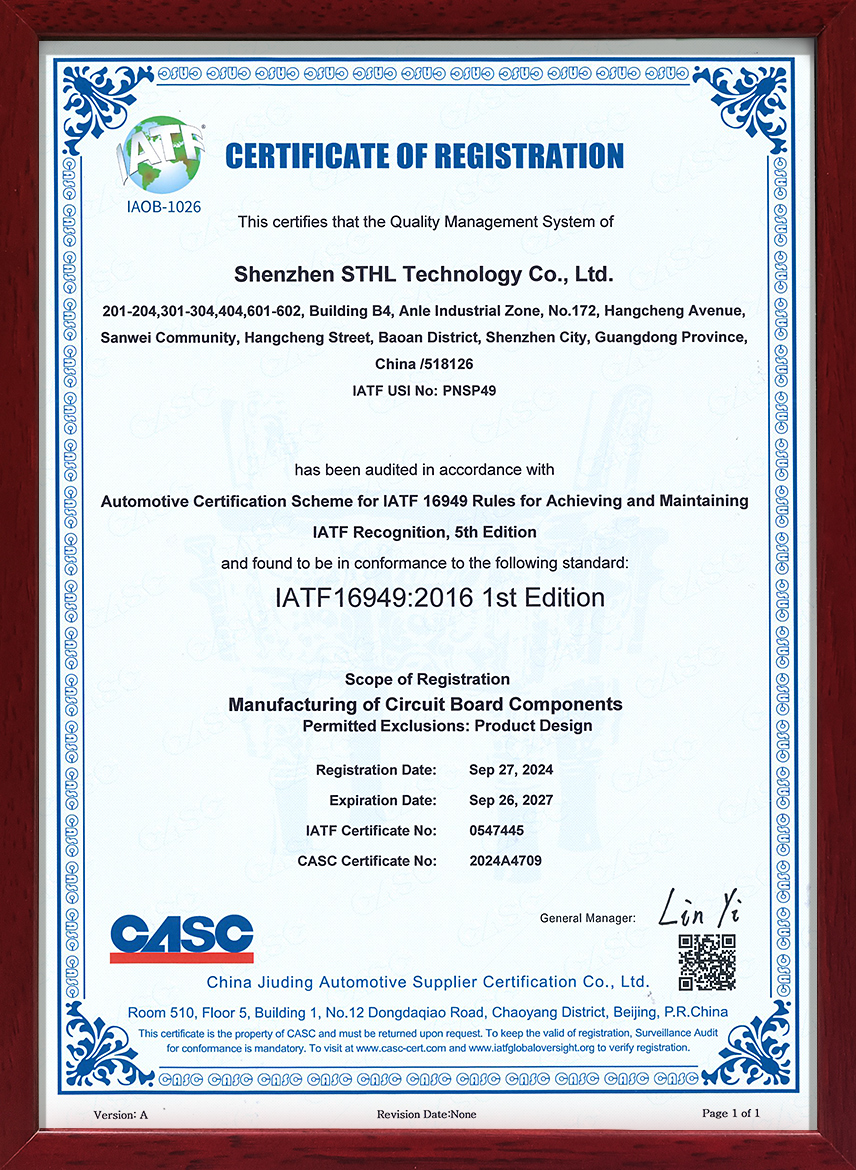
IATF 16949
Automotive Quality Management
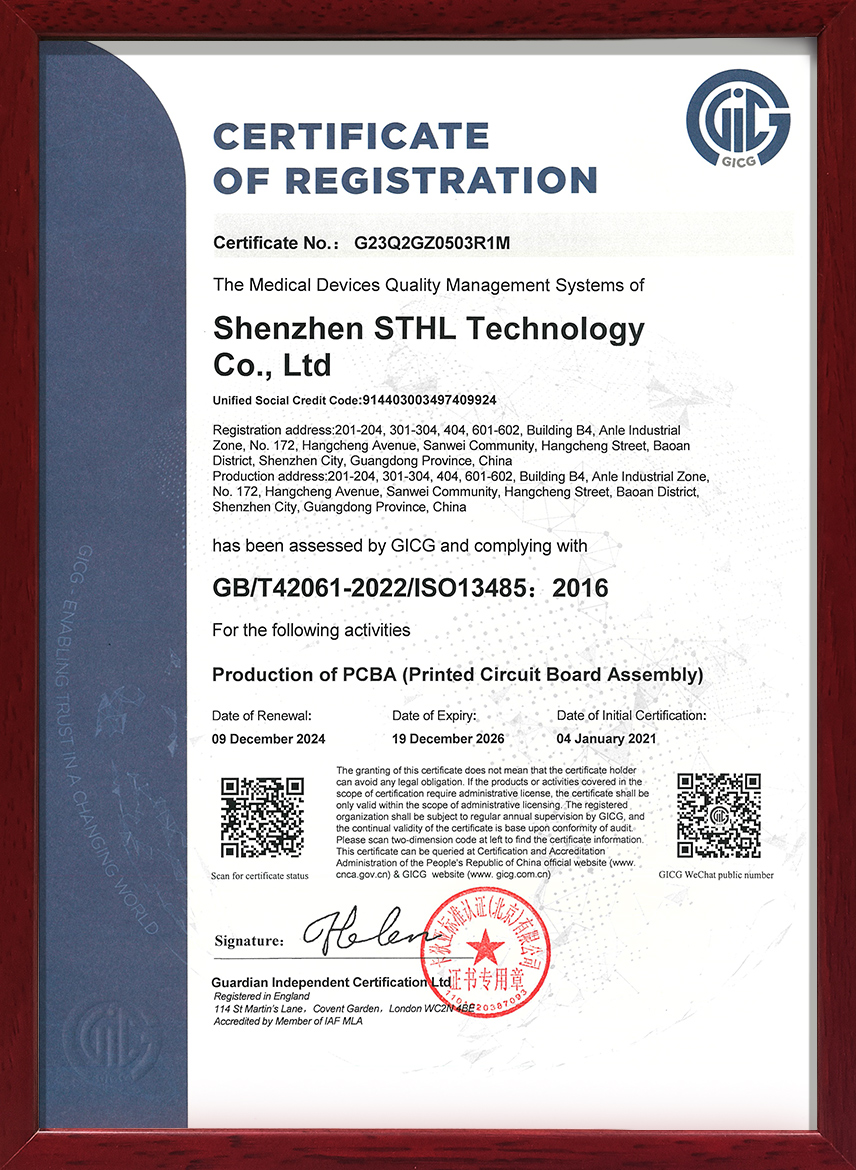
ISO 13485
Medical Devices Quality Management
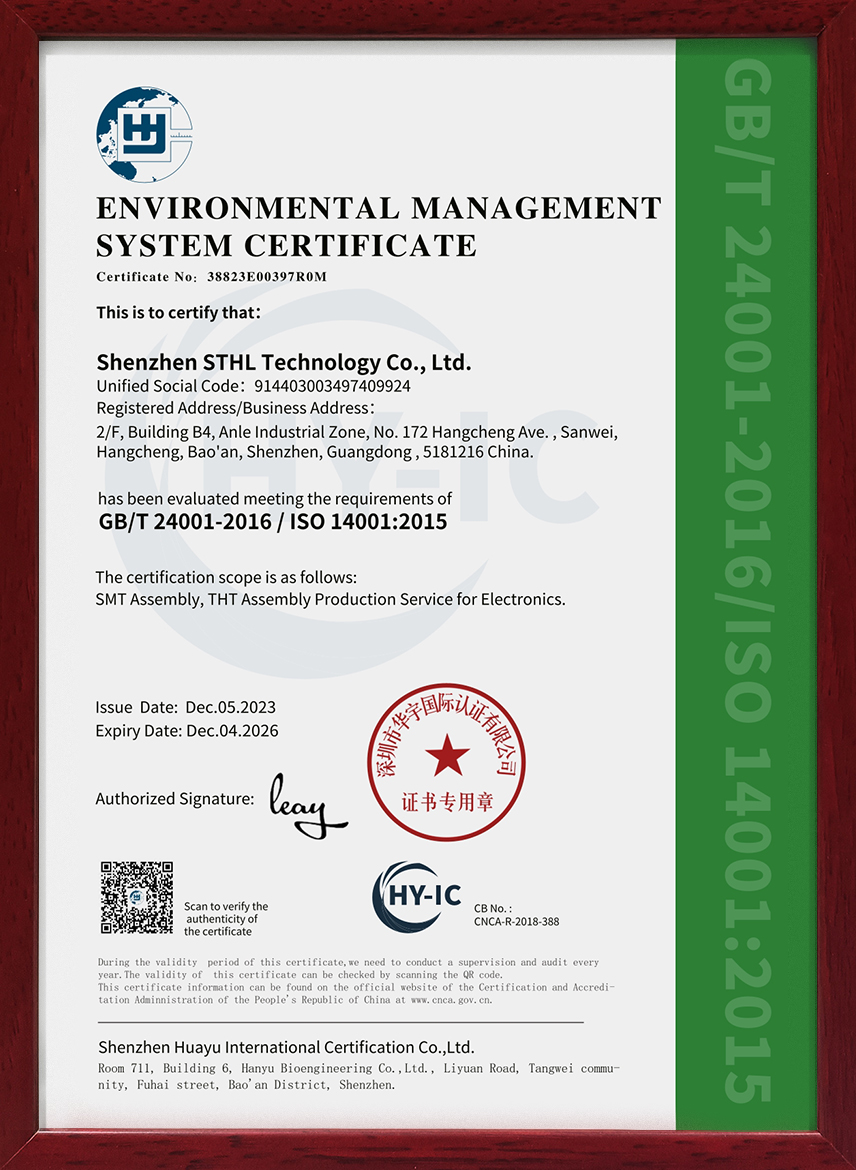
ISO 14001
Environmental Management System
7SMT assembly lines
2DIP / THT lines
2Functional test lines
2Box build lines
99.5%On-time delivery
99%Qualified shipment rate
STHL’s certifications include IATF 16949, ISO 9001, ISO 14001 and ISO 13485, with RoHS-compliant assemblies. The quality message is strengthened by the inspection stack: AOI, X-ray, ICT and functional testing, plus ERP and MES tracking for production status and lot traceability. For HDI and fine-pitch PCBA, these controls matter because a defect can be hidden under a component or inside a via structure.
The trust dimension also includes IP protection. The supplier states that an NDA is signed before RFQ, project data is restricted to the assigned engineering team, and every build is tracked through ERP and MES. Buyers can also audit or visit the Shenzhen factory and R&D laboratory, or use the 360-degree virtual factory tour for remote pre-qualification.
The original site lists cooperation references and sourcing channels that include Schneider Electric, Siemens, Razer, Geely, Anker, Corsair, D-Link, Haier, Logitech, Mindray, Arrow, Avnet, Digi-Key, Farnell, Future Electronics, Master Electronics, Microchip, Mouser, STMicroelectronics, TDK, Verical and Littelfuse. These references should still be verified for the exact program and period, but they show the type of supply-chain ecosystem STHL operates within.
Factory news and procurement intelligence preserved from the original page
The original STHL news updates include European visitors reviewing an early-stage healthcare electronics concept and factory tour, German visitors walking through SMT, THT and material preparation, a technical update on component traceability from incoming reel to finished board, and an industry note on PCBA lead time between purchase order and shipment.
These topics are directly relevant to HDI PCB buyers. Early-stage concept review reduces costly redesign. Material preparation discipline protects fine-pitch assembly yield. Reel-to-board traceability supports recalls and root-cause analysis. Lead-time analysis separates fabrication time, component lead time, assembly time, test time and logistics, which helps procurement teams set realistic promises to their own customers.
Contact evidence: [email protected] · +86 135 1018 8049 · +86 755 8936 9123 · B4, AnLe Industrial Zone, No.172 Hangcheng Blvd, Bao'an Xixiang District, Shenzhen, 518126 China
Client feedback and cooperation
What Engineers and Buyers Say About STHL
The original page includes feedback from hardware engineers, designers and company owners across North America, Europe and beyond. These comments are not a substitute for an audit, but they provide useful context about communication, delivery and repeat-order confidence.
Excellent team to work with and fast delivery with high-quality boards. We are very happy to work with such a good supplier. Thanks again.

PauloR&D Engineer · United States
Please extend my thanks to your team for your hard work in preparing these samples. This positive experience has strengthened my confidence in your company, and I'm looking forward to discussing bulk orders in the near future.

OliviaHardware Engineer · Germany
We are satisfied with the last order. You did a great job on those boards and the lead time was short. I will place a new order soon.

WilliamCEO · Italy
For a high-reliability HDI program, combine testimonial evidence with a formal supplier audit, a prototype build, test-data review and a pilot order before full volume commitment.
Q&A for global buyers
HDI PCB & PCBA Supplier FAQ
These answers combine the original STHL FAQ with the extra questions procurement teams ask when evaluating an HDI PCB supplier in China.
What files do I need to submit for a PCBA or HDI PCB project?
Send Gerber files, a BOM with manufacturer part numbers, the pick-and-place or centroid file and assembly drawings. If you need IC programming or functional testing, include firmware and test procedures. For HDI boards, also share stack-up expectations, impedance requirements, via structure, surface finish and any special inspection requirements. STHL engineers complete a DFM and BOM review before production starts.
Is there a minimum order quantity (MOQ)?
No. STHL accepts prototype, low-volume and high-volume PCB assembly orders. That means a hardware team can validate a design, run a pilot and scale to mass production with the same supplier and quality system.
Can STHL source all the electronic components?
Yes. STHL offers full turnkey, partial turnkey and consigned assembly. The sourcing team works with 100+ agents and suppliers covering more than 500,000 part numbers, with incoming inspection and traceability from reel to finished board. For long-lifecycle products, confirm component life-cycle status and approved alternates during RFQ.
Which quality certifications does STHL hold?
STHL is certified to IATF 16949, ISO 9001, ISO 14001 and ISO 13485, and produces RoHS-compliant assemblies. Boards are verified with AOI, X-ray, ICT and functional testing according to the product risk and customer requirements.
How do you protect our design files and intellectual property?
STHL signs an NDA before RFQ, restricts project data to the assigned engineering team and tracks every build through ERP and MES systems. For sensitive programs, define data-access rules, approved communication channels, change-notification requirements and whether test data should be stored or returned.
Can we audit or visit the factory?
Yes. Customers are welcome to visit the Shenzhen factory and R&D laboratory, and a 360-degree virtual factory tour is available for remote evaluation. An audit can cover SMT lines, THT, material preparation, inspection, test, warehouse and traceability records.
How should I evaluate a top-rated HDI PCB supplier from China?
Start with the product risk, not the price. Review HDI stack-up capability, minimum line and space, microvia and via-fill experience, registration control, AOI and X-ray capability, fine-pitch assembly experience, test strategy, component sourcing, traceability, NDA terms and audit results. Then run a prototype or pilot order and compare the technical feedback, build quality, documentation and communication against your internal criteria.
What drives HDI PCBA cost and lead time?
Cost is driven by layer count, HDI structure, line and space, microvia count, material type, surface finish, board size, component count, fine-pitch or BGA assembly, test coverage, conformal coating, IC programming and order volume. Lead time includes PCB fabrication, component procurement, material preparation, SMT/THT, testing, box build and logistics. Component lead time can be the largest variable, so BOM risk review should happen before the purchase order is finalized.
How can a buyer reduce supply-chain risk without losing speed?
Use a staged approach: DFM and BOM review first, approved alternates for critical parts, a prototype or pilot build, documented test criteria, and a production readiness review before volume. Keep traceability and change notification in the contract. For programs serving several regions, confirm packaging, labelling, documentation and logistics requirements early.
Planning an HDI PCB or Turnkey PCBA Build?
Send Gerber, BOM and assembly requirements for a DFM review. STHL can support prototype, low-volume and volume production from Shenzhen, with IATF 16949, ISO 9001, ISO 14001 and ISO 13485 controls, NDA before RFQ, no MOQ, and a factory audit path for global buyers.
More HDI-ready assemblies
Additional PCB Assembly Solutions for Monitoring, Imaging and Connected Devices
The second product group extends the same HDI-compatible thinking into environmental monitoring, medical imaging, surveillance, power conversion, positioning, wearable health, webcams and automotive telematics. These applications benefit from controlled fine-pitch assembly, reliable inspection and component traceability.
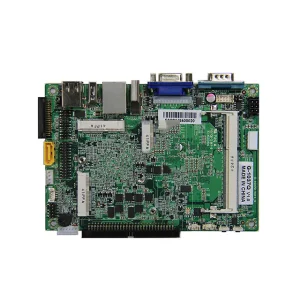
Reliable Industrial Waste Gas Online Monitoring System PCB Assembly Solutions, Manufacturers
View Product Details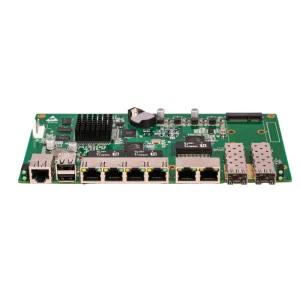
China Digital X-ray Machine PCB Assembly--STHL Manufacturer, Partner
View Product Details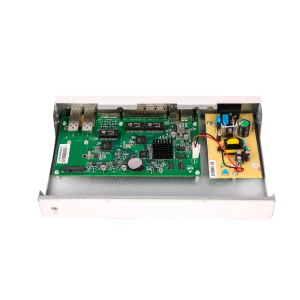
OEM Surveillance Camera PCB Assembly Partner, Factories
View Product Details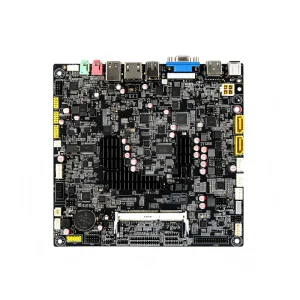
Custom AC-DC Converter PCB Assembly--STHL Service, Manufacturers
View Product Details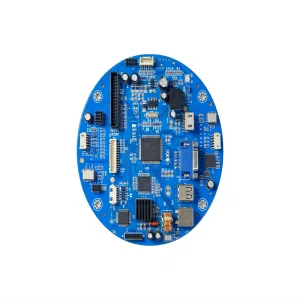
China Top GNSS Module PCBA Assembly--STHL Partner, Solution Provider
View Product Details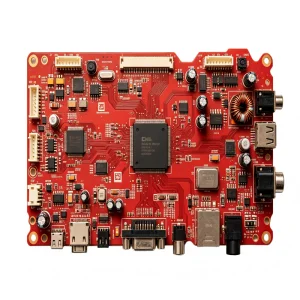
Turnkey Health Monitoring Devices (such as smart bracelets) PCBA Assembly--STHL Company, Partner
View Product Details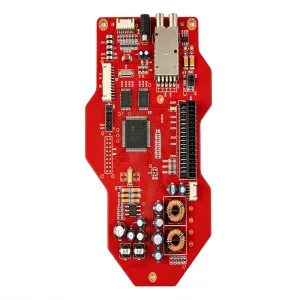
Certified Webcam PCB Assembly--STHL from China, Manufacturers
View Product Details