Top-Rated Flexible Circuits Partner & in China
Engineering-led FPC, rigid-flex and turnkey PCBA manufacturing from Shenzhen for OEMs in 90+ regions — supported by IATF 16949, ISO 13485, ISO 9001 and ISO 14001 quality systems.
Flexible Circuit and PCBA Programs for Demanding Applications
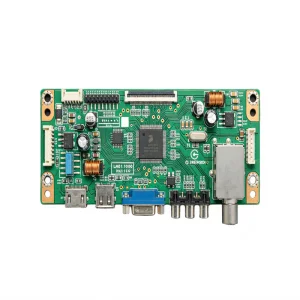
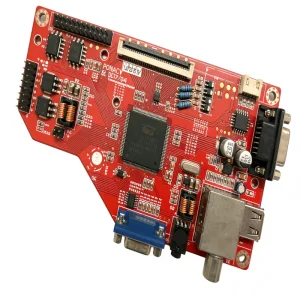
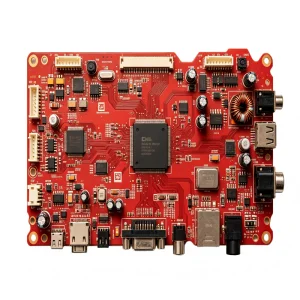
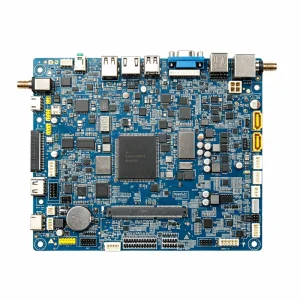
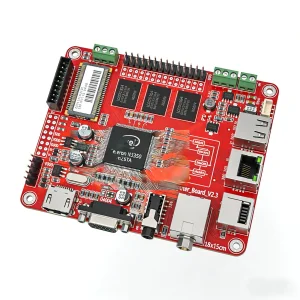
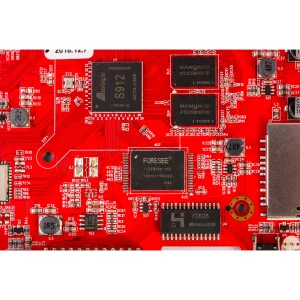
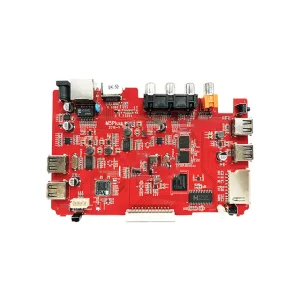
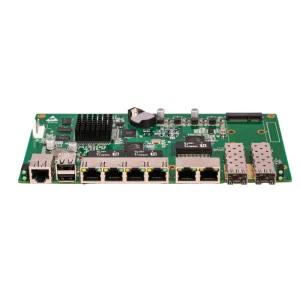
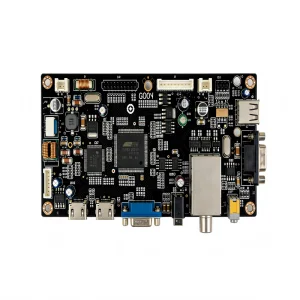
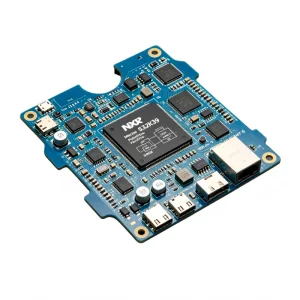
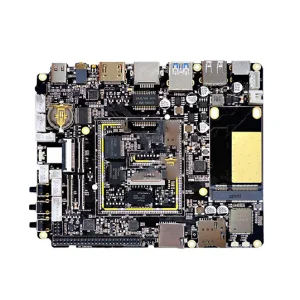
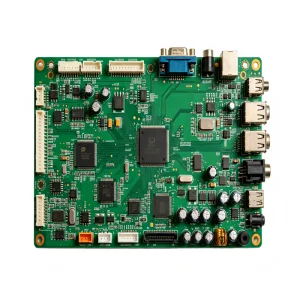
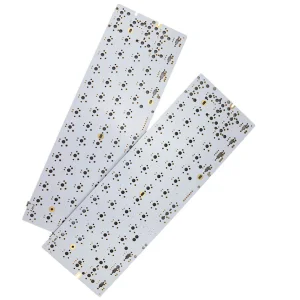
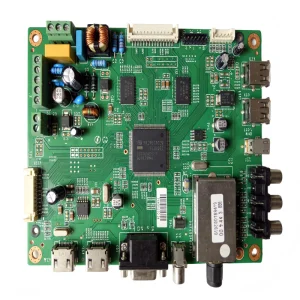
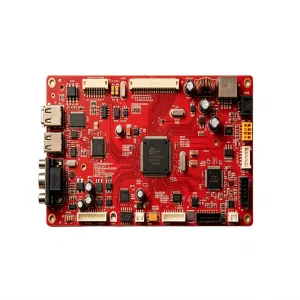
The same engineering discipline used for flexible printed circuits is applied to high-mix PCBA projects — from medical and automotive electronics to smart home, power, intercom and industrial control. Explore eight representative programs below; each card preserves the original product image, title and URL.
Why Flexible Circuits Matter in the Global Electronics Supply Chain
Flexible printed circuits are not simply “bendable PCBs.” They are an enabling technology for products that must be smaller, lighter, more reliable and more ergonomic while surviving vibration, thermal cycling and repeated movement.
Flexible circuits — also called FPC, flex PCBs or flexible printed electronics — use a thin dielectric film such as polyimide or PET, laminated with conductive copper and protected by coverlay or cover coat. They replace bundles of wire and connectors in space-constrained assemblies, reduce weight, simplify packaging and improve signal integrity in compact devices. When rigid substrates are combined with flexible sections, the result is a rigid-flex circuit: a single interconnect solution that can support mounted components while folding into a tight enclosure.
Global demand is being pulled by miniaturization, electrification and connected products. Consumer electronics, medical wearables, automotive sensor modules, battery management systems, robotics, aerospace avionics, smart-home controls and industrial IoT all rely on flexible or rigid-flex interconnect. Buyers no longer ask only for a low unit price; they ask for verified process capability, material traceability, design-for-manufacturing feedback and supply continuity across product launch and volume ramp.
China remains central to this supply chain because the country combines a dense component ecosystem, mature PCB and FPC fabrication capacity, experienced process engineers and a factory base that can move from prototype to mass production quickly. The most valuable partners are not simply low-cost assemblers. They are engineering-led EMS providers that can review a stack-up, identify flex-rigid risks, source difficult parts and document every build under recognized quality systems. That is the standard STHL applies to flexible circuit and PCBA programs from its Shenzhen facility.
Buyer lens: what “top-rated” should mean
- ✓ Documented quality systems for automotive, medical and industrial customers.
- ✓ DFM and BOM review before material is ordered, not after defects appear.
- ✓ Traceability from incoming reel and flex material lot to finished board.
- ✓ NDA before RFQ and disciplined protection of customer design data.
- ✓ No-MOQ prototype support with a practical path to volume production.
Measurable Capacity, Engineering Depth and Delivery Discipline
For global OEMs, supplier selection is a risk decision. STHL supports that decision with transparent capacity, engineering headcount, production lines and quality performance indicators.
Years of EMS Experience
Production Facility
Professional Engineers
Production Lines
On-Time Delivery
Qualified Shipment Rate
The Global Commercial and Industrial State of Flexible Circuits
Flexible circuit demand is broadening from high-volume consumer products into mission-critical industrial, medical and automotive systems. Procurement teams are adapting their supplier scorecards accordingly.
In commercial electronics, flexible circuits are used to fit displays, cameras, sensors and antenna modules into thin enclosures. In industrial systems, they connect moving stages, robotic joints and compact control modules where wire harnesses would be bulky or prone to failure. In medical devices, flexible and rigid-flex designs support wearable monitors, diagnostic cartridges and minimally invasive instruments. In automotive electronics, flex circuits appear in lighting, sensor clusters, battery-management interfaces and cabin electronics where vibration and temperature cycling are normal operating conditions.
The market is also shaped by supply-chain geography. Many OEMs now balance cost, speed and resilience: they may keep final assembly close to the end market while sourcing high-mix electronics from experienced Asian partners. China’s role has shifted from pure volume manufacturing toward engineering collaboration, new-product introduction and mixed-technology assembly. A supplier that can support FPC fabrication, rigid-flex assembly, component sourcing, testing and box build reduces the number of hand-offs that create delay and accountability gaps.
For buyers, the practical question is not “Where is the cheapest flex circuit?” but “Which partner can deliver a repeatable process, protect our IP, document the build and scale with us?” This is where an EMS partner with certified systems and in-house engineering becomes a strategic asset rather than a transactional vendor.
⌬ Miniaturization and space-constrained design
Thinner devices, tighter packaging and higher function density make flexible interconnects essential in consumer, medical and wearable electronics.
✚ Medical wearables and patient monitoring
Comfort, reliability, biocompatible materials and traceability drive rigid-flex adoption in monitoring patches, diagnostic devices and handheld instruments.
⚡ EV, battery management and automotive electronics
Electrification increases the need for compact, vibration-resistant interconnects and IATF 16949-controlled assembly processes.
⬡ Aerospace, defense and industrial robotics
Weight reduction and resistance to motion make flex and rigid-flex attractive in avionics, sensors, automation and robotic joints.
◎ Consumer electronics and smart devices
Smart home, lighting, audio, e-book readers and intercom products require fast NPI cycles and mixed-technology PCBA support.
⇄ Supply-chain resilience and regional diversification
Global buyers seek partners that combine China process depth with transparent communication, audit support and documented continuity planning.
Why China’s Flexible Circuit and PCBA Factories Remain Competitive
China’s advantage is no longer limited to labor cost. For FPC and PCBA programs, the real advantage is supply-chain density, engineering speed, process maturity and the ability to manage high-mix production without losing traceability.
◈ Shenzhen cluster density
Close access to PCB fabrication, components, connectors, tooling, test fixtures and surface-finish suppliers shortens engineering feedback loops.
⚡ High-mix flexibility
Factories can support prototype, low-volume and volume orders on the same quality system, reducing re-qualification effort when products ramp.
⌁ Mature component sourcing
Experienced sourcing teams can scrub BOMs, recommend alternates and manage obsolescence before it disrupts production.
✓ Audit-ready process control
Certified quality systems, AOI, X-ray, ICT, functional testing and MES traceability support global customer audits.
STHL’s Shenzhen location places engineering, sourcing and production inside one of the world’s most concentrated electronics clusters. With 220+ staff, including 50+ engineers, a 10,000 m² facility and an in-house R&D laboratory, the team can review designs, identify manufacturability risks and prepare prototypes without outsourcing critical engineering decisions. The factory runs 7 SMT assembly lines, 2 DIP/THT lines, 2 functional test lines and 2 box build lines, allowing it to serve high-mix customers without forcing every project into a single volume profile.
For flexible circuit projects, that means earlier discussion of stiffeners, bend radius, coverlay openings, panelization and assembly handling. For PCBA projects, it means a disciplined DFM and BOM review before material is ordered. The result is less rework, fewer schedule surprises and a clearer cost model for procurement. STHL also supports NDA before RFQ, no MOQ and ERP/MES tracking, which are practical requirements for overseas buyers who need both speed and control.
Where Flexible Circuits and PCBA Converge in Real Products
From Shenzhen and the Greater Bay Area to Europe and North America, the same application logic appears again and again: less space, more function, higher reliability and faster time to market.
Medical & Healthcare
ISO 13485-controlled assembly for monitoring, diagnostic and wearable devices with lot traceability.
Explore medical PCBA →Automotive Electronics
IATF 16949 processes for control modules, lighting and charging electronics that must survive heat and vibration.
Explore automotive PCBA →Computer & Storage
High-density, BGA-rich boards for computing, storage and peripherals, verified by X-ray inspection.
Explore computer PCBA →Industrial Control
Robust PCBAs for PLCs, motor drives and automation equipment with conformal coating options.
Explore industrial PCBA →LED & Lighting
Thermal-management-aware assembly for lighting modules, LED matrix boards and smart light strips.
Explore LED PCBA →Smart Home & IoT
Compact, connected assemblies for smart outlets, intercoms, sensors and home automation controls.
Explore smart home PCBA →Safety & Security
Reliable electronics for access control, surveillance and security systems with controlled testing.
Explore security PCBA →Communication
Signal-integrity-aware assembly for wireless boosters, networking devices and communication modules.
Explore communication PCBA →Power Supply
PoE, battery charger and power electronics assembly with attention to creepage, clearance and thermal stress.
Explore power PCBA →Energy
Control and monitoring electronics for energy systems that require long service life and stable supply.
Explore energy PCBA →Consumer Electronics
Fast NPI and mixed-technology assembly for e-book readers, audio products and smart devices.
Explore consumer PCBA →Environmental Monitoring
Durable PCBAs for wastewater, air-quality and remote monitoring equipment in demanding environments.
Explore monitoring PCBA →A Shenzhen Flexible Circuit and PCBA Partner Since 2006
Shenzhen STHL Electronics Co., Ltd. is a certified EMS and ODM provider helping hardware teams move from schematic to shipped product through one controlled workflow.
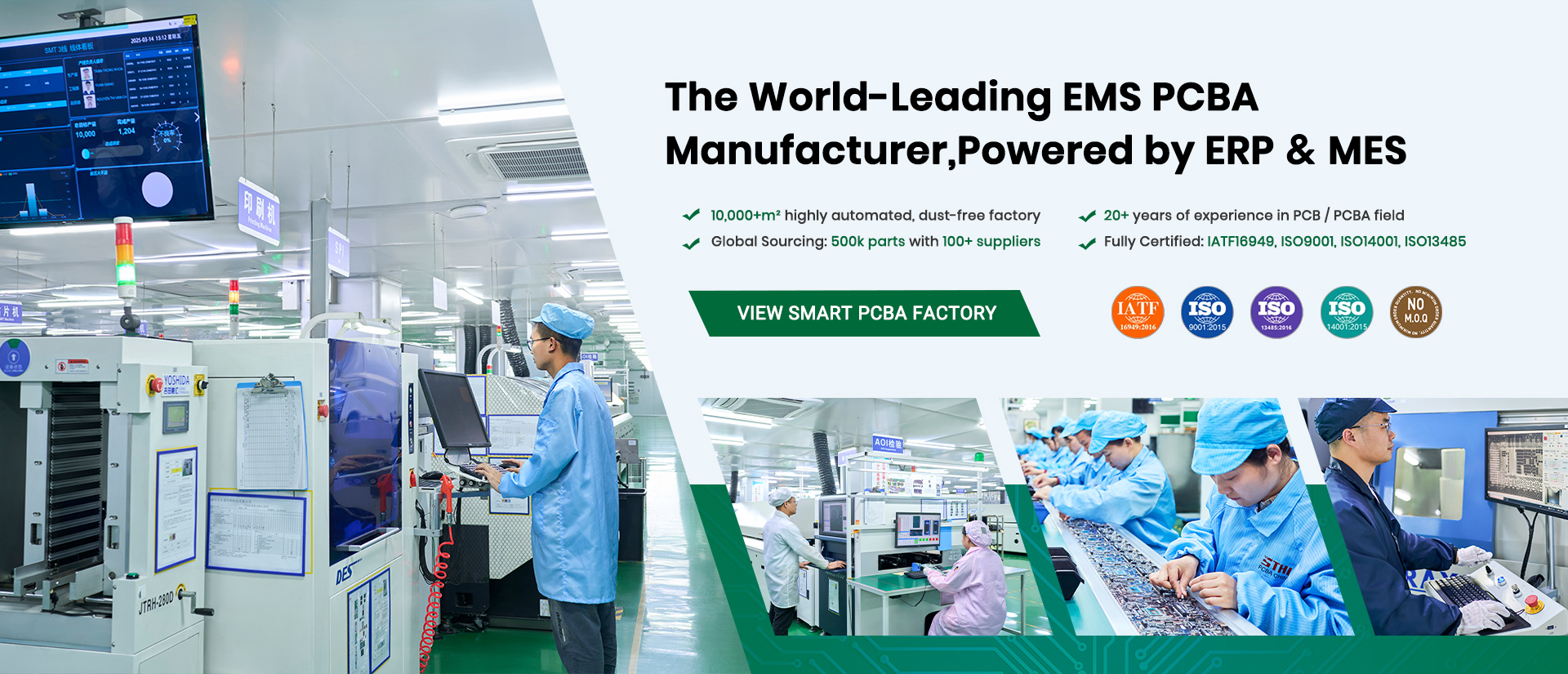
Our 220+ staff, including 50+ engineers, run a 10,000 m² facility with an in-house R&D laboratory for design verification and prototype testing. Every build is RoHS-compliant and controlled under IATF 16949, ISO 9001, ISO 14001 and ISO 13485 systems. Customers are welcome to visit and audit the factory, and a 360-degree virtual factory tour is available for remote evaluation.
STHL supports PCB layout, component sourcing, PCB fabrication, SMT/THT assembly, cable assembly, box build and full testing. The sourcing team works with 100+ agents and suppliers covering more than 500,000 part numbers, with incoming inspection and reel-to-board traceability. For buyers, that means one accountable partner from first article to repeat production — and an engineering team that can challenge a design before cost and delay are locked in.
- ✓ 7 SMT assembly lines, 2 DIP/THT lines, 2 functional test lines and 2 box build lines.
- ✓ AOI, X-ray, ICT and functional testing under ERP/MES tracking.
- ✓ Flexible, rigid, rigid-flex, HDI, aluminum and heavy-copper PCB options.
- ✓ NDA before RFQ, no MOQ and global shipment to 90+ regions.

Electronic Components Procurement
Full or partial turnkey sourcing through 100+ agents and suppliers, with BOM scrubbing, alternate-part suggestions and reel-level traceability.
Learn more →
PCB Fabrication
Standard, prototype, aluminum, flexible, rigid-flex, HDI, Rogers, ceramic, heavy-copper, high-Tg and halogen-free boards built to your stack-up.
Learn more →
SMT & THT PCB Assembly
Prototype, low-volume and high-volume assembly including fine-pitch, BGA and mixed-technology boards, verified by AOI and X-ray.
Learn more →
Value-Added Services
PCB layout and design, IC programming, ICT and functional testing, conformal coating, cable and wire harness, and complete box build assembly.
Learn more →From Gerber Files to Global Shipment in Six Controlled Steps
Knowing what happens after a purchase order removes surprises. This is how every STHL PCBA and flexible circuit program moves through the factory.
DFM & BOM Review
Engineers check Gerber, BOM and centroid data for manufacturability, footprint errors and end-of-life parts before any material is ordered.
Component Sourcing
Parts are purchased through 100+ agents and suppliers, then pass incoming inspection and moisture-sensitive device control.
PCB Fabrication
Bare boards are produced to your stack-up, surface finish and impedance requirements, from single-layer to HDI and rigid-flex.
SMT & THT Assembly
7 SMT lines and 2 DIP/THT lines handle fine-pitch, BGA and mixed-technology boards for prototypes and mass production.
Inspection & Testing
AOI, X-ray, ICT and functional tests, plus IC programming and conformal coating, with results logged in our MES.
Box Build & Delivery
Cable assembly, enclosure integration and ESD-safe packaging, shipped to customers in 90+ countries and regions.
Why Global OEMs Choose STHL for Flexible Circuits and PCBA
Measurable capacity, documented quality systems and engineering support that reduces total cost — not just the unit price.
Dust-Free Smart Factory
10,000+ m² highly automated production space with controlled assembly areas.
20 Years of Experience
Proven know-how across PCB and PCBA since 2006.
Global Sourcing
500k+ parts via 100+ agents and suppliers with inspection and traceability.
Fully Certified
IATF 16949, ISO 9001, ISO 14001 and ISO 13485 quality systems.
ERP & MES Tracking
Real-time production status and lot traceability from material to shipment.
Cost-Down Engineering
DFM and BOM optimisation by our engineering team before production.
No MOQ & NDA First
Prototype and volume orders welcome, with design data protected before RFQ.
Fast Delivery
99.5% on-time delivery across global shipments and repeat builds.
What Global Enterprises Look for in a China Flexible Circuit Partner
Purchasing teams are not only buying boards. They are buying risk reduction, documentation, communication and a repeatable path from NPI to volume.
Global OEMs typically evaluate a China flexible circuit or PCBA partner across six dimensions: process capability, quality-system certification, IP protection, traceability, supply continuity and engineering responsiveness. A supplier may have attractive pricing and still fail the scorecard if it cannot provide a DFM response, material certificates, test records or a clear escalation path. For medical and automotive customers, the bar is even higher because complaints, field failures and audit findings can create disproportionate commercial risk.
STHL addresses these requirements through NDA-before-RFQ procedures, a dedicated engineering team, incoming inspection, ERP/MES tracking, AOI, X-ray, ICT and functional test records, and certified quality systems. The company also supports full turnkey, partial turnkey and consigned assembly, so procurement teams can choose the sourcing model that fits their component strategy. Brands and supply-chain relationships displayed on our site include names such as Schneider Electric, Siemens, Razer, Anker, Logitech, Arrow, Avnet, Digi-Key, Mouser and TDK — evidence of the ecosystem in which STHL operates and sources.
◈ Process capability evidence
Stack-up review, fine-pitch and BGA assembly, rigid-flex handling, conformal coating, IC programming and box build under one workflow.
✓ Certification and audit readiness
IATF 16949, ISO 9001, ISO 14001 and ISO 13485 systems, plus documented inspection and test records for customer audits.
⌁ BOM risk and continuity
BOM scrubbing, alternate-part recommendations, obsolescence review and access to 500,000+ part numbers through sourcing partners.
⌬ IP protection
NDA before RFQ, restricted project access and controlled data handling keep customer designs and firmware confidential.
▣ Traceability and documentation
Reel-to-board traceability, ERP/MES tracking and test logs help buyers investigate issues and satisfy internal quality requirements.
⇢ Landed cost and responsiveness
Engineering feedback, no MOQ, fast quoting and a practical ramp to volume reduce total cost — not just the quoted unit price.
Trends Reshaping Flexible Circuit Sourcing Through 2026 and Beyond
The next phase of flexible electronics will reward suppliers that combine material knowledge, precision assembly and digital traceability.
◈ Rigid-flex integration
More products are replacing separate rigid boards and cable assemblies with rigid-flex designs that reduce connectors and assembly steps.
⌬ HDI and fine-line flex
Higher-density interconnect demands tighter process control, better inspection and stronger collaboration between design and manufacturing.
✚ Medical and wearable reliability
Dynamic bend, moisture exposure and patient-contact requirements are pushing material selection and test coverage to a higher level.
⚡ Electrification and battery systems
EV and energy-storage products need compact, vibration-resistant interconnect with automotive-grade process discipline.
◎ Digital traceability
ERP/MES integration, lot-level records and test-data visibility are becoming standard expectations for global procurement teams.
⇄ China plus regional resilience
Buyers are keeping China process depth while adding regional inventory and dual-source strategies for critical components and assemblies.
Certified Quality Management Systems
Independent third-party audits confirm that our processes meet the requirements of automotive, medical and industrial customers. Click any certificate image to view it in full size.

ISO 9001
Quality Management System

IATF 16949
Automotive Quality Management

ISO 13485
Medical Devices Quality Management

ISO 14001
Environmental Management System
What Engineers and Buyers Say About STHL
Feedback from hardware engineers, designers and company owners across North America, Europe, South America, New Zealand and beyond.
“Excellent team to work with and fast delivery with high-quality boards. We are very happy to work with such a good supplier. Thanks again.”

“Please extend my thanks to your team for your hard work in preparing these samples. This positive experience has strengthened my confidence in your company, and I'm looking forward to discussing bulk orders in the near future.”

“We are satisfied with the last order. You did a great job on those boards and the lead time was short. I will place a new order soon.”

“The order was perfect — exactly as specified with top quality. Highly recommend this reliable supplier.”

“Exciting! Very fast delivery, a professional supplier and a professional product. We will place a new order very soon!”

“We have tested all the boards and I am highly pleased. I will repeat my order soon. Thank you again for your excellent service.”

PCBA Insights and Production Floor Updates
Practical updates from our production floor — customer visits, traceability practices and what really drives PCBA lead time.




Flexible Circuit and PCBA Sourcing FAQs for Overseas Buyers
Straight answers to the questions procurement and engineering teams ask before choosing a PCB assembly manufacturer in China.
What files do I need to submit for a PCBA project?
Send Gerber files, a BOM with manufacturer part numbers, the pick-and-place (centroid) file and assembly drawings. If you need IC programming or functional testing, include firmware and test procedures. Our engineers complete a DFM and BOM review before production starts.
Is there a minimum order quantity (MOQ)?
No. STHL accepts prototype, low-volume and high-volume PCB assembly orders, so you can validate a design and scale to mass production with the same supplier.
Can STHL source all the electronic components?
Yes. We offer full turnkey, partial turnkey and consigned assembly. Our sourcing team works with 100+ agents and suppliers covering more than 500,000 part numbers, with incoming inspection and traceability from reel to finished board.
Which quality certifications does STHL hold?
STHL is certified to IATF 16949, ISO 9001, ISO 14001 and ISO 13485, and produces RoHS-compliant assemblies. Boards are verified with AOI, X-ray, ICT and functional testing.
How do you protect our design files and IP?
We sign an NDA before RFQ, restrict project data to the assigned engineering team and track every build through our ERP and MES systems.
Can we audit or visit the factory?
Yes. Customers are welcome to visit our Shenzhen factory and R&D laboratory at any time, and a 360-degree virtual factory tour is available for remote evaluation.
What is the difference between a flexible circuit and a rigid-flex circuit?
A flexible circuit uses a flexible dielectric and copper structure that can bend in use. A rigid-flex circuit combines rigid boards with flexible interconnect sections, allowing components to be mounted on rigid areas while the assembly folds into a compact enclosure. The choice depends on bend requirements, component density, assembly handling and reliability targets.
How do you support reliability in dynamic bend applications?
Early discussion of bend radius, copper grain direction, coverlay design, stiffener placement and assembly handling is essential. STHL reviews the design during DFM, aligns fabrication and assembly requirements, and applies inspection and testing based on the program’s risk level. For critical programs, functional testing, X-ray, AOI and traceability records provide additional evidence of process control.
Planning a Flexible Circuit or PCBA Build?
Get our capability catalog with PCB fabrication options, assembly processes, testing methods and industry case references — everything your team needs to qualify STHL as a partner. Send Gerber, BOM and assembly drawings for a DFM and BOM review, or contact our engineers to discuss rigid-flex stack-ups, material selection and prototype-to-volume planning.
Talk to a PCBA Engineer
B4, AnLe Industrial Zone, No.172 Hangcheng Blvd, Bao'an Xixiang District, Shenzhen, 518126 China
Additional Flexible Circuit and PCBA Manufacturing Programs
These eight programs complete the original product set. Every image, product title and destination URL has been retained for direct navigation.