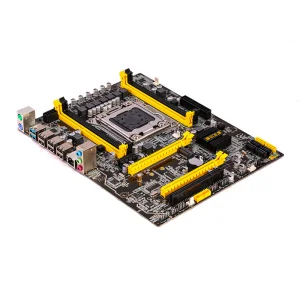
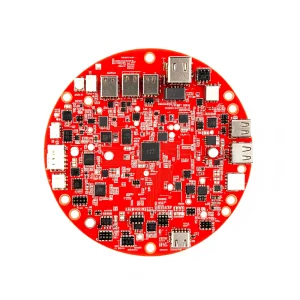
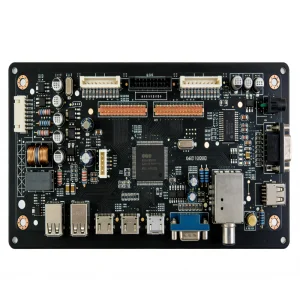
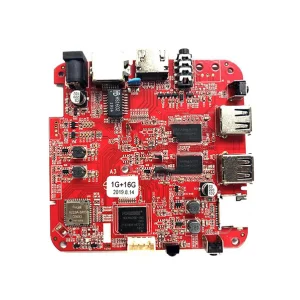
Original Product Families: Test-Ready PCBA Programs
The following eight product families reflect the practical demand patterns that drive precision SMT testing in China: automotive safety electronics, medical monitoring, security, communications, power conversion, flight instrumentation and industrial control. Each product page is preserved with its original URL and product image for direct technical review.
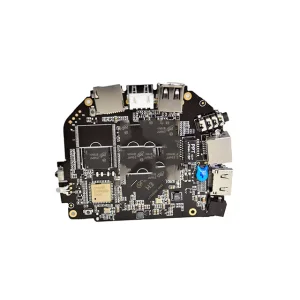
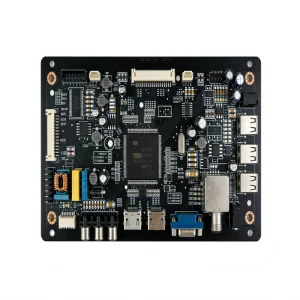
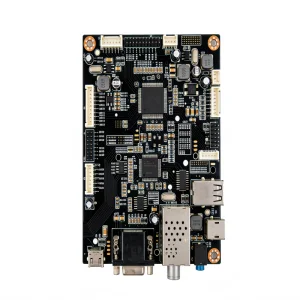
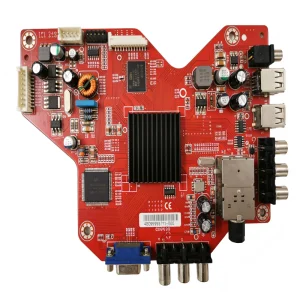
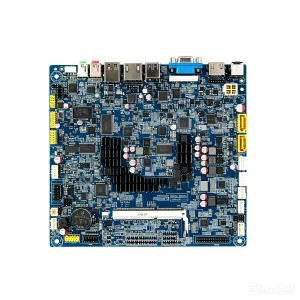
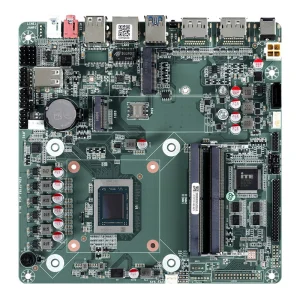
Custom Medical PCBA Application: Precision and Reliability for Healthcare Devices Solution Provider, in China
View product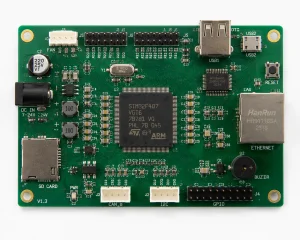
Top 10 Non-Isolated DC-DC Converter (Point-of-Load) PCB Assembly--STHL Factory, Manufacturers
View product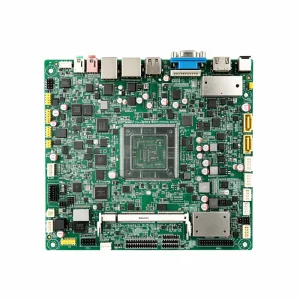
Why Precision SMT Testing from China Matters to Global OEMs
Precision SMT testing is not a single station at the end of the line. In a competent Chinese PCBA factory, it is a closed-loop quality system that begins with DFM and testability review, continues through incoming material control, stencil printing, SPI, placement, reflow profiling, AOI, X-ray, ICT, boundary scan, functional test, programming and final quality assurance, and ends with a traceable data package. The difference between a low-cost assembler and a qualified manufacturing partner is not the presence of an AOI machine. It is the correlation between inspection, electrical test, functional test and process capability data.
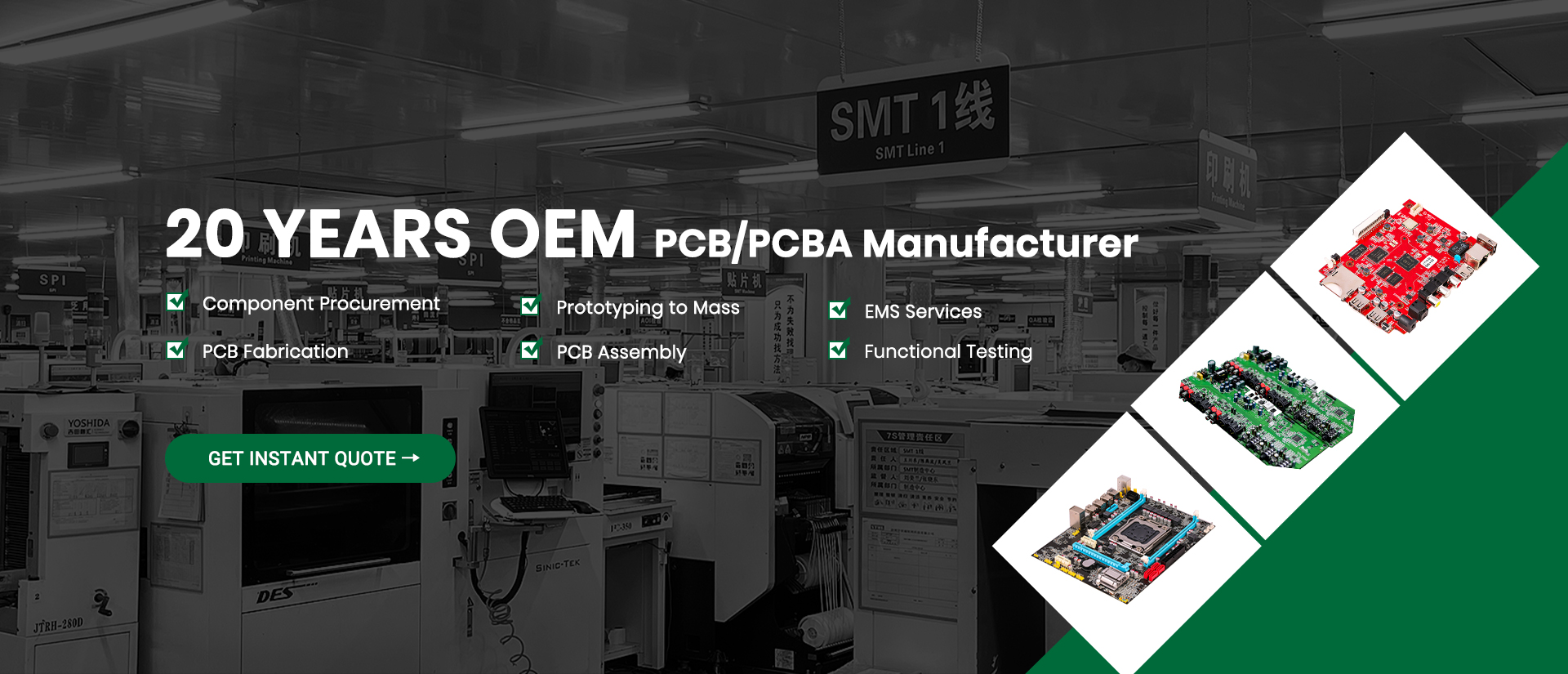
Shenzhen STHL Electronics Co., Ltd. has operated as a certified EMS and ODM provider since 2006. The company serves OEMs in the USA, Germany, Italy, the UK, Poland, New Zealand, Brazil and more than 90 other regions from a 10,000 m² facility with 220+ staff, including 50+ engineers. Production capacity includes 7 SMT lines, 2 DIP/THT lines, 2 functional test lines and 2 box build lines, supported by an in-house R&D laboratory for design verification and prototype testing. STHL is certified to IATF 16949, ISO 9001, ISO 14001 and ISO 13485, and operates with no MOQ and an NDA-before-RFQ policy.
For procurement teams, the practical question is not “Does the supplier have certificates?” The better question is “Can the supplier demonstrate how test coverage, fixture design, false-call control, traceability and engineering change management work together?” This whitepaper answers that question with an operator’s view of the SMT testing process, localized application scenarios, technical roadmap, supply-chain resilience and compliance safeguards.
- 7 SMT assembly lines and 2 DIP / THT lines
- 2 functional test lines and 2 box build lines
- In-house R&D laboratory and 50+ engineers
- AOI · X-Ray · ICT · FCT · MES traceability

Certified quality and environmental systems support automotive, medical, industrial and communications builds.

 Inside the STHL Shenzhen factory: SMT, THT, testing, warehouse and box build.
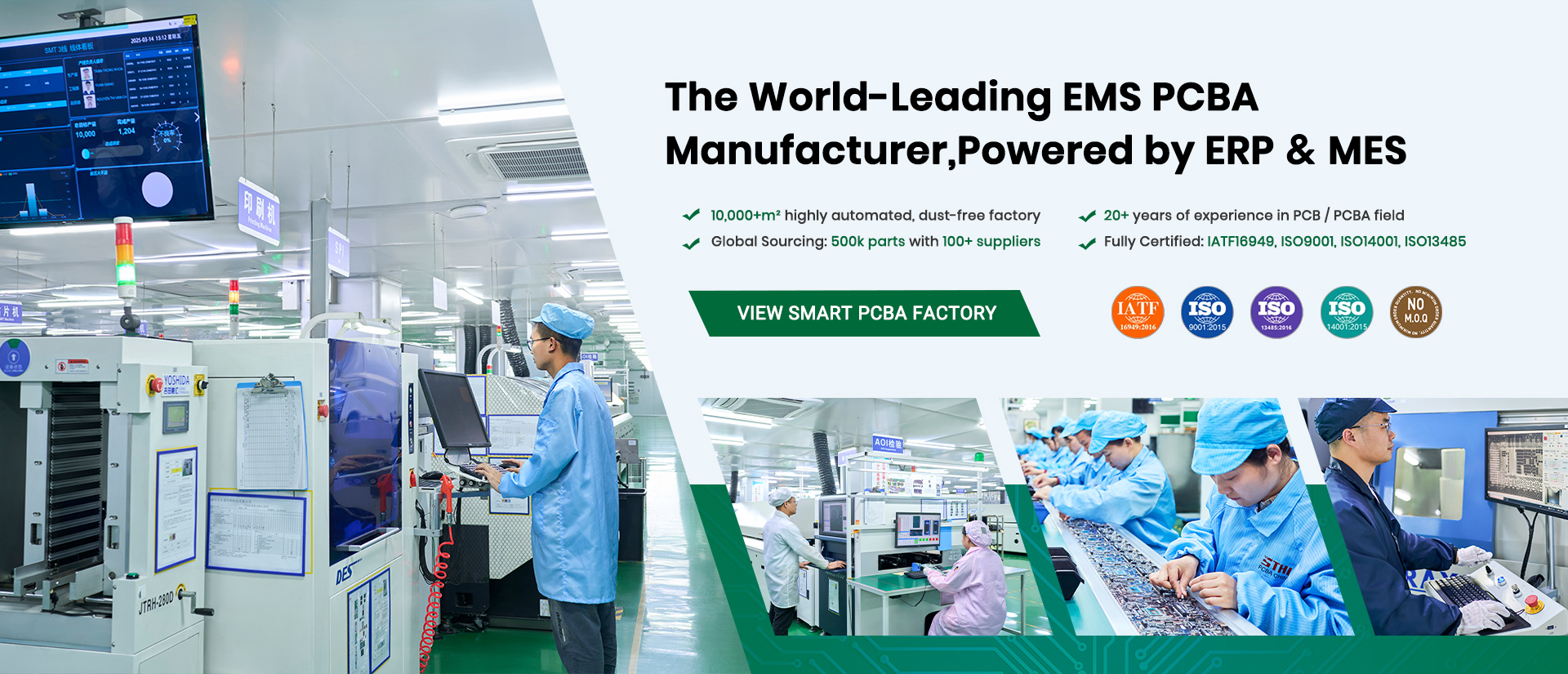
Automated SMT production line
Flex PCB assembly and inspection
Rigid-flex quality inspection

Precision PCBA equipment operation
The Precision SMT Testing Stack: From Solder Paste to System Function
A high-reliability PCBA program uses overlapping test layers. Each layer answers a different question, and the data from one layer should trigger action in another. This is where information gain is created: the supplier must show not only equipment, but correlation logic.
3D SPI and Paste-Print Capability
Solder paste inspection measures volume, area, height and offset after printing. Mature factories monitor CpK by aperture and use SPI trends to adjust printer pressure, speed and separation. SPI is most valuable when it closes the loop before reflow, preventing defects rather than ranking them after the fact.
AOI with False-Call Governance
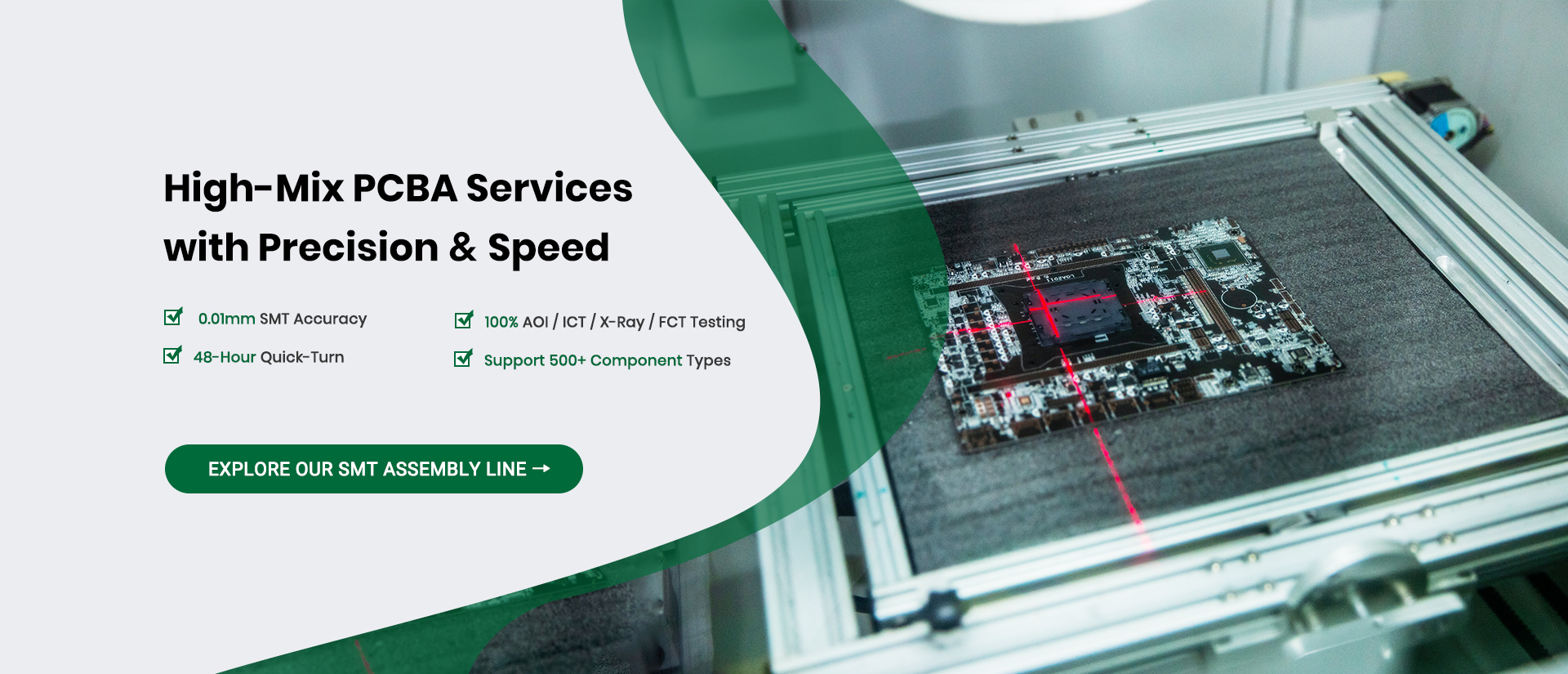
Automated optical inspection catches missing parts, polarity, offset, bridging and solder shape issues. The quality question is not whether AOI exists, but how false calls are classified, reviewed and trended. AOI should be correlated with X-ray, ICT and functional failures to avoid creating inspection bottlenecks.
X-Ray for Hidden Solder Joints
BGA, QFN, LGA, PoP and fine-pitch assemblies require X-ray or 3D CT to evaluate voids, head-in-pillow, open joints, solder ball integrity and thermal pad coverage. A useful supplier defines acceptance criteria by IPC class, customer specification and application risk, then stores images in the lot record.
ICT, Flying Probe and Boundary Scan
In-circuit test verifies opens, shorts, component values and access points. Flying probe supports prototypes and low-volume boards where fixtures are not economical. Boundary scan extends coverage to complex digital nets. The engineering work is in test-point access, fixture repeatability and GR&R.
Functional Test and System Validation
Functional test proves the board behaves as a system: power rails, clocks, RF, audio, sensing, communication, firmware and thermal response. Good programs define golden samples, test limits, calibration intervals, fixture maintenance and failure Pareto analysis. For medical and automotive boards, validation records matter as much as yield.
Reliability, ESD and Compliance
Conformal coating, thermal cycling, vibration, cleanliness, salt spray and ESD controls are selected according to the use environment. RoHS and REACH declarations, material traceability, MSD control and counterfeit mitigation complete the evidence package. This is how precision SMT testing supports global market access.
The 8-Stage Precision SMT Testing Workflow
This is a practical sequence for high-mix, high-reliability PCBA. It is written from the perspective of a Shenzhen EMS provider that manages prototype, low-volume and mass-production orders under one quality system.
DFM, BOM and Testability Review
Gerber, BOM, centroid and assembly drawings are checked for footprints, panelization, test-point access, polarity, end-of-life parts and fixture feasibility. Test strategy is agreed before material is ordered.
Component Sourcing and Incoming Inspection
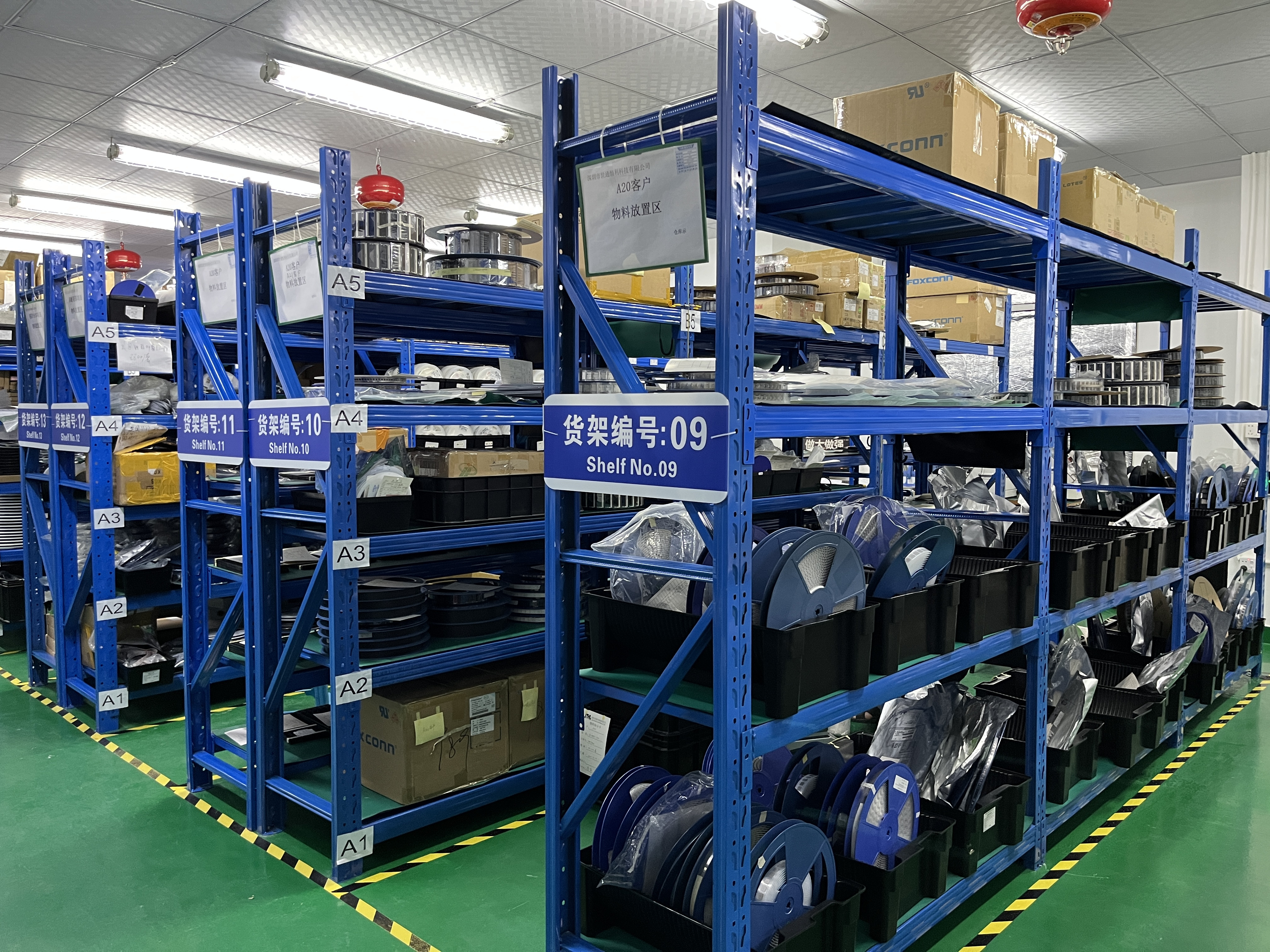
Sourcing runs through 100+ agents and suppliers covering 500,000+ part numbers. Incoming inspection checks authenticity, packaging, moisture sensitivity, date code and reel traceability.
Stencil Printing and SPI
Paste volume, aperture design and printer parameters are controlled; SPI results are reviewed for trends. The goal is a stable print window before placement, not a report after the board fails.
Pick-and-Place and Pre-Reflow Checks
Fine-pitch, BGA and mixed-technology boards are programmed with verified feeder and nozzle data. First-article checks confirm placement accuracy and orientation before volume placement.
Reflow Profiling and Thermal Control
Profiles are matched to paste, component mass and board complexity. Critical zones are verified with thermocouples, and reflow settings are controlled under change management.
AOI, X-Ray and Solder Verification
Visible joints are screened by AOI; hidden joints are verified by X-ray. Operator review, false-call data and image archives are linked to the lot record for traceability.
ICT, Boundary Scan and Functional Test
Test coverage is balanced across ICT, flying probe, boundary scan and FCT. Fixtures are validated, limits are documented, and failures are fed back to SMT and sourcing.
Box Build, Final QA and Data Package
Cable assembly, enclosure integration, conformal coating and ESD-safe packaging are completed. Final QA releases the lot with test records and traceability data for the customer.
Localized Application Scenarios for Precision SMT Testing
Different markets require different test evidence. A medical monitor, an automotive ESP module and a telecom base station board may share SMT equipment, but they do not share risk tolerance or documentation expectations.

Medical and Healthcare Devices
Smart blood glucose monitors, diagnostic equipment and wearable health devices require ISO 13485 controls, lot traceability and validated test fixtures. Precision SMT testing focuses on low-leakage measurements, sensor stability and repeatable functional test limits.
Explore medical PCBA
Automotive Safety and ESP Electronics
Electronic stability program modules, lighting, charging and control electronics demand IATF 16949 process discipline, PPAP documentation, AEC-Q component strategy and failure analysis discipline. Test correlation and change control are central to zero-defect programs.
Explore automotive PCBA
Communications, Base Stations and OLT
Base station boards, PoE power supplies, optical line terminals and voice assistant devices require RF-aware test, thermal evaluation and high-layer board handling. Test coverage must address high-speed interfaces as well as power integrity.
Explore communication PCBA
Industrial Control, PDU and DC-DC
Industrial control boards, power distribution units and point-of-load DC-DC converters must survive heat, vibration, electrical noise and long field life. Conformal coating, in-circuit test and thermal stress screening are often required.
Explore industrial PCBAAerospace, EFIS and Autopilot Modules
Electronic flight instrument systems, autopilot modules and mission-critical controls require conservative design rules, high inspection coverage and a robust traceability package. Low-volume high-mix builds benefit from flying probe, X-ray and application-specific functional test.
Explore aerospace PCBAConsumer IoT, Security and Ecological Monitoring
Security monitors, intercoms, audio amplifiers, voice assistants and ecological restoration monitoring equipment need fast NPI, cost-down engineering and scalable test. Standardized test fixtures and modular FCT platforms reduce ramp time.
Explore monitoring PCBATechnical Roadmap and Future Outlook: 2026–2030
The next competitive advantage in SMT testing will come from data correlation, not from adding isolated inspection machines. Chinese manufacturers that invest in test informatics will make supplier qualification faster and more transparent.
AI-Assisted Inspection and False-Call Reduction
SPI, AOI and X-ray data will be combined into multi-modal defect classification. Explainable AI dashboards will show which printer, placement or reflow parameter produced a defect signature. The business outcome is lower false-call workload, faster first-pass yield improvement and more reliable new-product introduction.
Digital Thread and Predictive SPC
ERP, MES, test fixtures and customer quality systems will exchange structured data. Predictive SPC will alert engineers before a trend becomes a lot failure. Supplier risk scoring will include component availability, test yield and change history, not just price and lead time.
Advanced Packaging Test Readiness
HDI, rigid-flex, SiP, PoP and chiplet-like architectures will increase the value of X-ray CT, boundary scan and system-level functional test. Test fixtures must handle finer pitch, higher density and more thermal constraints. Early design-for-test will become a required supplier capability.
Autonomous Zero-Defect Workcells
Closed-loop printer, placement and reflow control will move factories from detection to prevention. Secure data exchange will allow OEMs to audit test results remotely. Carbon-aware manufacturing and component traceability will become part of the commercial scorecard for global supply chains.
China Factory Supply-Chain Resilience and Efficiency Advantages
China’s advantage is not only labor cost. For PCBA, the deeper advantage is the density of PCB fabrication, component distribution, fixture making, tooling, engineering talent and logistics inside a short radius. That density reduces the time between a design change and a verified build.
Shenzhen Ecosystem Depth
PCB fabrication, SMT assembly, stencil making, fixtures, component sourcing and box build can be coordinated in one industrial cluster. For prototypes and low-volume high-mix programs, this compresses engineering iterations and reduces freight friction.
Multi-Source Component Strategy
STHL works with 100+ agents and suppliers covering more than 500,000 part numbers. Full turnkey, partial turnkey and consigned assembly are supported, with alternate-part validation and incoming inspection to reduce line-down risk.
ERP and MES Traceability
Real-time production status and lot traceability connect material, process and test results. From incoming reel to finished board, the data trail supports failure analysis, recalls and customer audits. This is a resilience capability, not only a quality record.
High-Mix Flexibility and No MOQ
With 7 SMT lines, 2 DIP/THT lines, 2 functional test lines and 2 box build lines, STHL can support prototype validation and scale to mass production without changing suppliers. No MOQ and NDA-before-RFQ lower the barrier for new product programs.
Cooperative enterprises and component sourcing channels
Long-term cooperation with global brands and established distributors helps keep the BOM genuine, traceable and available. Brand customers and sourcing channels referenced in the original STHL resource include the following.































Global Commercial and Industrial Status: From Cost Arbitrage to Resilience
Global electronics sourcing has shifted. OEMs still care about unit price, but they now place equal weight on supply continuity, test evidence, regulatory readiness and the ability to audit a factory remotely. China remains a central manufacturing base because it combines component depth, engineering capacity, mature PCBA ecosystems and export logistics.
For automotive, medical and industrial customers, the purchasing decision is increasingly cross-functional. Engineering wants design-for-test feedback. Quality wants PPAP, validation and traceability. Procurement wants dual-source options and predictable lead time. Compliance wants RoHS, REACH, ESD and quality-system evidence. A precision SMT testing process from China must satisfy all four groups. STHL supports this through IATF 16949, ISO 9001, ISO 13485 and ISO 14001 systems, MES traceability, ERP status tracking, 100+ sourcing agents and a documented test workflow.
The company’s customer footprint includes the USA, Germany, Italy, the UK, Poland, New Zealand, Brazil and 90+ other regions. This matters because localized support is not only language. It is quotation responsiveness, engineering change control, shipping documentation, NDA discipline, time-zone communication and the ability to host a remote or on-site audit. For high-mix programs, the supplier must move smoothly between prototype validation and repeat production without rebuilding the quality system.
Localized Support and Compliance Assurance
A China PCBA manufacturer can be technically capable and still fail a supplier audit if IP protection, documentation, change control or regulatory evidence is weak. The following safeguards are part of a credible localization strategy.
Certified Quality Systems
IATF 16949, ISO 9001, ISO 14001 and ISO 13485 certificates support automotive, medical, industrial and environmental requirements. RoHS-compliant assemblies and inspection records are available for customer review.
IP and NDA Protection
An NDA is signed before RFQ. Project data is restricted to the assigned engineering team and tracked through ERP and MES. This is essential for custom medical, aerospace and security electronics.
Remote and On-Site Audit Support
Customers can visit the Shenzhen factory and R&D laboratory, or use a 360° virtual factory tour for remote pre-qualification. Audit preparation includes lot records, test data and material traceability.
Documentation for Global Markets
FAI, PPAP support, CoC, test reports, traceability records, change notifications and inspection data help overseas buyers satisfy internal quality gates and regulatory expectations.

ISO 9001
Quality Management System

IATF 16949
Automotive Quality Management

ISO 13485
Medical Devices Quality Management

ISO 14001
Environmental Management System
End-to-End PCBA Manufacturing Services Under One Quality System
For 20 years, STHL has combined component procurement, PCB fabrication, SMT and THT assembly, testing and box build into one controlled workflow. That integration matters when a test failure requires a fast decision across material, process and design.

Electronic Components Procurement
Full or partial turnkey sourcing through 100+ agents and suppliers, with BOM scrubbing, alternate-part suggestions and reel-level traceability.
Learn more
PCB Fabrication
Standard, prototype, aluminum, flexible, rigid-flex, HDI, Rogers, ceramic, heavy-copper, high-Tg and halogen-free boards built to your stack-up.
Learn more
SMT & THT PCB Assembly
Prototype, low-volume and high-volume assembly including fine-pitch, BGA and mixed-technology boards, verified by AOI and X-ray.
Learn more
Value-Added Services
PCB layout and design, IC programming, ICT and functional testing, conformal coating, cable and wire harness, and complete box build assembly.
Learn moreWhy Global OEMs Choose STHL for Precision SMT Testing and PCBA
Measurable capacity, documented quality systems and engineering support reduce total cost, not just unit price. The following capabilities are the practical reasons buyers move from a transactional assembler to a qualified EMS partner.

Dust-Free Smart Factory
10,000+ m² highly automated production space with controlled processes and inspection stations.

20 Years of Experience
Proven know-how across PCB and PCBA since 2006, including high-mix and regulated builds.

Global Sourcing
500k+ parts via 100+ agents and suppliers, with alternate-part validation and incoming inspection.

Fully Certified
IATF 16949, ISO 9001, ISO 14001 and ISO 13485 quality systems with RoHS-compliant output.

ERP & MES Tracking
Real-time production status and lot traceability from incoming material to finished shipment.

Cost-Down Engineering
DFM and BOM optimisation by our engineering team, without compromising test coverage.

No MOQ
Prototype and large-quantity orders are both welcome, with the same quality system.

NDA Before RFQ
Your design data and intellectual property are protected from the first technical discussion.

Fast Delivery
99.5% on-time delivery across global shipments and repeat production programs.
Planning a high-reliability SMT build?
Share Gerber, BOM, centroid and test requirements. STHL can review DFM, BOM and testability before quotation, under NDA.
Request a catalog Global serviceWhat Engineers and Buyers Say About STHL
Feedback from hardware engineers, designers and company owners across North America, Europe and beyond. These comments reflect the commercial experience behind the technical process.
“Excellent team to work with and fast delivery with high-quality boards. We are very happy to work with such a good supplier. Thanks again.”

“Please extend my thanks to your team for your hard work in preparing these samples. This positive experience has strengthened my confidence in your company, and I'm looking forward to discussing bulk orders in the near future.”

“We are satisfied with the last order. You did a great job on those boards and the lead time was short. I will place a new order soon.”

“The order was perfect — exactly as specified with top quality. Highly recommend this reliable supplier.”

“Exciting! Very fast delivery, a professional supplier and a professional product. We will place a new order very soon!”

“We have tested all the boards and I am highly pleased. I will repeat my order soon. Thank you again for your excellent service.”

“It's always a pleasure ordering. Very professional team and good quality — thanks for your great service.”

“Satisfied with the sample products delivered. Very good product, quick delivery and a good understanding of my requirements.”

“The supplier's professionalism is evident in their seamless communication, efficient processing and reliable service. They are a trustworthy and commendable partner.”

PCBA Insights and Factory News
Practical updates from the production floor: customer visits, traceability practices and what really drives PCBA lead time.

STHL Hosts Two European Visitors for an Early-Stage Healthcare Electronics Concept Review and Factory Tour

STHL Hosts Two German Visitors for an SMT, THT and Material Preparation Walkthrough

Precision SMT Testing Process from China: Common Questions
Straight answers for procurement and engineering teams evaluating a China SMT assembly and testing manufacturer. The first six answers are the original STHL FAQ content; the remaining answers add supplier-qualification depth.
What files do I need to submit for a PCBA project?
Send Gerber files, a BOM with manufacturer part numbers, the pick-and-place (centroid) file and assembly drawings. If you need IC programming or functional testing, include firmware and test procedures. Our engineers complete a DFM and BOM review before production starts.
Is there a minimum order quantity (MOQ)?
No. STHL accepts prototype, low-volume and high-volume PCB assembly orders, so you can validate a design and scale to mass production with the same supplier.
Can STHL source all the electronic components?
Yes. We offer full turnkey, partial turnkey and consigned assembly. Our sourcing team works with 100+ agents and suppliers covering more than 500,000 part numbers, with incoming inspection and traceability from reel to finished board.
Which quality certifications does STHL hold?
STHL is certified to IATF 16949, ISO 9001, ISO 14001 and ISO 13485, and produces RoHS-compliant assemblies. Boards are verified with AOI, X-ray, ICT and functional testing.
How do you protect our design files and IP?
We sign an NDA before RFQ, restrict project data to the assigned engineering team and track every build through our ERP and MES systems.
Can we audit or visit the factory?
Yes. Customers are welcome to visit our Shenzhen factory and R&D laboratory at any time, and a 360-degree virtual factory tour is available for remote evaluation.
How do you correlate AOI, X-ray, ICT and functional test results?
A qualified supplier links inspection and electrical test data by serial number or lot. AOI flags are reviewed against X-ray images, ICT failures and functional failures. The purpose is to find the dominant defect signature, adjust the process and verify improvement, not merely to increase inspection volume.
What data package can I receive after production?
Depending on the program, the data package can include lot traceability, component reel records, SPI/AOI/X-ray results, ICT and FCT summaries, first-article inspection, calibration status, programming records, packing records and certificate of conformance. Automotive and medical programs can define additional documentation in the quality agreement.
Can you support prototypes and low-volume high-mix orders?
Yes. STHL operates with no MOQ and supports prototype, low-volume and high-volume PCB assembly. Flying probe, fixture-based ICT and modular functional test platforms can be selected according to volume and coverage requirements.
How do you handle component shortages and redesigns?
The sourcing team reviews BOM risk, proposes alternate parts, validates specifications with engineering and records any approved change. For redesigns, DFM and testability are reviewed again so that fixture access, programming and test limits remain valid before production.
Localized Support, Audit Access and Original STHL Links
For quotation, NDA, factory audit, 360° virtual tour or technical review, contact the STHL team directly. The original service, industry and resource links are preserved below for navigation and supplier evaluation.
Talk to a PCBA engineer
[email protected] +86 135 1018 8049 +86 755 8936 9123 WhatsApp: +86 135 1018 8049 Launch the 360° factory tourB4, AnLe Industrial Zone, No.172 Hangcheng Blvd, Bao'an Xixiang District, Shenzhen, 518126 China


Original navigation, industry and social links
Original Product Families: Precision Testing for Critical Electronics
These eight product families complete the original STHL product set. They cover aerospace, intercom, autopilot, PoE, industrial control, optical line terminal, audio amplifier and ecological restoration monitoring applications. All original URLs and product images are preserved below.
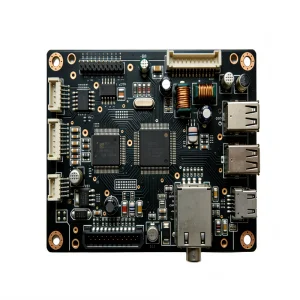
Certified Electronic Flight Instrument System (EFIS) PCBA Assembly--STHL Manufacturer, Factories
View product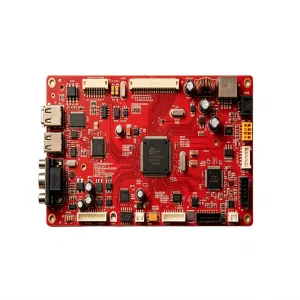
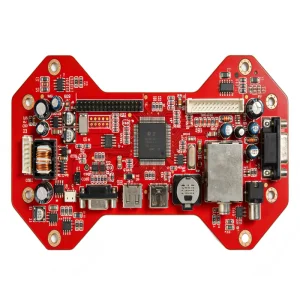
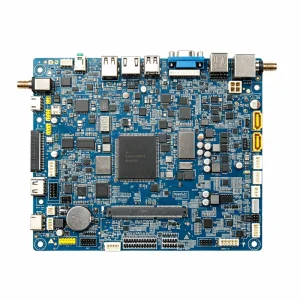
China Leading PoE Power Supply (Power over Ethernet) PCB Assembly--STHL Supplier, Manufacturers
View product