
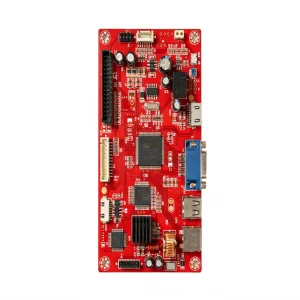
Fabrication Portfolio · Part 1
Engineered PCB Assembly Programs for Mission-Critical Products
Precision fabrication is only meaningful when it survives the real application. The programs below show how our process controls are applied across navigation, audio, water-safety, automotive communication, access control, medical infusion, power conversion and connectivity hardware. Each project is quoted after a documented DFM and BOM review, and every build ships with inspection data.
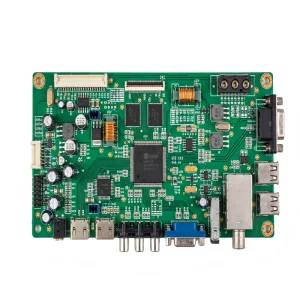
OEM Smart Speaker PCBA Assembly--STHL Factory, Solutions
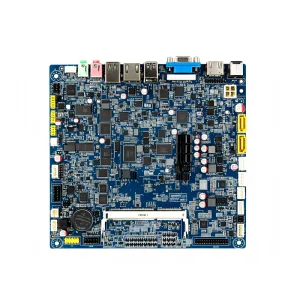
High Quality Water Leak Detector PCBA Assembly--STHL Partner, from China
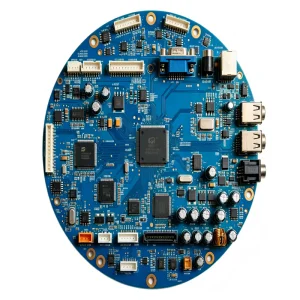
OEM In-vehicle Communication Devices PCBA Assembly--STHL in China, Factories
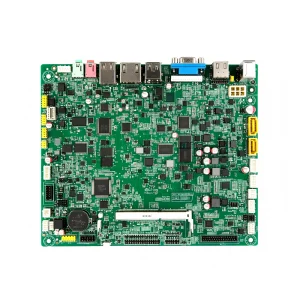
China Smart Lock PCBA Assembly--STHL Partner, Solutions
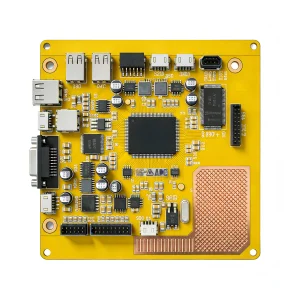
China Leading Infusion Pump PCB Assembly--STHL Supplier, from China
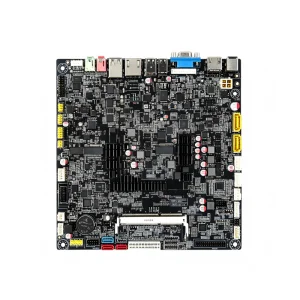
High-Reliability Open Frame Power Supply PCB Assembly--STHL Supplier, Solution Provider
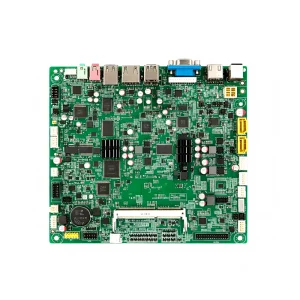
High-Reliability Modem PCB Assembly Manufacturer, Company
Global Demand Perspective
Why Global Enterprises Are Re-Specifying Printed Circuit Board Fabrication
Procurement strategy for PCB fabrication and assembly has changed more in the last five years than in the previous twenty. Understanding that shift is the first step to choosing a supplier who will not become a bottleneck.
Electronics manufacturers are now operating with far less margin for error. A modern vehicle platform carries hundreds of semiconductors per unit; a clinical device must hold calibration through years of field service; a consumer product may be expected to iterate three times inside twelve months. That pressure has turned board fabrication from a tactical purchase into a strategic control point — PCB and PCBA quality directly determines certification timelines, warranty exposure and brand trust.
Shenzhen STHL Electronics has been inside that shift since 2006. From our Shenzhen facility we serve OEMs across North America, Europe, the Middle East, Southeast Asia, Oceania and South America, and we see buying teams converging on the same five requirements: compliance certainty with auditable IATF 16949, ISO 13485, ISO 9001 and ISO 14001 certificates; traceability from component reel to finished serial number; speed through quick-turn first articles with no MOQ gate; engineering partnership in DFM and BOM optimisation; and supply-chain resilience backed by multi-agent sourcing and alternate-part intelligence.
The most decisive change is economic. Buyers no longer compare only the price per board. They compare landed cost — which includes first-pass yield, rework, scrap, expediting fees and the administrative load of a second audit. A manufacturer that eliminates rework is frequently cheaper than a supplier quoting ten percent less and forcing a second review cycle. That is why we publish our process controls rather than simply our price list.
20+Years of EMS & PCBA Experience
10,000+m² Automated Production Area
99.5%On-Time Delivery Performance
500,000+Traceable Component Part Numbers
90+Countries & Regions Served
99%Qualified Shipment Rate
Macro Industry Solutions
One Qualified Platform, Six Regulated Market Pathways
No single manufacturing configuration fits every market. Below is how we map process controls, documentation and inspection intensity to the compliance and reliability expectations of six industry groups.
Automotive & Mobility
IATF 16949 controlled lines, PPAP-ready documentation and thermal-cycling validation for control modules, in-vehicle communication devices, sensors and charging electronics.
Medical & Life Sciences
ISO 13485 workflows with lot traceability and validation support for infusion pumps, biochemical analysers, hearing aids and operating-room video monitoring systems.
Industrial Automation
Conformal coating, wide-temperature assembly and vibration-resistant builds for PLCs, motor drives, open-frame supplies and rack-mount power systems.
Telecom & Connectivity
Impedance-controlled routing, RF-aware layout review and rapid iteration for modems, intercoms, smart speakers and Wi-Fi or cellular communication modules.
Smart Home & Security
Low-power assembly, battery-life optimisation and ESD-safe packaging for smart locks, water leak detectors and access-control electronics.
Energy & Environment
Corrosion-resistant finishes, protective coating and long-term field reliability for environmental monitoring stations, leak sensors and grid-side electronics.
Technology Roadmap
Where PCB Fabrication Is Heading: A Practical Roadmap to 2030
Roadmaps are only credible when they are grounded in shipped manufacturing capability rather than brochure language. These are the six technical directions we are investing in and the customer problems each one solves.
Phase 1 · HDI & Micro-Via Density
Laser-drilled micro-vias, any-layer interconnection and finer BGA pitches for wearables, sensor modules and compact medical electronics where board area is the scarcest resource.
Phase 2 · Rigid-Flex & Embedded Components
Rigid-flex stack-ups, embedded passives and cavity designs are moving from prototype tooling to repeatable volume — reducing connectors, weight and assembly failure points.
Phase 3 · Power Electronics & Thermal Design
Heavy-copper, metal-core and ceramic substrates combined with thermal via planning for EV charging, motor drives and industrial power conversion.
Phase 4 · Smart Manufacturing & Traceability
ERP and MES integration, board-level serialisation and automatic archiving of AOI, X-ray and functional test data so quality evidence is retrievable years after shipment.
Phase 5 · Supply-Chain Resilience
Alternate-part libraries, lifecycle and end-of-life monitoring and multi-agent sourcing strategies that protect long-life industrial and medical programs from allocation shocks.
Phase 6 · Sustainable Manufacturing
Halogen-free laminates, lead-free finishes, wastewater recycling and ISO 14001 metrics that satisfy customer ESG reporting without inflating unit cost.
Industry Status
The Global PCB Fabrication Landscape and Today's Sourcing Reality
East Asia still concentrates the majority of global PCB output, but sourcing decisions are no longer driven by the lowest quotation alone. Trade policy, export-control lists, semiconductor lead times and customer ESG obligations now sit inside every supplier evaluation.
What we observe consistently across inbound RFQs is a more mature buying pattern. Dual sourcing is now standard rather than exceptional, with most OEMs retaining at least two qualified PCBA suppliers and distributing volume by risk tier. Documentation quality has become a genuine competitive variable — projects arriving with a clean BOM, centroid file and stack-up drawing are quoted two to three days faster than incomplete packages, and they also start production with fewer engineering queries. Regulatory evidence matters more than marketing material: buyers request certificate PDFs, test reports and sample corrective-action records before an order is discussed.
Lead-time volatility has also relocated. Bare-board fabrication and SMT capacity can ramp within two to three weeks; the unpredictable element is component availability, where specific ICs may extend beyond forty weeks. That is why our quoting workflow scrubs the BOM for lifecycle status and alternate parts before pricing is finalised. China's advantage in prototype and mid-volume work remains structural rather than simply cost-driven: PCB shops, component distributors, stencil suppliers, enclosure fabricators and test houses sit within hours of each other, so a design change on Monday can be assembled and functionally tested in the same week.
Localised Support & Compliance
Localised Support and Compliance Assurance for Cross-Border Buyers
Offshore manufacturing only works when communication and documentation feel local. These six pillars remove the friction that usually slows an overseas PCBA project down.
English-Speaking Engineering Interface
A dedicated project engineer covers every RFQ, DFM report and first-article approval, with working-hours overlap for the Americas, Europe, the Middle East and Asia-Pacific.
NDA and IP Protection
An NDA is signed before the RFQ stage. Gerber, BOM and firmware data are restricted to the assigned team and access is logged inside our ERP and MES systems.
RoHS, REACH & Conflict Minerals
Every BOM is screened for RoHS and REACH conformity, with conflict-mineral declarations and documented material change notification on file.
Export Logistics & Packaging
ESD-safe trays, desiccant-controlled bags, ISPM 15 compliant crating and DDP or DDU shipping options into more than 90 countries and regions.
Audit & Documentation Package
PPAP, first-article inspection reports, functional test logs, corrective-action records and certificate copies are delivered with the shipment, not after it.
On-Site Visits & Remote Audits
Quality and procurement teams are welcome at our Shenzhen plant at any time, and a 360-degree virtual factory tour supports remote pre-qualification before the first PO.
Controlled Workflow
From Gerber Files to Global Shipment in Six Controlled Steps
Knowing exactly what happens after a purchase order is issued removes surprises from a fabrication project. This is how every PCBA order moves through our Shenzhen facility.
DFM & BOM Review
Engineers check Gerber, BOM and centroid data for manufacturability, footprint errors, panel utilisation and end-of-life parts before any material is purchased.
Component Sourcing
Parts are purchased through 100+ agents and suppliers, then pass incoming inspection plus moisture-sensitive device control and reel-level traceability.
PCB Fabrication
Bare boards are produced to your stack-up, surface finish and impedance requirements — from single-layer and aluminium boards to HDI and rigid-flex.
SMT & THT Assembly
Seven SMT lines and two DIP/THT lines handle fine-pitch, BGA and mixed-technology assemblies for both prototypes and mass production.
Inspection & Testing
AOI, X-ray, ICT and functional testing, plus IC programming and conformal coating, with every result logged in our manufacturing execution system.
Box Build & Delivery
Cable assembly, enclosure integration and ESD-safe packaging, shipped on schedule to customers in more than 90 countries and regions.
Certified Quality Systems
Independently Audited Management Systems
Third-party certification confirms that our processes meet the documented requirements of automotive, medical, industrial and environmental customers — not simply our own internal standard.
ISO 9001
Quality Management System
IATF 16949
Automotive Quality Management
ISO 13485
Medical Devices Quality Management
ISO 14001
Environmental Management System
Q&A
Printed Circuit Board Fabrication & PCBA Sourcing FAQs
Direct answers to the questions engineering and procurement teams ask most often before qualifying a PCB assembly manufacturer in China.
What files do I need to submit for a PCB fabrication and PCBA project?
Send Gerber files, a BOM with manufacturer part numbers, the pick-and-place (centroid) file and assembly drawings. If you need IC programming or functional testing, include firmware and test procedures as well. Our engineers complete a DFM and BOM review before production starts, and any manufacturability risk is reported back before material is ordered.
Is there a minimum order quantity for PCB assembly?
No. STHL accepts prototype, low-volume and high-volume PCB assembly orders, so a design can be validated on the same line and with the same process documentation that will later be used for mass production. This continuity reduces the re-qualification effort when a product moves from pilot to volume.
Can STHL source all the electronic components required for my BOM?
In most cases, yes. We offer full turnkey, partial turnkey and consigned assembly. Our sourcing team works with more than 100 agents and suppliers covering over 500,000 part numbers, supported by incoming inspection, alternate-part suggestions and traceability from reel to finished board.
Which quality certifications does the factory hold?
STHL is certified to IATF 16949, ISO 9001, ISO 14001 and ISO 13485, and produces RoHS-compliant assemblies. Boards are verified with AOI, X-ray, in-circuit testing and functional testing, and the inspection records are retained for traceability after shipment.
How do you protect our design files and intellectual property?
We sign a non-disclosure agreement before the RFQ stage, restrict project data to the assigned engineering team, and track every build through our ERP and MES systems. Gerber and firmware access is role-based and logged, and files are never shared with third parties without written approval.
Can we audit or visit the factory before placing an order?
Yes. Customers are welcome to visit our Shenzhen factory and in-house R&D laboratory at any time, and a 360-degree virtual factory tour is available for remote evaluation. Pre-qualification audits can be scheduled before the first purchase order so that quality and procurement teams review the process with their own checklist.
Fabrication Portfolio · Part 2
Further PCB Assembly Programs Built on the Same Quality System
Sensing, audiology, intercom, diagnostics, environmental monitoring and power distribution assemblies — each produced under the same documented inspection, traceability and compliance controls.
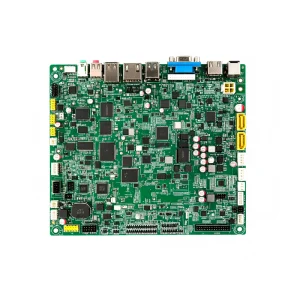
High Quality Leak Sensor PCBA Assembly--STHL Supplier, Company
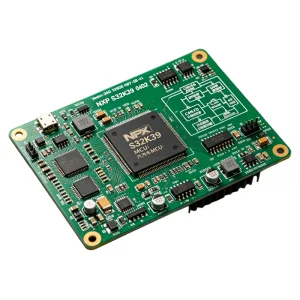
Prototype Smart Hearing Aid PCB Assembly--STHL Supplier, Solutions
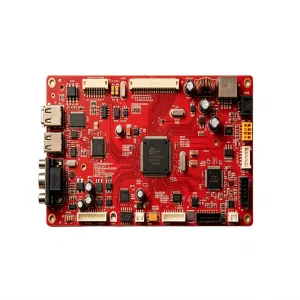
OEM Intercoms PCBA Assembly--STHL Factory, Service
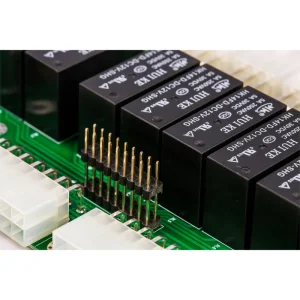
One-Stop Biochemical Analyzer PCB Assembly--STHL Manufacturer, Factory
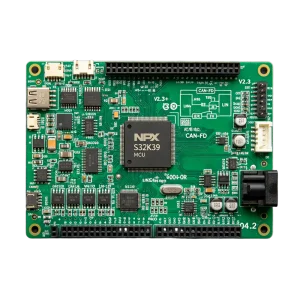
High Quality Environmental Monitoring Station PCB Assembly Service, Factories
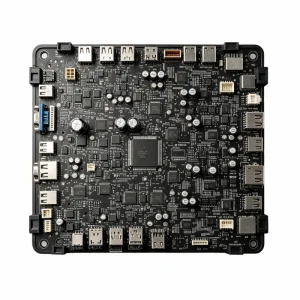
Custom Modular Power Supply PCB Assembly--STHL Partner, Solution Provider
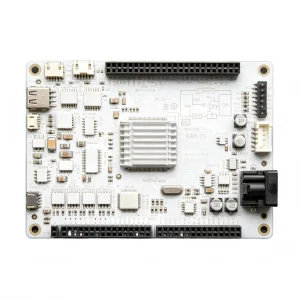
High Quality Operating Room Video Monitoring System PCB Assembly--STHL Company, Service
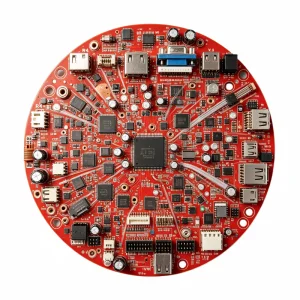
Custom Rack Mount Power Supply PCB Assembly--STHL Supplier, Factory
Planning a Precision PCB Fabrication Build?
Send your Gerber, BOM and centroid files under NDA and receive a documented DFM review, a transparent quotation and a realistic production schedule — from prototype quantities to repeat volume.
