Turnkey multilayer PCB fabrication, SMT/THT assembly, BOM sourcing, testing, conformal coating and box build for global OEMs that need engineering depth, compliance assurance and dependable China factory supply-chain execution.
IATF 16949ISO 13485ISO 9001ISO 14001No MOQNDA before RFQ
OEM Multilayer PCB & PCBA Solution Portfolio
Engineered Multilayer PCB Manufacturing for Real OEM Programs
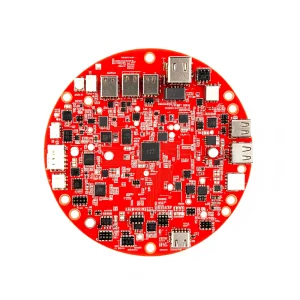
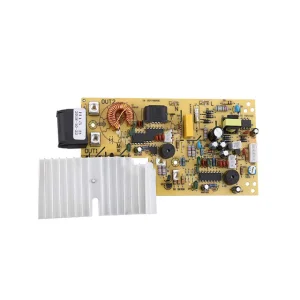
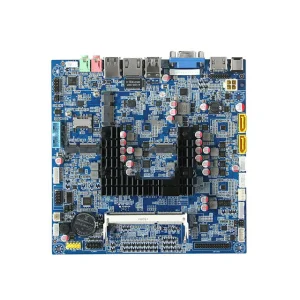
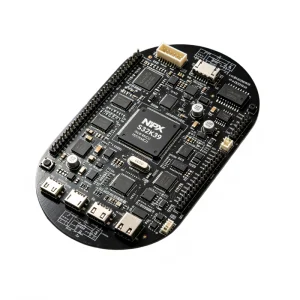
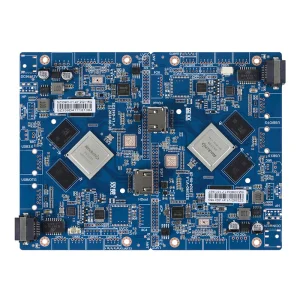
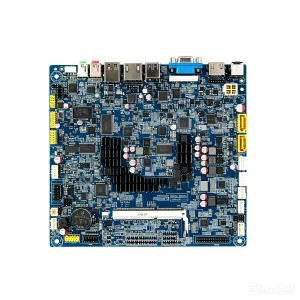
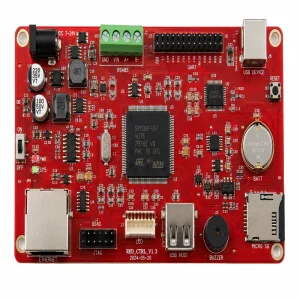
This product series connects multilayer PCB fabrication with application-specific PCBA engineering. Each solution below represents a practical build path: stack-up review, component sourcing, SMT and THT assembly, inspection, testing and shipment under one accountable manufacturing workflow.
What OEM Buyers Should Expect from a Multilayer PCB Supplier
Multilayer PCB manufacturing is not a commodity purchase when the board sits inside an energy meter, base station, medical monitor, power converter or industrial controller. The supplier becomes part of the OEM’s quality system, affecting yield, field reliability, compliance evidence, lead time and total cost of ownership.
A true OEM multilayer PCB manufacturing supplier and solution provider does more than quote a per-square-meter price. It controls the interaction between laminate choice, prepreg flow, copper balance, drilling accuracy, plating uniformity, solder-mask registration, surface finish, impedance tolerance and assembly process windows. When those variables are managed together, the OEM receives a board that can be assembled repeatedly, tested consistently and audited confidently.
At STHL, multilayer PCB projects are reviewed as a manufacturing system. Engineering checks stack-up symmetry, dielectric spacing, via structures, annular rings, thermal relief, panel utilisation and mixed-technology assembly risk before material is released. This early DFM discipline matters because many field failures are not caused by a single component; they are created by hidden process interactions such as via-in-pad voids, copper imbalance that warps the panel, inadequateCAF margins, or a surface finish that changes solder joint behaviour during reflow.
For global OEMs, the commercial interpretation is straightforward: information gain comes from manufacturing evidence. Buyers need documented inspection methods, lot traceability, material certificates, first-article reports, functional test logs and a clear escalation path when a question arises. A supplier that can explain why a stack-up works, how a BOM risk will be mitigated and what evidence will be provided at shipment is more valuable than a quotation that only promises a low unit price.
Stack-Up Engineering
Layer symmetry, dielectric thickness, copper weight and drill-to-copper clearance are reviewed before fabrication so the board remains stable through reflow and field temperature cycling.
HDI & Via Reliability
Blind, buried and stacked via options are matched to routing density, aspect ratio, fill requirements and X-ray verification needs, not selected as a default feature.
Material & Compliance Fit
Tg, Td, CTE, thermal conductivity, halogen-free requirements and RoHS/REACH expectations are translated into a laminate and finish specification your quality team can audit.
Assembly-Aware Fabrication
Fiducials, panel rails, solder-mask dams, component clearances and test access are considered during PCB fabrication so SMT and THT assembly run without avoidable rework.
Demonstrated Capability & E-E-A-T Signals
Shenzhen STHL Electronics: capability built on 20 years of EMS execution
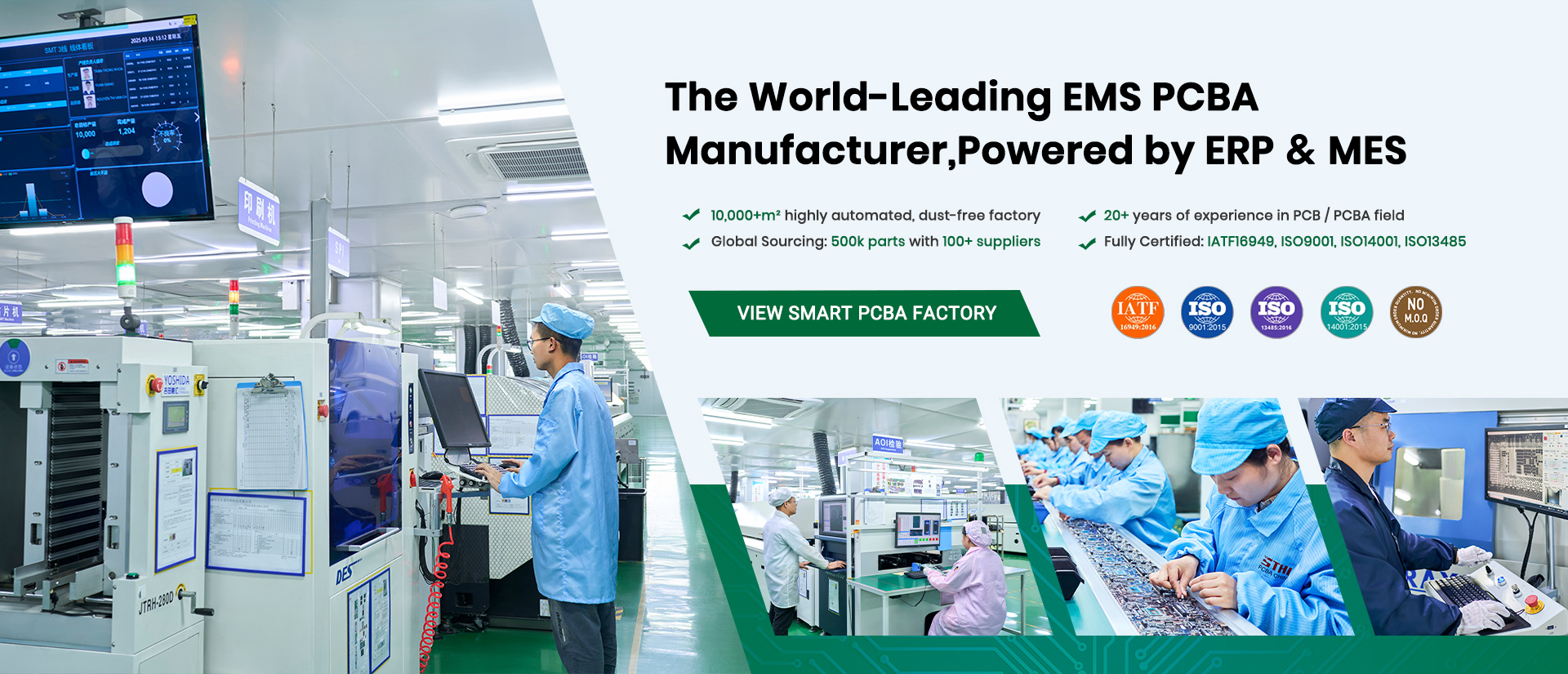
STHL has operated as a certified electronics manufacturing services and ODM provider in Shenzhen since 2006. The factory combines PCB fabrication coordination, component sourcing, SMT/THT assembly, testing, cable assembly and box build, giving OEM procurement teams a single point of accountability from prototype to repeat production.
20+
Since 2006
Years of EMS and PCBA experience
10,000m²
Shenzhen
Production facility with controlled processes
220+
Team
Staff supporting manufacturing and sourcing
50+
Engineers
Engineering support for DFM, BOM and test
7+2
Lines
SMT lines plus DIP/THT assembly lines
99.5%
OTD
On-time delivery across global shipments
Automated SMT production for high-mix PCBA programs.Component placement and flexible assembly inspection.Quality inspection for rigid, flex and multilayer builds.
Factory evidence: Customers can visit the Shenzhen factory or request a 360-degree virtual tour before qualification.
Engineering evidence: DFM reports, BOM risk notes, first-article inspection and test records support every production release.
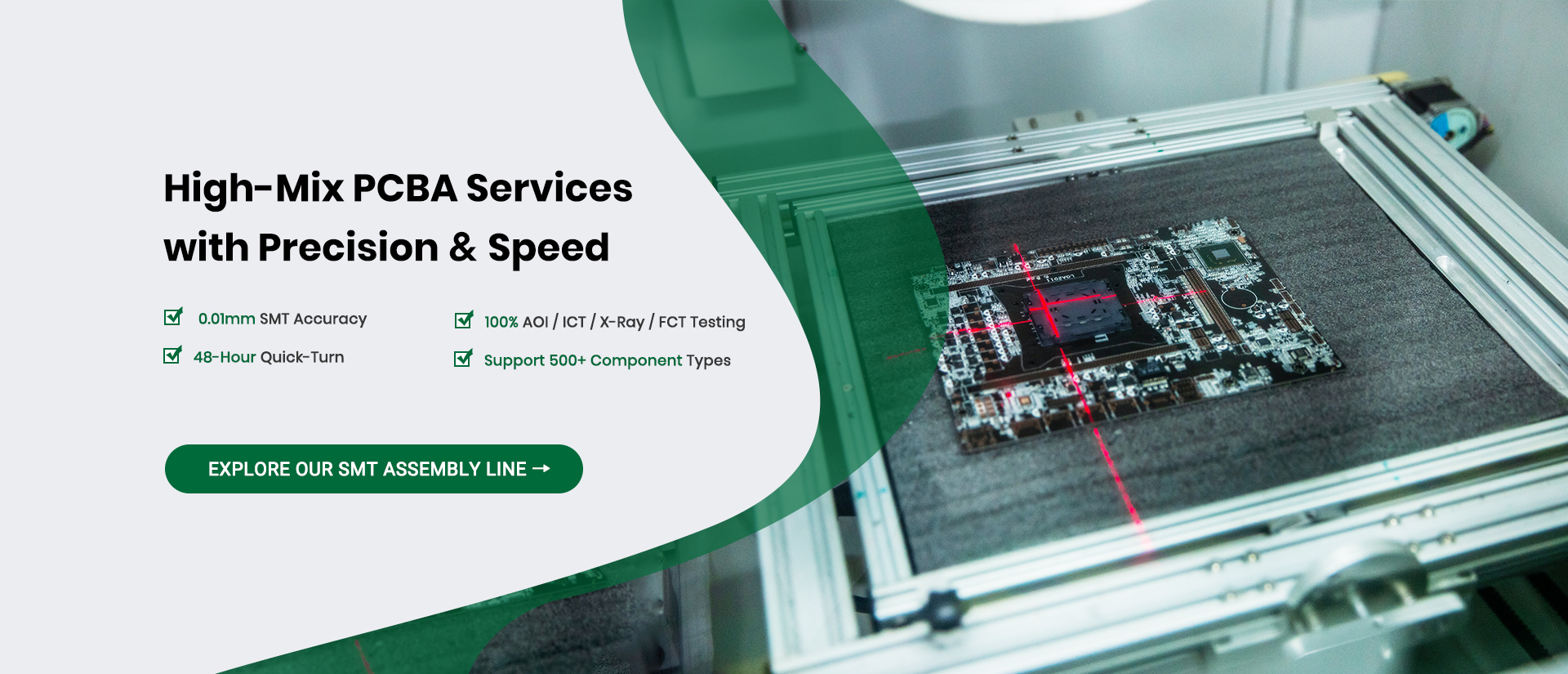
Quality evidence: AOI, X-ray, ICT and functional testing are matched to board complexity and end-market risk.
China Factory Supply-Chain Advantage
Why Shenzhen still matters for multilayer PCB and PCBA programs
The strongest China factory advantage is not simply labour cost. It is the density of the electronics ecosystem: multilayer PCB fabrication, laminate distribution, component agents, SMT capacity, tooling, cable assembly, enclosures, testing houses and international logistics are all available within a compact industrial region. That density shortens problem-solving cycles when a BOM line becomes obsolete, a bare board needs a stack-up change, or a pilot build needs a rapid functional-test fixture.
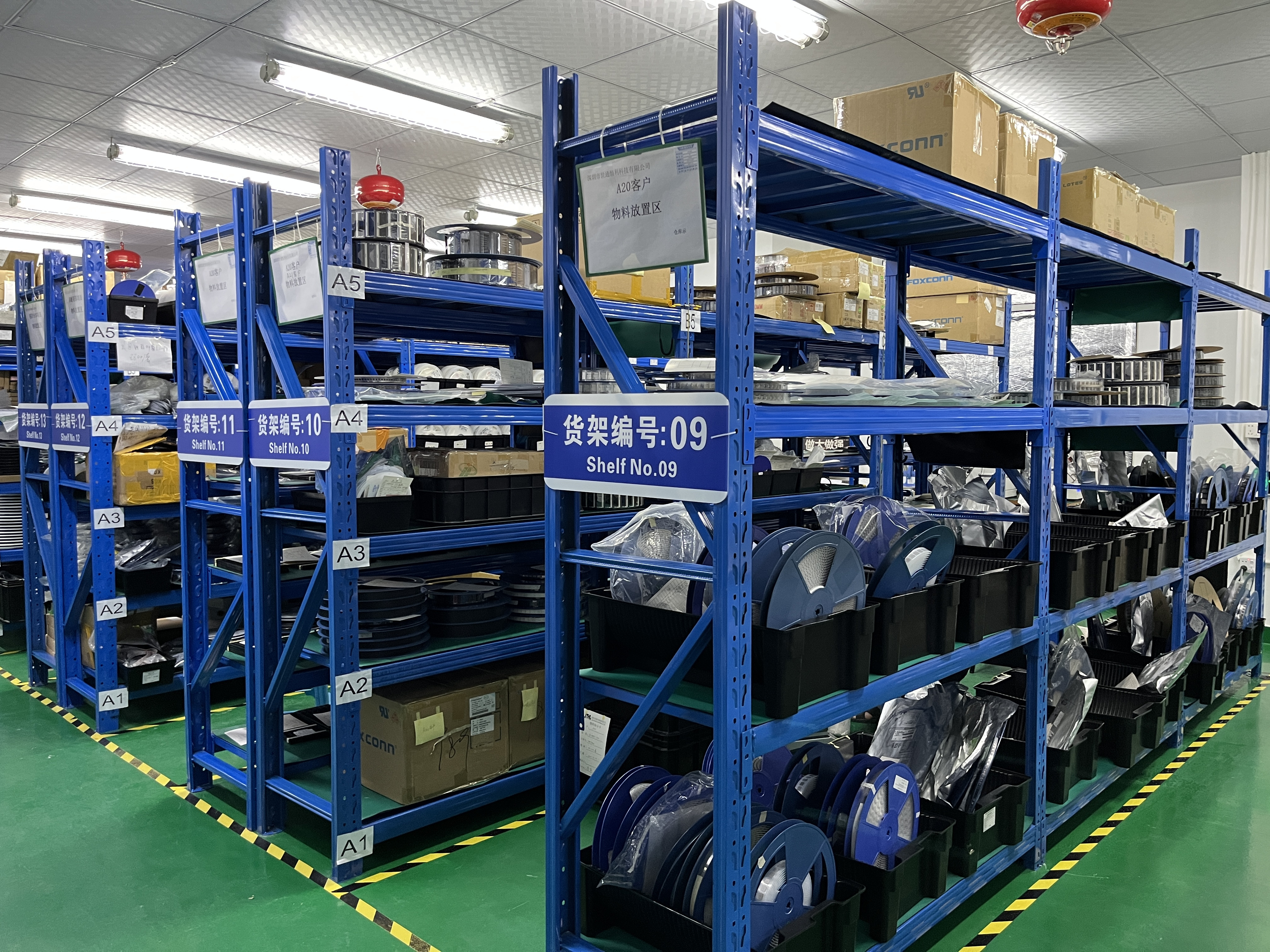
STHL operates inside that ecosystem with a sourcing team that manages full turnkey, partial turnkey and consigned assembly. More than 100 agents and suppliers support a database covering 500,000+ part numbers. Component risk is reviewed before purchase, including lifecycle status, counterfeit exposure, moisture sensitivity, date-code acceptability and alternate-part options. For OEMs, the benefit is not only availability; it is a documented sourcing rationale that procurement and quality teams can review.
Multilayer PCB manufacturing benefits from the same regional depth. Fabrication partners can be matched to rigid, HDI, heavy-copper, high-Tg, aluminium, ceramic, Rogers and rigid-flex requirements. Because STHL coordinates fabrication with assembly, changes in surface finish, via fill or panel definition are evaluated against the downstream assembly process rather than handled in isolation. This reduces the common procurement gap where a bare-board supplier and an assembly supplier each meet their own specification but the finished PCBA still fails.
Cluster Density
PCB fabrication, components, assembly, tooling and logistics sit close together, shortening escalation and rework cycles for complex builds.
Dual Sourcing Logic
Critical BOM lines are supported by approved alternates and supplier checks, reducing line-down risk without silently changing form, fit or function.
BOM Lifecycle Review
Engineers and buyers flag end-of-life, long lead-time, minimum-order and counterfeit-risk parts before the production schedule is committed.
Compliance Documentation
RoHS, REACH, conflict-minerals statements, material declarations, CoC and inspection records can be prepared for customer quality systems.
NPI Speed
Prototype and low-volume runs can be validated without MOQ pressure, then scaled into repeat production with the same process assumptions.
Export Execution
ESD-safe packaging, export documentation, Incoterm coordination and shipment visibility support buyers in 90+ countries and regions.
Localized Support & Compliance Assurance
Compliance is a process, not a certificate on a wall
For global OEMs, supplier qualification rarely ends with a certificate upload. Quality and procurement teams need to know how non-conformance is handled, how design data is protected, how changes are controlled and how a remote factory can be audited. STHL builds localized support around those questions with an NDA-first RFQ process, named project communication, engineering review before quotation and documentation that can be filed in the customer’s supplier-management system.
Compliance assurance is matched to the end market. Automotive programs require IATF 16949 process discipline, PPAP readiness, change notification and lot traceability. Medical electronics require ISO 13485-controlled production, documented process validation where applicable and careful handling of high-reliability assemblies. Industrial, energy and communications products require robust inspection, conformal coating options, thermal consideration and long-term supply planning. Consumer and IoT projects may prioritise fast NPI, cost-down engineering and packaging-ready delivery.
Localized support also means understanding how regional buyers work. A North American hardware team may need early DFM feedback before a design freeze; a European buyer may need REACH and conflict-minerals documentation; an Asian or Latin American distributor may need fast sample iterations and consolidated shipments. STHL supports these patterns through English-speaking project coordination, Shenzhen-based engineering, remote audit options and a factory visit program.
NDA & IP Protection
NDA signing before RFQ, restricted project access and controlled file handling protect schematics, Gerber data, BOMs, firmware and test procedures.
Market-Specific Compliance Packs
RoHS, REACH, conflict-minerals statements, UL-related documentation and IPC-A-610 Class 2/3 inspection expectations can be aligned to your market.
Automotive & Medical Discipline
IATF 16949 and ISO 13485 systems support PPAP readiness, first-article reports, change control and traceability for regulated products.
Localized Communication
English-speaking project coordination, time-zone-aware follow-up and a single accountability path reduce friction between engineering and procurement.
Audit & Virtual Tour Support
Factory visits, remote 360-degree tours and document review help quality teams pre-qualify STHL before the first production order.
Reel-to-Board Traceability
Incoming inspection, MSD control, ERP/MES tracking and lot records support root-cause analysis and customer audit requirements.
Global OEM Procurement Requirements
What procurement teams actually compare beyond unit price
Global enterprise buyers evaluate a multilayer PCB supplier through a total-cost and risk lens. Unit price matters, but it is only one line in the decision. Engineers care about DFM quality, assembly yield, alternate-part logic and test coverage. Procurement cares about quotation speed, lead-time reliability, payment terms, logistics and supply continuity. Quality teams care about certificates, traceability, CAPA discipline and audit access. Finance cares about hidden rework, expediting fees and field-failure exposure.
A supplier that scores well on all of these dimensions reduces the cost of coordination. STHL’s operating model is designed for that: engineering reviews the BOM before purchasing commits material; sourcing establishes acceptable alternates before shortages become emergencies; production planning aligns bare-board fabrication with SMT/THT capacity; and inspection data is generated as part of the build rather than reconstructed after a customer complaint.
TCO Discipline
DFM feedback, panel optimisation, BOM alternates and test strategy are used to reduce total programme cost, not just the first quotation.
Lead-Time Confidence
Material lead time, fabrication queue, assembly capacity and test fixtures are reviewed together so the shipment date is achievable.
Compliance Confidence
Certificates, inspection reports, material declarations and change-control records are prepared for supplier qualification and periodic audit.
Engineering Responsiveness
Questions about stack-up, BOM risk, test access or packaging should receive a documented answer from an engineer, not a generic sales reply.
Localized Application Scenarios
Multilayer PCB assembly tuned to the product environment
Different end markets expose the same PCB to very different stress conditions. A smart-meter board must survive long field life and environmental cycling; a base-station board must manage signal integrity and thermal density; a power converter must control creepage, clearance and thermal rise; a portable consumer device must balance miniaturisation with drop reliability and cost.
STHL uses application context to select process controls. That may mean higher inspection frequency on fine-pitch BGA devices, conformal coating for humidity exposure, heavy-copper capability for power stages, controlled impedance for high-speed interfaces or burn-in support for critical systems. The objective is not to over-engineer every board; it is to apply controls where the field risk is concentrated.
One controlled workflow from Gerber and BOM to tested shipment
Buyers often lose time when PCB fabrication, component purchasing, assembly and testing are split across different vendors. Each supplier can pass its own inspection while the integrated programme still struggles with fit, function or delivery. STHL combines these steps so engineering, sourcing and production decisions are visible to one project team.
Electronic Components Procurement
Full or partial turnkey sourcing through 100+ agents and suppliers, with BOM scrubbing, alternate-part suggestions and reel-level traceability.
From Gerber files to global shipment in six documented steps
Knowing what happens after a purchase order is placed removes uncertainty. Each step below produces evidence that can be reviewed by engineering, procurement and quality teams before the next stage begins.
01
DFM & BOM Review
Engineers check Gerber, BOM and centroid data for manufacturability, footprint errors and end-of-life parts before material is ordered.
02
Component Sourcing
Parts are purchased through 100+ agents and suppliers, then pass incoming inspection and moisture-sensitive device control.
03
PCB Fabrication
Bare boards are produced to your stack-up, surface finish and impedance requirements, from single-layer to HDI and rigid-flex.
04
SMT & THT Assembly
7 SMT lines and 2 DIP/THT lines handle fine-pitch, BGA and mixed-technology boards for prototypes and mass production.
05
Inspection & Testing
AOI, X-ray, ICT and functional tests, plus IC programming and conformal coating, with results logged in our MES.
06
Box Build & Delivery
Cable assembly, enclosure integration and ESD-safe packaging, shipped to customers in 90+ countries and regions.
Why Global OEMs Choose STHL
Capacity, documentation and engineering support that reduce risk
STHL is selected when a buyer needs more than a low-cost assembly quote. The value is in the combination of production capacity, sourcing reach, quality systems and engineering feedback that shortens decision cycles and prevents avoidable production surprises.
Dust-Free Smart Factory
10,000+ m² highly automated production space with controlled ESD and material handling.
20 Years of Experience
Proven know-how across PCB and PCBA since 2006, including prototype and repeat production.
Global Sourcing
500k+ parts via 100+ agents and suppliers with alternates and lifecycle review.
Fully Certified
IATF 16949, ISO 9001, ISO 14001 and ISO 13485 systems support regulated markets.
ERP & MES Tracking
Real-time production status and lot traceability from incoming material to finished board.
Cost-Down Engineering
DFM and BOM optimisation by our engineering team to reduce hidden programme cost.
No MOQ
Prototype and large-quantity orders both welcome, from design validation to mass production.
NDA Before RFQ
Your design data and IP are protected from the first technical discussion.
Fast Delivery
99.5% on-time delivery performance across global customer shipments.
Independent certifications that procurement teams can verify
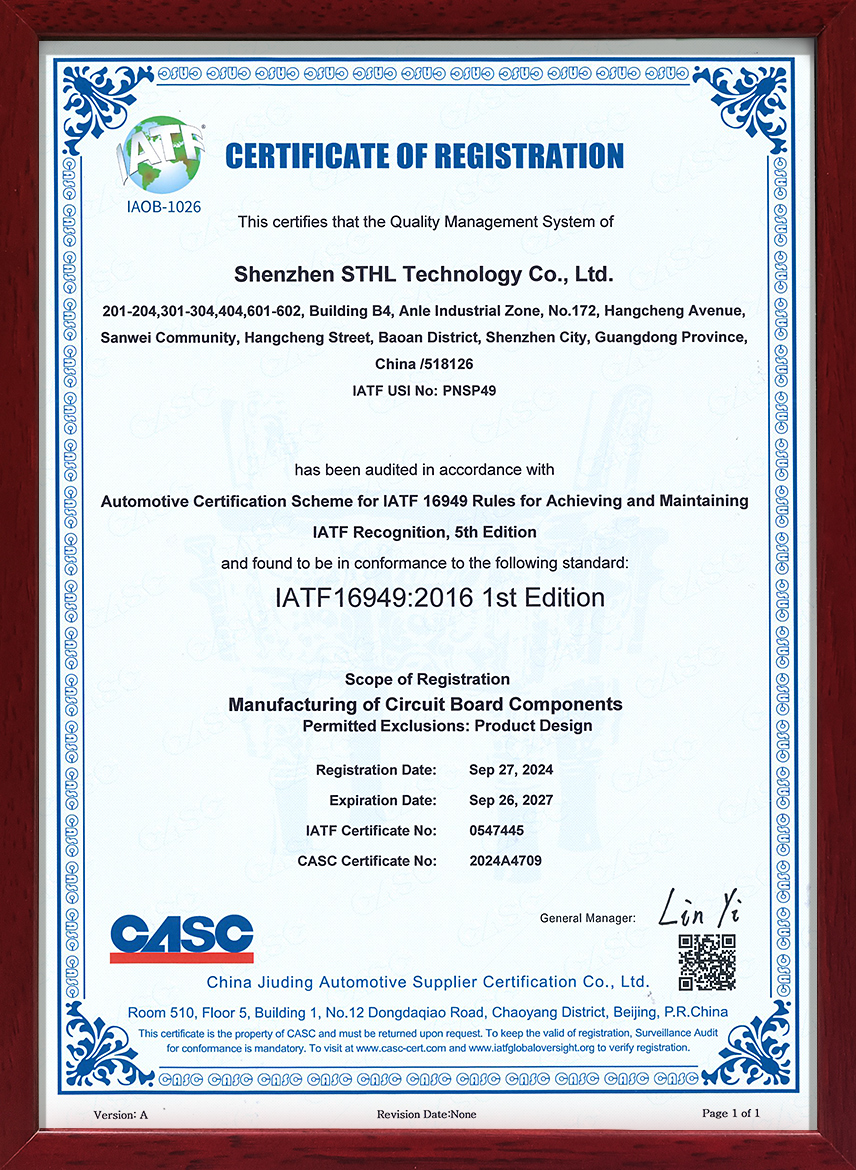
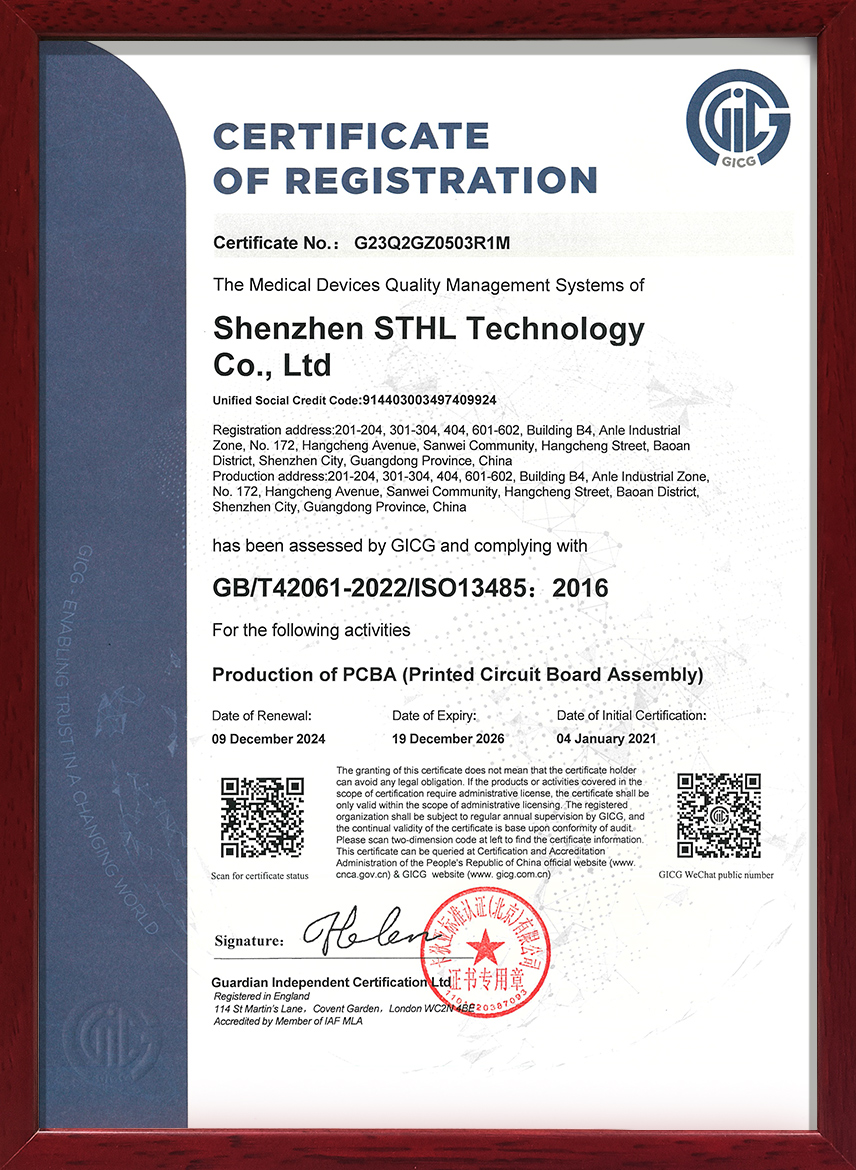
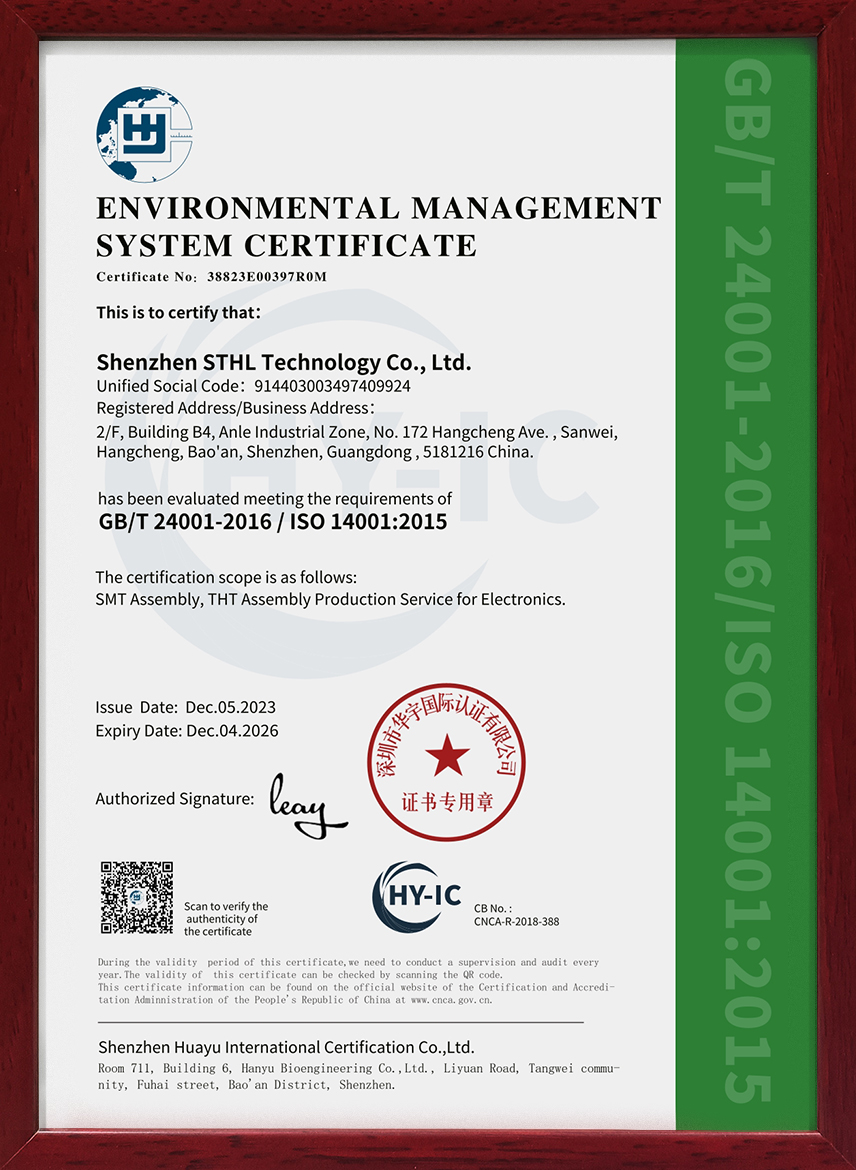
STHL maintains IATF 16949, ISO 9001, ISO 14001 and ISO 13485 certification. These systems are supported by practical controls: incoming inspection, first-article review, in-process checks, AOI, X-ray, ICT, functional testing, non-conformance handling and corrective-action follow-up. Click any certificate image to view the full-size document.
IATF 16949 Automotive Quality
ISO Systems Quality & Environment
ISO 9001 Quality Management
ISO 14001 Environmental Control
ISO 9001
Quality Management System
IATF 16949
Automotive Quality Management
ISO 13485
Medical Devices Quality Management
ISO 14001
Environmental Management System
Brands & Supply-Chain Partners
Long-term cooperation reduces availability and authenticity risk
Established brand relationships and authorised or traceable component channels help protect the BOM from counterfeit exposure and unexpected availability shocks. The lists below reflect the type of brand customers and component sourcing channels associated with STHL’s manufacturing ecosystem.
Brand Customers
Component Sourcing Channels
Client Feedback
What engineers and buyers say about STHL
Feedback from hardware engineers, designers and company owners across North America, Europe, South America, New Zealand and beyond reflects consistent themes: responsive communication, reliable boards and repeat-order confidence.
“
Excellent team to work with and fast delivery with high-quality boards. We are very happy to work with such a good supplier. Thanks again.
PauloR&D Engineer · United States
“
Please extend my thanks to your team for your hard work in preparing these samples. This positive experience has strengthened my confidence in your company, and I'm looking forward to discussing bulk orders in the near future.
OliviaHardware Engineer · Germany
“
We are satisfied with the last order. You did a great job on those boards and the lead time was short. I will place a new order soon.
WilliamCEO · Italy
“
The order was perfect — exactly as specified with top quality. Highly recommend this reliable supplier.
DmitryCEO · Brazil
“
Exciting! Very fast delivery, a professional supplier and a professional product. We will place a new order very soon!
SohiabHardware Engineer · Turkey
“
We have tested all the boards and I am highly pleased. I will repeat my order soon. Thank you again for your excellent service.
AnnaSr. Hardware Designer · New Zealand
“
It's always a pleasure ordering. Very professional team and good quality — thanks for your great service.
JohnsonR&D Engineer · United States
“
Satisfied with the sample products delivered. Very good product, quick delivery and a good understanding of my requirements.
SarahHardware Engineer · United Kingdom
“
The supplier's professionalism is evident in their seamless communication, efficient processing and reliable service. They are a trustworthy and commendable partner.
Dmitry IvanovCEO · Romania
News & Insights
Practical updates from the production floor
Factory visits, traceability practices and lead-time analysis provide useful context for buyers evaluating a China PCBA partner.
The next buying cycle will be defined less by generic capacity and more by engineering transparency, compliance evidence and supply-chain resilience.
Miniaturisation & HDI Adoption
Higher pin counts, finer lines and denser routing are pushing more programmes toward HDI, via fill and controlled impedance. Buyers should require stack-up rationale and X-ray verification, not just a layer count.
China Plus One & Regional Resilience
Global OEMs are diversifying final assembly while retaining China’s deep component and PCB ecosystem. The practical answer is dual sourcing, transparent change control and buffer planning for critical BOM lines.
Traceability & Sustainability
Procurement teams increasingly expect reel-level traceability, material declarations, RoHS/REACH evidence and environmental management. Suppliers with ERP/MES discipline can answer these requests faster.
FAQ
PCBA sourcing questions for overseas buyers
Direct answers to the questions procurement and engineering teams ask before choosing a multilayer PCB assembly manufacturer in China.
What files do I need to submit for a PCBA project?
Send Gerber files, a BOM with manufacturer part numbers, the pick-and-place (centroid) file and assembly drawings. If you need IC programming or functional testing, include firmware and test procedures. Our engineers complete a DFM and BOM review before production starts.
Is there a minimum order quantity (MOQ)?
No. STHL accepts prototype, low-volume and high-volume PCB assembly orders, so you can validate a design and scale to mass production with the same supplier.
Can STHL source all the electronic components?
Yes. We offer full turnkey, partial turnkey and consigned assembly. Our sourcing team works with 100+ agents and suppliers covering more than 500,000 part numbers, with incoming inspection and traceability from reel to finished board.
Which quality certifications does STHL hold?
STHL is certified to IATF 16949, ISO 9001, ISO 14001 and ISO 13485, and produces RoHS-compliant assemblies. Boards are verified with AOI, X-ray, ICT and functional testing.
How do you protect our design files and IP?
We sign an NDA before RFQ, restrict project data to the assigned engineering team and track every build through our ERP and MES systems.
Can we audit or visit the factory?
Yes. Customers are welcome to visit our Shenzhen factory and R&D laboratory at any time, and a 360-degree virtual factory tour is available for remote evaluation.
More OEM Multilayer PCB & PCBA Solutions
Additional application-specific builds from the same manufacturing system
These solutions extend STHL’s multilayer PCB manufacturing capability into optical access, air-data computing, environmental monitoring, safety devices, voice communications, PoE power, drilling equipment and acoustic measurement.
Get an engineering-led quotation, not a blind price.
Send Gerber data, BOM, centroid file and test requirements. Our team will return DFM observations, BOM risk notes, sourcing options, assembly approach and a production schedule aligned to your target market.
 Shenzhen STHL Electronics Co., Ltd. · Since 2006







 IATF 16949
 ISO Systems
 ISO 9001
 ISO 14001