
STHL PCBA · Shenzhen · Since 2006
High-Reliability Prototype Board Factory & Solutions
Quick-turn prototype PCB assembly, engineering validation and mass-production ramp — built inside one IATF 16949 & ISO 13485 certified factory, shipped to OEMs in 90+ regions with reel-to-board traceability and no minimum order quantity.
Prototype & High-Reliability Programs
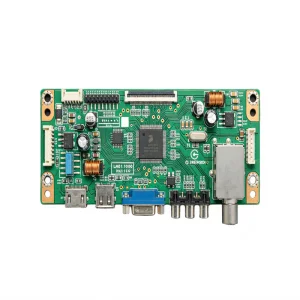
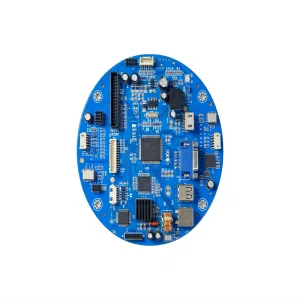
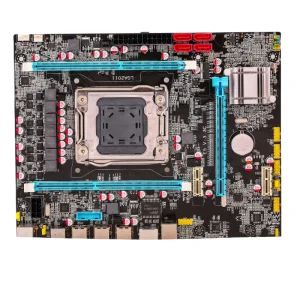
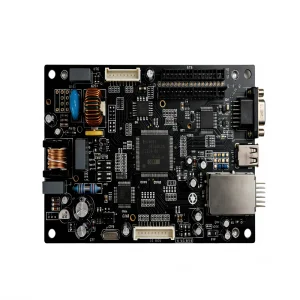
Boards We Build Every Week
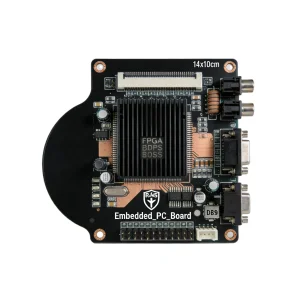
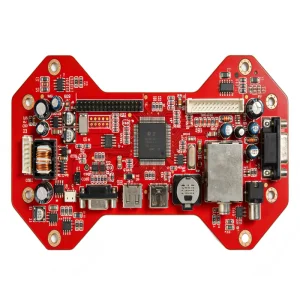
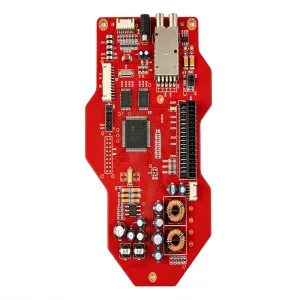
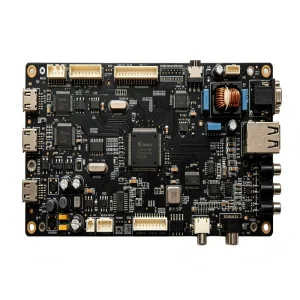
From wind-turbine controllers and cockpit alerting electronics to sensor nodes and LED matrices — these are live programs where prototype reliability decided whether the product reached production at all.
Capability At A Glance
A Factory Sized for Prototypes, Certified for Production
20+Years of EMS & PCBA
10,000 m²Production Facility
50+Professional Engineers
13+Production Lines
99.5%On-Time Delivery
99%Qualified Shipment Rate
Search Intent & Information Gain
What Searchers Really Mean by “High-Reliability Prototype Board”
A query like prototype board factory almost never describes a single product. Behind “prototype PCB assembly”, “quick-turn PCBA” and “prototype board manufacturer” sit at least four distinct buying intents: a hardware founder validating a first schematic and needing boards within 24–72 hours; an engineering team squeezing a re-spin in before an EVT/DVT/PVT gate; an industrial OEM running a small pilot lot to qualify a supplier before volume purchase; and a quality manager at an automotive, medical or aerospace program auditing a vendor before the line is signed off. A useful page answers all four at once instead of repeating “we do prototypes”.
Start with a definition. A high-reliability prototype board is not a downgraded product. It is fabricated on the same processes, with the same component provenance controls and the same acceptance criteria as the eventual series build — the only variables are lot size and schedule pressure. The job of that board is to expose design failures while a redesign costs a week, not while it costs a quarter.
Reliability in prototyping is mostly a data question. Every prototype order is treated as a mini production audit: DFM report, first-article inspection record, AOI and X-ray data, ICT and functional test logs, and a reel-to-board component trace. When a failure appears 400 units into series production, those records are what allow a supplier to trace the issue back to a specific lot, a specific reel or a specific stencil revision instead of restarting the investigation from zero.
That is also why the cheapest prototype quote is rarely the cheapest decision. A supplier that skips impedance control, substitutes an unlisted capacitor, or assembles with a rushed thermal profile will pass your functional test today and fail your field return analysis eighteen months later.
Engineering Stack
Six Controls That Make a Prototype Board Trustworthy
These are not add-ons quoted separately. They run on every build, from a five-piece engineering sample to a 5,000-piece pilot.
DFM, DFA & DFX Review
Every lot passes a 12-point check before CAM: pad geometry, thermal relief, component spacing, panelisation, stencil aperture, tooling holes, fiducials and test-point access. The written report returns within 24 hours, before any material is ordered.
Stack-Up & Impedance Control
From 2-layer boards to HDI and rigid-flex, the stack-up is engineered around the parameters the series build will actually use, not around the cheapest possible lamination. Controlled impedance lets your prototype test results extrapolate to volume instead of misleading you.
Authentic Component Sourcing
More than 100 agents and distributors covering 500,000+ part numbers, with incoming inspection, moisture-sensitive device control, alternate-part proposals and last-time-buy planning for programs with a ten-year service window.
High-Mix SMT & THT Assembly
Seven SMT lines and two DIP/THT lines handle fine-pitch, BGA and mixed-technology boards. Fast changeover means a 50-piece engineering build and a 5,000-piece pilot run on the same equipment and the same process parameters.
Inspection & Functional Test
AOI catches placement and solder defects, X-ray verifies BGA and QFN joints, ICT confirms nets and values, and functional test proves the board behaves the way your firmware expects — all four before packaging.
Traceability & Data Pack
ERP and MES record the material lot, operator, machine and test result for every serial. Shipments carry a certificate of conformance, test reports and material declarations as standard, not on request.
Localized Application Scenarios
Where Prototype Boards Are Actually Tested
The same factory, but very different proof requirements. These are the regional program patterns we see most often on the order desk.
Automotive & Industrial Automation
EPS control boards, ADAS domain controllers and motor-drive modules must be validated under IATF 16949 before PPAP. Prototype lots therefore need SPC data, full traceability and a documented change-control path from sample to series.
Medical & Aerospace Electronics
Patient monitors, imaging sub-systems and cockpit alerting electronics such as EICAS modules require ISO 13485-aligned processes, rigid documentation packs and, for aerospace work, material and process certificates per lot.
Wind Power & Energy Storage
Turbine converter controllers and BMS master boards operate from −40 °C to +85 °C. Thermal cycling, conformal coating strategy and connector retention should be decided during prototyping, not after the first field failure.
Connected Devices & In-Vehicle HMI
Head-up display light engines and Wi-Fi modules demand impedance-controlled stack-ups, RF-friendly ground planning and solder-mask integrity on antenna-adjacent traces — all verified before the radio certification run.
Displays & Consumer Electronics
Mini-LED backlight and LED matrix boards require micron-level placement accuracy, warp-resistant panel design and per-pixel functional verification before the prototype leaves the line.
Grid & Infrastructure Monitoring
Substation sensor boards, smart meters and data loggers must survive 50 °C-plus ambient temperatures and dust ingress. Coating and enclosure decisions made at the prototype stage determine whether these survive their first summer.
Smart Home & Networking
Routers, smart dimmer switches and Wi-Fi modules move through rapid model iterations, so projects need low MOQ, five-day component turnaround and repeated small builds rather than one large annual order.
E-Mobility & Battery Systems
E-bike and two-wheeler BMS boards plus charging controllers need high test coverage at a cost structure tuned for regional pricing — which means test fixtures designed early, not as a late-stage add-on.
Technology Roadmap & Future Outlook
Where Prototype Board Manufacturing Is Heading
The next five years of prototype work will be defined less by shrinking features and more by shrinking the distance between design intent and production process.
HDI Becomes the Baseline
Laser-drilled microvias, stacked vias and 2/2 mil traces are already moving from optional to default for wearable, handheld medical and compact IoT designs. We expect a growing share of production-intent prototypes to require HDI or substrate-like processes, which places a premium on fabrication partners who can quote and build HDI without a second supply tier.
Wide-Bandgap Power Prototypes
GaN and SiC devices need flatter thermal pads, heavier copper, tighter co-planarity and different reflow profiles than silicon equivalents. Prototype boards for battery management, on-board chargers and motor inverters will be re-stacked around thermal simulation rather than around historical habit.
Chiplet & Heterogeneous Integration
As bare-die integration spreads out of high-end computing, prototype factories will be asked to handle interposers, die attach and traditional SMT in a single work order — a workflow that requires cleanroom discipline and conventional assembly capacity under one roof.
AI-Native Inspection
Inline AI defect classification that feeds corrected parameters back to the printer and mounter is the realistic path to near-zero-defect prototype builds. The competitive advantage will not be the model itself, but the traceability data that lets the model learn from a specific customer's product family.
Supply-Chain Resilience & Efficiency
Why the Shenzhen Ecosystem Still Wins on Prototype Speed
Shenzhen and the surrounding Pearl River Delta concentrate bare-board shops, component distributors, connector suppliers, tooling and machining shops, and accredited test laboratories inside a one-hour drive. For prototyping, that density is worth more than any single cost line: an obsolete resistor or a missing connector can be cross-referenced and on the line the same afternoon, not six weeks into a global backorder.
Resilience is not the absence of disruption; it is the ability to reroute within days. The 2020–2023 component shortage exposed every EMS supplier's weak points at once. Our answer was structural: dual-source recommendations written into the BOM review, safety stock held for critical long-lead parts, and last-time-buy planning agreed with customers before the end-of-life notice becomes a crisis.
- 13 production lines — 7 SMT, 2 DIP/THT, 2 functional test and 2 box-build — allow engineering lots and volume lots to run in parallel without queueing behind each other.
- Fast changeover discipline keeps high-mix, low-volume work economic, which is exactly the shape of prototype and pilot production.
- Single accountable supplier from PCB fabrication through component sourcing, assembly, testing and box build removes the classic failure mode where three vendors blame each other.
Global Business & Industrial Context
The Current State of Prototype Manufacturing Worldwide
Global electronics manufacturing has been shifting from pure offshore concentration toward “China plus regional backup” for several years. But prototyping behaves differently from volume assembly. At prototype stage, engineering density beats labour cost every time: what matters is how fast a DFM question is answered, how fast a missing part is located, and how fast a re-spin can be turned around.
Demand for high-reliability boards keeps rising because the industries that need them keep growing — vehicle electrification, energy transition infrastructure, medical monitoring and edge AI devices. Buyers in these segments do not purchase prototypes on unit price. They purchase documented process control, because their own certification and audit obligations are passed straight through to the supplier.
A practical pattern has emerged among our customers in the USA, Germany, Italy, the UK, Poland, Brazil and New Zealand: prototype and pilot builds stay with a partner who can iterate quickly, while volume is placed wherever landed cost, tariffs and regional content rules make most sense. What those buyers want is a supplier who can run the first 50 units, freeze the process, and then support the transfer to volume without losing the process knowledge.
Compliance pressure has risen alongside this. Carbon border reporting, supply-chain due-diligence rules and procurement restrictions now mean that a shipment of boards is expected to arrive with material declarations, conflict-minerals statements and country-of-origin documentation attached — not three weeks later after an email chase. Delivering that documentation by default is now part of what “reliable” means.
Localized Support & Compliance Assurance
What You Get Beyond the Board Itself
Certification & Audit Readiness
IATF 16949, ISO 9001, ISO 14001 and ISO 13485 certified systems, RoHS-compliant assemblies and IPC-A-610 Class 2 or Class 3 acceptance as specified. Certificate copies and audit checklists are supplied before an order is placed.
IP & NDA Protection
A mutual NDA is signed before the RFQ, not after the design files are shared. Project data is restricted to the assigned engineering team, and ERP/MES access is role-controlled, so your Gerber and firmware never float around a shared drive.
Engineering Communication
Direct English and Chinese engineering contact with DFM reports, photographs of first articles and test output — a reply cycle measured in hours, not working days. Cameras and live video reviews are available on request during builds.
Logistics & Trade Terms
DDP, FOB or EXW as your freight policy requires, ESD-safe packaging, and express, air or sea routing selected per project. Documentation is prepared so clearance does not become the bottleneck after the boards are finished.
Compliance Documentation Pack
Certificate of conformance, material declarations, conflict-minerals statements, test reports and country-of-origin documentation shipped with the goods — the paperwork your own quality system is going to ask for.
Remote & On-Site Auditing
A 360-degree virtual tour covers SMT, THT, testing and warehouse areas for teams pre-qualifying a supplier remotely. On-site visits to the Shenzhen facility and R&D laboratory are welcome at any stage of a program.
How We Work
From Gerber Files to a Tested Prototype in Six Controlled Steps
Data Package Submission
Send Gerber files, a BOM with manufacturer part numbers, the pick-and-place (centroid) file and assembly drawings. If you need IC programming or functional testing, include firmware and test procedures as well.
DFM & BOM Review
Engineers check manufacturability, footprint errors, end-of-life parts and long-lead items before a single component is ordered, and return a written report within 24 hours.
Quotation & Alternates
Pricing, lead time and cross-referenced alternates for constrained parts arrive together, so the purchasing decision is not blocked by a single unavailable device.
Sourcing & Incoming Inspection
Components are purchased through vetted agents and distributors, then pass incoming inspection and moisture-sensitive-device handling, with the lot record opened at the reel.
Assembly & First Article
Bare-board fabrication, SMT and THT assembly, followed by first-article inspection with AOI and X-ray before the rest of the lot is released.
Test, Pack & Ship
ICT and functional test where specified, then ESD-safe packaging with the full documentation pack and routing to your required trade terms.
Q&A
Prototype Board Factory FAQs
The questions procurement and engineering teams actually ask before placing a high-reliability prototype order.
What files do I need to submit for a prototype board order?
Send Gerber files, a BOM with manufacturer part numbers, the pick-and-place (centroid) file and assembly drawings. If you need IC programming or functional testing, include firmware and test procedures. Our engineers complete a DFM and BOM review before production starts, so ambiguities are resolved before material is committed.
Is there a minimum order quantity for prototype assembly?
No. STHL accepts prototype, low-volume and high-volume PCB assembly orders, so you can validate a design and scale to mass production with the same supplier, on the same equipment and process parameters, instead of re-qualifying a second factory later.
How fast can a prototype lot be turned around?
The clock starts with a complete data package. DFM and BOM review normally returns within 24 hours, and the assembly schedule depends mainly on component availability and whether bare boards must be fabricated first. Because the factory runs prototype and volume work in parallel, a small pilot lot does not have to queue behind a large production order.
Can STHL source hard-to-find electronic components?
Yes. We offer full turnkey, partial turnkey and consigned assembly. Our sourcing team works with more than 100 agents and suppliers covering more than 500,000 part numbers, with incoming inspection and traceability from reel to finished board, plus alternate-part suggestions when a device is constrained.
How do you keep the prototype and the series build identical?
By freezing process parameters at first-article approval: stack-up, stencil design, reflow profile, test coverage and approved supplier list. Any change afterwards runs through a documented change-control step, so the board you certified is the board you eventually ship in volume.
Which quality certifications does STHL hold?
STHL is certified to IATF 16949, ISO 9001, ISO 14001 and ISO 13485, and produces RoHS-compliant assemblies. Boards are verified with AOI, X-ray, ICT and functional testing, and can be built to IPC-A-610 Class 2 or Class 3 acceptance criteria depending on the end application.
Can you support medical, automotive and aerospace programs?
Yes. Medical work is handled under ISO 13485 controls with full lot traceability, automotive work under IATF 16949 discipline ahead of PPAP, and aerospace-style programs with per-lot material and process certificates. Functional safety, cockpit alerting and engine-indicating electronics are already in routine production.
How do you protect our design files and intellectual property?
We sign an NDA before RFQ, restrict project data to the assigned engineering team and track every build through our ERP and MES systems with role-based access. Your design files are never used for another customer's quotation or sample.
What documentation ships with a prototype order?
Certificate of conformance, first-article inspection record, test reports where testing was specified, material declarations, conflict-minerals statement and country-of-origin documentation. Extra report formats can be agreed at quotation stage if your quality system requires them.
Can we audit or visit the factory before the first order?
Yes. Customers are welcome to visit our Shenzhen factory and R&D laboratory at any time, and a 360-degree virtual factory tour is available for remote evaluation. Pre-qualification audits and document reviews are typically completed before the first data package is submitted.
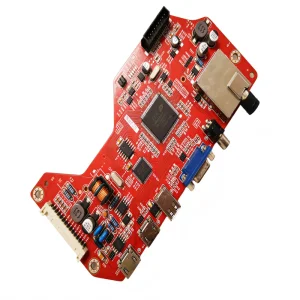
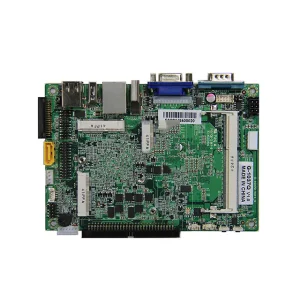
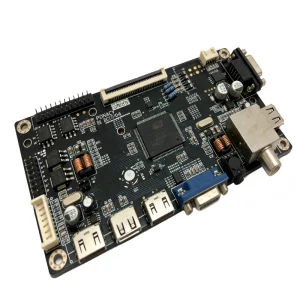
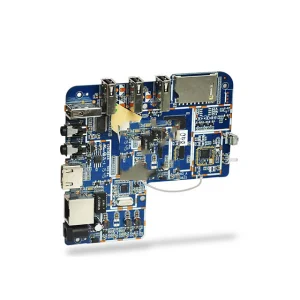
More Prototype & Reliability Programs
Production-Intent Prototypes We Support
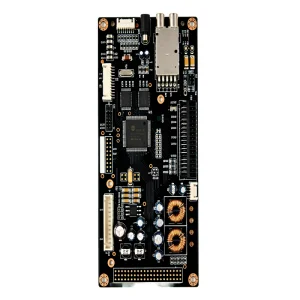
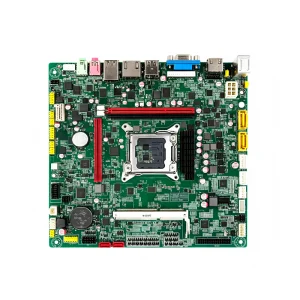
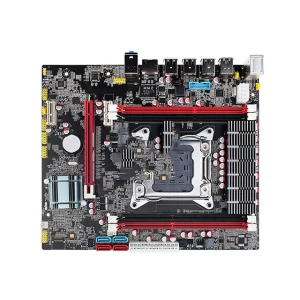
Automotive, display, networking and energy-storage boards that started as a small engineering build and moved to repeat production.
Start Your Build
Planning a High-Reliability Prototype Build?
Send your Gerber, BOM and centroid data under NDA and get a DFM review, a quotation and an alternate-part proposal back within one working day — from the same factory that will run your series production.
Talk to a PCBA Engineer