
High Quality What Is PCBA Supplier & Service
A high-quality PCBA supplier is not a directory listing. It is an engineering-led partner that controls material authenticity, assembly yield, test coverage, traceability and delivery accountability. This guide explains what a PCBA service really includes, how to evaluate a China factory, and where local application knowledge changes the outcome.
High Quality PCBA Supplier & Service: Proven Product Series
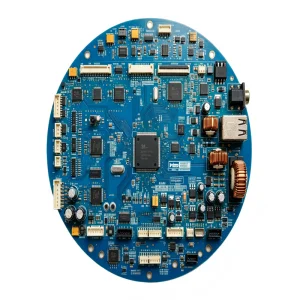
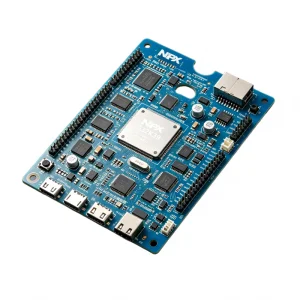
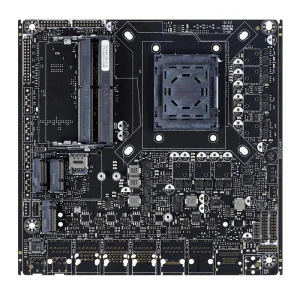
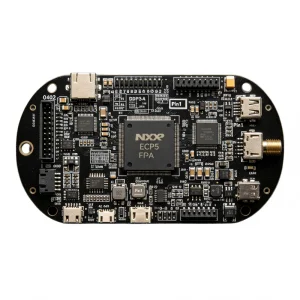
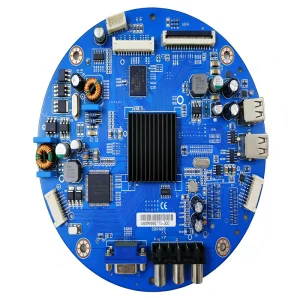
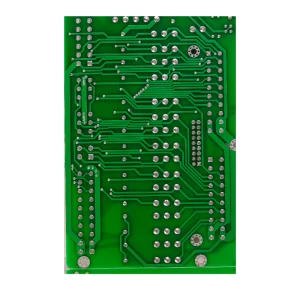
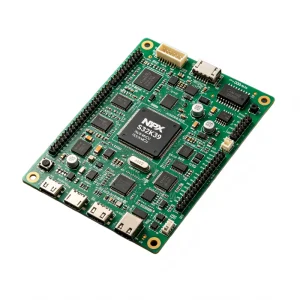
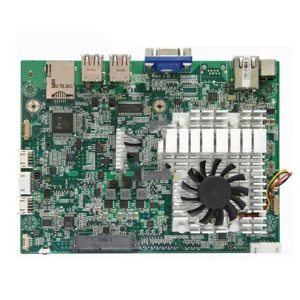
These applications show how a PCBA supplier and service model is tested in real products. Each build requires more than placing components: it needs DFM feedback, BOM integrity, process control, functional testing and shipment discipline.
What Is a PCBA Supplier & Service? A Buyer-Focused Definition
PCBA means printed circuit board assembly — the finished board after bare PCB fabrication, component sourcing, SMT/THT placement, soldering, inspection, programming and testing. A PCBA supplier is the organization that takes commercial and process responsibility for that chain. A PCBA service is the controlled set of engineering, procurement and manufacturing activities delivered against your Gerber files, BOM, centroid data, firmware and test specification.
The distinction matters because a PCB shop, a component broker, a trading company and a true turnkey EMS provider can sound identical on a website while carrying very different risk. A high-quality PCBA supplier should be able to explain how it checks the BOM before quoting, how it validates first articles, how it prevents counterfeit or out-of-date components from entering the line, and how it records traceability from incoming reel to finished board. For global buyers, the real search intent behind “what is PCBA supplier & service” is usually not definition alone. It is a qualification question: which partner can own the build without hiding engineering risk inside a low unit price?
A mature PCBA service also separates commercial flexibility from quality control. Prototype, low-volume and high-mix production can share the same approved process, documentation and test discipline as mass production. This is where an experienced supplier creates value: it shortens the learning curve between NPI and repeat orders, and it prevents a new product from being re-engineered every time volume changes.
What a mature PCBA service should include
- ✓DFM, Gerber and BOM review before production
- ✓Full turnkey, partial turnkey or consigned material
- ✓PCB fabrication, SMT, THT and BGA assembly
- ✓AOI, X-ray, ICT and functional testing
- ✓IC programming and firmware loading
- ✓Conformal coating, cable assembly and box build
- ✓Lot-level traceability and change control
- ✓Export packaging and global shipment support
What Makes a High-Quality PCBA Supplier? The 6-Layer Evidence Model
A quality claim becomes useful only when it can be verified. This six-layer model helps procurement, engineering and quality teams compare China PCBA factories on substance rather than marketing language.
1. Certified quality system
IATF 16949, ISO 9001, ISO 14001 and ISO 13485 are not decorative logos; they indicate documented process control, auditability and corrective-action discipline. Regulated buyers should map the supplier’s certificate scope to their own product risk.
2. DFM and BOM engineering
Before material is ordered, engineers should flag footprint errors, panelization issues, end-of-life parts, long lead-time items and testability risks. This engineering feedback often saves more money than a discount on assembly labor.
3. Traceable material control
Authentic components require approved channels, incoming inspection, moisture-sensitive device controls and reel-to-board traceability. A supplier that cannot show material records cannot credibly promise long-term reliability.
4. Process capability
Fine-pitch, BGA, mixed-technology and high-mix boards demand disciplined stencil, placement, reflow and inspection control. Capacity should be matched to your product mix, not just to a monthly output number.
5. Test coverage
AOI, X-ray, ICT and functional testing answer different questions. A high-quality PCBA service defines the right test stack for the product, records results and feeds failures back into corrective action rather than relying on visual inspection alone.
6. Change control and communication
Engineering changes, component substitutions and schedule shifts must be written down and approved. NDA protection, named engineering contacts and production-status visibility protect both intellectual property and delivery confidence.
What Is PCBA in China? Factory Advantages That Still Matter
China is no longer chosen only for labor cost. For high-mix, engineering-led PCBA, the real advantage is supply-chain density, fast NPI feedback and mature quality systems that can serve regulated markets.
Shenzhen supply-chain density
Shenzhen and the Greater Bay Area concentrate PCB fabrication, components, tooling, connectors, cables, enclosures and test services. That density shortens sourcing cycles and gives engineers faster access to alternatives when a part is constrained.
Engineering-led NPI
A strong China PCBA factory can review Gerber and BOM data, suggest alternates, prepare first articles and support design verification before mass production. This is especially valuable for startups and OEMs with limited local manufacturing engineering.
High-mix flexible capacity
Seven SMT lines, two DIP/THT lines, two functional test lines and two box build lines can support prototype, low-volume and volume production without forcing the buyer to change suppliers at each stage.
Cost-to-quality balance
The lowest quote is rarely the lowest total cost. A factory with disciplined sourcing, DFM feedback and functional testing can reduce rework, delay and field failure costs — even when its unit price is not the cheapest.
Export logistics and documentation
Experienced PCBA suppliers understand export packaging, ESD protection, commercial invoices, compliance declarations and international shipping. Documentation quality is part of the service, not an afterthought.
Quality systems for regulated markets
Automotive, medical, industrial and aerospace buyers require more than good workmanship. They need audit-ready processes, incoming inspection, traceability and corrective-action records that can survive customer and third-party review.
PCBA Supplier & Service Trends Reshaping Global Procurement
The supplier market is moving from “can you assemble this board?” to “can you keep this product manufacturable, traceable and resilient for years?” These shifts change how buyers should evaluate a PCBA partner.
High-mix, low-volume production
More hardware teams are launching smaller batches, more variants and faster revisions. Suppliers need efficient changeovers, flexible line planning and engineering support that does not disappear below a certain order size.
Supply resilience and dual sourcing
Component shortages have made alternate-part planning a core PCBA service. Buyers now ask for approved substitutions, lifecycle monitoring and practical risk mitigation before a part reaches end-of-life.
Digital traceability
ERP and MES records are becoming a purchasing requirement. Lot traceability, test results and change history allow buyers to investigate field issues quickly and demonstrate due diligence to their own customers.
Miniaturization and power density
Wearable, medical, automotive and energy products push boards toward finer pitch, higher layer counts and tighter thermal management. Assembly partners must be able to inspect what they cannot easily see.
AI-assisted inspection
Automated optical inspection and data analytics help detect solder defects, placement errors and trends earlier. The future advantage will belong to suppliers that use data to prevent repeat failures, not merely to report them.
Sustainability and compliance
RoHS compliance, waste control and environmental management are now part of supplier risk. ISO 14001 and documented material declarations help global buyers meet their own procurement and reporting obligations.
Local Application Scenarios: Where PCBA Quality Is Truly Tested
The same assembly process can behave very differently across industries. A high-quality PCBA supplier adapts materials, inspection and testing to the environment where the product must survive.
Medical & diagnostics
ECG monitors, medical power supplies and electronic medical record systems require ISO 13485 discipline, lot traceability and reliable test records. Product examples in this series include OEM ECG Monitor PCB Assembly and Top-Rated Medical Power Supply PCB Assembly.
Automotive & mobility
Automotive electronics must survive heat, vibration and long service life. IATF 16949 process control, solder-joint reliability and functional testing matter more than cosmetic appearance. Safety inspection equipment is a closely related high-reliability application.
Aerospace & extreme environments
Aerospace PCB assembly requires engineering reliability for extreme environments, with careful material selection, conformal coating options and inspection records. The risk profile demands documentation and disciplined change control.
Smart home & security
Video doorbells, gateways and connected devices combine wireless performance, compact layout and user-visible reliability. Precision Smart Home Gateway PCB Assembly and Custom Video Doorbell PCB Assembly are typical builds in this category.
Communications & call centers
Modems and call-center phones require stable signal integrity and consistent assembly quality across repeat orders. Certified Modems PCBA Assembly and One-Stop Call Center Phones PCBA Assembly illustrate the communication segment.
Energy & battery management
Energy storage battery pack management systems and wind turbine control systems demand robust power handling, thermal awareness and test coverage. These boards often sit inside systems where downtime is expensive.
Environmental monitoring
Water pollution early-warning systems and air quality monitors need sensor stability, calibration-friendly design and dependable field performance. Prototype programs in this category often benefit from DFM guidance before enclosure and sensor integration freeze.
Safety & emergency systems
Emergency buttons and safety inspection equipment must perform when they are needed. Assembly quality, switch reliability and functional verification are more important than volume speed alone.
Macro Industry Solutions: From Gerber to Box Build in One Controlled Workflow
A high-quality PCBA supplier should function as a controlled workflow, not a collection of outsourced steps. This sequence reduces handoffs, improves accountability and makes lead-time discussions more transparent.
01 · DFM & BOM review
Engineers check Gerber, BOM and centroid data for manufacturability, footprint errors, lifecycle status and test access. The output is a cleaner quote and fewer surprises after purchase order release.
02 · Component sourcing
Full turnkey, partial turnkey and consigned options are managed through approved suppliers. Incoming inspection, moisture-sensitive device handling and traceability records protect the build.
03 · PCB fabrication
Bare boards are produced to the required stack-up, surface finish and impedance needs, from standard rigid boards to HDI, flex, rigid-flex, aluminum and high-Tg constructions.
04 · SMT & THT assembly
Fine-pitch, BGA and mixed-technology boards move through SMT and DIP/THT lines. First-article approval and in-process inspection catch issues before volume is committed.
05 · Inspection & testing
AOI, X-ray, ICT and functional tests are selected according to the product’s risk. IC programming, conformal coating and test-data logging can be included in the same controlled flow.
06 · Box build & delivery
Cable assembly, enclosure integration, ESD-safe packaging and export documentation complete the service. Shipment performance and packaging quality are part of the customer experience.
Global Enterprises’ Procurement Requirements: A Practical Vendor Scorecard
Overseas buyers from North America, Europe, the Middle East, South America and Oceania usually evaluate the same core risks. A supplier that answers these points clearly is easier to qualify and safer to scale.
IP protection and NDA
The supplier should sign an NDA before RFQ, restrict design data to the assigned team and keep project files under controlled access. This is especially important for new-product launches and proprietary firmware.
Documentation package
Buyers need BOM confirmation, DFM feedback, material declarations, test reports and shipment records. Clear documentation reduces customs friction and supports internal quality audits.
Quote transparency and MOQ
A clear quote separates PCB fabrication, components, assembly, testing, programming and logistics. No-MOQ or low-MOQ flexibility helps buyers validate a design before committing to volume.
Supply-chain resilience
Access to 500,000+ part numbers through 100+ agents and suppliers helps identify alternatives, reduce line-down risk and keep production moving when a single channel is disrupted.
Global communication
English-speaking engineering support, time-zone-aware project updates and a named contact reduce misunderstandings. Buyers should expect proactive communication when schedules, BOMs or test results change.
Total cost of ownership
On-time delivery, qualified shipment rate, rework rate and engineering responsiveness affect total cost more than a small unit-price difference. A scorecard should compare quality and schedule risk alongside price.
The STHL Answer: 20 Years of EMS Experience in Shenzhen
Shenzhen STHL Electronics Co., Ltd. is a certified electronics manufacturing services and ODM provider founded in 2006. The company supports hardware teams in the USA, Germany, Italy, the UK, Poland, New Zealand, Brazil and 90+ other regions — from PCB layout and component sourcing to PCB fabrication, SMT/THT assembly, cable assembly, box build and full testing.
STHL operates a 10,000 m² facility with 220+ staff, including 50+ engineers, seven SMT assembly lines, two DIP/THT lines, two functional test lines, two box build lines and an in-house R&D laboratory. Every build is RoHS-compliant and controlled under IATF 16949, ISO 9001, ISO 14001 and ISO 13485 systems. Factory visits and audits are welcome, and a 360-degree virtual factory tour is available for remote evaluation.
Long-term cooperation includes global brands and industrial customers such as Schneider Electric, Siemens, Razer, Geely, Haier, Logitech, Mindray and D-Link, supported by sourcing channels that include Arrow, Avnet, Digi-Key, Mouser, Future Electronics, Microchip Technology, STMicroelectronics and TDK. The service model accepts prototype and volume orders with no MOQ, signs an NDA before RFQ and tracks builds through ERP and MES systems.
Manufacturing facts that buyers can verify
- Factory: B4, AnLe Industrial Zone, No.172 Hangcheng Blvd, Xixiang, Bao'an District, Shenzhen, 518126 China
- Certifications: IATF 16949, ISO 9001, ISO 14001, ISO 13485
- Capacity: 7 SMT lines · 2 THT lines · 2 test lines · 2 box build lines
- Engineering: 50+ engineers · in-house R&D laboratory · DFM and BOM review
- Contact: [email protected] · +86 135 1018 8049
What Engineers & Buyers Say About a High-Quality PCBA Service
Feedback from hardware engineers, designers and company owners across North America, Europe and beyond shows that communication, delivery and repeatability matter as much as unit price.
“Excellent team to work with and fast delivery with high-quality boards. We are very happy to work with such a good supplier. Thanks again.”
“Please extend my thanks to your team for your hard work in preparing these samples. This positive experience has strengthened my confidence in your company, and I'm looking forward to discussing bulk orders in the near future.”
“We are satisfied with the last order. You did a great job on those boards and the lead time was short. I will place a new order soon.”
“The supplier's professionalism is evident in their seamless communication, efficient processing and reliable service. They are a trustworthy and commendable partner.”
PCBA Supplier & Service Insights from the Factory Floor

STHL Hosts Two European Visitors for an Early-Stage Healthcare Electronics Concept Review and Factory Tour
Read more
STHL Hosts Two German Visitors for an SMT, THT and Material Preparation Walkthrough
Read more
STHL PCBA Component Traceability: From Incoming Reel to Finished Board
Read more
PCBA Lead Time: Where the Days Go Between Purchase Order and Shipment
Read morePCBA Sourcing FAQs for Overseas Buyers
Straight answers to the questions procurement and engineering teams ask before choosing a PCB assembly manufacturer in China.
What files do I need to submit for a PCBA project?
Send Gerber files, a BOM with manufacturer part numbers, the pick-and-place (centroid) file and assembly drawings. If you need IC programming or functional testing, include firmware and test procedures. Our engineers complete a DFM and BOM review before production starts.
Is there a minimum order quantity (MOQ)?
No. STHL accepts prototype, low-volume and high-volume PCB assembly orders, so you can validate a design and scale to mass production with the same supplier.
Can STHL source all the electronic components?
Yes. We offer full turnkey, partial turnkey and consigned assembly. Our sourcing team works with 100+ agents and suppliers covering more than 500,000 part numbers, with incoming inspection and traceability from reel to finished board.
Which quality certifications does STHL hold?
STHL is certified to IATF 16949, ISO 9001, ISO 14001 and ISO 13485, and produces RoHS-compliant assemblies. Boards are verified with AOI, X-ray, ICT and functional testing.
How do you protect our design files and IP?
We sign an NDA before RFQ, restrict project data to the assigned engineering team and track every build through our ERP and MES systems.
Can we audit or visit the factory?
Yes. Customers are welcome to visit our Shenzhen factory and R&D laboratory at any time, and a 360-degree virtual factory tour is available for remote evaluation.
What is the difference between PCB and PCBA?
A PCB is the bare circuit board with copper traces, solder mask and surface finish. PCBA adds components, soldering, inspection, programming and testing. The PCBA service therefore carries broader engineering and supply-chain responsibility than bare-board fabrication alone.
How should I evaluate a China PCBA supplier?
Score the supplier on five practical areas: quality-system fit for your industry, DFM and BOM feedback, material traceability, test coverage, and communication during changes. Ask for an NDA, a sample quote breakdown, a first-article plan and a clear corrective-action process. This is more reliable than comparing unit prices alone.
More High Quality PCBA Supplier & Service Examples
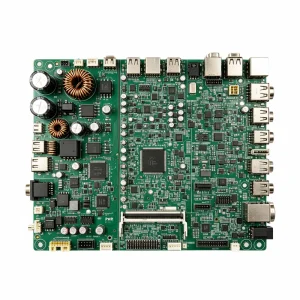
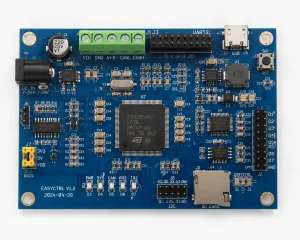
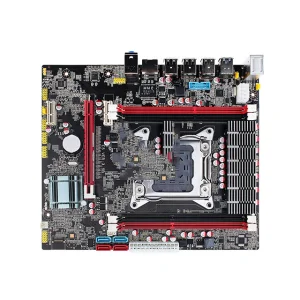
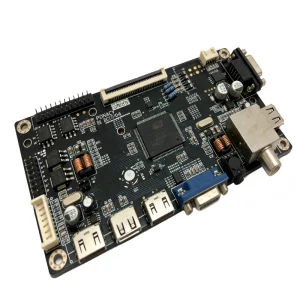
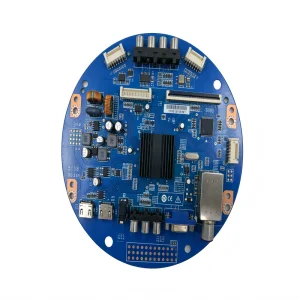
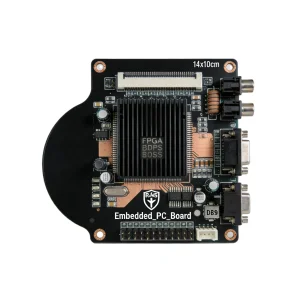
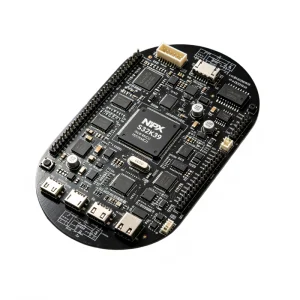
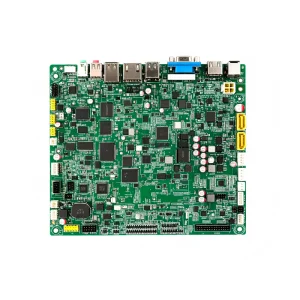
These additional builds show the breadth of a turnkey PCBA service across medical power, DC-DC conversion, energy storage, Mini-LED, smart home, wind power, emergency systems and environmental monitoring.
Planning Your Next PCBA Build?
Get a capability catalog with PCB fabrication options, assembly processes, testing methods and industry references — everything your team needs to qualify a high-quality PCBA supplier and service partner.
