
High Quality Turnkey PCB Manufacturing Manufacturer & from China
Shenzhen STHL Electronics Co., Ltd. has been the one-stop PCBA and EMS partner for global OEMs since 2006 — PCB fabrication, component sourcing, SMT/THT assembly, testing and box build delivered from one audited factory.
Turnkey PCB Assembly Product Portfolio Ready to Scale
Sixteen proven PCBA platforms — networking, power distribution, LED display, medical terminals, automotive, energy and environmental monitoring — each supported by the same controlled turnkey workflow.
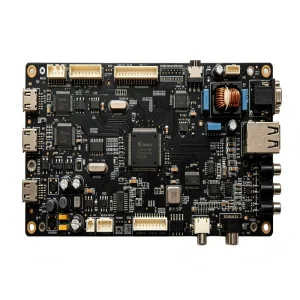
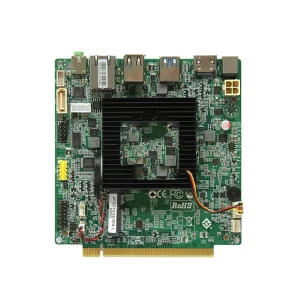
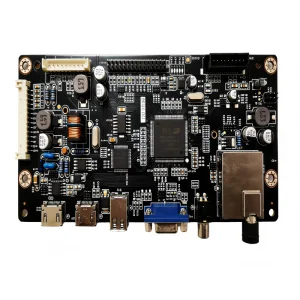
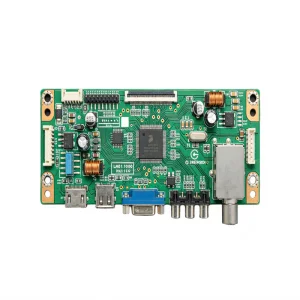
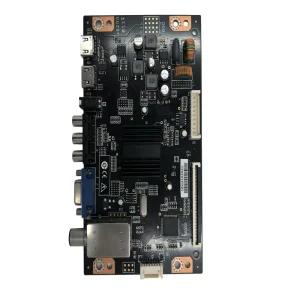
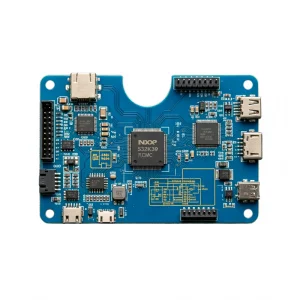
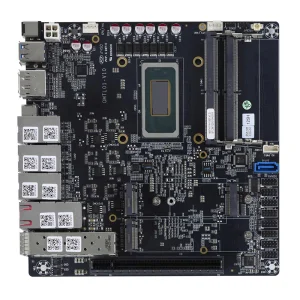
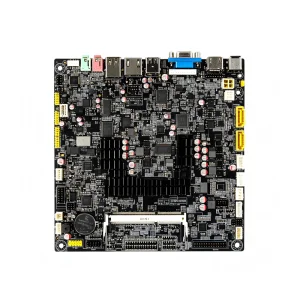
Your Turnkey PCBA & ODM Partner in Shenzhen Since 2006
Certified electronics manufacturing services, ODM engineering and full BOM accountability — under one roof, under one signature.
Shenzhen STHL Electronics Co., Ltd. is a certified electronics manufacturing services (EMS) and ODM provider operating out of a 10,000 m² facility in Bao'an District, Shenzhen. Since 2006 we have helped hardware teams in the USA, Germany, Italy, the United Kingdom, Poland, New Zealand, Brazil and more than 90 other regions move from schematic to shipped product — covering PCB layout, component sourcing, PCB fabrication, SMT and THT assembly, cable assembly, box build and full functional testing inside a single, auditable workflow.
Our 220+ staff include 50+ engineers and technicians working alongside an in-house R&D laboratory used for design verification and prototype testing. Every build is RoHS-compliant and controlled under IATF 16949, ISO 9001, ISO 14001 and ISO 13485 management systems, with production status and lot traceability maintained in our ERP and MES platforms. Customers are welcome to visit and audit the Shenzhen factory at any time; a 360-degree virtual tour is available for remote pre-qualification.
Turnkey means one accountable partner. Instead of coordinating a bare-board shop, a component broker, an assembly house and a test house across different time zones, our customers issue one purchase order and receive one bill of materials, one inspection report and one shipment. That single point of responsibility is why procurement teams use STHL for both prototype validation and repeat mass production — with no minimum order quantity and an NDA signed before any request for quotation.
The Global Commercial and Industrial Reality of Turnkey PCB Manufacturing
Turnkey PCBA is no longer a purchasing convenience — it is the operating model that decides how fast a hardware company can react to demand, component shortages and regulatory change.
Electronics manufacturing is structurally fragmented. A single printed circuit board assembly can involve a bare-board fabricator, three or four authorised and independent component channels, an SMT subcontractor, a programming house, a conformal-coating vendor and a box-build partner. Every hand-off adds lead time, adds inspection risk and dilutes accountability. The global EMS industry has responded by consolidating these steps into turnkey programmes, and buyers now evaluate suppliers less on unit price and more on working-capital efficiency, supply assurance and documentation quality.
At the same time, the geographic map of electronics production is being redrawn. Many North American and European OEMs now run a "China plus one" sourcing strategy: a primary Asian manufacturing base for volume economics and a secondary location for resilience. Suppliers that survive this shift are the ones that can prove their processes, not just quote a price — with certificates, audit trails, DFM records and traceable component lots.
Supply-Chain Restructuring
Dual sourcing, regional buffer stock and supplier diversification have become standard procurement policy, pushing assemblers to prove second-source capability for critical BOM lines.
Component Volatility
Allocation cycles, end-of-life notices and long lead times on MCUs and power devices force assemblers to offer alternates, partial turnkey and consignment flexibility.
High-Mix, Low-Volume
Product life cycles are shorter and SKU counts higher, so lines must switch between fine-pitch, BGA and mixed-technology builds without sacrificing first-pass yield.
Compliance Burden
Automotive and medical buyers now demand IATF 16949 and ISO 13485 evidence, RoHS/REACH declarations and reel-level traceability as a baseline, not an upgrade.
Six Trends Reshaping Turnkey PCBA Between 2025 and 2030
These are the forces we plan capacity, equipment and engineering headcount around — and the questions serious buyers now ask in supplier audits.
1. Supply-Chain Resilience
Manufacturers are shifting from pure cost optimisation to resilience engineering: qualified alternates, safety stock agreements and dual-region logistics built into the production plan from day one.
2. End-to-End Digitalisation
ERP and MES integration, paperless shop-floor routing, digital twin simulation and machine-level yield analytics are replacing paper travellers — turning traceability into a queryable database.
3. Miniaturisation & Advanced Packaging
01005 passives, 0.3 mm-pitch BGA, HDI microvias, rigid-flex and embedded components require X-ray verification and tightly controlled reflow profiles rather than visual inspection alone.
4. Power Electronics Transition
SiC and GaN devices, high-density DC-DC converters and battery management systems are pushing thermal design, heavy-copper capability and isolation testing to the centre of assembly planning.
5. Compliance-First Manufacturing
Automotive PPAP-style documentation, medical device process validation and environmental declarations are increasingly requested before the first prototype order is placed.
6. Sustainable & Circular Electronics
Halogen-free laminates, lead-free processes, energy monitoring, waste solder recovery and design-for-repair are moving from marketing language into procurement scorecards.
What Buyers in Different Regions Actually Need from a China PCBA Partner
Turnkey service is not one product. Requirements differ sharply by region, product maturity and regulatory environment — and the manufacturing plan should reflect that.
North America — Speed and Iteration
Startups and mid-size OEMs typically need rapid prototype turns, zero minimum order quantity and engineering feedback inside the DFM loop. The priority is compressed iteration cycles, transparent freight handling and a supplier that can scale from five boards to five thousand without re-qualification.
Europe — Documentation and Compliance
German, Italian, UK and Polish customers tend to lead with quality questions: IATF 16949 scope, ISO 13485 process validation, RoHS and REACH declarations, first-article inspection reports and lot traceability. Complete documentation before shipment is often more valuable than a lower unit price.
Oceania & Latin America — Logistics Consolidation
For New Zealand and Brazilian buyers, freight cost and customs handling frequently outweigh component cost. Consolidating PCBA, cable assembly and box build into one shipment — with correct HS classification and ESD-safe export packaging — materially reduces landed cost.
Middle East, Southeast Asia & India — Volume Ramp
Fast-growing infrastructure, energy and environmental-monitoring markets need a partner that can support pilot builds locally while scaling production in China, backed by consistent BOMs, stable firmware programming and repeatable test protocols.
From Gerber Files to Global Shipment in Six Controlled Steps
Understanding what happens after the purchase order removes surprises. This is the exact route every STHL turnkey PCBA project follows.
DFM & BOM Review
Engineers check Gerber, BOM and centroid data for manufacturability, footprint errors, panel utilisation and end-of-life parts before any material is purchased.
Component Sourcing
Parts are purchased through 100+ agents and suppliers, then pass incoming inspection, counterfeit screening and moisture-sensitive device control.
PCB Fabrication
Bare boards are produced to your stack-up, surface finish and impedance requirements — from single-layer and aluminium to HDI, Rogers and rigid-flex.
SMT & THT Assembly
Seven SMT lines and two DIP/THT lines handle fine-pitch, BGA and mixed-technology boards for both prototypes and mass production runs.
Inspection & Testing
AOI, X-ray, ICT and functional testing, plus IC programming and conformal coating, with every result logged against the build in our MES.
Box Build & Delivery
Cable assembly, enclosure integration and ESD-safe packaging, shipped with documentation to customers in more than 90 countries and regions.
Future outlook: our capability roadmap prioritises the technologies that customers are already designing in — 01005 placement, 0.3 mm-pitch BGA reflow, HDI and rigid-flex stack-ups, heavy-copper and ceramic boards for power electronics, and full in-line X-ray verification for hidden-joint assemblies. Alongside equipment, we are extending digital traceability so that a customer can query any serial number and retrieve its material lots, machine route, reflow profile and test results. The direction is clear: turnkey manufacturing will be judged not only by boards shipped, but by the depth of data that accompanies them.
PCB Assembly Solutions Mapped to Real Industry Requirements
Process controls, inspection methods and documentation are matched to the reliability and compliance level each market demands.
Automotive Electronics
IATF 16949 processes for control modules, TCUs, lighting, charging and sensor boards that must survive vibration, thermal cycling and long field life.
Medical & Healthcare
ISO 13485-controlled assembly for monitoring, diagnostic, imaging and wearable devices, with lot traceability and process validation records.
Industrial Control
Robust PCBAs for PLCs, motor drives, inverters and automation equipment, with conformal coating and wide-temperature material options.
Power & Energy
Battery management systems, DC-DC converters, bench power supplies, wind power controllers and PDUs built with heavy-copper and isolation test capability.
Communication & Networking
Router, gateway and radio-frequency boards assembled with impedance-controlled fabrication and RF-aware handling practices.
LED & Display Systems
LED matrix, signage and lighting boards with aluminium and metal-core substrates for effective thermal dissipation.
Environmental Monitoring
Wastewater monitoring, particle monitors and carbon monoxide detectors with sensor calibration support and long-term stability testing.
Consumer & IoT Devices
Smart plugs, tablets, wearables and home-automation terminals assembled with cost-down engineering and rapid prototype turnaround.
Experience, Expertise, Authority and Trust — in Practice
Measurable capacity, documented quality systems and engineering support that lowers total cost — not just the quoted unit price.
Dust-Free Smart Factory
10,000+ m² of highly automated production space with dedicated SMT, DIP/THT, testing and box-build areas.
20 Years of Experience
Proven PCB and PCBA know-how accumulated since 2006 across consumer, industrial, medical and automotive programmes.
Global Sourcing Network
500,000+ part numbers reachable through 100+ agents and suppliers, with BOM scrubbing and alternate-part recommendations.
Fully Certified Systems
IATF 16949, ISO 9001, ISO 14001 and ISO 13485 certified management systems, with RoHS-compliant output as standard.
ERP & MES Traceability
Real-time production status and reel-to-board lot traceability available for every build we ship.
Cost-Down Engineering
DFM review and BOM optimisation by our engineering team reduce material waste and rework before production starts.
No Minimum Order Quantity
Prototype, low-volume and high-volume builds are welcome, so a design can be validated and scaled with the same supplier.
NDA Before RFQ
Design data and intellectual property are protected from the first contact, with project access restricted to the assigned team.
Fast, Reliable Delivery
99.5% on-time delivery and a 99% qualified shipment rate across global logistics routes.
Why this matters to a buyer: a supplier is only as credible as the evidence behind its claims. STHL's experience is documented by 20 years of continuous operation and repeat business from brand customers; our expertise is carried by 50+ in-house engineers; our authority comes from independently audited IATF 16949, ISO 9001, ISO 14001 and ISO 13485 certifications; and our trustworthiness is demonstrated through NDAs before quotation, reel-level traceability, open factory audits and a 360-degree virtual tour that lets procurement teams verify the shop floor before placing a single order.
Management Systems Verified by Third-Party Audits
Independent certification bodies confirm that our processes meet automotive, medical and industrial customer requirements.
ISO 9001
Quality Management System — the baseline framework behind every order, from DFM review to final shipment inspection.
IATF 16949
Automotive Quality Management — supports PPAP-style documentation, control plans and automotive-grade traceability.
ISO 13485
Medical Devices Quality Management — process validation, clean handling and lot traceability for healthcare electronics.
ISO 14001
Environmental Management System — controlled waste streams, energy monitoring and RoHS-compliant production.
Turnkey PCBA Sourcing Questions, Answered Directly
The questions procurement and engineering teams ask most often before selecting a PCB assembly manufacturer in China.
What files do I need to submit for a PCBA project?
Send Gerber files, a BOM with manufacturer part numbers, the pick-and-place (centroid) file and assembly drawings. If you need IC programming or functional testing, include firmware and test procedures. Our engineers complete a DFM and BOM review before production starts.
Is there a minimum order quantity (MOQ)?
No. STHL accepts prototype, low-volume and high-volume PCB assembly orders, so you can validate a design and scale to mass production with the same supplier and the same process controls.
Can STHL source all the electronic components?
Yes. We offer full turnkey, partial turnkey and consigned assembly. Our sourcing team works with 100+ agents and suppliers covering more than 500,000 part numbers, with incoming inspection and traceability from reel to finished board.
Which quality certifications does STHL hold?
STHL is certified to IATF 16949, ISO 9001, ISO 14001 and ISO 13485, and produces RoHS-compliant assemblies. Boards are verified with AOI, X-ray, ICT and functional testing.
How do you protect our design files and IP?
We sign an NDA before RFQ, restrict project data to the assigned engineering team and track every build through our ERP and MES systems.
Can we audit or visit the factory?
Yes. Customers are welcome to visit our Shenzhen factory and R&D laboratory at any time, and a 360-degree virtual factory tour is available for remote evaluation.
What is the difference between full turnkey, partial turnkey and consigned assembly?
In full turnkey, STHL purchases the bare PCB and all components and delivers tested assemblies. In partial turnkey, you supply long-lead or customer-approved parts while we source the remainder. In consigned assembly, you supply the full kit and we provide fabrication, assembly and testing services only.
How is lead time structured for a turnkey order?
Total lead time is the sum of engineering review, component procurement, bare-board fabrication, assembly, testing and shipping. Component availability usually dominates the schedule, which is why our sourcing team confirms critical BOM lines before the production slot is booked.
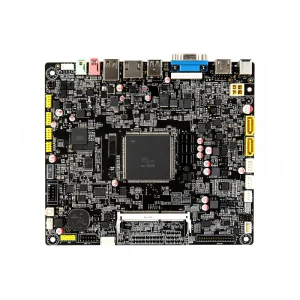
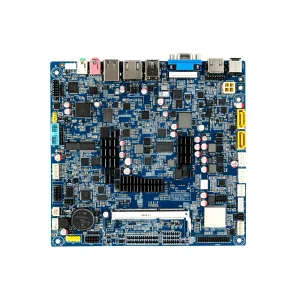
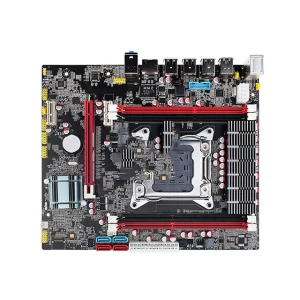
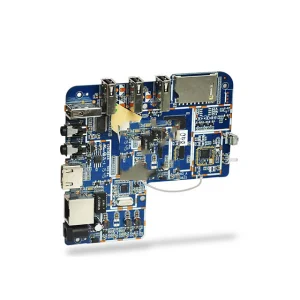
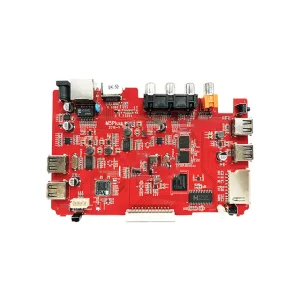
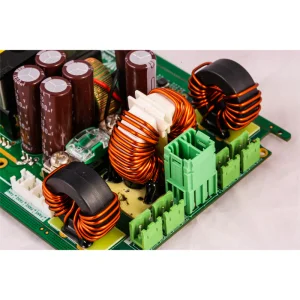
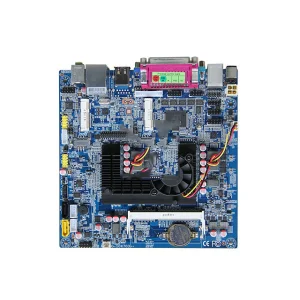
Power, Automotive, Energy and Monitoring Assemblies
The same controlled turnkey workflow, applied to converter, power supply, battery management, transmission control and environmental sensing platforms.
Planning Your Next Turnkey PCBA Build?
Send your Gerber, BOM and centroid files under NDA and receive a DFM review plus a transparent quotation covering fabrication, components, assembly, testing and delivery. Prototype quantities and mass production are equally welcome.
