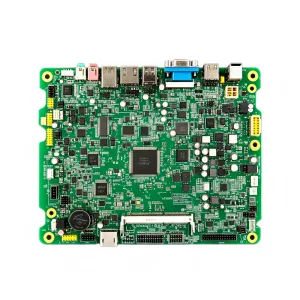
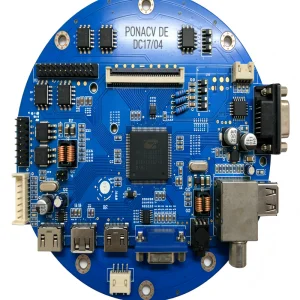
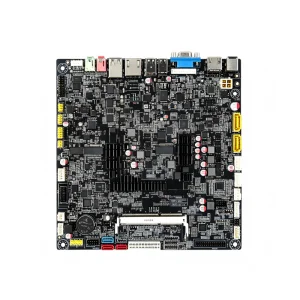
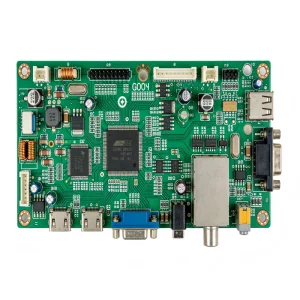
High Quality Electronics Assembly Solution Provider & from China
Turnkey PCBA, SMT and THT assembly, component sourcing, functional testing and box build — engineered in a 10,000 m² Shenzhen facility that has supported OEMs across 90+ regions since 2006.
Electronics Assembly Programs Built and Shipped from Shenzhen
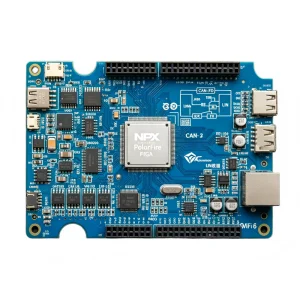
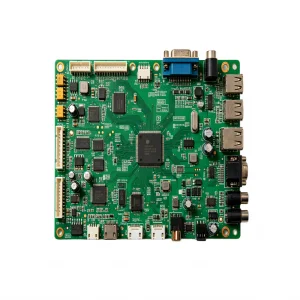
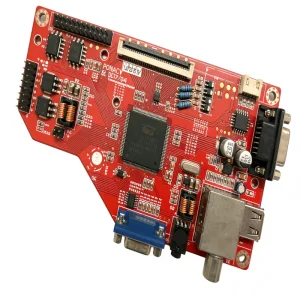
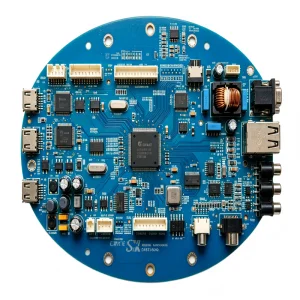
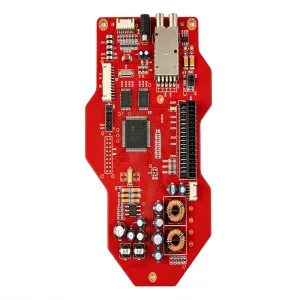
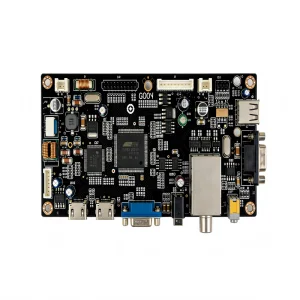
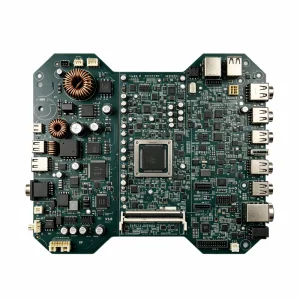
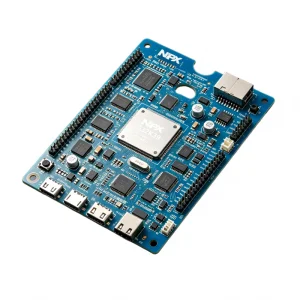
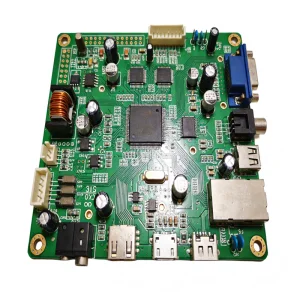
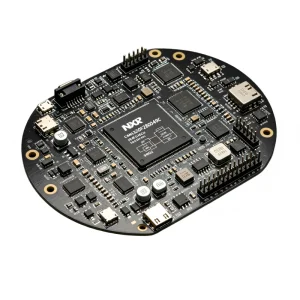
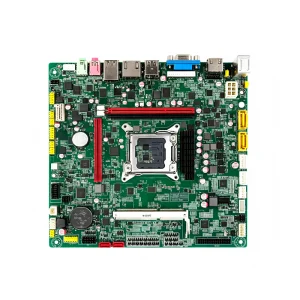
Each of the following programs represents a real production workflow — a defined BOM, a defined test procedure and a defined quality record. Selecting a board family is the fastest way for a procurement team to shortlist a supplier whose process controls already match the product's reliability class.
What "High Quality Electronics Assembly" Actually Means
High quality electronics assembly is not a single manufacturing step. It is a continuous chain in which design intent, material integrity, process control, metrology and traceability all hold together. If any link breaks, even the most precise placement machine cannot rescue the finished board. These four capability layers are what separate a genuine solution provider from a broker that simply forwards files to a subcontractor.
DFM Engineering Before Metal Is Cut
Gerber, BOM and centroid files are reviewed for pad geometry, footprint mismatch, panel utilisation and end-of-life parts before a single component is ordered. Catching an error at this stage costs hours; catching it after reflow costs weeks.
BOM Integrity and Traceability
Turnkey sourcing through 100+ agents and suppliers, incoming inspection, moisture-sensitive device control, authenticity screening and reel-to-board traceability. A genuine BOM is the cheapest insurance a program can buy.
Controlled SMT and THT Process
Solder paste deposition, placement accuracy, reflow profiling and AOI/X-ray inspection are interlocked. Seven SMT lines and two DIP/THT lines handle fine-pitch, BGA and mixed-technology boards under the same process discipline.
Verification Beyond Visual Inspection
In-circuit testing, functional testing and burn-in confirm that every assembled board behaves as specified — not merely that it looks correct. Test procedures and results are logged so that a failure three months later can be traced to a lot.
Why China Remains the Backbone of Global Electronics Assembly
China's role in electronics manufacturing has moved well beyond labour cost. The depth and density of the Pearl River Delta ecosystem — and specifically Shenzhen — give OEMs an industrial infrastructure that cannot be replicated in months, only in decades. For a buyer evaluating an offshore partner, these six advantages translate directly into shorter iteration loops, fewer supply interruptions and a lower total cost of ownership.
A Complete Industrial Ecosystem
PCB fabrication, component distribution, connectors, cable harnesses, sheet metal, injection moulding and packaging suppliers all sit within a short drive. That density means faster engineering iterations, fewer shipping handoffs and less friction when a design changes late in the program.
Engineering Talent Density
Shenzhen concentrates hardware, process and test engineers at a scale no other region matches. Our team alone includes 50+ engineers supporting DFM review, test development, component engineering and cost-down analysis for every active program.
Prototype-to-Volume Without Switching
No minimum order quantity means a design validation build and a mass production run happen on the same lines, with the same stencils, the same process parameters and the same quality system. Nothing is re-qualified when the program scales.
Structural Cost Advantage
Access to 500,000+ part numbers through 100+ sourcing channels, combined with volume purchasing power and engineering-driven BOM optimisation, reduces material cost before a single board is built. Real savings come from the BOM, not just the labour rate.
Certification Maturity
IATF 16949, ISO 9001, ISO 14001 and ISO 13485 are embedded in daily workflows rather than bolted on before an audit. That maturity is what allows a single factory to serve automotive, medical and industrial customers simultaneously.
Logistics and Port Access
Proximity to the Port of Shenzhen and Hong Kong International Airport, plus established freight-forwarder relationships, underpins a 99.5% on-time delivery record across 90+ countries and regions — including time-critical medical and automotive shipments.
Six Trends Reshaping Electronics Assembly Procurement
Buyer behaviour in PCBA sourcing has shifted noticeably. The decision is no longer only about unit price — it is about resilience, documentation and the ability to absorb change without restarting the qualification process. These six trends are visible across our own quotation pipeline and production mix.
High-Mix, Low-Volume Becomes Default
Product portfolios fragment as brands localise and customise. Suppliers are now judged on changeover speed and line flexibility rather than raw throughput alone, which favours factories built around quick-turn SMT rather than single-product mass lines.
Resilience Becomes a Design Parameter
Dual sourcing, approved alternates and buffer inventory are now specified at the design stage, not improvised during a shortage. Electronics assembly partners are expected to propose substitutes with matching electrical characteristics and documented approval trails.
Traceability Moves From Nice-to-Have to Gate
Medical and automotive customers increasingly require lot-level records linking each finished board back to specific component reels, operators and test results. ERP and MES integration is now a pre-qualification question, not a post-award detail.
High-Reliability Sectors Pull Capacity
Medical devices, EV electronics, industrial automation and energy storage absorb a growing share of certified assembly capacity. Suppliers without ISO 13485 or IATF 16949 systems are being filtered out before commercial discussions even begin.
Component Lifecycle Moves Upstream
End-of-life and allocation risk is now analysed during DFM rather than discovered at purchase order. Last-time-buy planning, alternate qualification and long-term agreements have become part of the assembly supplier's engineering scope.
Sustainability Enters the Scorecard
RoHS compliance is assumed; ISO 14001 environmental management, waste handling and packaging reduction are increasingly scored. Procurement teams now ask for environmental documentation alongside quality certificates.
Application Scenarios Where Assembly Quality Is Non-Negotiable
Different end markets demand different process controls. A smart light strip and a ventilator board may share an SMT line, but they never share a quality plan. These are the application clusters we build for most frequently — and the specific controls each one requires.
Medical & Healthcare Electronics
Ventilator control boards, telemedicine equipment, electronic medical record terminals and medical barcode scanners are assembled under ISO 13485 controls with lot traceability, validated test procedures and documented change control.
Automotive & Mobility
Heads-up display modules, lighting electronics and charging assemblies follow IATF 16949 process discipline with thermal cycling, vibration resistance and full first-article documentation aligned to PPAP expectations.
Smart Home & IoT Devices
Smart light strips, smart bulbs, Wi-Fi modules and sensor nodes demand compact layouts, RF-aware placement and cost discipline at volume. Frequent engineering changes make quick-turn capability a commercial requirement rather than a luxury.
Networking & Communication
Optical network units and webcam modules require impedance control, careful handling of high-speed traces and consistent reflow profiles. X-ray and functional verification are standard, not optional add-ons.
Power Electronics
Redundant power supplies and open-frame power supplies involve creepage and clearance discipline, heavy copper handling and thermal stress testing. These boards fail silently when process windows drift, so SPC monitoring matters here more than anywhere.
Display & Lighting Assemblies
Edge-lit LED backlights and LED panel lights depend on optical consistency as much as electrical performance. Placement repeatability, binning control and colour-consistency checks are built into the inspection plan.
End-to-End Industry Solutions from NPI to Global Fulfilment
A macro-level solution is more than a list of services. It is an accountable workflow in which every handoff is documented and every stage has an owner. This is how a program moves from an engineering file to a shipped carton inside a single factory.
NPI & DFM Review
Gerber, BOM, centroid and assembly drawings are checked for manufacturability, footprint accuracy and part availability before a purchase order is converted into material demand.
Component Sourcing & Alternates
Full turnkey, partial turnkey or consigned supply. Long-lead items are flagged early and approved alternates are proposed with documented equivalence rather than silent substitutions.
PCB Fabrication
Single-layer through HDI, rigid-flex, heavy copper, aluminium and high-Tg boards are fabricated to the specified stack-up, surface finish and impedance requirements.
SMT & THT Assembly
Seven SMT lines and two DIP/THT lines handle fine-pitch, BGA and mixed-technology boards, from single prototypes to repeat production volumes with no MOQ constraint.
Inspection, Test & Traceability
AOI, X-ray, ICT and functional testing, plus IC programming and conformal coating, with every result captured in MES for later retrieval by lot or serial number.
Box Build & Global Shipment
Cable and harness assembly, enclosure integration, ESD-safe packaging and export documentation, shipped to customers across 90+ countries and regions.
What Global Enterprises Require from an Assembly Partner
Overseas buyers evaluating Chinese electronics assembly suppliers are not simply comparing quotations. They are evaluating risk. These six expectations appear consistently in supplier questionnaires from North America, Europe and Oceania — and they are the criteria on which long-term partnerships are actually decided.
Auditable, Observable Quality
A certificate on the wall is a starting point, not proof. Buyers want process evidence they can retrieve on demand: AOI and X-ray reports, ICT and functional test logs, and MES records linked to a specific lot or serial number.
IP and NDA Protection
An NDA is signed before quotation, project data is restricted to the assigned engineering team, and access is tracked through ERP and MES. Design files are treated as a customer asset from the first email onwards.
Dual Sourcing and Risk Mitigation
Critical components should never depend on a single reel. Approved alternates are qualified in advance so that an allocation event does not stop a production line or force an unplanned design revision.
Predictable, Quoted Lead Times
A realistic lead time accounts for component procurement, PCB fabrication, assembly, testing and packing. Promising three days and delivering in three weeks destroys more trust than quoting fourteen days honestly.
Total Cost, Not Unit Price
First-pass yield, rework rate, engineering responsiveness and freight efficiency are part of the real cost. A marginally higher unit price with a 99% qualified shipment rate is usually the cheaper option.
Export Compliance and Logistics
Serving 90+ regions means correct HS classification, commercial invoices, RoHS declarations and ESD-safe packaging as standard — not as a special request that delays every shipment.
Experience, Expertise, Authority and Trust — Documented
Twenty years of continuous operation, more than 220 team members, in-house R&D laboratory capability and published customer feedback from engineers and buyers across the United States, Germany, Italy, the United Kingdom, Poland, New Zealand, Brazil and Turkey form the evidence base behind every claim made on this page. Certifications confirm the systems; production records confirm the practice.
Electronics Assembly FAQ for Overseas Buyers
These are the questions procurement managers and hardware engineers raise most often before qualifying a PCB assembly manufacturer in China. Each answer reflects how the work is actually executed in our Shenzhen facility.
What files are required to quote an electronics assembly project?
Submit Gerber files, a BOM listing manufacturer part numbers, the pick-and-place (centroid) file and assembly drawings. If IC programming or functional testing is required, include firmware and the test procedure. Our engineers complete a DFM and BOM review before production begins, so missing or conflicting information is resolved at quotation stage rather than on the line.
Is there a minimum order quantity for PCBA production?
No. Prototype, low-volume and high-volume orders are all accepted and run on the same lines under the same process parameters. A design validated at five units can scale to mass production without changing supplier, stencils or quality plan — which removes an entire re-qualification cycle from the program timeline.
Can the supplier source every component on the BOM?
Yes. Full turnkey, partial turnkey and consigned assembly are all supported. The sourcing team works through 100+ agents and suppliers covering more than 500,000 part numbers, with incoming inspection, moisture-sensitive device control and reel-to-board traceability. Where a part is on allocation, an electrically equivalent alternate is proposed for written approval before substitution.
Which certifications prove that a supplier is qualified?
For general manufacturing, ISO 9001 is the baseline. Automotive electronics require IATF 16949; medical devices require ISO 13485; environmental performance is evidenced by ISO 14001. Assemblies should additionally be RoHS compliant and verified through AOI, X-ray, ICT and functional testing. Certificates should be current, in the supplier's own name and available for verification.
How are design files and intellectual property protected?
An NDA is executed before the RFQ, project data is restricted to the assigned engineering team, and every build is tracked through ERP and MES systems with access logging. Design files remain the customer's property, are never reused for other customers, and can be deleted or returned on request at the end of a program.
How is a realistic lead time calculated?
Total lead time is the sum of component procurement, PCB fabrication, SMT/THT assembly, testing and packing. Long-lead semiconductors usually dominate, which is why BOM scrubbing happens on day one. Quoted dates are based on confirmed material availability, not optimistic assumptions, and performance against those dates is measured — currently at 99.5% on-time delivery.
Can overseas customers audit or visit the factory?
Yes. Customers are welcome to visit the Shenzhen facility and R&D laboratory at any time, and a 360-degree virtual factory tour is available for remote pre-qualification. Audits covering process control, traceability, ESD handling and calibration records can be scheduled in advance so the relevant engineering and quality staff are present.
Planning Your Next Electronics Assembly Build in China?
Request the capability catalog for PCB fabrication options, assembly processes, test methods and industry case references — everything a procurement or engineering team needs to pre-qualify a turnkey PCBA partner. An NDA can be signed before any design file is shared.
Turnkey PCBA Projects Ready for Your BOM
From optical network units and medical barcode scanners to open-frame power supplies, telemedicine equipment and tablet mainboards — these programs illustrate the breadth of board families our Shenzhen lines assemble, test and ship under one quality system.