Wire Cable Assembly Programs Built Around Real Product Platforms
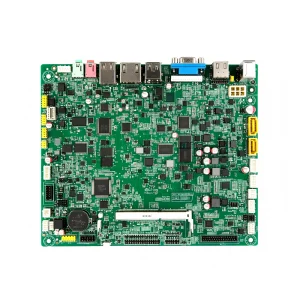
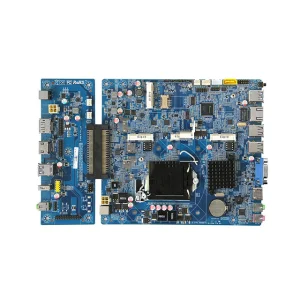
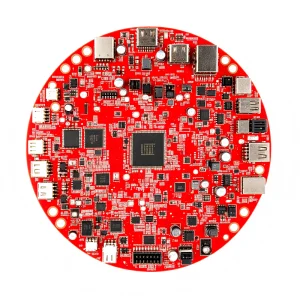
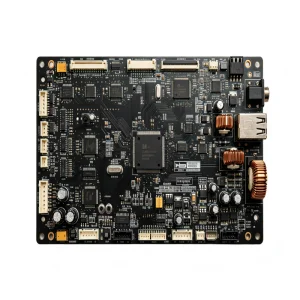
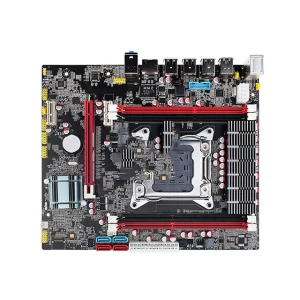
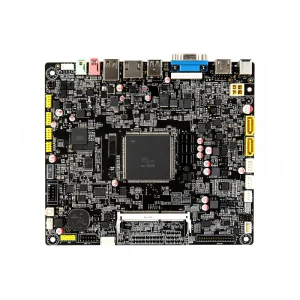
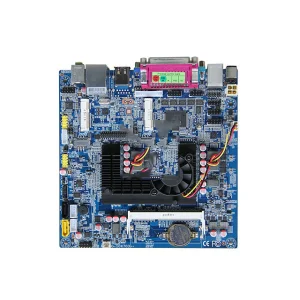
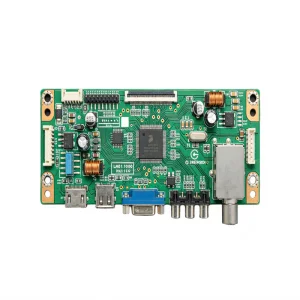
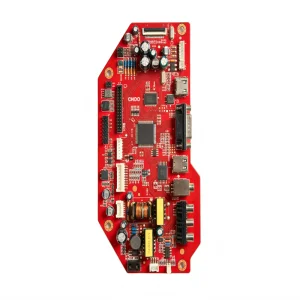
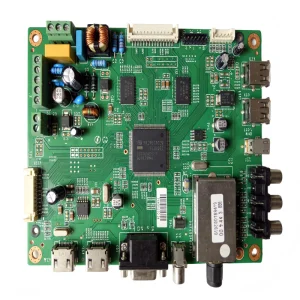
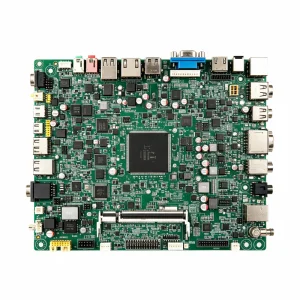
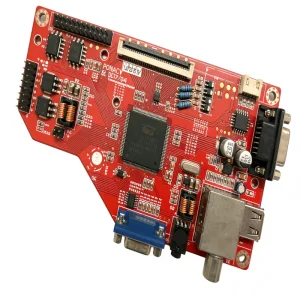
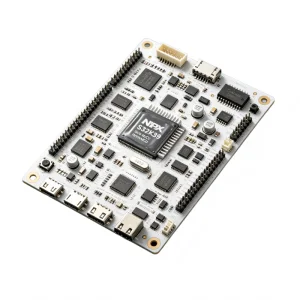
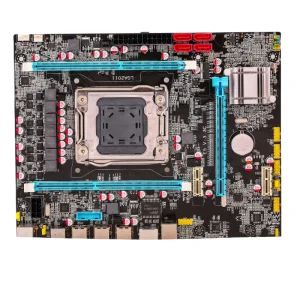
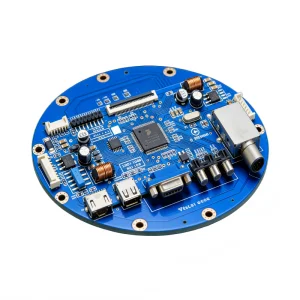
Wire and cable assemblies rarely exist in isolation. They connect the PCBA to sensors, displays, antennas, power sources, and the outside world. The reference programs below come from STHL’s broader electronics manufacturing portfolio and show the product contexts in which custom cable and wire harness assembly is most often requested: smart home controls, security devices, medical monitors, LED systems, energy controllers, and automotive electronics. Each product link is retained below.
The Strategic Rise of Wire Cable Assembly in Global Electronics Manufacturing
In 2025, a wire harness is no longer a passive bill-of-materials item. In electric vehicles, medical carts, robotics, solar inverters, and smart security devices, the cable assembly carries power, signal, shielding, and sometimes safety-critical diagnostics. A single mis-crimped terminal or an unverified connector position can stop a production line, trigger a field return, or delay a regulatory submission. This is why mature procurement teams now evaluate cable assembly suppliers with the same discipline they apply to PCB fabrication and PCBA.
China remains the world’s deepest sourcing market for wire cable assembly because the supply chain is physically clustered. In Shenzhen and the surrounding Pearl River Delta, a buyer can access wire drawing, connector molding, terminal plating, tooling, automation, EMS, and test laboratories within a short drive. The advantage is not simply labor cost. It is iteration speed: new connector samples, revised crimp tools, alternate wire gauges, and engineering feedback can move in days rather than weeks.
STHL’s model reflects that reality. Since 2006, the company has operated as an EMS and ODM provider with PCB assembly, component sourcing, cable assembly, testing, and box build under one management system. Its Shenzhen facility covers more than 10,000 m², employs 220+ staff including 50+ engineers, and runs 7 SMT lines, 2 DIP/THT lines, 2 functional test lines, and 2 box build lines. For buyers, the practical value is fewer handoffs: the same team can review a PCB layout, specify a mating connector, build the harness, test the PCBA, and ship a complete assembly with one lot code.
Engineering-Led DFM
Wire routing is a system decision. Our engineers review connector mating, bend radius, strain relief, shielding, voltage drop, and assembly sequence before tooling is released.
Supply-Chain Depth
Full turnkey or consigned assembly through 100+ agents and suppliers, covering more than 500,000 part numbers with incoming inspection and reel-to-finished-board traceability.
Compliance by Design
IATF 16949, ISO 9001, ISO 14001, ISO 13485, RoHS-compliant builds, NDA before RFQ, and audit-ready lot records for automotive, medical, and industrial programs.
Seven Forces Reshaping Wire Cable Assembly, 2025–2030
The cable assembly industry is being re-engineered by electrification, miniaturization, data intensity, and supply-chain resilience. Buyers who understand these forces can ask better RFQ questions and avoid suppliers that are still quoting yesterday’s process.
High-Voltage Electrification
EV battery packs, energy storage, and solar systems are moving to higher voltages. Harnesses need correct creepage, thermal ratings, shielded constructions, connector keying, and validated high-pot testing — not just a longer wire.
Miniaturization and Density
Wearables, medical monitors, and compact cameras use fine-pitch connectors, micro-coax, flexible circuits, and overmolded strain relief. Smaller geometry leaves less tolerance for strip length, bend radius, and operator error.
High-Speed Data Integrity
USB4, HDMI, Ethernet, camera links, and sensor buses require impedance control, skew management, shielding, and connector torque discipline. A cable that passes continuity can still fail signal integrity.
Ruggedization and Flex Life
Robotics, automation, and outdoor equipment demand drag-chain compatibility, torsion resistance, IP-rated sealing, vibration tolerance, and validated flex cycles. Field maintenance crews expose weak designs quickly.
China+1 and Dual Sourcing
Global OEMs want supply continuity without losing process consistency. Suppliers must support duplicate tooling, documented process transfer, approved alternate parts, and consistent test methods across sites.
Digital Traceability and AI Inspection
Crimp force monitoring, tooling IDs, vision inspection, test-data capture, and MES lot tracking are becoming baseline expectations. Buyers want evidence, not assurances.
These forces change the RFQ. Buyers now ask for crimp cross-sections, pull-force data, test fixtures, tooling ownership, and change-control commitments. A factory that can only quote a per-piece price is not answering the real question: can this supplier prove that every harness was built inside a controlled process window?
What Global Enterprises Actually Buy When They Source Cable Assemblies from China
Global enterprises buy cable assemblies through multiple lenses. A program manager wants NPI velocity. A quality manager wants evidence. A finance team wants landed cost. A compliance team wants material declarations and supplier codes of conduct. The supplier that wins is the one that can satisfy all four without shifting risk back to the customer.
NPI Velocity
Fast quotation, connector availability checks, tooling validation, and first-article samples that arrive before the design window closes.
Total Landed Cost
Unit price is only one line. Scrap, freight, duty, inventory, expedited recovery, and field-failure cost often decide the true winner.
Quality Assurance
Defined critical characteristics, crimp validation, pull-force windows, functional test coverage, and corrective-action discipline.
Compliance & Documentation
RoHS/REACH declarations, approved material sources, lot traceability, NDA coverage, and audit-ready quality records.
A low unit price with poor documentation is expensive. If a harness fails at system integration, the cost is not the harness — it is the assembly line downtime, expedited freight, engineering investigation, and customer confidence. Factories that understand this quote the total cost of quality, not only the wire.
Macro Industry Solutions: Where Wire Harness Quality Determines System Uptime
Different markets impose different failure costs. A consumer cable may be replaced; a medical harness may affect clinical confidence; an automotive harness may trigger a safety investigation. The assembly factory must flex its process controls to the reliability level each market requires.
Automotive & EV
Battery packs, BMS sense harnesses, lighting, cameras, and charging systems require IATF 16949 discipline, high-voltage safety, connector position assurance, and lot traceability. PPAP, FAI, and change control are part of the commercial agreement, not an afterthought.
Medical Devices
Patient monitors, ultrasound carts, diagnostic equipment, and wearable sensors demand ISO 13485 controls, clean assembly, flex-life validation, and material documentation. Cable failures are not just returns; they can affect clinical confidence.
Industrial Automation
PLC cabinets, motor drives, robots, and test equipment need shielded data cables, continuous-flex jackets, strain relief, and error-proofed harnesses. Labeling and connector keying must survive maintenance technicians, not just the lab.
Renewable Energy
Solar trackers, inverters, battery energy storage, and EV charging expose cables to UV, moisture, thermal cycling, and surge. Correct jacket material, sealing, and test coverage matter more than a low piece price.
Smart Home & Security
Smart locks, cameras, thermostats, and sensors are compact, cost-sensitive, and installed by non-experts. Overmolded strain relief, polarity protection, and connector retention often determine the user experience.
Communications & Data
Routers, antennas, small cells, and edge devices combine RF coax, high-speed data, and power in one enclosure. Impedance control, shielding, and connector torque specifications must be documented.
Consumer Electronics
Headsets, wearables, audio products, and USB accessories need cosmetic-grade overmolding, tight bend radii, and high-volume repeatability. The assembly must look as good as it performs.
Environmental Monitoring
Low-frequency noise monitors, air-quality sensors, and remote weather stations often run on long cable runs in uncontrolled environments. Waterproofing, shielding, and field-serviceable connectors reduce maintenance cost.
From RFQ to Mass Production: A Wire Cable Assembly Control Plan
Most cable assembly problems are designed in before the first crimp. A disciplined RFQ process identifies the critical characteristics early: wire gauge and stranding, insulation material, connector family, terminal plating, crimp height, pull-force window, strip length, shield termination, bend radius, label placement, and test method. The factory should return a DFM response with assumptions and open questions — not just a price.
Requirements & DFM
Receive drawings, BOM, connector datasheets, wire list, and test plan. Confirm mating interfaces, current load, voltage drop, environmental exposure, and agency requirements. Flag obsolete connectors or tooling constraints before quotation.
Material & Tooling
Lock approved sources for wire, terminals, connectors, seals, and overmold materials. Build or validate applicator tooling, crimp dies, test fixtures, and labeling programs. Record tooling ownership and maintenance responsibility.
First Article & Validation
Produce FAI samples. Verify continuity, polarity, hipot/dielectric strength, pull force, crimp cross-section, dimensions, and fit. For regulated markets, align PPAP or validation documentation with the customer’s quality plan.
Production & Traceability
Release controlled work instructions. Monitor crimp force, strip quality, and test results. Link lot codes to incoming materials, operator, tooling, and test data. Package with ESD, moisture, and connector protection as required.
2D/3D drawings, wire list, connector manufacturer part numbers, approved alternate list, crimp and strip specifications, pull-force requirements, test method, labeling standard, packaging requirement, target annual volume, and any NDA or compliance documents.
Localized Support and Compliance Assurance in China
Offshore sourcing only works when support feels local. That means English-speaking engineering, fast sample iterations, clear change control, and a quality contact who can answer a CAPA within the customer’s business day. STHL supports OEMs in the USA, Germany, Italy, the UK, Poland, New Zealand, Brazil, and 90+ other regions from its Shenzhen base.
Shenzhen Cluster & Capacity
10,000+ m² facility, 220+ staff, 50+ engineers, an in-house R&D laboratory, 7 SMT lines, 2 DIP/THT lines, 2 functional test lines, and 2 box build lines support integrated cable, PCBA, and final assembly programs.
Compliance & IP Protection
NDA before RFQ, restricted project data, ERP/MES tracking, IATF 16949, ISO 9001, ISO 14001, ISO 13485, RoHS-compliant builds, incoming inspection, and lot traceability from material reel to finished assembly.
Audit & Remote Qualification
Factory visits, a 360° virtual factory tour, FAI reports, test data, and global shipping support remote supplier qualification. Procurement and quality teams can pre-qualify the process before committing to tooling.
Send your cable drawing and connector list
Share your wire list, connector MPNs, test requirements, and target volume. An NDA can be signed before RFQ, and our engineers will return a DFM review with assumptions, risks, and a production path.
Technical Roadmap & Future Outlook: The Cable Assembly Factory of 2030
The next five years will separate cable assembly factories into two groups: those that can prove process capability digitally, and those that still rely on paper travelers and operator experience. The winners will combine automation for repeatable operations with engineering flexibility for high-mix work.
Digital Thread & Error-Proofing
Crimp force monitoring, tooling IDs, digital work instructions, MES lot tracking, and test-data capture become baseline requirements for global OEM programs.
Flexible Automation
Robotic wire cutting, laser stripping, automated crimping, vision inspection, and AGV material flow reduce variation in high-mix harness production.
High-Voltage & High-Speed Integration
EV battery harnesses, shielded coax, thermal management, and signal-integrity testing push factories to combine electrical, mechanical, and environmental validation.
AI-Assisted Engineering & Sustainability
Generative DFM for cable routing, carbon accounting, recycled materials, and closed-loop quality analytics will reshape supplier scorecards and total-cost models.
For buyers, the roadmap should influence supplier selection today. Ask whether the factory can export test data, whether tooling has digital IDs, whether change history is linked to lot codes, and whether the same MES governs PCBA and cable assembly. These answers predict whether the supplier can scale with your program — or become a bottleneck when volumes rise.
A 12-Point Qualification Checklist for China Cable Assembly Factories
Use this checklist during RFQ review, supplier audits, and first-article approval. It focuses on evidence that predicts repeatable production, not just sample quality.
Engineering & Documentation
- Revision-controlled drawings and wire lists
- DFM feedback with assumptions and open risks
Materials & Compliance
- RoHS/REACH/UL wire and connector authenticity
- Approved alternate list and incoming inspection
Process Capability
- Crimp force monitoring and pull-test windows
- Tooling IDs, strip quality, and cross-section checks
Test & Inspection
- Continuity, polarity, hipot, and functional test
- FAI, first-piece approval, and data retention
Traceability & Quality System
- Lot codes linked to material, operator, and test data
- CAPA, change control, and audit-ready records
Supply & Support
- Lead time, capacity, and dual-source plan
- NDA, factory audit, and engineering responsiveness
Wire Cable Assembly FAQ for Global Procurement Teams
These are the questions most often raised during supplier qualification for custom wire harnesses and cable assemblies sourced from China.
What is included in a custom wire cable assembly service?
A custom service normally covers wire cutting and stripping, terminal crimping, connector assembly, shielding, overmolding or heat-shrink strain relief, labeling, continuity and polarity testing, hipot testing where required, packaging, and lot traceability. The supplier should also provide DFM feedback, connector availability checks, tooling validation, and first-article documentation before mass production.
What files should we provide for quotation?
Send a wire list or schematic, 2D/3D drawings, connector manufacturer part numbers, approved alternate list, wire gauge and insulation specification, strip and crimp requirements, pull-force or test requirements, labeling standard, packaging requirement, target annual volume, and any compliance documents. If you have an existing sample, include photos and measured dimensions.
How do you control crimp quality?
Crimp quality should be controlled through approved terminal and wire combinations, calibrated applicator tooling, crimp-height or crimp-force monitoring, pull-force testing, and periodic cross-section inspection. The factory should define a validation window for each terminal-wire pair and retain evidence by lot code, rather than relying only on operator visual inspection.
Can you integrate cable assembly with PCBA and box build?
Yes. This is one of the strongest reasons to use an EMS factory that offers PCB assembly, cable assembly, testing, and box build under one management system. The same engineering team can review connector mating, PCB header placement, wire routing, enclosure clearance, test fixtures, and final packaging. Fewer handoffs reduce rejection loops and improve lot-level traceability.
Which certifications matter for cable assembly in China?
For automotive programs, IATF 16949 is typically mandatory. Medical devices usually require ISO 13485. General industrial and consumer electronics usually require ISO 9001, while environmental systems may add ISO 14001. RoHS and REACH declarations are common for material compliance. The certification must be supported by process evidence, incoming inspection, and lot traceability — not just a certificate image.
What is the MOQ and typical lead time?
MOQ depends on connector availability and tooling. STHL supports prototype, low-volume, and high-volume PCB assembly and integrated cable assembly work with no fixed MOQ on many PCBA programs. Lead time depends on connector sourcing, tooling, FAI approval, and test complexity. A prototype harness may move in days, while a new overmolded or high-voltage assembly with custom tooling requires a longer validation window.
How do you protect our design files and IP?
Sign an NDA before RFQ, restrict project data to the assigned engineering and production team, control drawing revisions, and track builds through ERP and MES systems. Ask whether tooling ownership is documented, whether subcontractors are controlled, and whether test data or firmware is segregated. IP protection is a process discipline, not a single agreement.
Can we audit the factory or start with a prototype?
Yes. A factory visit and process audit are appropriate before volume release, and a prototype build is often the fastest way to validate communication, DFM feedback, tooling, test coverage, and delivery. Remote buyers can request a 360° virtual factory tour, FAI reports, test records, and sample builds before committing to production tooling.
More Cable-Integrated Electronics Programs
These additional product programs show how wire harness and cable assembly requirements vary by enclosure, connector interface, environmental exposure, and test strategy. All original product links are retained below.