China Top Box Build PCB Partner & From China
Turnkey PCBA, cable assembly, enclosure integration, firmware loading, functional testing and global fulfillment engineered for OEMs that need one accountable manufacturing partner from prototype to volume.
Box Build PCB & PCBA Solutions for Global Programs
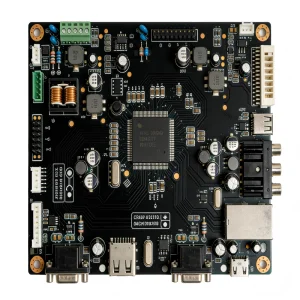
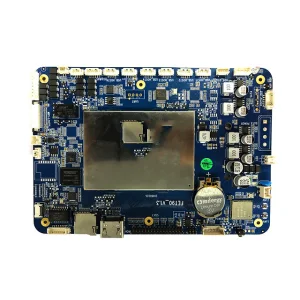
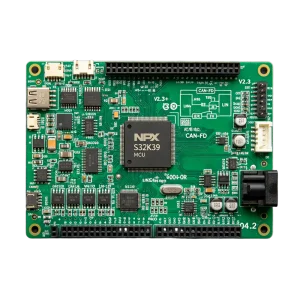
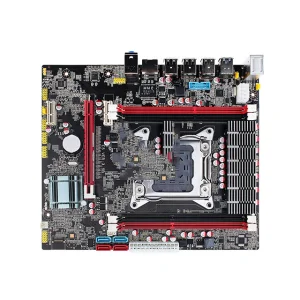
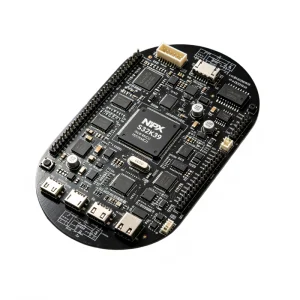
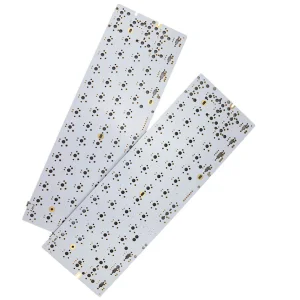
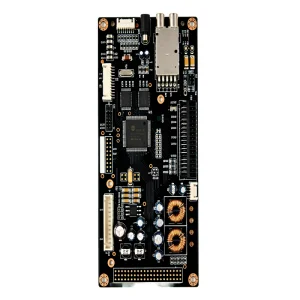
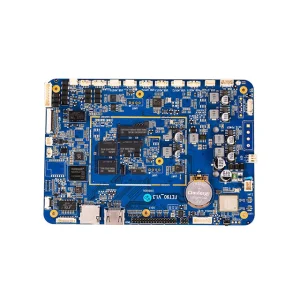
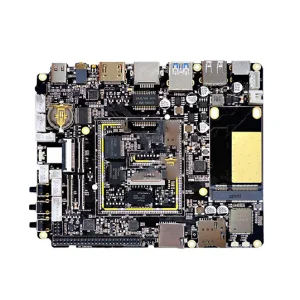
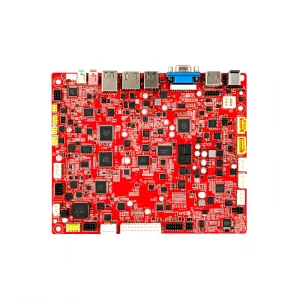
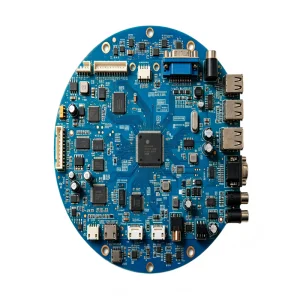
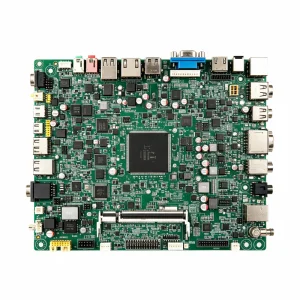
These eight engineered product families show how STHL connects PCB assembly with real enclosure, power, control, sensing and communication requirements. Each product URL is retained below with its original image.
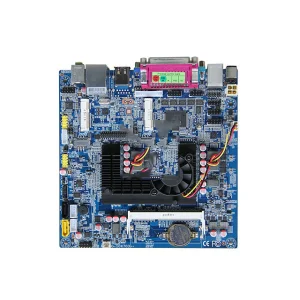
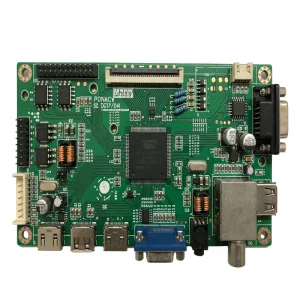
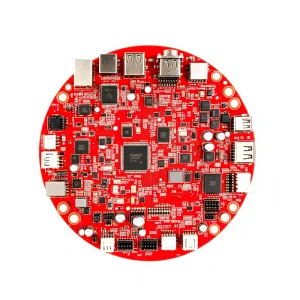
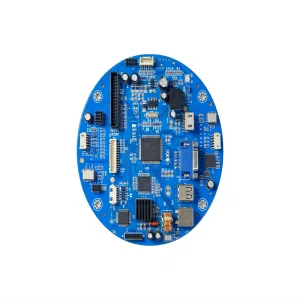
Box Build PCB Is the Last Mile of Electronics Manufacturing — and the Hardest Step to Outsource Well
A box build PCB project is more than a finished circuit board. It is the controlled integration of a tested PCBA into an enclosure, with cable harnesses, connectors, displays, keypads, sensors, firmware, labels, packaging and final functional verification. In practice, the box build stage determines whether a product reaches the customer as a reliable system or as a collection of parts that only works on a laboratory bench.
For global OEMs, this creates a very specific supplier question. Can one partner manage the BOM, PCB fabrication, SMT and THT assembly, component sourcing, IC programming, conformal coating, cable assembly, mechanical fit, final test and shipment under one quality system? The answer matters because every handoff introduces delays, documentation gaps and accountability risk.
Shenzhen STHL Electronics Co., Ltd. has operated as a certified EMS and ODM provider since 2006. Our 10,000+ m² facility, 220+ staff and 50+ engineers support high-mix PCBA, prototype builds, low-volume production and repeat volume manufacturing for customers in the USA, Germany, Italy, the UK, Poland, New Zealand, Brazil and 90+ other regions. The factory runs IATF 16949, ISO 9001, ISO 14001 and ISO 13485 systems, with 7 SMT lines, 2 DIP/THT lines, 2 functional test lines and 2 box build lines.
What adds real information gain is not a list of machines. It is evidence of process discipline at the points where box build projects usually fail: BOM scrubbing, end-of-life component risk, first article inspection, ESD handling, cable routing, torque control, firmware version control, functional test coverage, packaging validation and traceability from incoming reel to finished system. Buyers should ask for this evidence before comparing unit price.
Partner Snapshot
One certified source for board assembly and final system integration in Shenzhen.
Manufacturing Capacity That Supports Real Box Build Decisions
Procurement teams can evaluate capacity, engineering depth and delivery discipline without relying on vague claims.
How Box Build PCB Demand Is Changing in 2026
Global buyers are not simply looking for lower assembly cost. They are looking for fewer suppliers, shorter learning curves and stronger evidence of compliance.
Supplier Consolidation Moves From Boards to Systems
OEMs increasingly prefer a box build partner that can manage PCB fabrication, component sourcing, SMT/THT assembly, cable harnesses, enclosure integration, testing and packaging. This reduces the number of interfaces between engineering, quality and logistics teams. It also makes corrective actions faster because one supplier owns the full process flow instead of blaming a previous vendor.
For a China-based partner, this trend rewards factories that can document process control, not just quote a low unit price. A useful RFQ question is: “Which steps happen inside your facility, and which are subcontracted?” STHL performs board assembly and box build under one roof, which helps protect schedule, IP and traceability.
High-Mix, Low-Volume and Late-Stage Customization
Products are becoming more customized at the configuration stage. One base PCBA may support different enclosures, labels, cable lengths, firmware versions and regional power accessories. The manufacturing partner must handle change control without turning every variation into a new project. This is where high-mix, low-volume production and clear work instructions matter.
STHL’s no-MOQ policy matters here. A buyer can validate a prototype design, run pilot builds, then scale to repeat production with the same quality system. The practical benefit is less re-validation, fewer supplier transfers and a cleaner path from engineering sample to mass production.
Traceability, IP Protection and Compliance Enter the RFQ
IP protection is now a purchasing criterion, not only a legal clause. Buyers expect an NDA before RFQ, restricted access to design files, controlled sub-supplier communication and traceable production records. Compliance also reaches beyond RoHS: medical programs need ISO 13485 discipline, automotive programs need IATF 16949 controls, and industrial buyers want consistent ESD, coating and labeling records.
Traceability from incoming reel to finished board, plus ERP/MES visibility, allows quality teams to investigate a lot quickly. When a box build system includes a cable harness, firmware version and enclosure label, that traceability must extend to the final shipment as well. This is a major differentiator between a low-cost assembler and a long-term EMS partner.
The takeaway for buyers: the winning supplier in 2026 is not the one with the broadest brochure. It is the one that can prove process ownership, data protection and repeatable system integration.
What Global Enterprises Actually Evaluate When Comparing Box Build PCB Suppliers
Public pricing is only one variable. The stronger question is total cost of ownership across engineering, quality, logistics and risk.
Landed Cost, Not Just Unit Price
Quoted assembly cost can hide expedite fees, rework, scrap, replacement parts, freight delays and engineering support. International buyers should compare landed cost with quality history, yield, test coverage and documentation included.
Lead Time With Predictable Recovery
A fast prototype is useful. A predictable ramp is better. Buyers need to know how long material sourcing, first article review, SMT, test and box build will take, and how exceptions are escalated when a part is short or a test fails.
Evidence-Based Quality Systems
Certifications matter, but the audit trail matters more. Ask for AOI and X-ray reports, first article inspection, functional test logs, correction action examples and lot traceability. The quality system should be visible in documents, not only in a logo.
Communication and IP Control
Time-zone differences are manageable when communication is disciplined. Buyers should confirm who owns RFQ follow-up, how engineering changes are approved, where design files are stored and what happens when a component reaches end-of-life.
Industry-Level Box Build PCB Solutions for Demanding Applications
Different markets require different controls. The same box build process must be tuned to the risk profile of the end product.
Automotive & Electric Mobility
IATF 16949 controls, robust component sourcing and thermal/vibration-aware assembly support controllers, charging electronics, lighting and in-vehicle systems. Box build may include connectors, harnesses and enclosure verification.
Medical & Healthcare Devices
ISO 13485 discipline, lot traceability, controlled labeling and functional verification support monitoring, diagnostic and drug delivery systems. Documentation and change control are central to long-term medical device supply.
Industrial Automation & Energy
DIN rail power supplies, motor control units, environmental monitoring stations and switching power supplies require reliable solder joints, coating options and repeatable final test. Box build adds DIN mounting, terminal wiring and label control.
Consumer, IoT & Smart Devices
Smart home gateways, biometric devices, GNSS modules, smartwatch boards and LED systems need fast NPI and flexible volume. Box build can integrate enclosures, antennas, battery accessories, packaging and retail-ready labeling.
China Manufacturing With Export-Ready Support and Compliance Confidence
A China box build PCB partner should make overseas collaboration easier, not harder. That means clear documentation, protected IP and a practical path for factory audits.
IP Protection Before Technical Discussion
STHL signs an NDA before RFQ, restricts project data to the assigned engineering team and tracks builds through ERP and MES systems. For buyers, this should be verified at the start of the project, not after the BOM has been released.
- NDA before drawing and BOM review
- Controlled access to Gerber and firmware files
- Traceable project communication
Certified Systems and Export Documentation
IATF 16949, ISO 9001, ISO 14001 and ISO 13485 systems align production with automotive, industrial, environmental and medical expectations. RoHS-compliant assembly, incoming inspection and shipment records support customs and customer audits.
- AOI, X-ray, ICT and functional test records
- RoHS-compliant assembly
- Factory visit and remote 360° tour options
Global Logistics and Engineering Support
Shipments to 90+ regions require packaging discipline, label accuracy and schedule visibility. English-speaking support, DFM feedback, alternate-part proposals and box build documentation reduce friction between engineering, purchasing and receiving teams.
- ESD-safe packaging and shipment preparation
- Alternate component recommendations
- Support for audits, samples and pilot builds
What the Next Generation of Box Build PCB Manufacturing Will Require
The roadmap is not only about smaller components. It is about data continuity, flexible automation and system-level verification.
Digital Thread From BOM to Box
Future buyers will expect BOM, assembly, test and box build records to share one digital thread. Version control for firmware, labels and harness drawings will become as important as the PCB revision.
Flexible Automation for High-Mix Builds
Automation must support changeovers, not only high-volume runs. Quick-programmable inspection, smart feeders and paperless work instructions help factories handle mixed products without sacrificing traceability.
Compliance by Design
Component compliance, conflict minerals, environmental requirements and cybersecurity expectations will be reviewed during design and sourcing, not only at final inspection.
Regional Resilience, Global Standards
OEMs will continue to balance China’s deep electronics ecosystem with regional inventory and backup plans. Suppliers that provide transparent lead times and robust documentation will be easier to keep in a resilient network.
From Gerber Files to a Shipped Box Build System
A repeatable six-step workflow removes surprises after the purchase order is issued.
DFM & BOM Review
Engineering checks Gerber, BOM, centroid data, footprints, end-of-life risk and mechanical interfaces before material is ordered.
Component Sourcing
Parts are purchased through 100+ agents and suppliers, then pass incoming inspection and moisture-sensitive device control.
PCB Fabrication
Bare boards are produced to the required stack-up, surface finish, impedance and material specification.
SMT & THT Assembly
Seven SMT lines and two DIP/THT lines handle fine-pitch, BGA and mixed-technology boards for prototypes and volume.
Inspection, Test & Programming
AOI, X-ray, ICT, functional testing and IC programming are logged and linked to production records for traceability.
Box Build & Delivery
Cable assembly, enclosure integration, labeling, ESD-safe packaging and shipment complete the system-level build.
Independent Certifications Backed by Production Records
Certification is the starting point. The real value is the daily discipline behind AOI, X-ray, first article inspection, functional test and lot traceability.

ISO 9001
Quality Management System
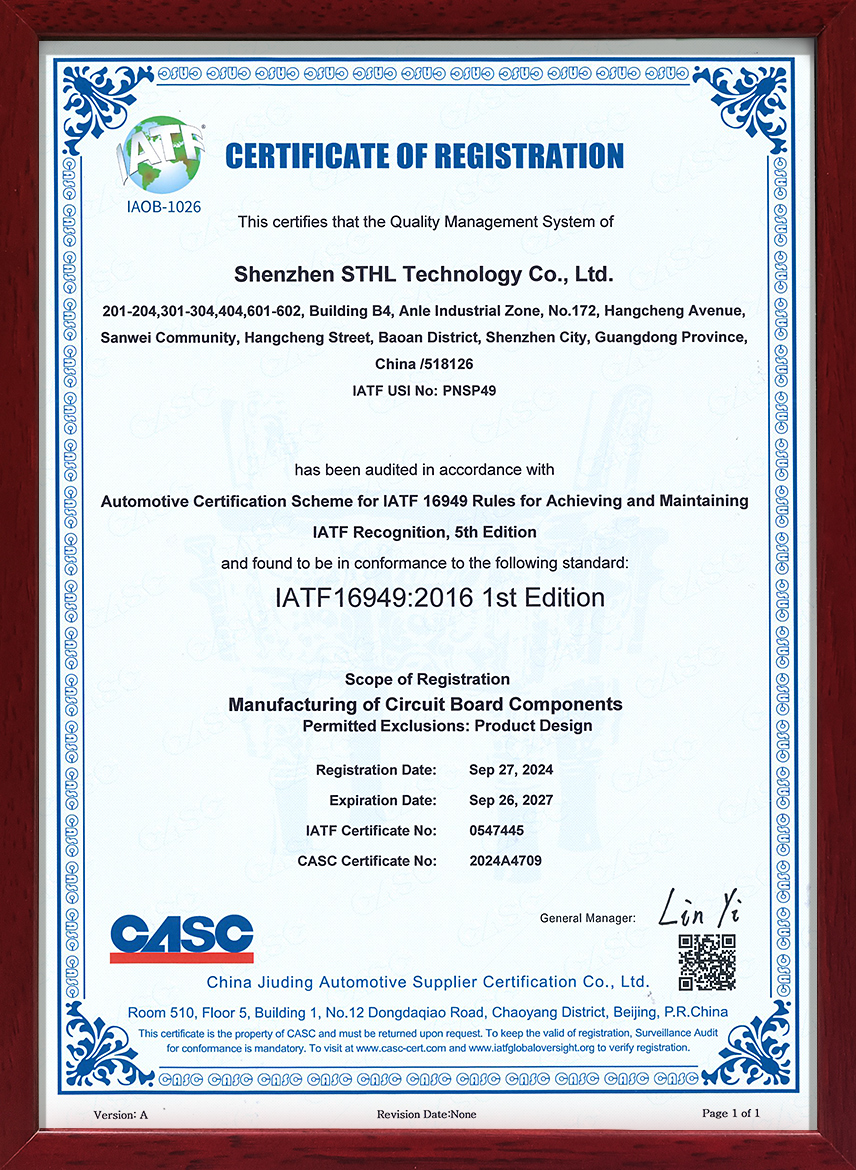
IATF 16949
Automotive Quality Management
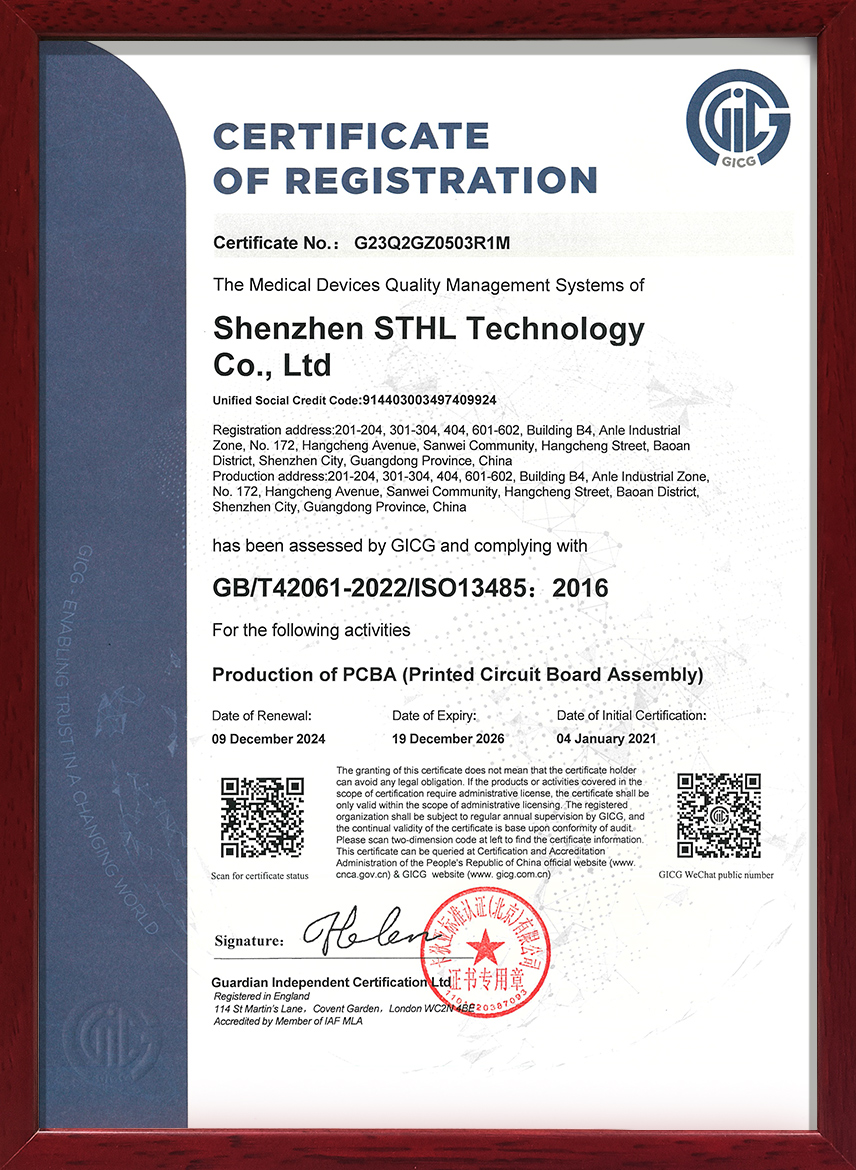
ISO 13485
Medical Devices Quality Management
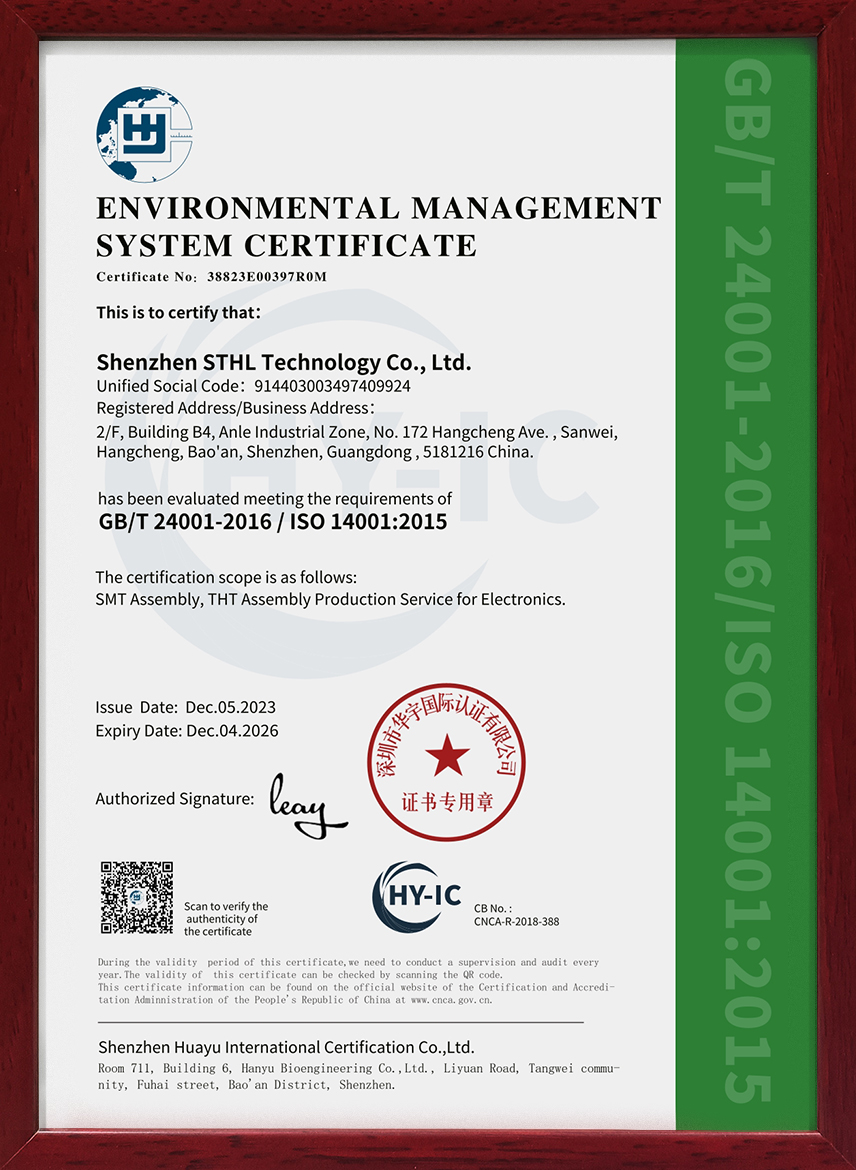
ISO 14001
Environmental Management System
STHL produces RoHS-compliant assemblies and verifies boards with AOI, X-ray, ICT and functional testing. Customers can visit the Shenzhen factory, audit the process and review traceability records before awarding repeat production.
Box Build PCB Sourcing Questions From Overseas Buyers
These are the questions engineering and procurement teams ask most often before selecting a China PCBA and box build partner.
What files do I need to submit for a PCBA and box build project?
Send Gerber files, a BOM with manufacturer part numbers, the pick-and-place centroid file and assembly drawings. For box build, add mechanical drawings, enclosure specifications, cable harness drawings, label files, firmware and functional test procedures. Our engineers complete a DFM and BOM review before production starts.
Is there a minimum order quantity for box build PCB assembly?
No. STHL accepts prototype, low-volume and high-volume PCB assembly orders, so you can validate a design and scale to mass production with the same supplier. Box build quantities can be adjusted as the product moves from pilot run to repeat production.
Can STHL source all electronic components and mechanical parts?
Yes. We offer full turnkey, partial turnkey and consigned assembly. Our sourcing team works with 100+ agents and suppliers covering more than 500,000 part numbers, with incoming inspection and traceability from reel to finished board. Enclosures, cables and labels can be coordinated as part of the box build scope.
Which quality certifications does STHL hold?
STHL is certified to IATF 16949, ISO 9001, ISO 14001 and ISO 13485, and produces RoHS-compliant assemblies. Boards are verified with AOI, X-ray, ICT and functional testing. Quality records, first article inspection reports and lot traceability can be reviewed during supplier qualification.
How do you protect our design files, firmware and IP?
We sign an NDA before RFQ, restrict project data to the assigned engineering team and track every build through our ERP and MES systems. Access to Gerber data, firmware and mechanical files is controlled by project authorization.
Can we audit or visit the factory?
Yes. Customers are welcome to visit our Shenzhen factory and R&D laboratory at any time, and a 360-degree virtual factory tour is available for remote evaluation. Audits can cover SMT, THT, testing, component storage, box build and packaging areas.
How early should we involve STHL in a new box build design?
Involve the manufacturing partner as early as possible, ideally before the PCB layout is frozen. Early DFM feedback can reduce connector height conflicts, cable routing issues, test pad access problems and enclosure tolerance risks. It can also improve BOM availability before the prototype build.
What is the fastest way to get a meaningful quote?
Provide Gerber, BOM, centroid file, assembly drawing, quantity plan and a short statement of the end application. If box build is required, include enclosure drawings, cable details, label requirements and test instructions. Clear input lets our engineers quote the full scope instead of only the board assembly.
Planning a Box Build PCB Program From China?
Talk with STHL about DFM, BOM sourcing, SMT/THT assembly, cable harnesses, enclosure integration, functional testing and repeat production. NDA can be signed before RFQ, and factory audit or remote virtual tour is available.
More Box Build PCB & PCBA Solutions From China
The final eight product families cover lighting, motor control, environmental sensing, radiation detection, emergency response, smart wearables and water quality monitoring.