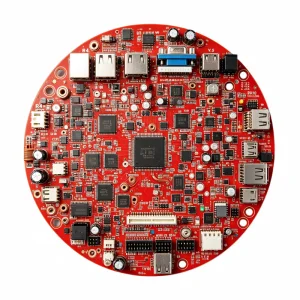
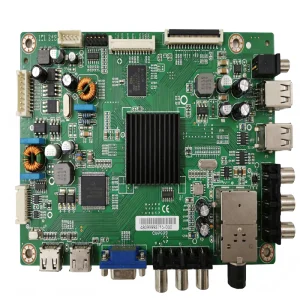
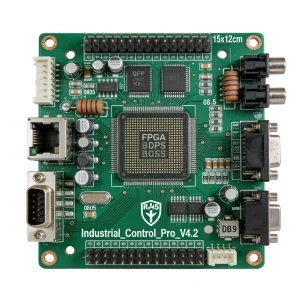
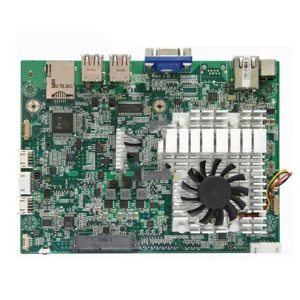
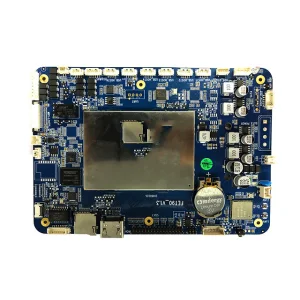
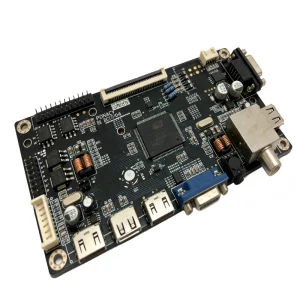
Rogers PCB & PCBA Product Portfolio — First 8 Application Platforms
These application platforms show how STHL translates Rogers-material requirements into repeatable PCB assembly programs for automotive, power, industrial, environmental, computing, communications and control electronics. Every product link and image below is retained for engineering and procurement review.
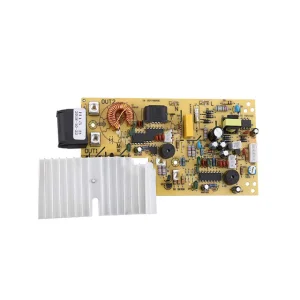
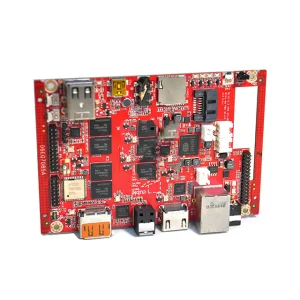
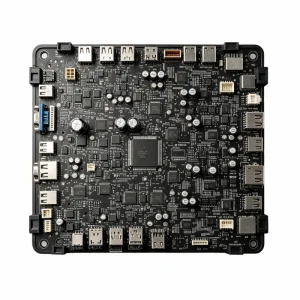
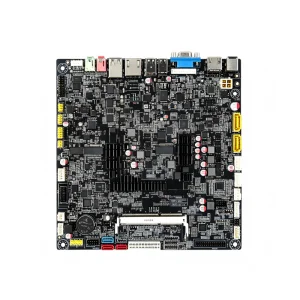
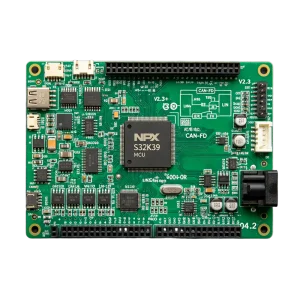
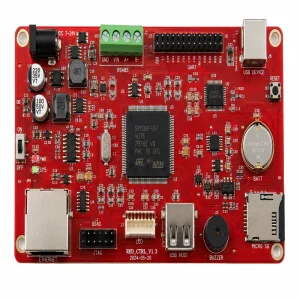
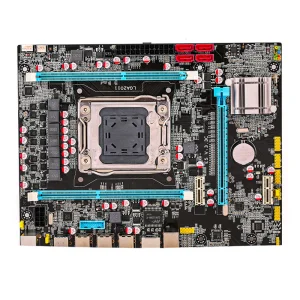
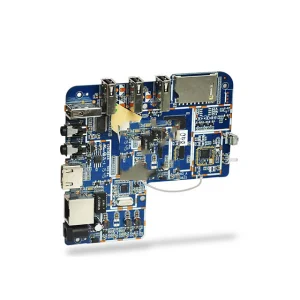
Executive Summary: Rogers PCB Is Now a Risk-Management Purchase, Not a Commodity
Rogers PCB projects rarely fail because a factory cannot place a component. They fail when the laminate, copper, stack-up, drilling, lamination, and final assembly are treated as separate transactions. High-frequency circuits used in EV on-board chargers, 77 GHz radar, electric power steering, VOR receivers, water-quality analyzers, battery monitoring modules and mini-LED backlights depend on stable dielectric constant (Dk) and dissipation factor (Df), controlled impedance, and predictable thermal behavior. A few percentage points of Dk drift can move a filter or antenna off specification; an uncontrolled via or lamination void can create insertion loss that no amount of final testing will fully recover. The China Leading Rogers PCB Solution Provider & Factories model described here is therefore built around information gain: material traceability, documented process windows, and cross-functional engineering review before production.
Shenzhen STHL Electronics Co., Ltd. has operated as a certified electronics manufacturing services (EMS) and ODM provider since 2006. Our 220+ staff, including 50+ engineers, run a 10,000 m² facility with 7 SMT assembly lines, 2 DIP/THT lines, 2 functional test lines, 2 box build lines and an in-house R&D laboratory for design verification and prototype testing. We support full turnkey, partial turnkey and consigned assembly, plus PCB fabrication, component sourcing, cable assembly, conformal coating, IC programming, AOI, X-ray, ICT and functional testing. This integrated model matters for Rogers PCB programs because high-frequency material decisions cannot be isolated from assembly, test and final mechanical integration.
For overseas buyers in the USA, Germany, Italy, the UK, Poland, New Zealand, Brazil and 90+ other regions, the practical question is not simply “Who can quote a Rogers PCB?” but “Who can prove that the quoted material, stack-up, assembly process and test record will remain repeatable from prototype to volume?” Our answer is a controlled workflow: NDA before RFQ, DFM and BOM review, incoming material verification, MES/ERP traceability, and a documented hand-off from engineering to production. That is the operational meaning of a Rogers PCB solution provider today.
Rogers PCB Market Trends and Global Procurement Demand
Global electronics demand is being reshaped by electrification, 5G and 6G infrastructure, satellite communication, industrial automation, medical monitoring, environmental sensing and mini-LED display technologies. These systems operate at higher frequencies, wider temperature ranges and tighter signal budgets. As a result, buyers are not only asking for more Rogers PCB capacity; they are asking for evidence: laminate lot records, impedance coupons, AOI and X-ray reports, functional test data, and supply-chain continuity plans. The market is moving from “can you make it?” to “can you prove it, repeat it, and sustain it?”
Procurement teams in North America and Europe continue to balance China+1 diversification with the reality that Shenzhen remains one of the fastest access points to high-mix laminate, component and PCBA capacity. The winning RFQ is no longer the lowest unit price alone; it is the most complete risk-reduction package. This is especially true for Rogers PCB sourcing, where material availability, counterfeit avoidance and engineering discipline can influence program timing more than assembly labor cost. STHL’s sourcing team works with 100+ agents and suppliers covering more than 500,000 part numbers, with incoming inspection and traceability from reel to finished board.
Proven PCB and PCBA know-how since 2006.
Highly automated, dust-free manufacturing space.
DFM, BOM, test and process engineering support.
7 SMT, 2 DIP/THT, 2 functional test, 2 box build.
Global shipment performance for repeat programs.
Sourcing reach through 100+ agents and suppliers.
Material Science: Why Rogers Laminates Require a Different Process Window
Rogers material families such as RO4000 series, RO3000 series, RT/duroid and RO4835 are not drop-in replacements for FR-4. PTFE-based and ceramic-filled laminates can be softer, more sensitive to drilling parameters, and more prone to dimensional movement. Mixed-material stack-ups, for example Rogers core plus FR-4 prepreg, require careful CTE matching, lamination cycle control, drill and desmear validation. For high-frequency RF, impedance control is not a single coupon test; it is a manufacturing system involving copper thickness, etch compensation, solder mask effect, layer-to-layer registration and final assembly stress.
The strongest information gain a supplier can offer is material authentication at the point of production. Buyers should ask for laminate supplier documentation, lot and date-code records, material datasheets, controlled storage evidence and a traceability path from incoming laminate to finished board. STHL reviews Rogers material datasheets, stack-up drawings, impedance targets and assembly drawings before quoting, and we flag risks such as mixed-material CTE mismatch, panelization limits, via-in-pad requirements and test access constraints before material is ordered.
Laminate Authentication & Sourcing
Supplier documentation, lot and date-code control, incoming inspection and reel-to-board traceability reduce counterfeit and substitution risk for high-frequency materials.
Mixed Stack-Up & Controlled Impedance
Engineering review covers CTE matching, prepreg flow, drill/desmear windows, copper balance, impedance targets and test coupon strategy for Rogers/FR-4 hybrids.
PTFE & Ceramic-Filled Process Control
Drill parameters, lamination pressure, surface preparation and via reliability are reviewed for PTFE-based and ceramic-filled laminates before pilot and mass production.
China Factory 4.0: Supply Chain Resilience and Efficiency Advantages
China’s electronics ecosystem remains a strategic advantage for high-mix Rogers PCB and PCBA programs because it combines laminate access, component depth, engineering talent, fast tooling and mature export logistics in one region. But resilience is not automatic. A factory that relies on a single component broker or an undocumented material channel can create more risk than a lower-cost supplier. STHL’s Factory 4.0 approach combines automated SMT and THT capacity with ERP/MES visibility, incoming inspection, moisture-sensitive device control and engineering-led alternates.
Our 10,000 m² facility supports prototypes, low-volume builds and volume production under one roof, so a Rogers PCB design can move from first article to repeat production with the same quality system. We sign an NDA before RFQ, accept no MOQ, keep project data with the assigned engineering team and track every build through ERP and MES. For buyers balancing global sourcing and local accountability, this means a China-based factory with auditable process discipline rather than a black-box assembly channel.
ERP + MES Traceability
Real-time production status, lot traceability and shipment records support audits and repeat orders.
Automated SMT & THT
7 SMT lines and 2 DIP/THT lines handle fine-pitch, BGA and mixed-technology boards.
Material Authenticity Checkpoint
Incoming inspection, MSD control and supplier documentation protect high-frequency laminate integrity.
DFM & BOM Engineering
Engineers check Gerber, BOM, centroid data, footprint errors and end-of-life risks before ordering.
Flexible NPI & No MOQ
Prototype, low-volume and high-volume orders share the same controlled process and quality system.
Logistics & Export Compliance
ESD-safe packaging, global documentation and shipment to 90+ countries and regions.
Global Industrial Landscape and Localized Rogers PCB Application Scenarios
The global business landscape is uneven. North American and European OEMs often prioritize supply-chain resilience, documentation and compliance, while still relying on Asia for high-mix NPI speed and component access. Japanese and Korean buyers frequently emphasize dimensional consistency and lot discipline. Chinese domestic customers often prioritize fast turns and engineering responsiveness. A Rogers PCB provider must translate these different expectations into one manufacturing language: clear specifications, verified materials, measurable process windows and test evidence.
STHL supports localized application scenarios across automotive, telecom, aerospace, medical, industrial control, energy storage, environmental monitoring and consumer electronics. Each application has different failure costs. An EV on-board charger may stress thermal cycling and isolation; an EPS board may face vibration and temperature excursion; a water-quality analyzer may require long-term stability in humid environments; a VOR receiver demands RF integrity. The same high-frequency material can behave differently in each scenario, so the manufacturing plan must be matched to the end-use environment.
Automotive & EV
On-board chargers, EPS, battery monitoring and control modules with IATF 16949 process discipline.
Telecom & 5G
High-frequency boards for RF front ends, small cells and communication infrastructure.
Aerospace & Defense
Critical electronics with tight traceability, inspection and reliability expectations.
Medical Devices
ISO 13485-controlled assembly for monitoring, diagnostic and wearable electronics.
Industrial Control
PLCs, motor drives and automation boards with conformal coating and robust testing options.
Energy & Battery
Battery monitoring, power conversion and energy management PCBAs for demanding cycles.
Environmental Monitoring
Water-quality analyzers, pollution early-warning systems and field-deployed sensing electronics.
Consumer & Mini-LED
Wireless phone boards, mini-LED backlights and compact consumer devices with fast NPI.
From Gerber to Global Shipment: Six Controlled Steps for Rogers PCBA
Knowing what happens after a purchase order removes surprises. Every STHL Rogers PCB or high-mix PCBA project moves through a controlled sequence that links engineering, material sourcing, fabrication, assembly, testing and delivery.
DFM & BOM Review
Gerber, BOM, centroid and assembly drawings are checked for manufacturability, footprint errors, end-of-life parts and material risks.
Material Sourcing
Rogers laminates and electronic components are sourced through qualified channels, then inspected and stored under controlled conditions.
PCB Fabrication
Bare boards are produced to the approved stack-up, surface finish, impedance and mixed-material requirements.
SMT & THT Assembly
Fine-pitch, BGA and mixed-technology boards run on 7 SMT lines and 2 DIP/THT lines for prototype to volume.
Inspection & Testing
AOI, X-ray, ICT and functional testing, plus IC programming and conformal coating, with results logged in MES.
Box Build & Delivery
Cable assembly, enclosure integration, ESD-safe packaging and export documentation for 90+ countries and regions.
Quality, Compliance and E-E-A-T Signals Global Buyers Can Audit
STHL is certified to IATF 16949, ISO 9001, ISO 14001 and ISO 13485, and produces RoHS-compliant assemblies. Boards are verified with AOI, X-ray, ICT and functional testing, and project data is controlled through ERP and MES. Customers are welcome to visit our Shenzhen factory and R&D laboratory at any time. For remote supplier qualification, review our factory video and 360° virtual factory tour, then schedule a live audit.

ISO 9001
Quality Management System

IATF 16949
Automotive Quality Management

ISO 13485
Medical Devices Quality Management

ISO 14001
Environmental Management System








What Engineers & Buyers Say About STHL
“Excellent team to work with and fast delivery with high-quality boards. We are very happy to work with such a good supplier. Thanks again.”

“Please extend my thanks to your team for your hard work in preparing these samples. This positive experience has strengthened my confidence in your company, and I'm looking forward to discussing bulk orders in the near future.”

“We are satisfied with the last order. You did a great job on those boards and the lead time was short. I will place a new order soon.”

PCBA Insights & Factory News




Rogers PCB & PCBA Sourcing FAQs for Overseas Buyers
What files do I need to submit for a PCBA project?
Send Gerber files, a BOM with manufacturer part numbers, the pick-and-place (centroid) file and assembly drawings. If you need IC programming or functional testing, include firmware and test procedures. Our engineers complete a DFM and BOM review before production starts.
Is there a minimum order quantity (MOQ)?
No. STHL accepts prototype, low-volume and high-volume PCB assembly orders, so you can validate a design and scale to mass production with the same supplier.
Can STHL source all the electronic components?
Yes. We offer full turnkey, partial turnkey and consigned assembly. Our sourcing team works with 100+ agents and suppliers covering more than 500,000 part numbers, with incoming inspection and traceability from reel to finished board.
Which quality certifications does STHL hold?
STHL is certified to IATF 16949, ISO 9001, ISO 14001 and ISO 13485, and produces RoHS-compliant assemblies. Boards are verified with AOI, X-ray, ICT and functional testing.
How do you protect our design files and IP?
We sign an NDA before RFQ, restrict project data to the assigned engineering team and track every build through our ERP and MES systems.
Can we audit or visit the factory?
Yes. Customers are welcome to visit our Shenzhen factory and R&D laboratory at any time, and a 360-degree virtual factory tour is available for remote evaluation.
How do you verify Rogers laminate authenticity?
We review supplier documentation, laminate datasheets, lot and date-code records, incoming inspection results and storage conditions. Production traceability links the approved material to the finished board lot, which is essential for high-frequency and mixed-material stack-ups.
Can STHL support mixed Rogers and FR-4 stack-ups?
Yes, subject to engineering review. We evaluate CTE mismatch, prepreg selection, lamination cycles, drill and desmear parameters, impedance targets, panelization and test coupon strategy before quoting a mixed-material build.
What affects lead time for Rogers PCB assembly?
Lead time depends on Rogers laminate availability, stack-up complexity, material lead time, component sourcing, NPI requirements, tooling, inspection level and functional test scope. We quote a realistic schedule after reviewing the Gerber, BOM, stack-up and test plan.
Which tests are recommended for high-frequency Rogers boards?
Typical controls include AOI, X-ray for BGA and hidden joints, impedance coupon verification, TDR where specified, insertion-loss evaluation where required, ICT and functional test. The final test plan should match the RF, thermal and reliability requirements of the end product.
Do you support prototypes and low-volume runs?
Yes. STHL accepts prototype, low-volume and high-volume PCB assembly orders with no MOQ, so a Rogers PCB design can be validated and then scaled with the same supplier and quality system.
How do you handle RoHS, REACH and conflict minerals?
We produce RoHS-compliant assemblies and review customer-specific compliance requirements during RFQ. BOM and supplier documentation are checked for restricted substances and material declarations, with traceability retained for audit and repeat production.
Planning a Rogers PCB or High-Mix PCBA Build?
Send Gerber, BOM, stack-up, impedance requirements and test expectations for an engineering review. STHL will respond with a manufacturability assessment, material sourcing path, inspection plan and realistic schedule. We protect your IP with an NDA before RFQ and support prototype, low-volume and volume production without MOQ.
Rogers PCB & PCBA Product Portfolio — Next 8 Application Platforms
The second product group covers power supply, industrial control, wireless, battery monitoring, water-quality analysis, RF navigation, motor control and mini-LED applications. These links are retained for buyers comparing Rogers PCB capability across different end markets.