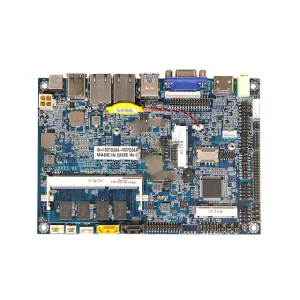
STHL PCBA & EMS Since 2006
Double-Sided PCB and PCBA Programs Built for Real Product Teams
The platforms below are representative of the programs STHL supports as a China PCBA manufacturer. They span safety monitoring, automotive navigation, power conversion, renewable energy, network security, head-up displays, LED lighting and telematics. Each can be quoted as bare PCB, turnkey PCBA, or complete box build, with engineering review before production.
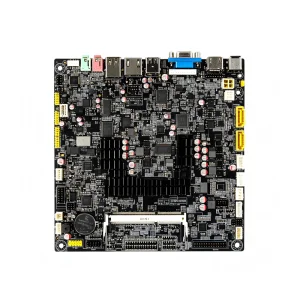
OEM Carbon Monoxide Detector PCBA Assembly--STHL Manufacturer, in China
View product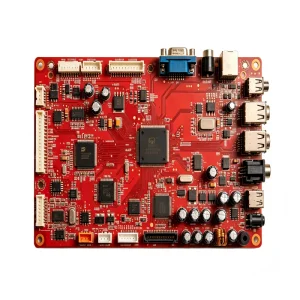
Certified Car Navigation Systems PCBA Assembly--STHL Service, in China
View product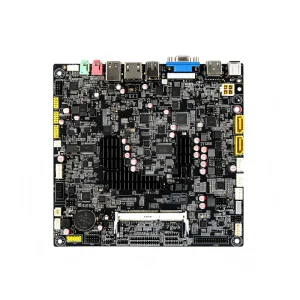
Custom AC-DC Converter PCB Assembly--STHL Service, Manufacturers
View product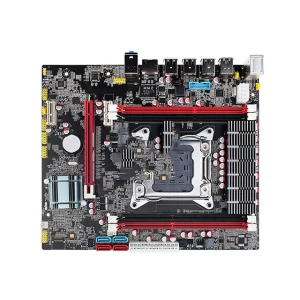
High Quality Wind Power Controller PCB Assembly Factory, Service
View product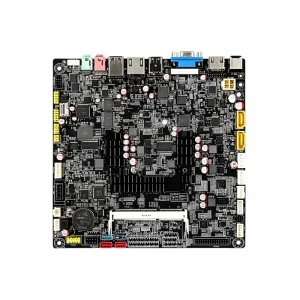
Top 10 Firewall PCB Assembly Supplier, Partner
View product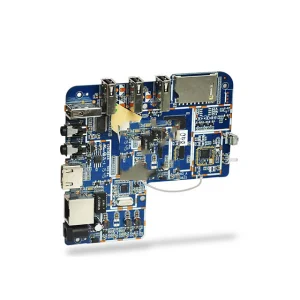
China Leading Head-Up Display (HUD) PCB Assembly Manufacturer, Factory
View product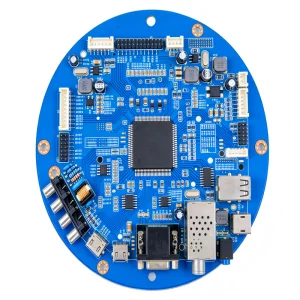
Top-Rated LED Floodlight PCB Assembly--STHL Supplier, Company
View product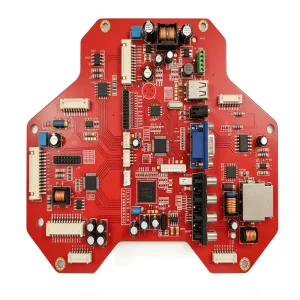
China Leading Telematics Box (T-Box) PCB Assembly Manufacturer, Solutions
View productChina Factory Depth for Double-Sided PCB and PCBA Programs
STHL combines bare-board fabrication, component sourcing, SMT/THT assembly, testing and box build in one controlled workflow. The figures below are the operating base behind every quotation.
What Is a Double-Sided PCB — and When Is It the Right Choice?
A double-sided PCB is a two-layer circuit board with copper on both sides, connected by plated through-holes and vias. It is not simply a single-sided board with an extra copper layer. It is a controlled routing environment that balances traces, planes and vias across the board, enabling denser layouts, shorter return paths, better EMI behavior and greater mechanical stability than single-sided boards — while avoiding the cost and lead time of many multilayer or HDI builds.
For many industrial controls, automotive accessories, consumer products, medical monitors, power converters and LED drivers, a well-engineered double-sided PCB is the most economic answer. The decision should be based on routing density, thermal demand, creepage and clearance, assembly sequence, test coverage and total landed cost — not on layer count alone.
When double-sided PCB is the right fit
- Single-sided routing can no longer hold all nets and return paths.
- Components, connectors or shielding need both sides of the board.
- Moderate thermal spreading is required without a heavy multilayer stack-up.
- Cost sensitivity rules out HDI or higher layer counts.
- Production volume justifies PTH tooling and repeatable assembly fixtures.
What to watch in double-sided assembly
- Warpage and panel support during second-side reflow.
- Via tenting, through-hole fill and solder wicking.
- Thermal shadowing in selective or wave solder.
- CTE mismatch around heavy components and connectors.
- Test access and probe clearance after both sides are populated.
Base material and stack-up
- FR-4, high-Tg FR-4, aluminum, ceramic, Rogers and flex options
- Typical thickness 0.4 mm to 3.2 mm
- PTH, vias and impedance-controlled traces where required
Copper, trace and finish
- 1–6 oz copper depending on current and thermal needs
- HASL, lead-free HASL, ENIG, OSP, immersion silver and hard gold
- RoHS-compliant solder mask and legend options
Assembly and value-add
- Double-sided SMT, mixed-technology, fine-pitch and BGA
- Selective solder, wave solder and THT assembly
- IC programming, conformal coating, cable and box build
Test and documentation
- AOI, X-ray, ICT, functional test, flying probe
- Impedance coupons, microsection and first article inspection
- MES traceability, CoC, FAI and PPAP support
China Double-Sided PCB Manufacturing with Turnkey PCBA Services
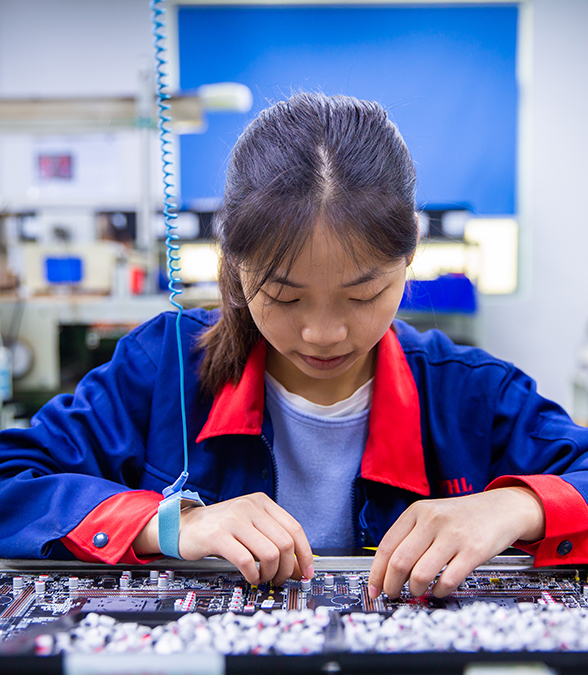
Shenzhen STHL Electronics Co., Ltd. is a certified EMS and ODM provider operating since 2006. Our 220+ staff, including more than 50 engineers, work in a 10,000 m² facility with 7 SMT lines, 2 DIP/THT lines, 2 functional test lines and 2 box-build lines. That structure lets a double-sided PCB program move from Gerber review to component sourcing, fabrication, assembly, testing and shipment under one accountable supplier.

Electronic Components Procurement
Full turnkey, partial turnkey and consigned assembly. BOM scrubbing, alternate-part suggestions, lifecycle checks, incoming inspection and reel-level traceability through 100+ agents and suppliers.
Learn more
PCB Fabrication
Double-sided, multilayer, aluminum, flexible, rigid-flex, HDI, Rogers, ceramic, heavy-copper, high-Tg and halogen-free boards. Stack-ups and finishes are matched to the electrical and assembly requirement.
Learn more
SMT & THT Assembly
Prototype, low-volume and high-volume assembly including fine-pitch, BGA and mixed-technology boards. Double-sided reflow, selective solder, AOI and X-ray controls are applied according to risk.
Learn more
Value-Added Services
PCB layout, IC programming, ICT and functional testing, conformal coating, cable and wire harness, and complete box build. Documentation can be aligned to prototype or production procurement requirements.
Learn moreEngineering Controls That Protect Double-Sided PCB Assembly Yield
Double-sided assembly raises process risk because the first side must survive the second reflow and the board must remain flat through test and shipment. STHL controls those risks before production starts, then verifies them with data on the floor. DFM review, panel design, reflow profiling, solder-mask selection and test access are treated as one engineering chain, not isolated steps.
DFM and BOM review
Engineers check Gerber, BOM, centroid data, footprints, end-of-life parts, assembly clearances and test points before material is ordered. Feedback is documented so the customer can see the change impact.
Panelization and stencil design
Panel rails, fiducials, tooling holes, breakaway tabs and stencil apertures are designed for the actual SMT line. Good panelization reduces warpage, improves paste release and stabilizes second-side support.
Double-sided reflow
Thermal profiles are tuned for board thickness, copper balance and component mass. Heavy parts may require adhesive, selective support or a different reflow sequence to prevent displacement.
Selective and wave solder
Through-hole and mixed-technology assemblies are reviewed for shadowing, thermal mass and solder drainage. Nozzle sizes, pallets and wave parameters are selected to protect both sides of the PCB.
Inspection and test
AOI, X-ray, ICT, flying probe and functional test are applied according to product risk. Test fixtures can be designed to access both sides without damaging double-sided assemblies.
ERP and MES traceability
Builds are tracked through ERP and MES systems. Material lots, reels, process parameters and test results can be traced from incoming inspection to finished board and final shipment.
Localized Support & Compliance Assurance for Global Buyers
Localized support does not mean a factory in every country. It means predictable communication, documentation and accountability across time zones. For a double-sided PCB project, the practical questions are simple: who reviews the stack-up, who flags a BOM risk, who signs the NDA, who owns the first-article report and who can prove traceability after shipment. STHL assigns an English-speaking project team, completes DFM and BOM review before production and maintains records under IATF 16949, ISO 9001, ISO 14001 and ISO 13485 systems.
Support that feels local to overseas teams
- DFM, BOM and assembly feedback before material commitment.
- NDA before RFQ so IP is protected from the first drawing.
- English-speaking project communication for engineering and procurement.
- Factory audits and a 360° virtual tour for remote pre-qualification.
- DDP, DDU or customer-arranged logistics quoted with landed-cost visibility.
- Compliance documents packaged for vendor onboarding and quality review.
Compliance package available for review
Documentation can include ISO certificates, RoHS declaration, REACH and material declarations, conflict-minerals statements, first article inspection, test reports, CoC, lot traceability and PPAP support where the program requires it. Inspection can be specified to IPC-A-610 Class 2 or Class 3.
- IATF 16949 for automotive-oriented process control.
- ISO 13485 for medical device quality expectations.
- ISO 14001 for environmental management.
- RoHS-compliant assemblies and controlled material records.

ISO 9001
Quality Management System

IATF 16949
Automotive Quality Management

ISO 13485
Medical Devices Quality Management

ISO 14001
Environmental Management System
China Factory Supply-Chain Advantages That Reduce Total Cost
China’s advantage is not a single low price. It is cluster density: PCB fabrication, component distribution, stencils, fixtures, test houses, cable assembly, enclosures and logistics are concentrated within a short distance. That density shortens the feedback loop between engineering changes and physical samples, and it makes multi-source BOM planning more practical for global OEMs. STHL works with 100+ agents and suppliers covering more than 500,000 part numbers, while maintaining incoming inspection and reel-level traceability.
Mixed-technology capacity for prototypes, NPI and repeat production without changing suppliers.
Direct channels through agents and distributors help reduce single-source exposure and lead-time shocks.
BOM coverage, alternates and lifecycle review support long-term production and end-of-life planning.
Prototype and volume orders can run through the same process, so validation data stays relevant when you scale.
Material lots, process steps and test results are recorded for traceability and change control.
On-time delivery is supported by production planning, material buffers where appropriate and ESD-safe packaging.
What Global Enterprises Require from a Double-Sided PCB Manufacturer
Global procurement teams are not buying boards. They are buying repeatable risk reduction. A double-sided PCB quote is only useful when it is backed by vendor qualification, change control, IP protection and logistics that survive the first order and the tenth repeat order. STHL supports customers in the USA, Germany, Italy, the UK, Poland, New Zealand, Brazil and 90+ other regions through a single documented workflow.
Supplier qualification
Factory audit, capability review, sample validation, quality system evidence and a clear escalation path before mass production.
Documentation and change control
FAI, CoC, test reports, material declarations, revision control and notification before process or material changes.
IP protection
NDA before RFQ, restricted project access, documented data handling and traceable builds through ERP and MES systems.
Logistics and landed cost
DDP, DDU, customer-arranged freight, ESD-safe packaging, export documentation and delivery schedules aligned to production.
Industry Trends Shaping Double-Sided PCB Demand
Double-sided PCB technology remains relevant because it sits between single-sided simplicity and multilayer cost. The demand is being reshaped by miniaturization, electrification, medical monitoring, industrial automation and supply-chain resilience. For buyers, the practical question is not whether double-sided boards are “old” or “new”; it is whether the chosen stack-up can meet the product’s thermal, EMI, assembly and compliance envelope at a sustainable total cost.
Miniaturization and HDI-lite
Smaller enclosures and denser I/O push designers toward finer traces, smaller vias and double-sided component placement. In many products, a tightly designed double-sided PCB with laser-drilled microvias or fine-pitch SMT can postpone the cost of a full HDI stack.
Automotive and EV electronics
Navigation, telematics, HUDs and power management require stable performance under vibration, heat and long field life. IATF 16949 process control, traceability and robust testing matter as much as the bare-board price.
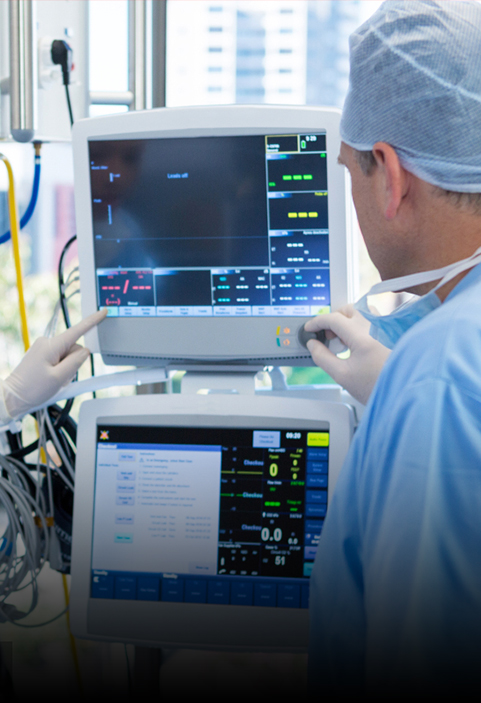
Medical monitoring and wearables
Patient monitors, ward systems and diagnostic devices demand documented quality systems, clean assembly practices and consistent lot traceability. Low-power double-sided designs are common where size and reliability must be balanced.
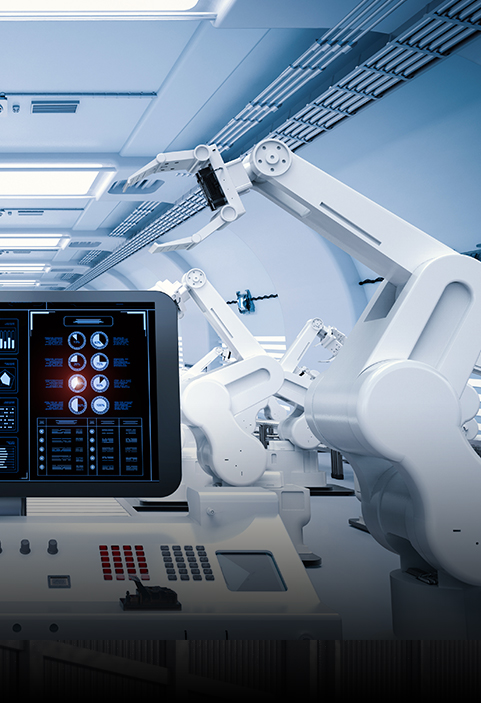
Industrial automation and PLCs
PLCs, motor drives, sensors and control modules need stable boards with clear creepage, thermal margin and long-term component availability. Double-sided boards often complement heavier multilayer control boards in the same system.
Energy transition and power electronics
Photovoltaic monitors, wind controllers and AC-DC converters require thermal design, creepage discipline and a supply chain that can support higher copper weight, thicker boards and specialized finishes.
Resilience, traceability and sustainability
Procurement teams increasingly ask for alternate BOMs, last-time-buy planning, documented traceability and RoHS-compliant materials. China manufacturing remains attractive when transparency and contingency planning are built into the supplier relationship.
Localized Application Scenarios We Build For
Different regions place different weight on compliance, lead time, thermal performance and cost. A North American automotive program may prioritize IATF 16949 evidence and PPAP; a European medical team may focus on ISO 13485 controls and lot traceability; an APAC consumer brand may need fast NPI and cost engineering. STHL supports all of these scenarios without forcing the same documentation package onto every product.

From Gerber to Global Shipment: Six Controlled Steps
Knowing what happens after purchase order removes surprises. This is how every STHL double-sided PCB and PCBA project moves through the factory, with engineering review and data capture at each stage.
DFM and BOM review
Engineers check Gerber, BOM, centroid data, footprints, end-of-life parts and assembly clearances before material is ordered. Questions are consolidated into a documented feedback package.
Component sourcing
Parts are sourced through 100+ agents and suppliers, then pass incoming inspection and moisture-sensitive device control. Alternates are proposed when lifecycle or lead time risk is detected.
PCB fabrication
Bare boards are produced to the approved stack-up, surface finish and impedance requirement, from double-sided FR-4 and aluminum boards to HDI and rigid-flex.
SMT and THT assembly
7 SMT lines and 2 DIP/THT lines handle fine-pitch, BGA and mixed-technology boards. Double-sided reflow sequencing is defined per assembly to protect first-side components.
Inspection and testing
AOI, X-ray, ICT and functional tests can be applied with IC programming and conformal coating. Results are logged in our MES for traceability and change review.
Box build and delivery
Cable assembly, enclosure integration and ESD-safe packaging are followed by export documentation and shipment to customers in 90+ countries and regions.
Quality, Testing and Documentation for Double-Sided PCB Programs
Test coverage should be matched to product risk rather than copied from a catalogue. A simple LED driver and a medical monitor do not need the same inspection plan. STHL defines the test flow from the application, assembly complexity, traceability requirement and expected field environment, then records the result in a form procurement and quality teams can review.
AOI and X-ray
Optical and X-ray inspection verify placement, solder joints, BGA voids and hidden joints on both sides of the assembly.
ICT, FCT and flying probe
Electrical test and functional test confirm continuity, component values, firmware behavior and product-level performance before shipment.
Impedance and microsection
For controlled-impedance or high-reliability builds, coupons and microsections can verify copper thickness, plating and dielectric construction.
CoC, FAI and PPAP
Certificates of conformance, first article inspection and PPAP support can be prepared for programs that require formal production approval.
What Engineers and Buyers Say About STHL
Feedback from hardware engineers, designers and company owners across North America, Europe and beyond.
Excellent team to work with and fast delivery with high-quality boards. We are very happy to work with such a good supplier. Thanks again.

Please extend my thanks to your team for your hard work in preparing these samples. This positive experience has strengthened my confidence in your company, and I am looking forward to discussing bulk orders in the near future.

We are satisfied with the last order. You did a great job on those boards and the lead time was short. I will place a new order soon.

Double-Sided PCB & PCBA Sourcing FAQs for Overseas Buyers
Straight answers to the questions procurement, engineering and quality teams ask before choosing a China double-sided PCB manufacturer.
What files do I need to submit for a double-sided PCB or PCBA project?
Send Gerber files, a BOM with manufacturer part numbers, the pick-and-place or centroid file, assembly drawings and the approved stack-up. If you need IC programming or functional testing, include firmware, test procedures and pass/fail criteria. For controlled-impedance boards, add the impedance target and coupon requirement. STHL engineers complete a DFM and BOM review before production starts.
What is the difference between a double-sided PCB and a multilayer PCB?
A double-sided PCB has two copper layers, while a multilayer PCB has three or more layers with internal planes and additional laminations. Double-sided boards are usually the better choice when routing density, thermal spreading, EMI control and mechanical stability can be met within two layers at lower cost. Multilayer or HDI is appropriate when the design needs internal planes, higher routing density, controlled impedance on many nets or tighter miniaturization.
Can STHL assemble components on both sides of the PCB?
Yes. We support double-sided SMT, mixed-technology and through-hole assembly. The assembly sequence, panel support, reflow profile and component adhesive strategy are reviewed before production. Risky parts such as heavy connectors, large electrolytic capacitors and fine-pitch BGAs are evaluated for first-side survival during second-side reflow.
Is there a minimum order quantity (MOQ)?
No. STHL accepts prototype, low-volume and high-volume PCB assembly orders. This means a design can be validated through the same process and supplier that will later support mass production, reducing transfer risk when the program scales.
Can STHL source all the electronic components for my BOM?
Yes. We offer full turnkey, partial turnkey and consigned assembly. Our sourcing team works with 100+ agents and suppliers covering more than 500,000 part numbers. We perform BOM scrubbing, lifecycle review, alternate-part suggestions, incoming inspection and reel-level traceability from material receipt to finished board.
Which quality certifications does STHL hold?
STHL is certified to IATF 16949, ISO 9001, ISO 14001 and ISO 13485, and produces RoHS-compliant assemblies. Boards can be verified with AOI, X-ray, ICT, flying probe and functional testing, with inspection specified to IPC-A-610 Class 2 or Class 3 where required. Compliance documents can be packaged for customer vendor onboarding.
How do you protect our design files and intellectual property?
We sign an NDA before RFQ, restrict project data to the assigned engineering team and track every build through our ERP and MES systems. Revision control, access control and documented change notification help protect customer IP throughout NPI and repeat production.
Can we audit or visit the factory, and how is localized support handled?
Yes. Customers are welcome to visit our Shenzhen factory and R&D laboratory, and a 360° virtual factory tour is available for remote evaluation at 364gesimt.wasee.com. For overseas buyers, support includes English-speaking project communication, DFM/BOM feedback, documentation preparation, audit coordination and logistics options such as DDP or DDU.
More Double-Sided PCB and PCBA Platforms from STHL
The platforms below complete the product series. They show how double-sided PCB and turnkey PCBA support extends from computer electronics and pacemakers to smart dimmers, photovoltaic monitoring, electronic fencing, body-temperature monitoring, ward systems and programmable logic controllers. Send Gerber, BOM, centroid file and test requirements to [email protected] for an engineering review.
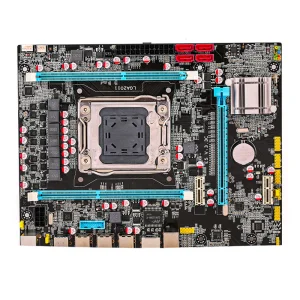
Certified Computer PCBA Factory Electronic Contract Assembly High Quality PCB Assembly Partner, Service
View product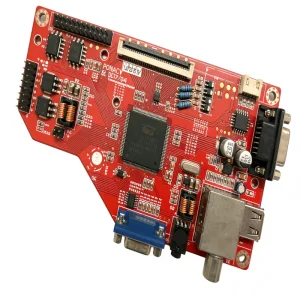
High-Reliability Pacemaker PCB Assembly--STHL Factory, Service
View product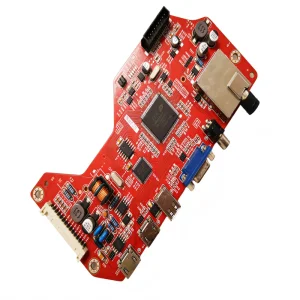
Top 10 Smart Dimmer Switch PCBA Assembly--STHL Service, Solutions
View product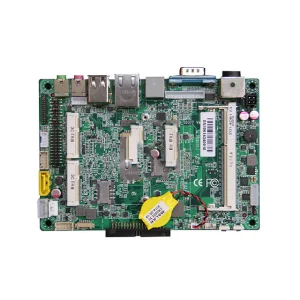
Professional Photovoltaic Module Monitor PCB Assembly in China, from China
View product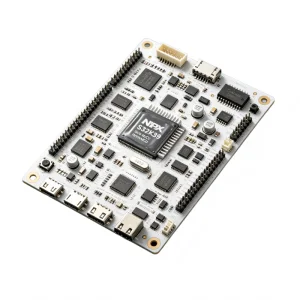
OEM Electronic Fence Vibrator PCB Assembly--STHL Solution Provider, from China
View product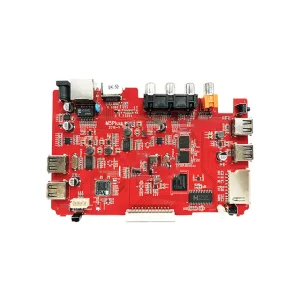
Certified Body Temperature Monitor PCB Assembly--STHL Partner, Factories
View product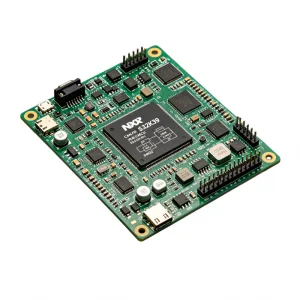
Professional Ward Monitoring System PCB Assembly--STHL Manufacturer, Manufacturers
View product