
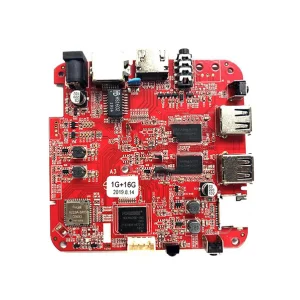
Certified PCB Fab Product Portfolio
PCB Fabrication & Assembly Solutions for High-Mix Programs
These eight product platforms show how a certified PCB fab partner translates Gerber, BOM, and test requirements into repeatable hardware. Each link preserves the original product URL and image, so engineering and procurement teams can move from evaluation to RFQ without losing traceability.
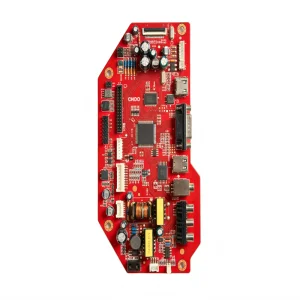
Reliable Smart Thermostat PCBA Assembly--STHL Solution Provider, in China
View Product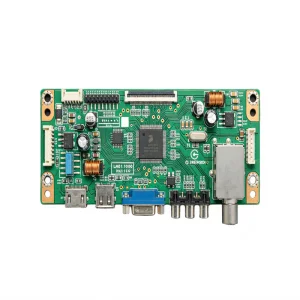
High-Reliability LED Matrix Board PCB Assembly--STHL Factory, in China
View Product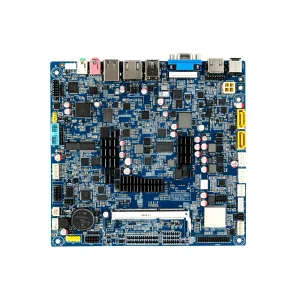
High Quality Bench Power Supply PCB Assembly--STHL Manufacturer, from China
View Product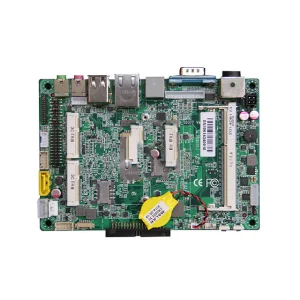
Top-Rated Modem PCB Assembly--STHL Service, Manufacturers
View Product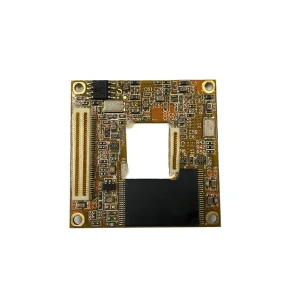
China Leading VoIP Phone PCB Assembly--STHL Solutions, Factories
View Product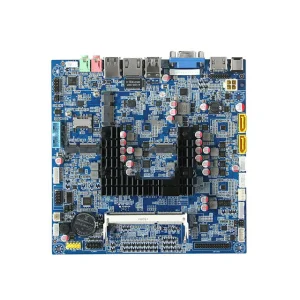
Certified Electric Forklifts PCBA Assembly Factory, Company
View Product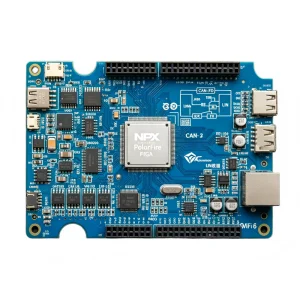
China Telemedicine Equipment PCB Assembly--STHL Manufacturer, Solutions
View Product
Capacity & Evidence
Evidence of a Certified PCB Fab Partner, Not Just a Supplier
The phrase “Certified Pcb Fab Partner & Manufacturers” carries a specific procurement meaning. Buyers are not only comparing board price; they are evaluating whether a manufacturer can provide repeatable process control, verified capacity, engineering feedback, and documented quality evidence before volume is committed.
20+
Years of EMS experience10,000m²
Production facility in Shenzhen50+
Professional engineers13+
Production lines99.5%
On-time delivery99%
Qualified shipment rate
IATF 16949
ISO 9001
ISO 13485
ISO 14001
RoHS-compliant assembly
Search Intent & Supplier Qualification
What “Certified PCB Fab Partner & Manufacturers” Means in 2026
When an engineering or procurement team searches for a Certified PCB Fab Partner & Manufacturers, the intent is usually not a simple price check. The buyer is trying to reduce risk across three connected workstreams: bare PCB fabrication, PCB assembly, and the component supply chain that feeds both. A credible partner must be able to answer process questions before the first purchase order—how BOM risk is reviewed, how moisture-sensitive devices are controlled, how AOI and X-ray results are recorded, how changes are approved, and how lot traceability is maintained from incoming reel to finished board.
Certification matters because it proves that a manufacturer has been independently audited against a recognized quality system. IATF 16949 supports automotive-grade discipline; ISO 13485 addresses medical device quality management; ISO 9001 covers general quality management; ISO 14001 reflects environmental management. But certification alone is not enough. The stronger signal is whether those systems are visible in daily production: documented DFM feedback, BOM scrubbing, alternate-part recommendations, incoming inspection, MES/ERP tracking, controlled rework, functional test logs, and ESD-safe packaging.
STHL has operated as an EMS and ODM provider in Shenzhen since 2006. The company’s 220+ staff, including more than 50 engineers, support PCB layout, component sourcing, PCB fabrication, SMT/THT assembly, cable assembly, box build, and testing under one factory roof. That integration is valuable for global OEMs because it reduces handoff risk between a bare-board supplier, a component distributor, and an assembly house. One accountable manufacturing partner is often more valuable than three disconnected low-cost quotes.
For buyers comparing China PCB factories, the practical test is whether the supplier can be audited and whether it can scale from prototype to repeat production. STHL accepts prototype, low-volume, and high-volume orders with no MOQ. An NDA can be signed before RFQ, project data is restricted to the assigned engineering team, and factory visits or a 360-degree virtual tour can support supplier qualification before any tooling or material commitment.
- Send Gerber, BOM with manufacturer part numbers, pick-and-place centroid data, and assembly drawings.
- Include firmware and test procedures when IC programming, ICT, or functional testing is required.
- Ask for DFM and BOM review before material is ordered, not after the build starts.
- Confirm traceability, change control, and non-conformance handling during the supplier audit.
Procurement-grade questions to ask before awarding a PCBA contract
1. Which quality system certificates are current, and what is the audit scope?
2. How are BOM shortages, end-of-life parts, and counterfeit risk handled?
3. What inspection and test evidence is available for every lot?
4. How fast can the manufacturer move from prototype to repeat volume?
5. Can the factory be audited physically or remotely before the first order?
Talk to a PCBA engineer
Industry Trends
PCB Fab and PCBA Trends Reshaping Global Sourcing
Global electronics demand is shifting faster than most product lifecycle plans. The most resilient buyers are not chasing the lowest unit price alone; they are aligning with manufacturers that can absorb design changes, component volatility, compliance pressure, and mixed-volume production without breaking process control.
High-Mix, Low-Volume Production
OEMs across networking, medical, industrial control, and smart-home markets now run more product variants with shorter lifecycles. A certified PCB fab partner must handle frequent changeovers, fine-pitch components, and mixed-technology boards without sacrificing first-pass yield.
Advanced Boards and Miniaturization
HDI, rigid-flex, aluminum, Rogers, ceramic, heavy-copper, high-Tg, and halogen-free boards are increasingly common. Buyers need a factory that can align PCB fabrication stack-up decisions with assembly yield, thermal performance, and test coverage.
Automotive, Medical, and Industrial Compliance
IATF 16949, ISO 13485, and tightly controlled industrial programs require more than a certificate. They demand documented traceability, change control, test evidence, and a quality culture that survives a customer audit.
Supply-Chain Resilience and Dual Sourcing
Component shortages and geopolitical uncertainty have made supply continuity a board-level topic. Buyers now ask for alternate-part strategies, supplier visibility, incoming inspection, and lot traceability rather than assuming that a BOM will remain available.
Factory 4.0 and Digital Traceability
ERP and MES systems are becoming procurement requirements, not internal conveniences. Real-time production status, reel-level traceability, AOI/X-ray logs, and test records allow buyers to verify what happened to a lot long after shipment.
Sustainability and ESG Requirements
RoHS compliance, waste control, energy management, and ISO 14001 discipline are increasingly part of supplier scorecards. Global customers want a manufacturer that can connect environmental controls to real production practice.
Global Procurement Demand
What Global Enterprises Actually Buy When They Source PCB Fab
Procurement teams in the United States, Germany, Italy, the United Kingdom, Poland, New Zealand, Brazil, and other regions are under pressure to shorten lead times while improving quality and reducing supply risk. The result is a more sophisticated buying process. Instead of selecting a manufacturer only on unit price, teams compare total cost of ownership, audit readiness, engineering response time, and the ability to keep a product supplied after launch.
Total Cost of Ownership
The lowest quote can become the most expensive project when BOM errors, rework, late delivery, or field failures appear. TCO analysis includes engineering support, first-pass yield, warranty exposure, freight, inventory, and the cost of managing multiple suppliers.
Quality Evidence
Certificates open the door, but inspection records keep it open. Buyers want AOI, X-ray, ICT, and functional test evidence, plus traceability from component reel to finished board. A documented non-conformance process is part of the product.
Supply Continuity
Global OEMs need alternate-part suggestions, approved supplier channels, and clear lead-time communication. A factory with 100+ agents and suppliers covering 500,000+ part numbers can reduce the probability that a single missing component stops a build.
Speed with Control
Quick-turn prototypes are valuable only when they do not create downstream quality debt. The ideal partner moves quickly through DFM, sourcing, fabrication, assembly, and test while preserving the same controls used for mass production.
Search semantics matter: a buyer looking for “certified PCB fab partner” is closer to a qualification decision than a buyer searching for “cheap PCB assembly.” The content, evidence, and internal links on this page are structured to answer that later-stage intent with specific capabilities, certifications, and product references.
China Factory 4.0
China Factory 4.0: Supply-Chain Resilience and Efficiency Advantages
China’s role in global electronics manufacturing has changed. It is no longer only a low-cost assembly destination; it is an integrated ecosystem of PCB fabrication, component distribution, tooling, test engineering, and logistics. For buyers, the advantage is not simply price. It is the ability to compress development cycles while retaining access to a deep supplier network and experienced process engineers.
Resilience: visibility, alternatives, and auditability
Resilience is not a warehouse full of parts. It is the ability to see risk early and respond with qualified alternatives. STHL’s sourcing team works with 100+ agents and suppliers covering more than 500,000 part numbers. BOM scrubbing, alternate-part suggestions, incoming inspection, and moisture-sensitive device control help protect production when the market changes.
For regulated industries, resilience also means auditability. ERP and MES tracking, lot traceability, and controlled documentation allow customers to verify what was built, when, and with which materials. That evidence is often more valuable than a generic “fast delivery” promise.
Efficiency: one factory, fewer handoffs
STHL’s 10,000 m² facility combines PCB fabrication coordination, component procurement, SMT/THT assembly, testing, cable assembly, and box build. Seven SMT lines, two DIP/THT lines, two functional test lines, and two box build lines support high-mix production without forcing customers to coordinate separate suppliers for each process step.
Engineering efficiency matters as much as machine capacity. DFM review, BOM optimization, test fixture planning, and IC programming can be discussed before production. When a design issue is found early, the cost is usually a drawing change rather than a scrapped lot. That is a core part of the “Factory 4.0” advantage: digital information moves faster than physical material, so problems are resolved before they become expensive.
Global business context
Global industrial demand remains uneven by region and market. Automotive electrification, medical monitoring, energy management, networking, and smart-home devices continue to create demand for reliable PCBAs, while consumer electronics cycles are shorter and more volatile. Buyers are responding with dual sourcing, stricter supplier audits, and a preference for manufacturers that can support both prototype and repeat production. A China-based certified partner with transparent systems can remain a strategic option when the relationship is built on evidence, not only price.
Localized Application Scenarios
Application Scenarios Across the Product Portfolio
Different markets impose different failure costs. A smart-home board may compete on cost and connectivity, while a telemedicine device must satisfy stricter documentation and reliability expectations. The following scenarios connect the product portfolio to real procurement contexts so buyers can map requirements to manufacturing controls.
Networking & Communication
Network switches, modems, VoIP phones, and wireless phones require controlled impedance, stable RF performance, and repeatable solder joints. Applications include enterprise networking, carrier equipment, and office communication systems.
Smart Building & HVAC
Smart thermostats, air quality monitors, and leak sensors are deployed in homes, offices, and industrial facilities. Reliability, sensor calibration, and low-power design influence both user experience and maintenance cost.
Power Electronics & Energy
Bench power supplies, open-frame power supplies, and hot-swappable power modules demand thermal management, creepage and clearance discipline, and functional testing under load. These boards are often central to system safety.
Industrial Mobility & Equipment
Certified electric forklift PCBA assemblies must tolerate vibration, dust, temperature variation, and long operating hours. Industrial buyers typically require robust test coverage and documented process controls.
Medical & Telemedicine
Telemedicine equipment PCB assembly sits within ISO 13485 expectations for documentation, traceability, and change control. Buyers should confirm test records, lot identification, and consistent handling of critical components.
Security & Monitoring
Security monitors and environmental monitoring devices often run continuously in remote locations. Stable power design, thermal margin, and reliable interconnects reduce service calls and field replacement costs.
Data Acquisition & Test
Data acquisition systems PCBA assemblies require stable analog performance, careful grounding, and test coverage that reflects real measurement conditions. These products are common in laboratories, automation, and industrial validation.
Consumer & Smart Home
LED matrix boards, smart speakers, and connected devices face short product cycles and cost pressure. The manufacturing partner must balance fast changeovers, aesthetic requirements, and reliable connectivity testing.
End-to-End Capability
PCB Fabrication and PCBA Services Under One Quality System
For 20 years, STHL has combined component procurement, PCB fabrication, SMT and THT assembly, testing, and final assembly into one controlled workflow. That structure gives buyers a single accountable partner from first article to repeat production.
Electronic Components Procurement
Full or partial turnkey sourcing through 100+ agents and suppliers, with BOM scrubbing, alternate-part suggestions, and reel-level traceability.
PCB Fabrication
Standard, prototype, aluminum, flexible, rigid-flex, HDI, Rogers, ceramic, heavy-copper, high-Tg, and halogen-free boards built to the required stack-up.
SMT & THT PCB Assembly
Prototype, low-volume, and high-volume assembly including fine-pitch, BGA, and mixed-technology boards, verified by AOI and X-ray inspection.
Value-Added Services
PCB layout, IC programming, ICT and functional testing, conformal coating, cable and wire harness, and complete box build assembly.
Controlled Workflow
From Gerber to Global Shipment in Six Controlled Steps
Knowing what happens after a purchase order removes surprises. This is how a high-mix PCBA project moves through STHL’s engineering, sourcing, fabrication, assembly, test, and delivery process.
01 · DFM & BOM Review
Engineers check Gerber, BOM, and centroid data for manufacturability, footprint errors, and end-of-life parts before material is ordered.
02 · Component Sourcing
Parts are purchased through 100+ agents and suppliers, then pass incoming inspection and moisture-sensitive device control.
03 · PCB Fabrication
Bare boards are produced to the required stack-up, surface finish, and impedance requirements, from single-layer to HDI and rigid-flex.
04 · SMT & THT Assembly
Seven SMT lines and two DIP/THT lines handle fine-pitch, BGA, and mixed-technology boards for prototypes and mass production.
05 · Inspection & Testing
AOI, X-ray, ICT, and functional tests, plus IC programming and conformal coating, with results logged in the manufacturing execution system.
06 · Box Build & Delivery
Cable assembly, enclosure integration, and ESD-safe packaging, shipped to customers in 90+ countries and regions.
Why STHL
Why Global OEMs Choose STHL for PCB Assembly
Measurable capacity, documented quality systems, and engineering support reduce total cost rather than only the unit price. These are the operational reasons buyers keep STHL on their approved supplier list.
Dust-Free Smart Factory
10,000+ m² highly automated production space supporting controlled assembly and consistent changeovers.
20 Years of Experience
Proven know-how across PCB and PCBA since 2006, with an in-house R&D laboratory for verification and prototype testing.
Global Sourcing
500,000+ part numbers through 100+ agents and suppliers, supported by BOM risk review and alternate-part planning.
Fully Certified
IATF 16949, ISO 9001, ISO 13485, and ISO 14001 systems, with RoHS-compliant assemblies.
ERP & MES Tracking
Real-time production status and lot traceability from incoming reel to finished board.
Cost-Down Engineering
DFM and BOM optimization by engineers who understand both manufacturability and supply-market constraints.
No MOQ & NDA
Prototype and large-quantity orders are welcome, and design data is protected by NDA before RFQ.
Fast Delivery & Global Service
99.5% on-time delivery across global shipments, with support for customers in 90+ regions.
Certifications
Certified Quality Management Systems
Independent third-party audits confirm that our processes meet the requirements of automotive, medical, and industrial customers. The certificate images below are preserved from the original company information and open in full size.

ISO 9001
Quality Management System

IATF 16949
Automotive Quality Management

ISO 13485
Medical Devices Quality Management

ISO 14001
Environmental Management System
Client Feedback
What Engineers & Buyers Say About STHL
Feedback from hardware engineers, designers, and company owners across North America, Europe, and beyond. These comments preserve the original testimonial content and customer images.
“
Excellent team to work with and fast delivery with high-quality boards. We are very happy to work with such a good supplier. Thanks again.
 PauloR&D Engineer · United States
“
Please extend my thanks to your team for your hard work in preparing these samples. This positive experience has strengthened my confidence in your company, and I'm looking forward to discussing bulk orders in the near future.
 OliviaHardware Engineer · Germany
“
We are satisfied with the last order. You did a great job on those boards and the lead time was short. I will place a new order soon.
 WilliamCEO · Italy
“
The order was perfect — exactly as specified with top quality. Highly recommend this reliable supplier.
 DmitryCEO · Brazil
“
Exciting! Very fast delivery, a professional supplier and a professional product. We will place a new order very soon!
 SohiabHardware Engineer · Turkey
“
We have tested all the boards and I am highly pleased. I will repeat my order soon. Thank you again for your excellent service.
 AnnaSr. Hardware Designer · New Zealand
“
It's always a pleasure ordering. Very professional team and good quality — thanks for your great service.
 JohnsonR&D Engineer · United States
“
Satisfied with the sample products delivered. Very good product, quick delivery and a good understanding of my requirements.
 SarahHardware Engineer · United Kingdom
“
The supplier's professionalism is evident in their seamless communication, efficient processing and reliable service. They are a trustworthy and commendable partner.
 Dmitry IvanovCEO · Romania
Factory News
PCBA Insights & Factory News
Practical updates from the production floor, including customer visits, traceability practices, and what really drives PCBA lead time.




Remote Factory Audit
Audit Our Factory Remotely with a 360° Virtual Tour
Walk through SMT, THT, testing, and warehouse areas before you visit. It is the fastest way for procurement and quality teams to pre-qualify a new PCBA supplier and verify the environment behind the certifications.
What the virtual tour helps you verify
- Production layout, line configuration, and material handling.
- Testing areas, inspection equipment, and documentation flow.
- Whether the facility matches the capability profile presented in RFQ.
Launch the STHL 360° factory tour
Customers are also welcome to visit the Shenzhen factory and R&D laboratory at any time.
Launch 360° Tour
FAQ
PCBA Sourcing FAQs for Overseas Buyers
Straight answers to the questions procurement and engineering teams ask before choosing a PCB assembly manufacturer in China.
What files do I need to submit for a PCBA project?
Send Gerber files, a BOM with manufacturer part numbers, the pick-and-place centroid file, and assembly drawings. If you need IC programming or functional testing, include firmware and test procedures. Our engineers complete a DFM and BOM review before production starts.
Is there a minimum order quantity (MOQ)?
No. STHL accepts prototype, low-volume, and high-volume PCB assembly orders, so you can validate a design and scale to mass production with the same supplier.
Can STHL source all the electronic components?
Yes. We offer full turnkey, partial turnkey, and consigned assembly. Our sourcing team works with 100+ agents and suppliers covering more than 500,000 part numbers, with incoming inspection and traceability from reel to finished board.
Which quality certifications does STHL hold?
STHL is certified to IATF 16949, ISO 9001, ISO 14001, and ISO 13485, and produces RoHS-compliant assemblies. Boards are verified with AOI, X-ray, ICT, and functional testing.
How do you protect our design files and IP?
We sign an NDA before RFQ, restrict project data to the assigned engineering team, and track every build through our ERP and MES systems.
Can we audit or visit the factory?
Yes. Customers are welcome to visit our Shenzhen factory and R&D laboratory at any time, and a 360-degree virtual factory tour is available for remote evaluation.
How do you support supply-chain resilience for high-mix builds?
We review the BOM for end-of-life and shortage risk, propose qualified alternates when appropriate, inspect incoming materials, and maintain traceability. The goal is to keep high-mix production moving without compromising approved specifications.
What makes a PCB fab partner “certified” rather than merely qualified?
A certified partner holds current third-party certificates and can show that the related systems operate in daily production. Evidence includes audit scope, traceability records, inspection and test logs, change-control procedures, and a documented non-conformance process. Buyers should verify both the certificate and the factory practice.
Planning Your Next PCBA Build?
Get the Capability Catalog Before You Issue an RFQ
Review PCB fabrication options, assembly processes, testing methods, and industry references — the information your team needs to qualify STHL as a certified PCB fab partner and manufacturers supplier.
- [email protected]
- +86 135 1018 8049
+86 755 8936 9123 - B4, AnLe Industrial Zone, No.172 Hangcheng Blvd, Bao'an Xixiang District, Shenzhen, 518126 China
- WhatsApp: +86 135 1018 8049
More Certified PCB Fab Products
Additional PCB Assembly Platforms for Global Buyers
The second group of eight product platforms covers security, environmental monitoring, power conversion, data acquisition, consumer audio, leak detection, and wireless communication. Each original image and product URL has been preserved for direct evaluation.
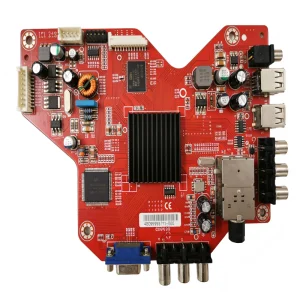
High Quality Security Monitor PCB Assembly--STHL Solutions, Factories
View ProductChina Top Air Quality Monitor PCB Assembly in China, from China
View Product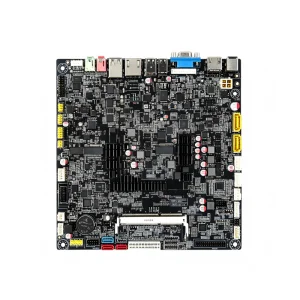
High-Reliability Open Frame Power Supply PCB Assembly--STHL Supplier, Solution Provider
View Product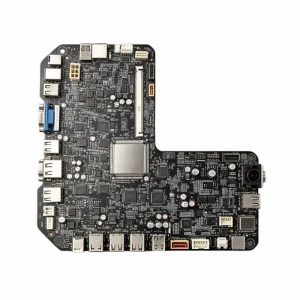
Prototype Hot-Swappable Power Supply PCB Assembly--STHL Partner, Factories
View Product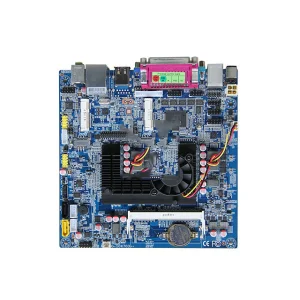
Top-Rated Data Acquisition Systems PCBA Assembly Company, Partner
View Product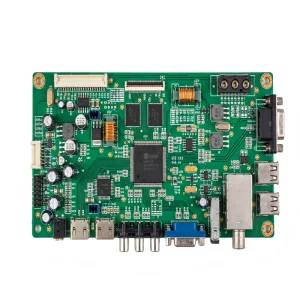
OEM Smart Speaker PCBA Assembly--STHL Factory, Solutions
View Product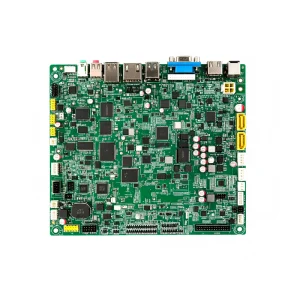
High Quality Leak Sensor PCBA Assembly--STHL Supplier, Company
View Product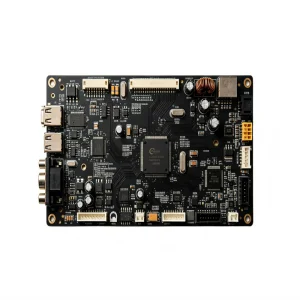
Top 10 Wireless Phones PCBA Assembly--STHL Supplier, Factory
View Product
Certified PCB fab partner
Turnkey PCB assembly
China PCB factory
IATF 16949 & ISO 13485
No MOQ
NDA before RFQ
Shenzhen STHL Electronics Co., Ltd. has supported OEMs since 2006 with PCB fabrication, component sourcing, SMT/THT assembly, testing, cable assembly, and box build. For a confidential review, contact [email protected] or call +86 135 1018 8049.
