Certified Flex PCB Products for Global OEM Procurement
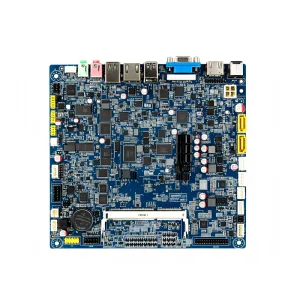
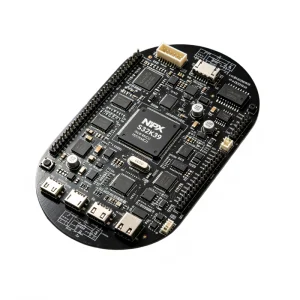
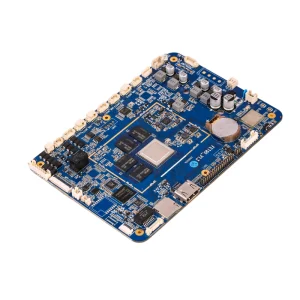
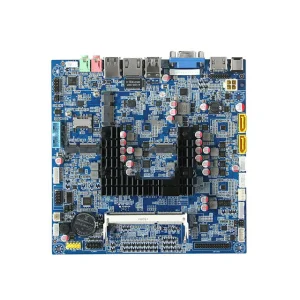
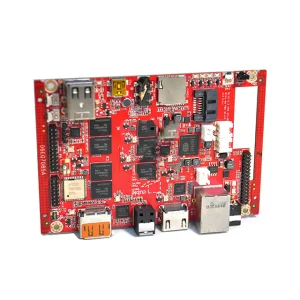
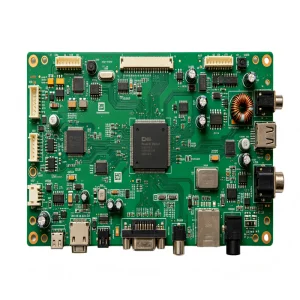
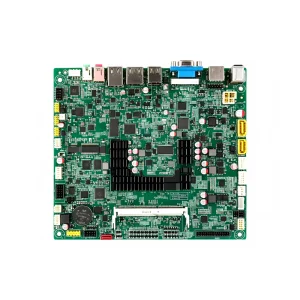
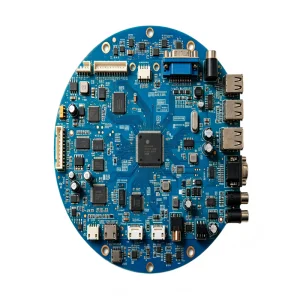
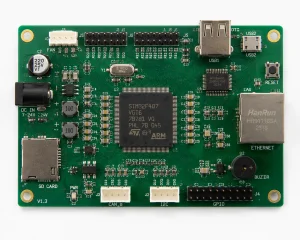
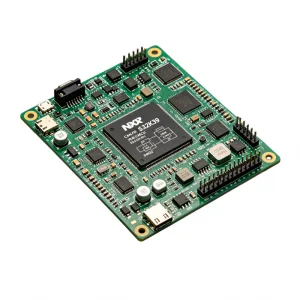
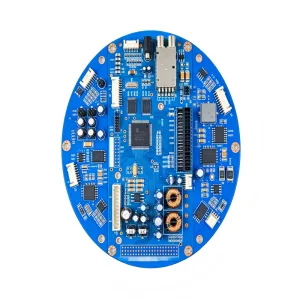
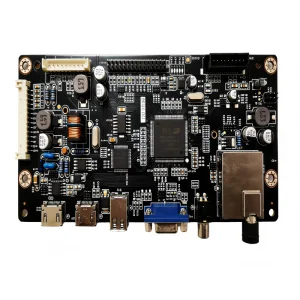
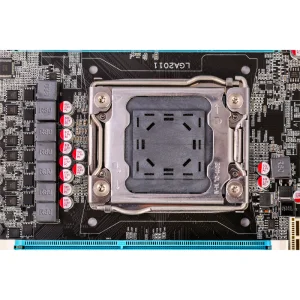
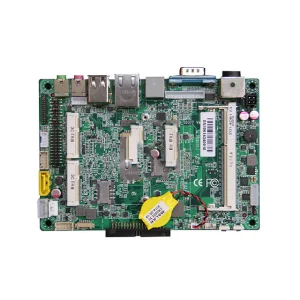
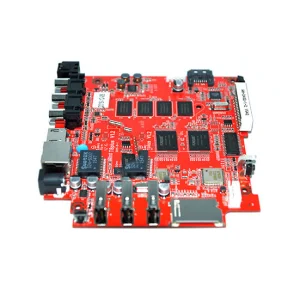
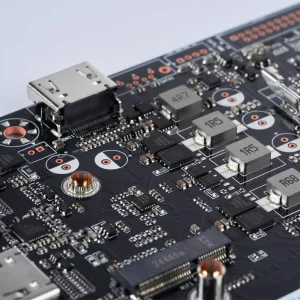
Start with eight representative STHL assemblies used across power, medical, consumer, communication, automotive and energy applications. Each product title retains its original product page link.
What “Certified Flex PCB Company in China” Means in Practice
A flexible circuit is not simply a bendable PCB. It is a materials, stack-up, assembly and test decision that affects bend radius, dynamic fatigue, impedance, connector reliability and final product yield.
Choosing a certified flex PCB company in China is a supplier qualification decision, not only a price comparison. The supplier must translate a mechanical envelope into a reliable polyimide or rigid-flex stack-up, control stiffeners and coverlay openings, protect fine-pitch components during assembly, and prove that the finished assembly survives handling, shipping and end-use flexing. STHL approaches flexible and rigid-flex projects through the same controlled workflow used for high-mix PCBA: DFM review, BOM scrubbing, PCB fabrication, SMT/THT assembly, AOI, X-ray, ICT, functional testing and box build.
Shenzhen STHL Electronics Co., Ltd. has operated as a certified EMS and ODM provider since 2006. The company serves OEMs in the USA, Germany, Italy, the UK, Poland, New Zealand, Brazil and 90+ other regions. Its 10,000 m² facility, 220+ staff and 50+ engineers support PCB layout, component sourcing, PCB fabrication, SMT/THT assembly, cable assembly, box build, functional testing and final shipment under one accountable workflow. The factory operates with 7 SMT assembly lines, 2 DIP/THT lines, 2 functional test lines and 2 box build lines, supported by an in-house R&D laboratory for design verification and prototype testing.
For buyers searching for a certified flex PCB company in China, the important proof points are not limited to certificates. They include the ability to run prototypes and volume production without changing suppliers, a documented NDA process before RFQ, component traceability from reel to finished board, RoHS-compliant output, and factory access for audits and visits. STHL accepts full turnkey, partial turnkey and consigned assembly, and there is no minimum order quantity. That means a hardware team can validate a wearable, medical or automotive module with a small build, then scale the same design into repeat production.
The company also supports standard, prototype, aluminum, flexible, rigid-flex, HDI, Rogers, ceramic, heavy-copper, high-Tg and halogen-free boards. For flex PCB projects, this range matters because the right material and surface finish depend on bend requirements, thermal exposure, layer count, shielding, connector style and assembly process. A supplier that can review these variables before fabrication reduces the risk of expensive redesign after the first article.
Qualification snapshot for overseas buyers
- Certified quality systems: IATF 16949, ISO 9001, ISO 14001 and ISO 13485.
- Prototype-to-volume production with no MOQ.
- NDA signed before RFQ and project data restricted to the assigned team.
- 100+ component agents and suppliers covering more than 500,000 part numbers.
- AOI, X-ray, ICT and functional testing with ERP/MES traceability.
- 99.5% on-time delivery and 99% qualified shipment rate.
- Factory visits, audits and a 360-degree virtual tour for remote evaluation.
Why Global Enterprises Need a Certified Flex PCB Supplier in China
Flex PCB demand is being pulled by devices that cannot tolerate rigid boards: wearables, medical patches, compact cameras, communication modules, automotive sensors, robotics and portable power systems.
Global procurement teams are not only asking whether a supplier can fabricate a flex circuit. They are asking whether the supplier can manage the entire assembly risk. Can the supplier source long-lead connectors and ICs? Can it accept consigned components? Can it protect intellectual property before the RFQ stage? Can it scale from ten boards to ten thousand boards without moving the project to a different factory? Can it provide lot traceability, test records and export packaging that survive international logistics? These questions are especially important when the product is a medical device, automotive module, communication router or energy monitoring system.
China remains central to flex PCB and PCBA supply because of its dense component ecosystem, engineering talent and mature SMT capacity. However, the buying decision has moved from “lowest unit price” to “total landed cost and supply resilience.” A qualified Chinese partner should reduce engineering cycles, avoid component surprises, improve first-pass yield and provide a documented path through compliance. STHL addresses this with 100+ agents and suppliers, more than 500,000 part numbers, BOM scrubbing, alternate-part suggestions and reel-level traceability. Buyers can use full turnkey, partial turnkey or consigned assembly, which gives procurement teams flexibility when components are constrained.
The rise of flexible and rigid-flex designs also changes the supplier evaluation checklist. A conventional rigid PCB factory may understand bare-board fabrication but struggle with flex assembly handling, stiffener placement, coverlay access, panel support and bending tests. A certified EMS partner should connect fabrication, assembly and test under one quality system. STHL’s IATF 16949, ISO 13485, ISO 9001 and ISO 14001 environment supports automotive, medical, industrial and consumer programs, with AOI, X-ray, ICT and functional testing used to verify assemblies before shipment.
Flex PCB and PCBA Solutions by Industry
Different markets impose different reliability, documentation and test requirements. STHL aligns process controls to the failure modes and compliance expectations of each application.
Medical & Healthcare
ISO 13485-controlled assembly for patient monitoring, diagnostic imaging, wearable sensors and ward monitoring systems. Lot traceability, functional testing and careful handling support critical electronics.
Explore medical PCB assemblyAutomotive Electronics
IATF 16949 process discipline for control modules, lighting, charging electronics, electric forklifts and automotive tools that must survive heat, vibration and long-term reliability demands.
Explore automotive PCB assemblyCommunication & Networking
Routers, mobile hotspots, communication PCBA, smart gateways and high-speed boards with BGA-rich layouts, X-ray inspection and controlled assembly practices for signal integrity.
Explore communication PCB assemblyEnergy & Power
Photovoltaic monitoring, distributed power generation control, heavy-copper boards and power electronics where thermal management and long-term field reliability are central.
Explore energy PCB assemblyIndustrial Control
PLC, motor drive, automation and instrumentation PCBAs with conformal coating options, robust inspection and traceability for industrial environments.
Explore industrial control PCBAConsumer & Smart Home
Smart plugs, Bluetooth headsets, garage door openers, home gateways and compact IoT devices that require miniaturization, stable sourcing and fast prototype-to-volume transitions.
Explore smart home PCBAWhere Flex PCB and PCBA Technology Is Heading
The next generation of flex PCB programs will be won by suppliers that can combine miniaturization, material science, assembly reliability and digital traceability.
Design for Flex & Rigid-Flex Convergence
More products are folding electronics into tight mechanical envelopes. Stack-up design must account for bend radius, dynamic flex, stiffeners, coverlay access and connector strain relief before fabrication begins.
Fine-Pitch, HDI & Miniaturization
Wearables, cameras and medical sensors continue to push finer line/space, micro-BGA, via-in-pad and thin-board assembly. AOI and X-ray inspection become even more important as geometry shrinks.
High-Frequency & High-Reliability Materials
Rogers, ceramic, high-Tg and low-loss materials support 5G, automotive radar and power electronics. Material selection must be tied to thermal, electrical and mechanical test requirements.
Component Sourcing Resilience
Supply constraints can stop a production line faster than a fabrication issue. STHL’s 100+ agents and suppliers, 500,000+ part numbers and BOM scrubbing process help identify alternates and reduce line-down risk.
Digital Traceability & MES/ERP
Every build is tracked through ERP and MES systems. Reel-to-finished-board traceability, inspection records and lot status give buyers an audit trail for automotive, medical and industrial programs.
Sustainability & Compliance
ISO 14001 environmental management, RoHS-compliant assemblies, halogen-free options and responsible packaging are becoming part of supplier scorecards, not afterthoughts.
China Electronics Manufacturing in a Diversified Supply Chain
China remains the world’s largest PCB production base, and Shenzhen offers a dense ecosystem of components, engineering talent and assembly capacity. The winning supplier model is not simply low cost; it is visible quality, auditability and responsive engineering.
For global OEMs, the practical question is how to use China’s ecosystem without taking unmanaged risk. A qualified PCBA partner should make the manufacturing process visible: who reviews the Gerber and BOM, which supplier provides the component, how moisture-sensitive parts are stored, how the first article is checked, how lot traceability is recorded and how shipment is protected. STHL’s public cooperation network includes long-term relationships with global brands and established component distributors, while its day-to-day production is controlled by ERP and MES systems, AOI, X-ray, ICT and functional testing.
STHL has supported customers in the USA, Germany, Italy, the UK, Poland, New Zealand, Brazil and 90+ other regions. Its service model is built around one accountable supplier from schematic to shipped product: PCB layout, component sourcing, PCB fabrication, SMT/THT assembly, cable assembly, box build and testing. For buyers who are consolidating suppliers, this reduces coordination friction between fabrication, assembly and test vendors. For engineers, it creates a single technical contact for DFM and BOM questions.
In a diversified supply chain, buyers often keep a primary and secondary source. The strongest secondary source is not a trading company that simply forwards files; it should be a factory with documented systems, engineering support and audit access. STHL welcomes factory visits and audits, and offers a 360-degree virtual factory tour for remote evaluation. That transparency helps procurement, quality and engineering teams pre-qualify the supplier before committing to a production ramp.
One Accountable Supplier
Fabrication, sourcing, assembly, testing and box build are controlled under one workflow.
Prototype to Volume
No MOQ. Validate a design, then scale with the same supplier and process discipline.
Audit-Ready Factory
Factory visits, audits and a 360-degree virtual tour support remote and on-site qualification.
Global Logistics
ESD-safe packaging and shipment experience across 90+ countries and regions.
Certified Quality Systems and IP Protection
Certification is a baseline. Overseas buyers also need responsive English communication, NDA protection, engineering documentation and an auditable quality record.

ISO 9001
Quality Management System
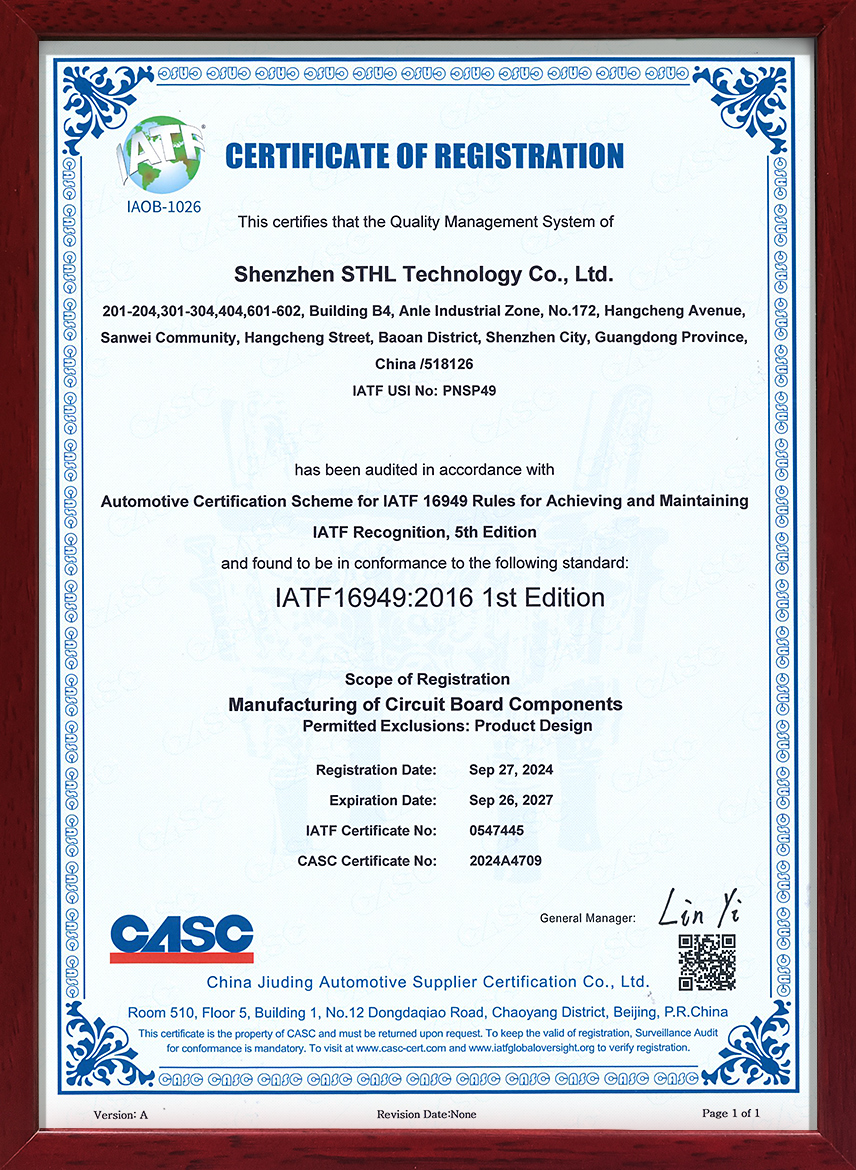
IATF 16949
Automotive Quality Management
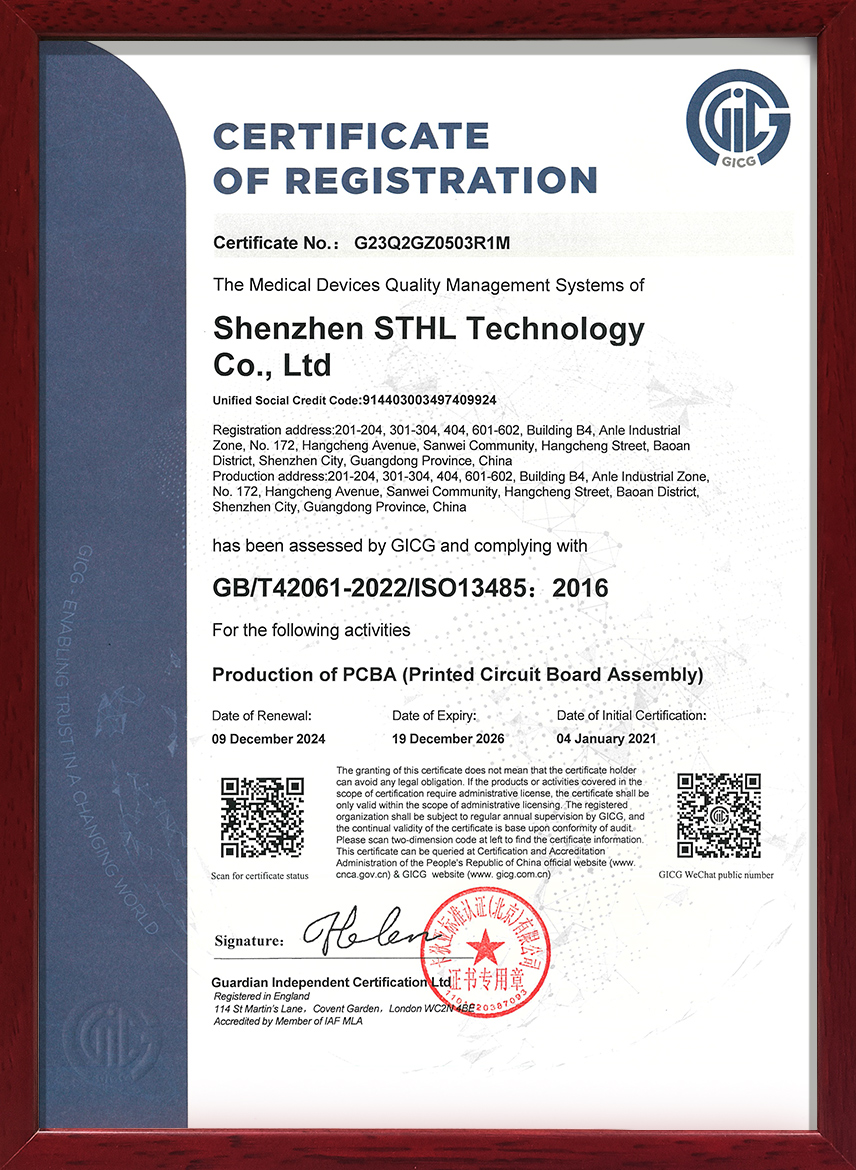
ISO 13485
Medical Devices Quality Management
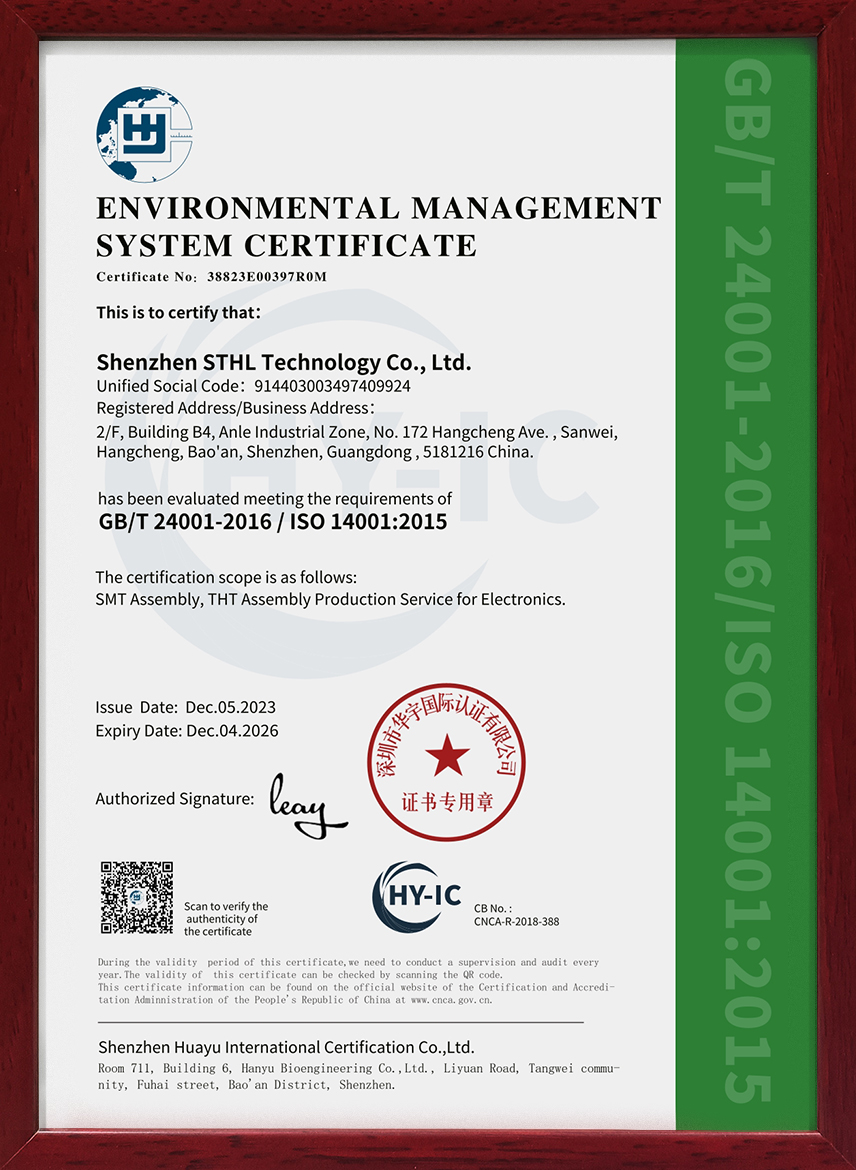
ISO 14001
Environmental Management System
NDA Before RFQ
Design files and IP are protected before quotation. Project data is restricted to the assigned engineering team and tracked through ERP/MES.
Remote Factory Evaluation
A 360-degree virtual tour lets procurement and quality teams review SMT, THT, testing and warehouse areas before travel.
Factory Audits Welcome
Customers are welcome to visit the Shenzhen factory and R&D laboratory, review records and audit processes at any time.
End-to-End Flex PCBA Manufacturing Services
From first article to repeat production, STHL combines component procurement, PCB fabrication, SMT/THT assembly, testing and box build into one controlled workflow.
Electronic Components Procurement
Full or partial turnkey sourcing through 100+ agents and suppliers, with BOM scrubbing, alternate-part suggestions and reel-level traceability covering 500,000+ part numbers.
PCB Fabrication
Standard, prototype, aluminum, flexible, rigid-flex, HDI, Rogers, ceramic, heavy-copper, high-Tg and halogen-free boards built to the required stack-up and surface finish.
SMT & THT PCB Assembly
Prototype, low-volume and high-volume assembly including fine-pitch, BGA and mixed-technology boards, verified by AOI and X-ray across 7 SMT lines and 2 DIP/THT lines.
Value-Added Services
PCB layout, IC programming, ICT and functional testing, conformal coating, cable and wire harness assembly, and complete box build for shipping-ready products.
DFM & BOM Review
Engineers check Gerber, BOM and centroid data for manufacturability, footprint errors and end-of-life parts before material is ordered.
Component Sourcing
Parts are purchased through 100+ agents and suppliers, then pass incoming inspection and moisture-sensitive device control.
PCB Fabrication
Bare boards are produced to your stack-up, surface finish and impedance requirements, from single-layer to HDI and rigid-flex.
SMT & THT Assembly
Fine-pitch, BGA and mixed-technology boards are assembled on 7 SMT lines and 2 DIP/THT lines for prototypes and mass production.
Inspection & Testing
AOI, X-ray, ICT and functional tests, plus IC programming and conformal coating, with results logged in the MES.
Box Build & Delivery
Cable assembly, enclosure integration and ESD-safe packaging, shipped to customers in 90+ countries and regions.
What Engineers and Buyers Say About STHL
Feedback from hardware engineers, designers and company owners across North America, Europe and beyond reflects the day-to-day experience of working with the factory.
“Excellent team to work with and fast delivery with high-quality boards. We are very happy to work with such a good supplier. Thanks again.”

“Please extend my thanks to your team for your hard work in preparing these samples. This positive experience has strengthened my confidence in your company, and I am looking forward to discussing bulk orders.”

“We are satisfied with the last order. You did a great job on those boards and the lead time was short. I will place a new order soon.”

PCBA Insights & Factory News
Practical updates from production: customer visits, traceability practices and what really drives PCBA lead time.

STHL Hosts Two European Visitors for an Early-Stage Healthcare Electronics Concept Review and Factory Tour
Read more
STHL Hosts Two German Visitors for an SMT, THT and Material Preparation Walkthrough
Read more
STHL PCBA Component Traceability: From Incoming Reel to Finished Board
Read more
PCBA Lead Time: Where the Days Go Between Purchase Order and Shipment
Read moreFlex PCB and PCBA Sourcing FAQs for Overseas Buyers
Straight answers to the questions procurement and engineering teams ask before choosing a PCB assembly manufacturer in China.
What files do I need to submit for a PCBA project?
Send Gerber files, a BOM with manufacturer part numbers, the pick-and-place (centroid) file and assembly drawings. If you need IC programming or functional testing, include firmware and test procedures. Our engineers complete a DFM and BOM review before production starts.
Is there a minimum order quantity (MOQ)?
No. STHL accepts prototype, low-volume and high-volume PCB assembly orders, so you can validate a design and scale to mass production with the same supplier.
Can STHL source all the electronic components?
Yes. We offer full turnkey, partial turnkey and consigned assembly. Our sourcing team works with 100+ agents and suppliers covering more than 500,000 part numbers, with incoming inspection and traceability from reel to finished board.
Which quality certifications does STHL hold?
STHL is certified to IATF 16949, ISO 9001, ISO 14001 and ISO 13485, and produces RoHS-compliant assemblies. Boards are verified with AOI, X-ray, ICT and functional testing.
How do you protect our design files and IP?
We sign an NDA before RFQ, restrict project data to the assigned engineering team and track every build through our ERP and MES systems.
Can we audit or visit the factory?
Yes. Customers are welcome to visit our Shenzhen factory and R&D laboratory at any time, and a 360-degree virtual factory tour is available for remote evaluation.
Can STHL produce flexible and rigid-flex PCB assemblies?
Yes. STHL supports flexible, rigid-flex, HDI, Rogers, ceramic, heavy-copper, high-Tg and halogen-free boards, and can manage component sourcing, SMT/THT assembly, testing and box build for flex and rigid-flex programs.
How does STHL control quality for flex PCBA?
Quality control covers incoming inspection, moisture-sensitive device control, DFM/BOM review, SMT/THT process control, AOI, X-ray, ICT and functional testing where required. Lot-level traceability is maintained through ERP and MES, and final shipment follows RoHS-compliant packaging and ESD-safe handling.
Planning a Certified Flex PCB or Turnkey PCBA Build?
Send Gerber files, BOM, centroid data and assembly drawings. Our engineers complete a DFM and BOM review before production, and we sign an NDA before RFQ. Talk to STHL about prototype runs, volume manufacturing, component sourcing, testing and box build.
More Certified Flex PCB and PCBA Products from STHL
The remaining eight representative assemblies complete the product series. Each product link and image is preserved for direct technical evaluation.