
Top 10 PCB Assembly Companies in China

Time:2026-11-27 Author:Sophia
0%

Choosing a PCB Assembly partner in China requires more than comparing quoted prices. Buyers need to examine engineering support, production capacity, quality controls, and delivery reliability. A polished website cannot reveal how a factory handles a difficult component shortage or a last-minute design change. The details matter.

This introduction to the Top 10 PCB Assembly Companies in China sets out a practical way to compare suppliers. IPC president and CEO John Mitchell has emphasized the importance of skilled workers and resilient electronics manufacturing. Put simply, capable people and disciplined processes shape dependable production. That principle is useful when assessing inspection methods, traceability, and communication—not just equipment lists.

The companies in this overview should be judged against clear needs: prototype speed, manufacturing volume, component sourcing, testing, and support after delivery. Look for concrete evidence, such as documented inspection stages, test reports, and a responsive engineering contact. A supplier may excel at quick-turn prototypes yet be less suited to high-volume orders. No ranking is perfect. Company capabilities change, and public information can be incomplete. That deserves a second look.

Use this list as a starting point, not a substitute for supplier checks. Ask specific questions, request relevant records, and confirm that the proposed process fits your board design. A lower price can look attractive. It may not tell the whole story. The best choice is the manufacturer whose verified capabilities match your product, schedule, and quality expectations.
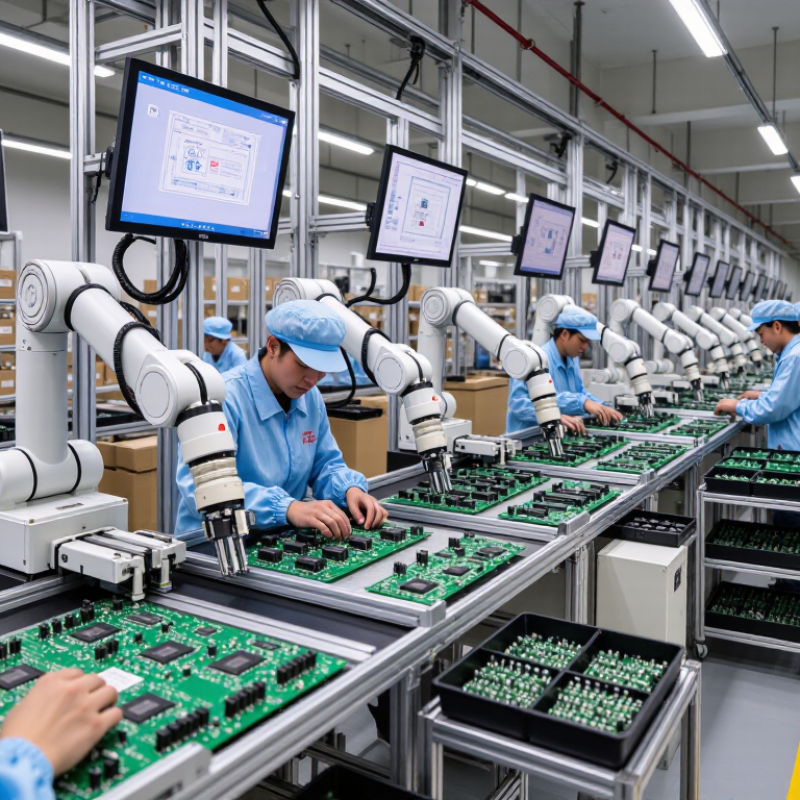
Top 10 PCB Assembly Companies in China

PCB Assembly in China: Industry Scope and Service Models

PCB assembly in China ranges from prototype builds to high-volume production for industrial, consumer, and communications equipment. Typical work includes surface-mount placement, through-hole soldering, inspection, and functional testing. A production line may handle fine-pitch parts, but that does not guarantee consistent results across every board design. Details matter. Ask how the factory controls solder paste, reflow profiles, and component traceability. For a dense board, request inspection records for solder joints and a sample build using the intended materials. A capability sheet is only a starting point.

Service models usually fall into turnkey, consigned, and partial turnkey arrangements. Under turnkey service, the assembler sources components and manages the build; this can simplify coordination, though buyers still need clear approval rules for substitutions. With consigned service, the customer supplies parts, gaining tighter purchasing control but taking on inventory and shortage risks. Partial turnkey divides sourcing responsibilities between both sides. It can work well, but unclear ownership creates delays. Before production, agree on the bill of materials, test coverage, revision control, and how defects will be reported. Even careful planning misses things sometimes; a pilot run can reveal assembly or documentation gaps before larger orders proceed.

Top 10 PCB Assembly Companies in China — Industry Scope and Service Models

A general overview of common PCB assembly process stages and service scope.

The bars show the typical sequence of common assembly stages, not company rankings, market share, or production volumes. Actual workflows vary by board design; through-hole assembly may be added where required. Service models commonly include turnkey, consigned, and hybrid sourcing, with support ranging from prototypes to volume production.

Criteria for Evaluating PCB Assembly Companies

When comparing PCB assembly companies in China, judge the production system, not a polished brochure. Ask how incoming components are checked, how solder paste is controlled, and how defects are recorded. A capable supplier should explain inspection stages, including automated optical inspection and functional testing where appropriate. Request sample reports with dates, defect descriptions, and corrective actions. Details matter. Check whether engineers review your files before quoting, especially for tight spacing, unusual materials, or mixed component sizes.

Tips: Compare quotes using the same bill of materials, board revision, test plan, and delivery quantity. Ask for a small pilot run when the design or process is new. Confirm who handles shortages and engineering changes. A low price alone tells little.

Assess communication with a practical test: send one technical question and note how clearly the reply identifies risks. Verify capacity using recent production examples, not only maximum monthly figures. Traceability should connect a finished board to component lots, process records, and inspection results. Discuss packaging, humidity protection, and shipping schedules; these details can affect yield after assembly. No checklist catches everything. Even experienced buyers sometimes overvalue a fast quote.

Profiles of Ten Notable PCB Assembly Companies in China

China’s PCB assembly sector includes providers with distinct strengths, though capabilities often overlap. One profile focuses on prototypes, where engineers review footprints and solder clearances before a small run. Another handles higher-volume consumer boards, relying on automated placement and careful component control. A third serves automotive projects, where inspection records and repeatable testing matter as much as line speed. Details matter.

A fourth profile supports industrial equipment, often managing long product lifecycles and replacement parts.

A fifth emphasizes medical-device work, with traceability and documented process controls.

A sixth builds dense multilayer boards for communications hardware, where fine-pitch placement demands close inspection.

A seventh specializes in LED assemblies and pays particular attention to heat paths.

An eighth handles rigid-flex designs, which need careful material handling and assembly planning.

A ninth offers turnkey sourcing alongside assembly; buyers should still ask how substitutions are approved.

The tenth profile suits quick-turn, low-volume orders, where responsive engineering can save days.

These are useful distinctions, not fixed categories. One factory may fit several, and a polished capability list does not prove consistent output. Request sample inspection records, clarify test coverage, and compare the actual build process before choosing a supplier.

Capabilities, Certifications, and Production Processes

Top 10 PCB Assembly Companies in China: Capabilities, Certifications, and Production Processes

A useful comparison of China’s leading PCB assembly providers starts with process control, not headline capacity. Check whether a factory handles your board type, component mix, and expected volume. Some facilities support quick-turn prototypes and small batches; others are better equipped for repeat production. Ask about SMT placement accuracy, fine-pitch components, through-hole assembly, and inspection coverage. Look for solder paste inspection, automated optical inspection, and X-ray testing where hidden joints require review. A process description should explain how defects are recorded and corrected, not just list machines.

Certifications can help assess management systems, but they do not guarantee that every product will meet your requirements. Confirm the certificate’s scope, validity, and relevance to your market. For automotive work, for example, ask whether the supplier’s quality system covers the actual production site and process. Request sample inspection reports, traceability details, and a clear account of how materials are controlled. Reflow profiles and first-article checks matter. So does communication when a build goes wrong. A polished audit file is useful, but it can still miss daily process drift.

Tips: Send the same drawings, bill of materials, and test requirements to each candidate. Compare lead time, yield reporting, engineering feedback, and change-control practices. Ask what happens when a component is unavailable. Verify answers with a small pilot build. No checklist is perfect; revisit your assumptions after the first production run.

Top 10 PCB Assembly Companies in China - Capabilities, Certifications, and Production Processes

Important: The entries below are anonymous supplier profiles for comparing common PCB assembly capabilities, not verified company-specific records or a ranked list. Actual equipment, capacity, certifications, and process limits vary by factory and should be confirmed directly. Certification names indicate relevant standards to check—not certifications held by a particular supplier.

Anonymous profile Typical assembly focus Common production processes Capabilities to verify Relevant certifications to check Typical inspection and testing
Supplier Profile 1 Prototype and quick-turn SMT, through-hole assembly, mixed-technology assembly, engineering review Low-volume orders, engineering change handling, component sourcing options, panelization support ISO 9001; ISO 14001 Automated optical inspection (AOI), visual inspection, electrical testing as specified
Supplier Profile 2 High-volume consumer electronics Automated SMT placement, reflow soldering, selective or wave soldering, depanelization Line capacity, changeover time, traceability, process control, seasonal demand planning ISO 9001; ISO 14001; RoHS requirements where applicable AOI, solder-paste inspection (SPI), in-circuit testing (ICT), functional testing
Supplier Profile 3 Automotive electronics SMT and through-hole assembly, controlled soldering processes, product traceability Automotive customer requirements, lot traceability, process documentation, change control IATF 16949; ISO 9001; applicable customer-specific requirements AOI, X-ray for suitable assemblies, ICT, functional testing, documented process checks
Supplier Profile 4 Industrial controls Mixed-technology assembly, connector installation, selective soldering, conformal coating when specified Long product lifecycles, component obsolescence support, ruggedized product requirements ISO 9001; ISO 14001; ISO 45001 AOI, ICT or flying-probe testing, functional testing, coating inspection where applicable
Supplier Profile 5 Medical electronics SMT and through-hole assembly, controlled material handling, documented assembly and inspection Device classification needs, cleanliness requirements, controlled documentation, supplier controls ISO 13485; ISO 9001; applicable regulatory and customer requirements AOI, electrical testing, functional testing, inspection records as defined by the quality plan
Supplier Profile 6 Communications and networking Fine-pitch SMT, double-sided assembly, BGA reflow, selective soldering Fine-pitch component handling, multilayer-board assembly experience, thermal-process control ISO 9001; ISO 14001; IPC workmanship requirements as specified by contract SPI, AOI, X-ray for hidden solder joints, ICT, functional testing
Supplier Profile 7 Power electronics SMT, through-hole assembly, heavy-component installation, thermal-interface material application High-current connections, large components, thermal-management needs, assembly-specific handling ISO 9001; ISO 14001; relevant product and safety requirements Visual inspection, AOI where suitable, electrical safety and functional tests as specified
Supplier Profile 8 LED and lighting products SMT placement, reflow soldering, board handling for thermal substrates, optional coating LED handling, thermal substrate compatibility, color or optical test coordination ISO 9001; ISO 14001; applicable RoHS and product-safety requirements AOI, electrical testing, functional or optical testing when included in the test plan
Supplier Profile 9 Box-build and system integration PCB assembly, cable and harness integration, enclosure installation, final product assembly Mechanical integration, configuration management, packaging, end-of-line test coordination ISO 9001; ISO 14001; product-specific standards where applicable AOI, electrical testing, functional testing, final inspection against customer specifications
Supplier Profile 10 Flexible and rigid-flex assembly SMT on rigid and flexible circuits, controlled handling, connector and stiffener installation Flexible-circuit handling, bend-area protection, design-for-assembly review, packaging controls ISO 9001; ISO 14001; IPC requirements as specified by contract AOI where accessible, visual inspection, electrical continuity testing, functional testing

Comparing Providers by Scale, Technology, and Market Focus

Comparing China’s top PCB assembly providers requires more than counting production lines. Scale matters when a project needs stable output across several sites, but utilization and delivery records matter too. A large factory can still struggle with urgent engineering changes. Scale is not everything.

Prismark’s 2024 Global PCB Industry Report estimated worldwide PCB production value at about US$68.4 billion in 2023, roughly 15% below 2022. It also placed China’s share at around 54%. These figures describe bare-board production, not assembly revenue, so they show the strength of the local supply base rather than ranking assemblers. For buyers, useful comparisons include SMT line configuration, inspection coverage, traceability, and prototype-to-volume transition. Ask how a provider handles fine-pitch parts, mixed-technology boards, and documented process changes—not merely how many placements it claims per hour.

Market focus shapes the best fit. Consumer devices often demand fast model changes and tight cost control; industrial and medical electronics may require longer product support and detailed records. IPC’s electronics manufacturing research tracks persistent pressure around skilled labor and supply-chain resilience, factors that can affect delivery even at high-capacity sites. Request sample inspection records, realistic lead-time ranges, and an explanation of component-sourcing controls. A tidy ranking can still mislead. Public data rarely reveals line-level yield, customer concentration, or how quickly a factory resolves defects; those gaps deserve direct questions.

FAQS

What should I evaluate beyond a supplier’s quoted price?

Compare process controls, inspection records, engineering review, traceability, and delivery terms. A low quote alone says little.

Which inspection methods should I ask about?

Ask about solder paste inspection, automated optical inspection, and X-ray checks for hidden joints. Confirm functional testing when relevant.

Do certifications guarantee product quality?

No. Verify the certificate’s scope, validity, and production-site coverage. Then review dated inspection reports.

How can I compare quotes fairly?

Send every candidate the same bill of materials, board revision, test plan, and order quantity. Details change prices.

When is a pilot build useful?

Use a small pilot for a new design or process. Check defects, yield reports, and corrective actions before scaling.

What does useful traceability include?

It should link a finished board to component lots, process records, and inspection results. Keep the records specific.

How can I assess communication?

Send one technical question about a real risk, such as tight component spacing. Notice whether the reply is clear and specific.

What production details can affect boards after inspection?

Ask about packaging, humidity protection, and shipping schedules. Moisture can matter. I may still overlook a detail.

Conclusion

This article explores the scope of Pcb Assembly in China, from common service models to the factors buyers can use when evaluating manufacturing partners. It explains how requirements such as product complexity, order volume, lead time, engineering support, quality management, and communication can shape the choice of provider. The profiles of ten notable companies offer a structured view of the variety of services available, without treating any single production model as suitable for every project.

The article also reviews capabilities, certifications, and key production stages, including component placement, soldering, inspection, and testing. It compares providers by scale, technology, and market focus to help readers understand practical differences between high-volume production and more specialized work. Together, these topics provide a clear framework for assessing manufacturing strengths and matching them to a project’s technical, operational, and quality needs.


Sophia

Sophia

Sophia is a dedicated marketing professional with an exceptional depth of knowledge about her company's products and services. With a keen understanding of market trends and customer needs, she crafts insightful blog posts that not only inform but also engage readers, enriching the company’s online......